British Council awards honour exam partners, ’ excellence

British Council awards honour exam partners, ’ excellence

The British Council hosted the Partners in Excellence: Annual Awards for Loyalty Programme Achievements event in Nicosia on March 20, 2024. Over 100 people attended the event to celebrate the exceptional accomplishments of exam partners. Awards were presented in various categories, including Advantage Excellence Awards, Cambridge International Excellence Awards, Pearson Edexcel Excellence Awards, School Exams Excellence Awards, and IELTS Excellence Awards.

Big hotel chains and unbranded-hotel owners find they need each other

Big hotel chains and unbranded-hotel owners find they need each other

Fact: Independent hotel operators and giant global chains are increasingly linking up in franchise agreements due to high-interest rates in the hospitality industry, which have slowed down new hotel construction.

Nissan to launch 30 new models by 2027, boost global sales volumes

Nissan to launch 30 new models by 2027, boost global sales volumes

Nissan Motor plans to launch 30 new models over the next three years and aims to raise its global sales by 1 million vehicles while cutting costs to improve profitability.

Oil prices to keep on rising

Oil prices to keep on rising

– The oil price is now over /barrel due to tight supply, increasing demand, Middle East conflict, and Houthi attacks on vessels in the Red Sea, with expectations of further increases.
– The International Energy Agency (IEA) now predicts a global oil supply deficit throughout 2024, reversing its earlier forecast of a surplus.
– The IEA and OPEC agree on supply deficits due to OPEC+ cuts and rising global demand.
– The IEA forecasts a crude consumption increase of 1.3 million barrels per day (b/d) this year, while OPEC maintains its growth estimate at 2.25 million b/d for 2024.
– The US is producing more crude oil than any other country, averaging 12.9 million b/d in 2023, with Saudi Arabia and Russia close to 10 million b/d.
– Oil and gas executives expect a slower transition to net-zero due to geopolitical turmoil, macroeconomic conditions, and AI.
– Shell aims to reduce its net carbon intensity by 15%-20% by 2030, adjusting from its previous goal of 20%.
– Adnoc and BP suspended their billion bid for a stake in Israel’s NewMed Energy due to the conflict in Gaza but remain interested.
– Adnoc and BP announced a new joint venture centered on Egypt on 14 February.
– European refineries may have a profitable future due to elevated margins for refined oil products like diesel and gasoline, amidst war in Ukraine and Red Sea tensions.
– On 13 March, Ukraine conducted drone strikes on Russian refineries, reducing refining capacity by 370,500 b/d.
– Falling refining capacity has increased diesel premiums ahead of crude by about /b.
– By 2026, Europe will have reduced its crude distillation capacity by about 7% compared to 2020, becoming more reliant on imports of refined products and more vulnerable to supply shocks.
– The IEA and OPEC continue to have contrasting biases in oil market forecasts.
– CERAWeek in Houston saw top oil executives and ministers discuss the energy sector, with less pressure for a large-scale move to clean fuels.
– ExxonMobil CEO Darren Woods emphasized the cost concerns in reducing emissions.
– Shell CEO Wael Sawan highlighted the critical role of LNG in Shell’s future.
– Saudi Aramco’s CEO criticized the energy transition approach, advocating for efficient hydrocarbon use.
– US Secretary of Energy Granholm emphasized meeting current energy needs while preparing for future realities.
– Wind turbine blades, which can’t be recycled, are accumulating in landfills.
– Methane emissions from the energy sector remained near a record high in 2023, according to the IEA.
– Germany has opened its first EUR 4 billion bidding round for ‘Carbon Contracts for Difference’ for industrial users to switch to green hydrogen or other low-emissions technology.
– Engie urges caution on the pace of hydrogen deployment in hard-to-abate industries.
– Global greenhouse gas emissions from food systems are growing, with livestock being the biggest driver.
– Jim Skea of the IPCC stated the world is in ‘unknown territory’ after heat records were broken, indicating more science is needed to understand extraordinary temperatures.


The first EU unified defense strategy and the benefits for Cyprus

The first EU unified defense strategy and the benefits for Cyprus

– The EU is taking steps toward building a single common defense to strengthen its strategic autonomy due to various global uncertainties.
– In early March, the European Commission presented a European Defense Industrial Strategy.
– At a European Council Summit, the leaders of the 27 Member States expressed their intention to access more public and private funding for defense.
– Financing future defense investment is a significant challenge.
– Dr. Fotini Asderaki highlighted that Greece and Cyprus would benefit from European funding for defense due to their strained defense budgets.
– Cyprus and Greece are encouraged to take initiatives that align with the wider interests and threats to the EU, beyond their issues with Turkey.
– Cyprus has initiated the ‘Amalthea’ project for transferring humanitarian aid to Gaza, which gained international support.
– Cyprus is positioned as a bridge between Europe and the Middle East and acts as a guardian of Europe’s southeastern border.
– Cyprus advocates for strengthening the EU’s defense capabilities and strategic autonomy due to its military inequality with Turkey.

Pushing out plastic in consumer-goods packaging

Pushing out plastic in consumer-goods packaging

Cellulose fibers are being used as a sustainable packaging option for various products including foods and electronics. Retailers Carrefour and U-Group, in Belgium, France, and Luxembourg, plan to test packaging made from cellulose fibers for items like yogurts, cheeses, and juices in 30 to 60 stores by the end of the year. This initiative is part of the R3PACK project, funded by the EU, aiming to replace plastic packaging with fiber-based alternatives. The project involves food producers and packagers like Candia and Thiolat and is set to expand to thousands of stores by May 2025. Europe generates nearly 190 kilograms of packaging waste per person annually, with almost a fifth being plastic in 2021. The R3PACK team is also exploring reusable packaging options. A Swedish startup, Yangi, has developed a competitive cellulose-based packaging using a less energy- and water-intensive manufacturing process called “dry forming.” This new packaging can be recycled in existing paper-recycling systems. In December 2023, EU governments agreed to amend legislation on packaging waste to promote reuse and recyclability, aligning with the European Green Deal’s circular economy goals.

Wood: building on an abundant natural resource

Wood: building on an abundant natural resource

Forests in the EU can contribute to greening the European construction industry and support architectural improvements. In the Gironde department of France, a secondary school was built in 2022 using wood from local pine trees, aiming to utilize wood from nearby forests while preserving them. This project is part of the BASAJAUN research initiative, funded by the EU, which promotes the use of wood as a versatile and recyclable material. The initiative’s flagship is a wooden apartment building near the Pian-Médoc school, designed to demonstrate sustainable forest management and the potential for greening the construction industry. The building, made from non-local wood, features a disassemblable facade and uses natural wood fibre for insulation, highlighting the environmental benefits of using wood in construction. BASAJAUN aligns with the European Green Deal’s goals and the New European Bauhaus initiative, emphasizing sustainability, aesthetics, and inclusion in architecture. Buildings in the EU account for significant energy consumption and greenhouse gas emissions, with traditional materials like concrete and steel being energy-intensive. Using wood in construction can reduce the carbon footprint and even turn buildings into carbon sinks. The EU aims to ensure sustainable sourcing of wood to support biodiversity, ecosystems, and local communities. The potential carbon storage of new residential wood buildings in the EU is significant, and bio-based materials, including wood, currently represent a small fraction of building materials used in Europe. BASAJAUN has partners across 11 EU countries and has developed a system for digitally tracking wooden materials in construction. Another EU-funded project, WOODCIRCLES, focuses on recycling wood waste, aiming to address the challenge of its variable quality and promote the reuse of wood in a sustainable manner.

Computing, ’s quantum shift

Computing, ’s quantum shift

European companies are participating in the global race to develop the next generation of computers, focusing on the potential of quantum computing to revolutionize fields such as drug discovery, healthcare, energy, and cybersecurity. Quantum computers operate on the principles of quantum physics, allowing them to perform certain calculations much faster than classical computers by being in a state of “superposition,” where they can process multiple possibilities simultaneously. However, current quantum computers are low-powered and offer few advantages over traditional computers. The NEASQC project, funded by the EU and involving universities and companies across Europe, is exploring the applications of quantum computing, including drug development and renewable energy enhancement. Another EU-funded project, QUCATS, aims to coordinate quantum computing research across Europe to strengthen the continent’s position in this field. European companies, recognizing the potential impact of quantum computing on various industries, are investing in research to explore its applications, with Airbus examining its use in aircraft design and LuxQuanta focusing on quantum cryptography to enhance online security. Despite the promising research environment in Europe, there is a concern about the lack of private investment compared to the US, highlighting the need for increased funding to support European quantum computing initiatives.

Voters are shifting in search of security

Voters are shifting in search of security

Socially conservative parties, often supported by individuals negatively impacted by globalization, are gaining votes from those who feel left behind economically and culturally. Politicians are perceived as detached from public concerns, contributing to a shift in voter behavior towards prioritizing security and identity issues. This trend benefits right-wing and far-right parties, as voters seek solutions to economic and identity crises, leading to a decline in support for traditional left-wing parties. The economic situation remains a primary voting criterion, but it’s increasingly intertwined with security concerns, especially post-pandemic and due to geopolitical tensions like the war in Ukraine. Voter abstention, particularly among the youth, is rising due to distrust in the political system and a belief that voting does not effect change. The political landscape is witnessing a shift towards more conservative stances on issues like immigration, challenging traditional parties to adapt or risk losing relevance. Social media has transformed political communication, enabling direct interaction between politicians and voters but also increasing scrutiny and the speed at which information spreads. To succeed, political candidates and parties must clearly articulate their unique selling points and effectively communicate them to the electorate, adapting to changing voter preferences.

Two years into the Ukraine crisis, what, ’s next?

Two years into the Ukraine crisis, what, ’s next?

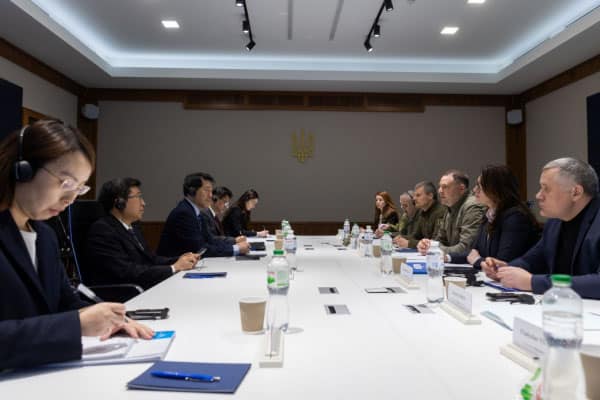
On February 24, the Ukraine crisis marked its two-year anniversary, with ongoing fighting and no sign of abating. The crisis has affected not only Ukraine but also its European neighbors, leading to uncertainty and a crumbling security architecture. The Munich Security Conference last month highlighted concerns about a lose-lose outcome. Both Russia and Ukraine, the parties to the conflict, appear unprepared or unwilling to stop fighting and enter negotiations. There have been efforts to encourage peace talks, including international peace conferences hosted by France and Malta, but without the participation of both conflicting parties, these efforts have seen limited success. Ambassador Li Hui, the Chinese special representative on Eurasian affairs, engaged in shuttle diplomacy, holding talks with officials in Moscow, Kiev, and several European capitals to bridge differences and promote peace. China, under President Xi Jinping, has advocated for respecting sovereignty and territorial integrity, observing UN Charter principles, addressing legitimate security concerns, and supporting peaceful crisis resolution. China aims to promote a negotiated peace and encourages the international community to support peace efforts.