Voters are shifting in search of security

Voters are shifting in search of security

Socially conservative parties, often supported by individuals negatively impacted by globalization, are gaining votes from those who feel left behind economically and culturally. Politicians are perceived as detached from public concerns, contributing to a shift in voter behavior towards prioritizing security and identity issues. This trend benefits right-wing and far-right parties, as voters seek solutions to economic and identity crises, leading to a decline in support for traditional left-wing parties. The economic situation remains a primary voting criterion, but it’s increasingly intertwined with security concerns, especially post-pandemic and due to geopolitical tensions like the war in Ukraine. Voter abstention, particularly among the youth, is rising due to distrust in the political system and a belief that voting does not effect change. The political landscape is witnessing a shift towards more conservative stances on issues like immigration, challenging traditional parties to adapt or risk losing relevance. Social media has transformed political communication, enabling direct interaction between politicians and voters but also increasing scrutiny and the speed at which information spreads. To succeed, political candidates and parties must clearly articulate their unique selling points and effectively communicate them to the electorate, adapting to changing voter preferences.
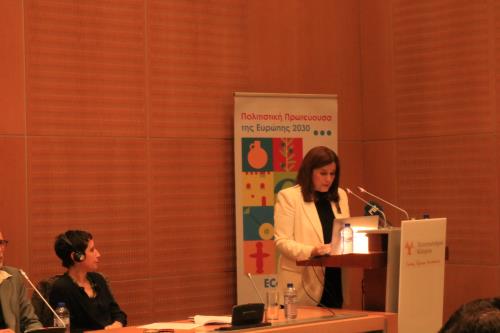

Deputy of Culture: Enormous challenges for European Capital of Culture 2030

Deputy of Culture: Enormous challenges for European Capital of Culture 2030

The first phase of pre-selection of the two most successful proposals will be completed in December 2024, and the second and final selection phase will be completed in late 2025. The Cultural Capital of Europe institution creates enormous challenges and opportunities for both the city that will receive the title and the member state. The title of European Cultural Capital for 2030 will be awarded to a city in Cyprus, a city in Belgium, and a city from a third country that is a candidate or potential candidate for EU membership. The Ministry of Culture is responsible for organizing the competition and selecting the city, and the selected city will receive a contribution of €6.5 million for its operational expenses. The title also includes the possibility of receiving the "Melina Mercouri" award, which includes a cash prize of €1.5 million. The Cultural Capital of Europe institution reminds us that culture must always have a significant place in the strategy of each state, as it can contribute to sustainable development, social inclusion, creativity, and innovation. The selection process includes formal criteria, exclusion and selection criteria, and questionnaires that cities must answer. The criteria for selecting a city are divided into six categories: contribution to the city's long-term strategy, European dimension of the application, cultural and artistic content, implementation capacity, promotion, and management.

€8 mln boost for 2030 Capital of Culture

€8 mln boost for 2030 Capital of Culture

The government of Cyprus has pledged to grant €6.5 million to the town chosen as the “European Capital of Culture for 2030.” Nicosia, Limassol, Larnaca, and Ayia Napa are all competing for the title. The chosen town will also receive a €1.5 million bonus. The funds will cover 60% of the city’s budget for cultural events and activities. Paphos, which was the European Capital of Culture in 2017, received €5 million in funding. The Deputy Minister for Culture, Dr. Vasiliki Kassianidou, believes that the title will bring economic growth and showcase the country’s culture and heritage. The Cypriot capital of culture for 2030 will share the title with one of five Belgian candidates.