Outdoor artworks in Paphos disappear

Outdoor artworks in Paphos disappear

Artworks created and placed in outdoor spaces in Paphos during its time as the European Capital of Culture in 2017 are being denounced by cultural bodies and stakeholders of the city. The Cultural Movement ex-Artis accuses the Paphos Municipality of irresponsibility, claiming that several sculptures are now missing and at risk of being destroyed. Specifically, three sculptures, including works by Rinos Stefani and Herman Pit, are mentioned as missing. Ex-Artis is calling on the Municipality to locate and reposition the missing artworks at their original sites.

The Cypriot village with a language of its own

The Cypriot village with a language of its own

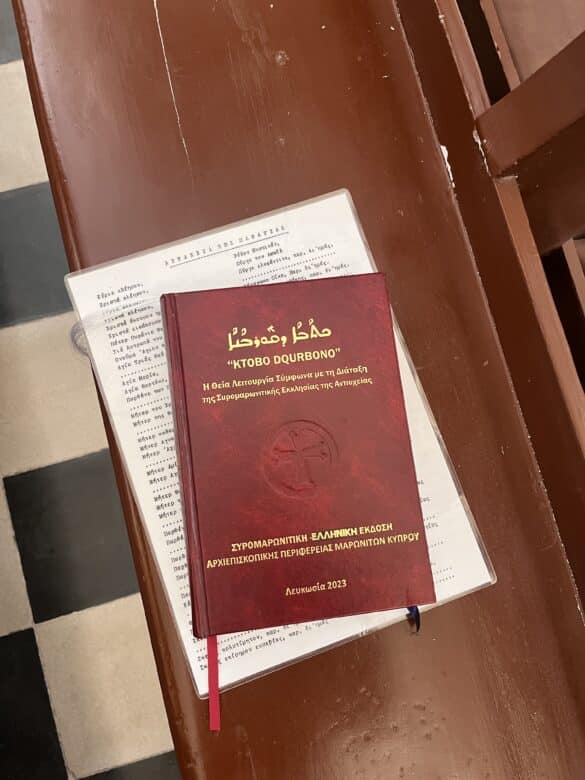
Tom Cleaver visited Kormakitis, a Maronite village in Cyprus, known for its unique language, Sanna, which is a derivative of Arabic brought to the island around 1,200 years ago from Mesopotamia. Kormakitis, once the largest of four majority-Maronite villages, has around 300 residents and is located in Cyprus’ northwestern corner. The village is significant as the spiritual capital of Maronite Cypriots, who are in full communion with the Catholic Church of Rome. The local church features two boxy cuboid bell towers and an interior with a statue of Saint George and writing in the Syriac script. The visit was organized by the Cyprus Bilingualism Association and the Cyprus Linguistics Society to highlight the linguistic uniqueness of Kormakitis.

Open call for artists from the #Nicosia2030 team

Open call for artists from the #Nicosia2030 team

The Nicosia International Festival 2024, co-organized by the Nicosia Municipality and Nicosia For Art, invites proposals from professional artists of Cypriot origin or nationality and organizations operating in Cyprus. The festival will occur from September to December 2024, featuring theatre, contemporary dance, and music performances at the Nicosia Municipal Theatre and Garden, including a Parallel Program. The festival’s philosophy emphasizes supporting young artists, promoting cultural acceptance and inclusion, raising awareness through cultural and artistic expression, presenting the realities of illegal invasion and forced displacement, discussing democracy’s fragility and resilience, and giving a platform to all nationalities and cultures in Nicosia. Proposals must align with these objectives and be submitted electronically by 14 April 2024 at 11:59 p.m.

Limassol street art celebrates Cyprus nature

Limassol street art celebrates Cyprus nature

Italian artist Francesco Camillo Giorgino, known as Millo, is creating eight large-scale murals in Limassol, Cyprus, as part of the Art Square project. These murals, which are being painted on buildings under construction, aim to become a new landmark for Limassol and contribute to the city’s bid to become the European Capital of Culture 2030. The murals, which depict the beauty of Cyprus’s nature and its people, are expected to be completed by April 6. This project marks Millo’s third in Cyprus, following previous works in Yeroskipou in 2022 and Paphos in 2017. Millo’s work is characterized by bright colors, black and white line drawings, and large faces, and can be found worldwide, including in permanent museum collections.

€8 mln boost for 2030 Capital of Culture

€8 mln boost for 2030 Capital of Culture

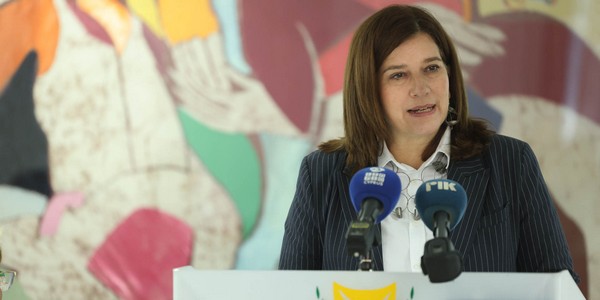
The government of Cyprus has pledged to grant €6.5 million to the town chosen as the “European Capital of Culture for 2030.” Nicosia, Limassol, Larnaca, and Ayia Napa are all competing for the title. The chosen town will also receive a €1.5 million bonus. The funds will cover 60% of the city’s budget for cultural events and activities. Paphos, which was the European Capital of Culture in 2017, received €5 million in funding. The Deputy Minister for Culture, Dr. Vasiliki Kassianidou, believes that the title will bring economic growth and showcase the country’s culture and heritage. The Cypriot capital of culture for 2030 will share the title with one of five Belgian candidates.