Budget 2024 Capital Gains taxation: Corporate tax for foreign companies slashed to 35%, charities, cruise operations taxation revised

Budget 2024 Capital Gains taxation: Corporate tax for foreign companies slashed to 35%, charities, cruise operations taxation revised

Simplifying the tax regime for corporate industries, Union Finance Nirmala Sitharaman on Tuesday, proposed new tax structures for charities, foreign shipping companies, rationalisation of capital gains in her 2024 Budget speech. She also reduced corporate tax on foreign companies from 40 to 35%. Ms. Sitharaman’s speech lasted just shy of ninety minutes Also read: Budget … Read more

Oil and gas will be around , ‘for quite some time’

Oil and gas will be around , ‘for quite some time’

The OPEC+ group of oil producers has extended its production cuts totaling 3.66 mln bpd until 2025, maintaining a controlled supply while taking advantage of the current price of the benchmark Brent crude at over $85/barrel. OPEC forecasts that cumulative oil-related investment requirements from now until 2045 will amount to about $14 trln, or around … Read more

Next UK government will face significant challenges

Next UK government will face significant challenges

Analysis: Morningstar DBRS Just a day to the UK general election on 4th July and a change in government looks imminent. The Labour party has continued to lead in the voting intention polls and if polls prove right, Labour will form the next government. After 14 years of a Conservative-led government, a change to Labour … Read more

Israel aims to boost Red Sea oil deliveries despite environmental risks

Israel aims to boost Red Sea oil deliveries despite environmental risks

Israel plans to allow more oil tankers to dock at a Red Sea port in Eilat despite environmental risks. The government wants to revoke restrictions on the amount of oil that can be unloaded at a jetty in the city, which sits near a coral reef. The curbs imposed in 2021 were eased temporarily during the Gaza war. EAPC, the state-owned company operating the pipeline, wants to receive more oil, but environmental regulators and Eilat’s mayor oppose the plan. Israel is pushing to ensure energy security amid conflicts with various groups. Netanyahu’s office recommended easing restrictions to include fuel for trade and domestic use. The environment ministry expressed concerns about the risks of more oil deliveries and cited past mishaps. EAPC welcomed the government’s U-turn, emphasizing the strategic importance of the Eilat facility for energy delivery. Israel imports most of its oil through seaborne trade, and the Emirati oil deal could be worth about million a year for EAPC. The Energy Ministry emphasized the need to handle oil deliveries properly to sustain the terminal economically.

Hellenic Bank champions green transition at Nicosia summit

Hellenic Bank champions green transition at Nicosia summit

The Green Agenda Cyprus Summit highlighted the vision and actions necessary for the green transition of the Cypriot economy. Hellenic Bank is committed to achieving carbon neutrality by 2050 and has set clear goals and indicators to reduce its environmental footprint. The bank offers specialized green products to combat climate change and improve energy efficiency. Cyprus Agriculture Minister introduced a pilot program for green roofs, and the Energy Minister expressed caution regarding hydrogen usage. European Commissioner for Climate Action emphasized Cyprus’ potential in renewable energy and the importance of investments in sustainable transport. European Commissioner for Health and Food Safety highlighted the health impacts of the climate crisis, including heatwaves and air pollution.

Oil prices under pressure due to slower economies

Oil prices under pressure due to slower economies

Oil prices are trading down due to disappointing economic data and a rise in US crude oil inventories.

‘Cyprus is a reliable business centre’

‘Cyprus is a reliable business centre’

– Cyprus is considered a reliable business center by Commerce Minister George Papanastasiou.
– The Eastern Mediterranean region can play a role in ensuring Europe’s energy security.
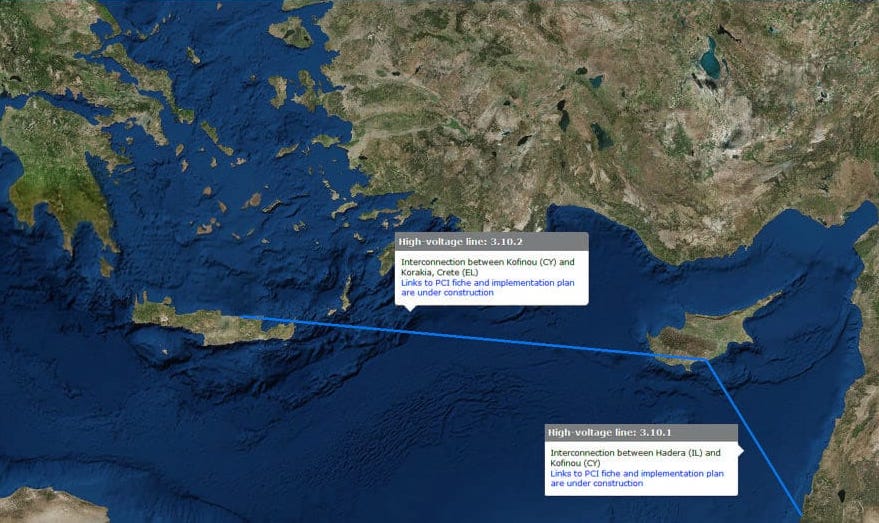
– The Great Sea Interconnector project aims to connect the electricity systems of Cyprus, Greece, and Israel to aid Europe in becoming independent of Russian gas.
– Greek Energy Minister Theodoros Skylakakis warned the Cypriot government about missing deadlines for the interconnector project.
– The Cypriot government is still in the phase of discussing conditions and waiting for Greece’s transmission system operator Admie to submit a cost-benefit analysis of the project.

Great Sea Interconnector will offer , ‘triple energy benefits’

Great Sea Interconnector will offer , ‘triple energy benefits’

The Great Sea Interconnector project will offer triple benefits to Cyprus, including better energy security, a ‘green mix’ of power generation, and cheaper energy for all consumers.

Egypt, ’s natgas woes continue

Egypt, ’s natgas woes continue

Egypt is unlikely to export any LNG to Europe this summer due to declining production at the Zohr field, which is prioritizing domestic energy needs.

Oil prices to keep on rising

Oil prices to keep on rising

– The oil price is now over /barrel due to tight supply, increasing demand, Middle East conflict, and Houthi attacks on vessels in the Red Sea, with expectations of further increases.
– The International Energy Agency (IEA) now predicts a global oil supply deficit throughout 2024, reversing its earlier forecast of a surplus.
– The IEA and OPEC agree on supply deficits due to OPEC+ cuts and rising global demand.
– The IEA forecasts a crude consumption increase of 1.3 million barrels per day (b/d) this year, while OPEC maintains its growth estimate at 2.25 million b/d for 2024.
– The US is producing more crude oil than any other country, averaging 12.9 million b/d in 2023, with Saudi Arabia and Russia close to 10 million b/d.
– Oil and gas executives expect a slower transition to net-zero due to geopolitical turmoil, macroeconomic conditions, and AI.
– Shell aims to reduce its net carbon intensity by 15%-20% by 2030, adjusting from its previous goal of 20%.
– Adnoc and BP suspended their billion bid for a stake in Israel’s NewMed Energy due to the conflict in Gaza but remain interested.
– Adnoc and BP announced a new joint venture centered on Egypt on 14 February.
– European refineries may have a profitable future due to elevated margins for refined oil products like diesel and gasoline, amidst war in Ukraine and Red Sea tensions.
– On 13 March, Ukraine conducted drone strikes on Russian refineries, reducing refining capacity by 370,500 b/d.
– Falling refining capacity has increased diesel premiums ahead of crude by about /b.
– By 2026, Europe will have reduced its crude distillation capacity by about 7% compared to 2020, becoming more reliant on imports of refined products and more vulnerable to supply shocks.
– The IEA and OPEC continue to have contrasting biases in oil market forecasts.
– CERAWeek in Houston saw top oil executives and ministers discuss the energy sector, with less pressure for a large-scale move to clean fuels.
– ExxonMobil CEO Darren Woods emphasized the cost concerns in reducing emissions.
– Shell CEO Wael Sawan highlighted the critical role of LNG in Shell’s future.
– Saudi Aramco’s CEO criticized the energy transition approach, advocating for efficient hydrocarbon use.
– US Secretary of Energy Granholm emphasized meeting current energy needs while preparing for future realities.
– Wind turbine blades, which can’t be recycled, are accumulating in landfills.
– Methane emissions from the energy sector remained near a record high in 2023, according to the IEA.
– Germany has opened its first EUR 4 billion bidding round for ‘Carbon Contracts for Difference’ for industrial users to switch to green hydrogen or other low-emissions technology.
– Engie urges caution on the pace of hydrogen deployment in hard-to-abate industries.
– Global greenhouse gas emissions from food systems are growing, with livestock being the biggest driver.
– Jim Skea of the IPCC stated the world is in ‘unknown territory’ after heat records were broken, indicating more science is needed to understand extraordinary temperatures.