Anger, anxiety, acrimony: Slovaks weigh what led to Fico shooting

Anger, anxiety, acrimony: Slovaks weigh what led to Fico shooting

Slovak opposition party leader Michal Simecka, his wife, and child received death threats following an assassination attempt on Prime Minister Robert Fico. The shooting highlighted deep political divides and toxic debate in Slovakia, with politicians calling for tolerance. Fico’s rapid policy changes raised concerns over the rule of law, leading to increased tensions and anxiety among the population. The suspect in the shooting targeted government policies on Ukraine, corruption, and public media reforms. Anxiety has grown in Slovakia since the parliamentary election campaign, with President Zuzana Caputova receiving death threats. The upcoming European elections have added to the unease, reflecting a global trend of increasing aggression in politics.

Slovakia’s PM Fico undergoes another operation

Slovakia’s PM Fico undergoes another operation

Slovakia’s Prime Minister Robert Fico underwent a two-hour operation that has increased hopes for his recovery following an assassination attempt. Deputy Prime Minister Robert Kalinak stated that a decision to transfer Fico back to Bratislava would only be made when there is further improvement in his condition. The suspect charged with attempted murder is a 71-year-old former security guard and author of poetry, but his identity has not been officially confirmed. The shooting has been condemned internationally and has highlighted a febrile and polarized political climate in Slovakia and Europe. Hungarian Prime Minister Viktor Orban, an ally of Fico, stated that even if Fico recovers fully, he may be unable to work for months during a critical time for Europe.

The far-right has already been normalised

The far-right has already been normalised

The rise of the far-right is becoming normalized in Cyprus and beyond, with political parties adopting its rhetoric in an attempt to tame it. This normalization is not exclusive to Cyprus or Greece, as far-right parties are gaining power in countries like Italy, Hungary, France, the Netherlands, Germany, Portugal, Spain, Romania, Slovakia, Czechia, Belgium, the USA, and Argentina. The far-right’s communication skills and appeal in a conspiracy-obsessed society are contributing to its success, raising concerns about a return to pseudo-eugenic and misanthropic theories reminiscent of the Middle Ages.

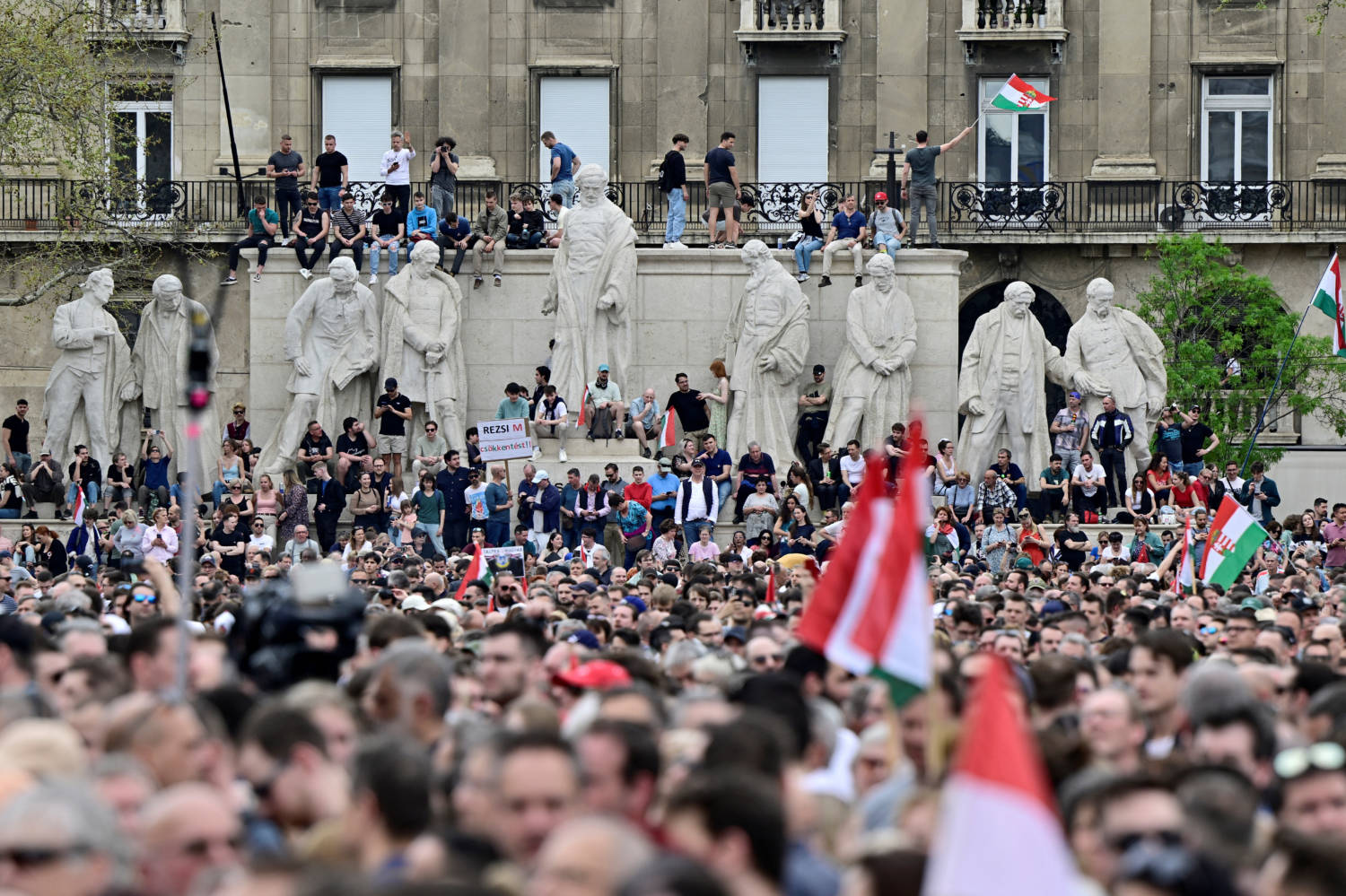
Tens of thousands march in Budapest against Orban

Tens of thousands march in Budapest against Orban

Tens of thousands protested against Viktor Orban’s government in Budapest, led by lawyer Peter Magyar, who plans to launch his own party. Protesters marched to parliament shouting for Orban to resign, wearing national colors and flags. Magyar, a former insider, revealed corruption within the government, sparking investigations. 68% of voters are aware of Magyar’s political movement, with 13% likely to support his party.