The far-right has already been normalised

The far-right has already been normalised

The rise of the far-right is becoming normalized in Cyprus and beyond, with political parties adopting its rhetoric in an attempt to tame it. This normalization is not exclusive to Cyprus or Greece, as far-right parties are gaining power in countries like Italy, Hungary, France, the Netherlands, Germany, Portugal, Spain, Romania, Slovakia, Czechia, Belgium, the USA, and Argentina. The far-right’s communication skills and appeal in a conspiracy-obsessed society are contributing to its success, raising concerns about a return to pseudo-eugenic and misanthropic theories reminiscent of the Middle Ages.

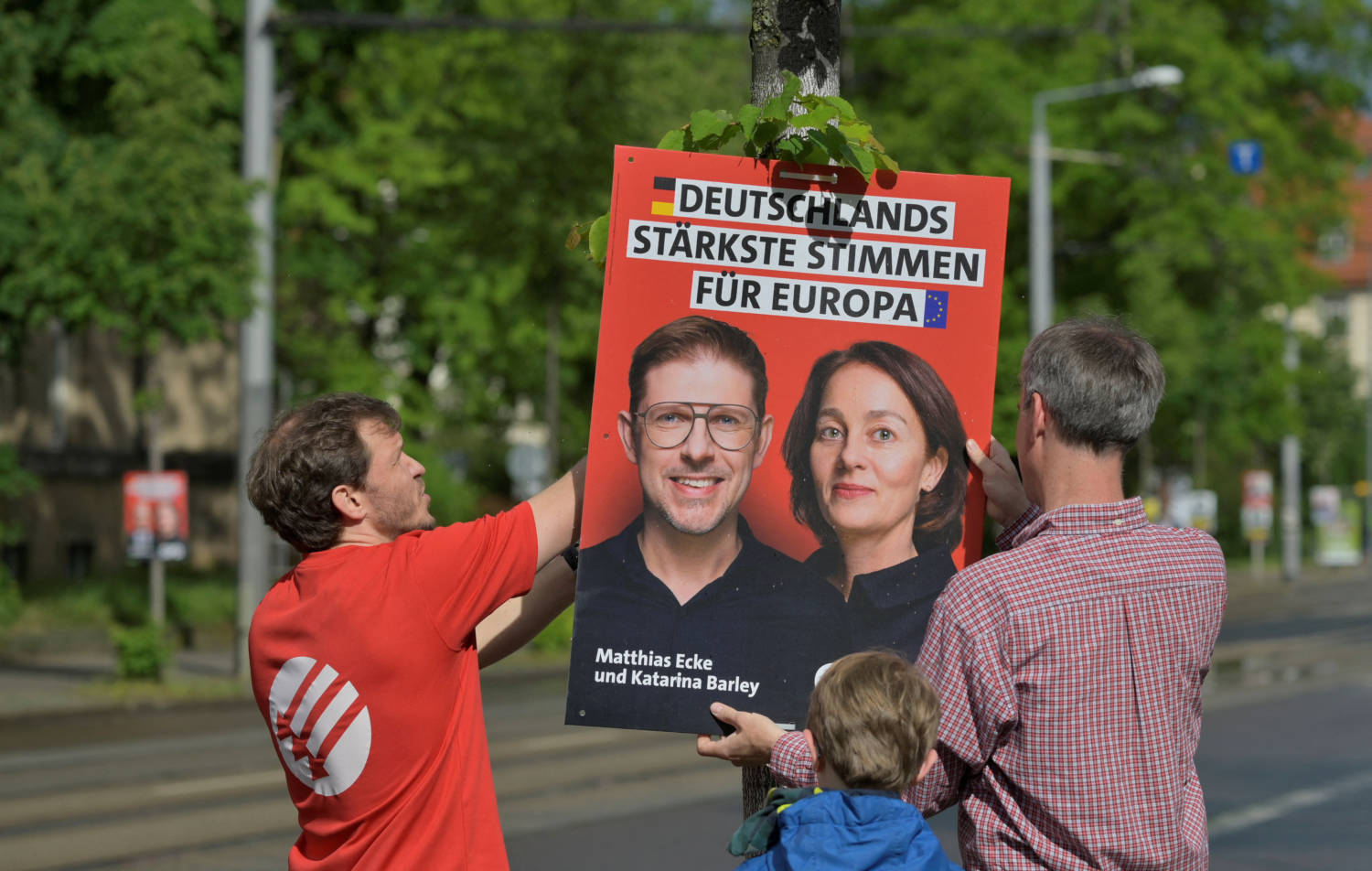
Why German politicians are facing growing violence

Why German politicians are facing growing violence

Fact: Verbal and physical attacks on politicians in Germany have more than doubled since 2019, with the Greens party reporting the highest number of incidents last year.

Analysis: Why German politicians are facing growing violence

Analysis: Why German politicians are facing growing violence

German politicians have been experiencing a surge in physical and verbal attacks, with 22 assaults reported so far in 2024 compared to 27 in all of 2023. The Green party has been the most targeted, with 1,219 incidents reported last year, followed by the far-right Alternative for Germany (AfD) party with 478 incidents. The rise in confrontations is attributed to the divisive rhetoric of populist politics, affecting the overall mood and safety of politicians. The attacks have led to concerns about the impact on election outcomes and have prompted some politicians to take precautions, such as avoiding publicizing campaign events and increasing security measures.

Hard right wants more EU power to reflect likely election gains

Hard right wants more EU power to reflect likely election gains

French right-wing lawmaker Jean-Paul Garraud expects nationalist and eurosceptic parties to gain influence in the upcoming EU assembly election. Polls predict radical right parties will increase their seats across the EU, including France, Germany, and Italy. Garraud anticipates far-right parties could have positions in committees or even hold key roles in the European Parliament, allowing them to influence policies related to green initiatives, free trade, and immigration. The rise of radical right parties is fueled by a growing gap between mainstream parties and distrustful voters, as well as concerns over issues such as the cost of living, illegal migration, and changing geopolitical dynamics. Critics warn that the influence of the hard right could weaken Europe and potentially lead to closer ties with China and Russia.

Analysis: TikTok’s popularity among European politicians rises despite security fears

Analysis: TikTok’s popularity among European politicians rises despite security fears

Simon Harris, Ireland’s prime minister-in-waiting, has embraced TikTok to connect with younger voters, despite security concerns about the Chinese-owned platform. European politicians like French President Macron and German Health Minister Lauterbach have also joined TikTok to reach a wider audience. Mainstream parties are feeling pressured to engage with TikTok to prevent fringe parties like the AfD from dominating the platform. Concerns about data privacy and influence from China persist, but politicians are finding ways to use TikTok effectively while addressing these issues.

Rich and retired: the boom beneficiaries who finance Germany’s far right

Rich and retired: the boom beneficiaries who finance Germany’s far right

Germany has seen a decline since the 1970s, with the far-right Alternative for Germany (AfD) party gaining support. The party relies on private donations, with wealthy, elderly backers like Hartmut Issmer, who gave 250,000 euros last year. These donors, mainly businessmen, have views they are unafraid to share and are disproportionately influential. AfD’s treasurer mentioned a positive trajectory for donations, but if the party fails to replace its ageing donor base, that could change. The party is under scrutiny for extremism and racism, making it toxic for potential sympathizers. Mainstream parties receive more significant donations from large companies and associations compared to the AfD.

Germany’s far-right AfD seeking to overturn extremist designation in court

Germany’s far-right AfD seeking to overturn extremist designation in court

The Alternative for Germany (AfD) party attempted to delay a court hearing regarding its classification as a suspected extremist organization by the Federal Office for the Protection of the Constitution (BfV), a German security agency. This classification, made in 2021, allows the BfV to use intelligence tools against the AfD. A ruling in favor of the BfV would permit continued surveillance of the AfD, impacting the party ahead of regional and European elections. The AfD, which holds 78 of the 735 seats in the Bundestag, claims to be a democratic, non-extremist party, despite some regional branches being declared extremist threats. The party’s lawyer sought to summon BfV leadership to discuss a report on the party, which the BfV states is incomplete. The court rejected the AfD’s request for more time and the dismissal of the judge panel. The AfD faces scrutiny after senior members attended a meeting discussing the “remigration” of “unintegrated” citizens, leading to protests and corporate concern. A broadcaster reported that AfD legislators employed over 100 people with extremist links, a claim the AfD denies. The court in Muenster is expected to issue a ruling after two days of hearings.

Berlin Film Festival jury questions move to uninvite far right

Berlin Film Festival jury questions move to uninvite far right

The Berlin Film Festival’s jury members criticized the decision to withdraw invitations to hard-right politicians from the Alternative for Germany (AfD) party. The politicians were initially invited to the opening ceremony but had their invites withdrawn after it was revealed that they had discussed deportations of ethnic minorities at a secret meeting. The jury members, including German director Christian Petzold and Italian actor Jasmine Trinca, argued that the decision hindered open discussion and that cinema has the power to change people’s perspectives. The AfD party criticized the decision, claiming that it marginalized and stigmatized democratically elected representatives. The jury members also faced questions about current affairs, including Russia’s missile attacks, but tried to steer the conversation back to cinema.

Support for Germany’s far-right AfD reaches six-month low after protests

Support for the Alternative for Germany (AfD) dropped below 20% for the first time since July, according to a poll. The drop in support comes after nationwide protests against the far-right party over the past three weeks. The AfD dropped one percentage point to 19% in the poll, remaining in second place behind the main opposition conservatives. The protests against the AfD gained momentum after news reports that two senior party members had discussed plans for mass deportation of citizens of foreign origin. German companies and their CEOs have also warned about the threat of right-wing extremism to the country’s economy. The popularity of the AfD is seen as damaging Germany’s reputation as an export nation. The AfD had previously placed first in recent polls in three eastern German states holding elections this year.

Germany – Holocaust Remembrance Day: 'Never Again' for Every Day – Mass Demonstrations Against the Far Right

Germany - Holocaust Remembrance Day: 'Never Again' for Every Day - Mass Demonstrations Against the Far Right

Over 300 protests have been planned in cities and villages across Germany this weekend, according to the alliance "Together against the far right". The protests are in response to the strong mobilization of citizens against the extreme right. Demonstrations have already taken place in cities such as Kiel, where 11,500 people gathered, and Dusseldorf, where tens of thousands of people gathered. The protests aim to honor the victims of National Socialism and protest against the rise of the far right.