After World Court ruling, Palestinians want action, not words

After World Court ruling, Palestinians want action, not words

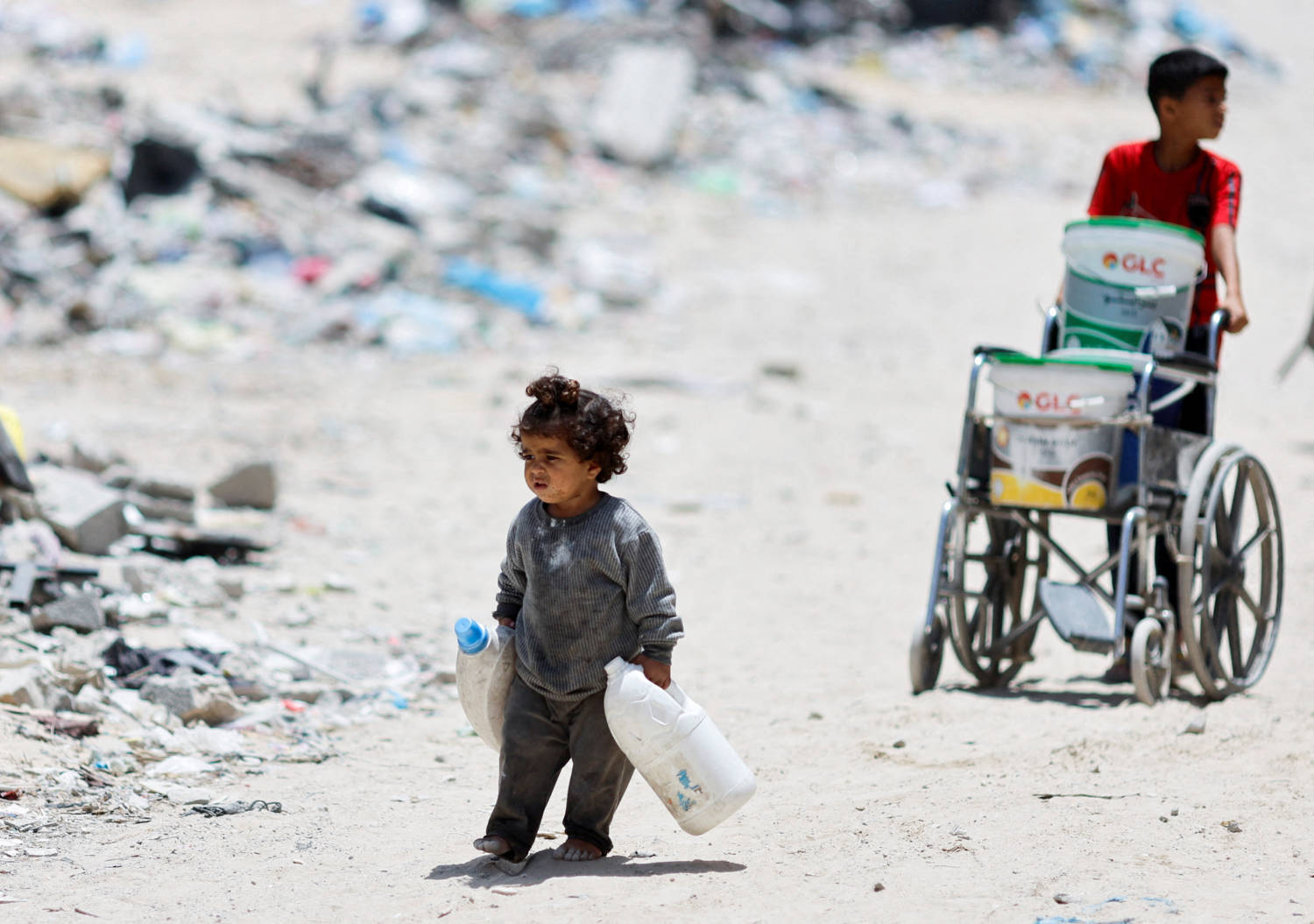
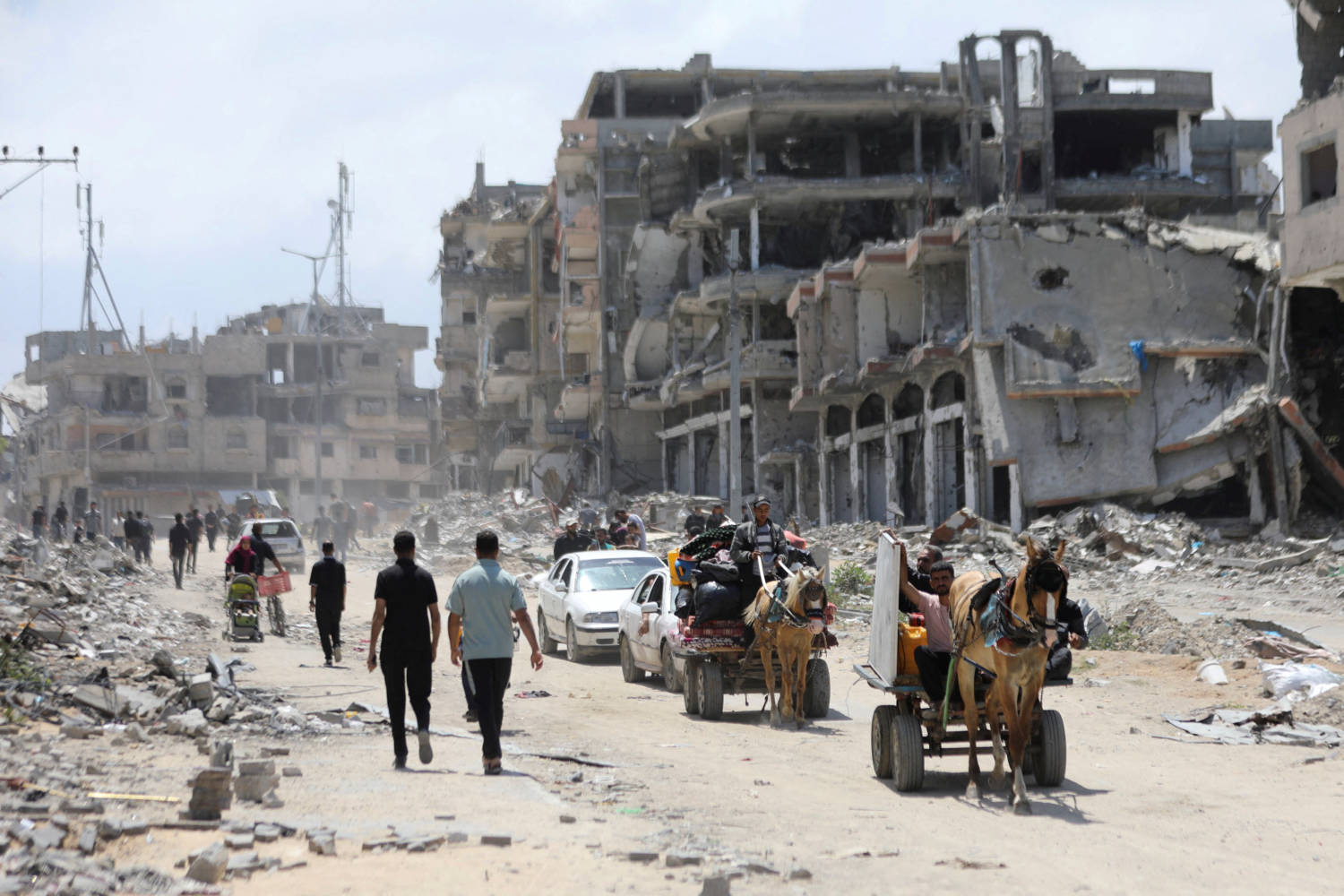
Salwa al-Masri, displaced by Israel’s offensive in Gaza, doubts that the UN’s ruling to halt the offensive in Rafah will help. The World Court ordered Israel to stop the offensive, but Israel stated it will continue the war against Hamas. The conflict has caused a high number of casualties and a new wave of displacement. Palestinians are calling for immediate action to end the war.

World Court orders Israel to stop Rafah offensive

World Court orders Israel to stop Rafah offensive

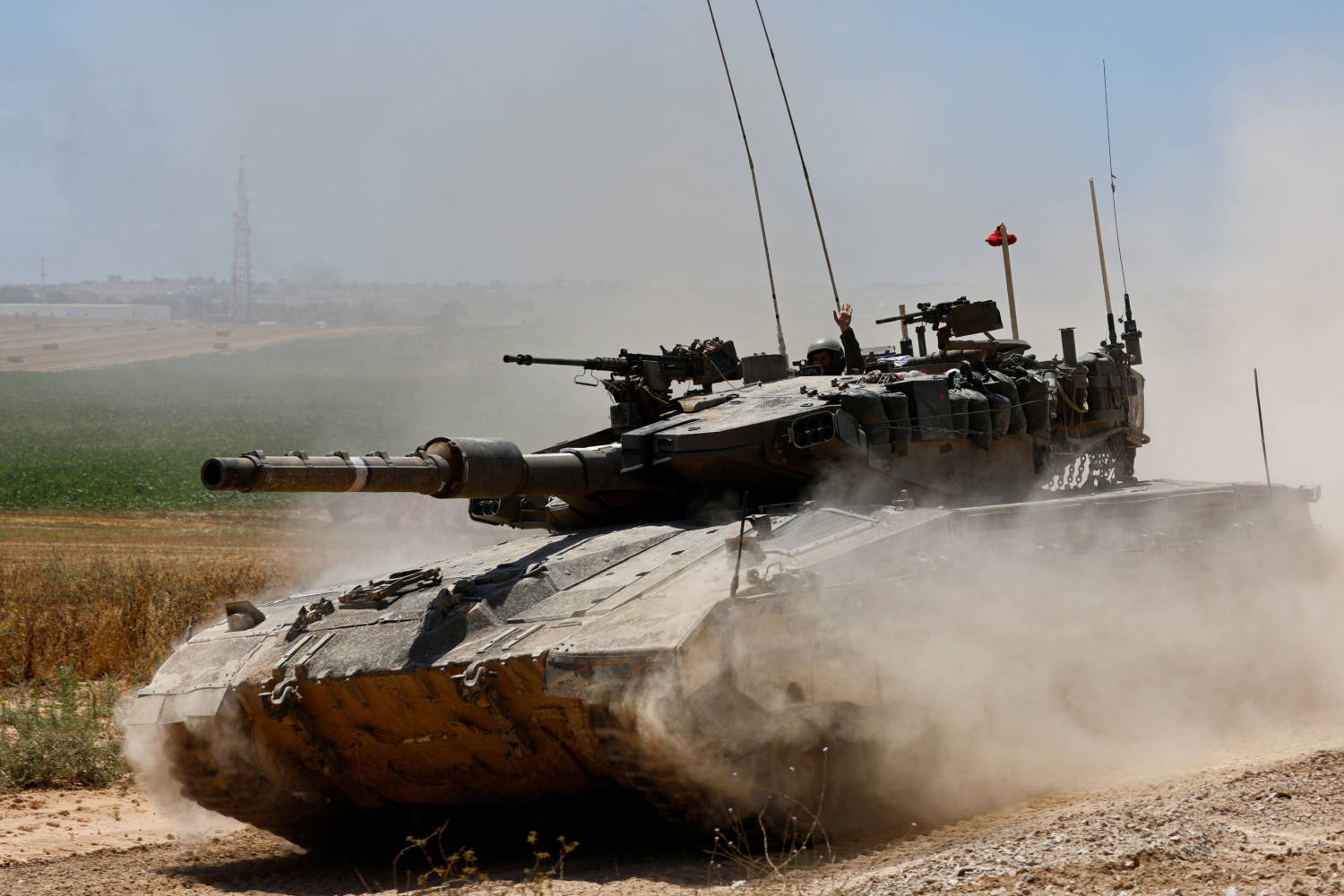
Judges at the International Court of Justice ordered Israel to immediately halt its military assault on the southern Gaza city of Rafah. The court backed a South African request to stop Israel’s offensive in Rafah, with Israel arguing its operations are self-defense against Hamas militants. Israel’s assault on Rafah has forced hundreds of thousands of Palestinians to flee, cutting off aid and raising the risk of famine. The court’s rulings are final and binding, but lack enforcement powers. Israel faces diplomatic pressure and accusations of crimes against humanity at the International Criminal Court. Israel denies charges of genocide and continues its military operations in Gaza.

World Court to rule on Friday on measures over Israel’s Rafah offensive

World Court to rule on Friday on measures over Israel’s Rafah offensive

The International Court of Justice will rule on South Africa’s request to order a halt to Israel’s Rafah offensive in Gaza. South Africa accused Israel of genocide and demanded emergency measures to protect Rafah and allow access to Gaza for humanitarian aid. Israel launched the assault on Gaza after militants stormed into southern Israel, resulting in numerous casualties. The International Criminal Court has requested arrest warrants against Israeli Prime Minister Benjamin Netanyahu and others for alleged war crimes.

Germany denies complicity in Gaza genocide at U.N. court

Germany denies complicity in Gaza genocide at U.N. court

Germany denied allegations of aiding genocide in Gaza by selling arms to Israel, with a lawsuit filed by Nicaragua at the U.N. court. Germany is a major arms supplier to Israel but claims its exports are scrutinized for adherence to international law. The country emphasizes its responsibility to both Israeli and Palestinian people, with a focus on Israel’s security due to historical reasons. An ICJ ruling on Nicaragua’s case is expected in weeks, but enforcing it may take years.

Farah Nabulsi: Cinema holds a powerful role in addressing oppressions

Farah Nabulsi: Cinema holds a powerful role in addressing oppressions

Farah Nabulsi started her career as an institutional equity stockbroker but transitioned to filmmaking in her late 30s after visiting Palestine. She founded Native Liberty Productions to highlight injustices faced by Palestinians. Her work, including the short film “The Present,” has received international acclaim. Nabulsi’s latest film, “The Teacher,” will be screened at the Cyprus Film Days International Festival. She believes cinema plays a crucial role in addressing oppressive realities and hopes to contribute to a narrative that inspires change.

Nicaragua seeks to halt German arms exports to Israel at World Court

Nicaragua seeks to halt German arms exports to Israel at World Court

Nicaragua has asked the International Court of Justice to order Germany to stop military arms exports to Israel and to resume funding for the U.N. Palestinian refugee agency UNRWA, citing a serious risk of genocide in Gaza. Germany denies the allegations and states it has not violated international law. Germany is a major arms exporter to Israel, sending 326.5 million euros in military equipment in 2023. Since October 7, over 33,000 Palestinians have been killed in Israel’s military offensive in Gaza. Germany has resumed some funding to UNRWA in certain regions, but not in Gaza.

Venezuela creates new state in territory under dispute with Guyana

Venezuela creates new state in territory under dispute with Guyana

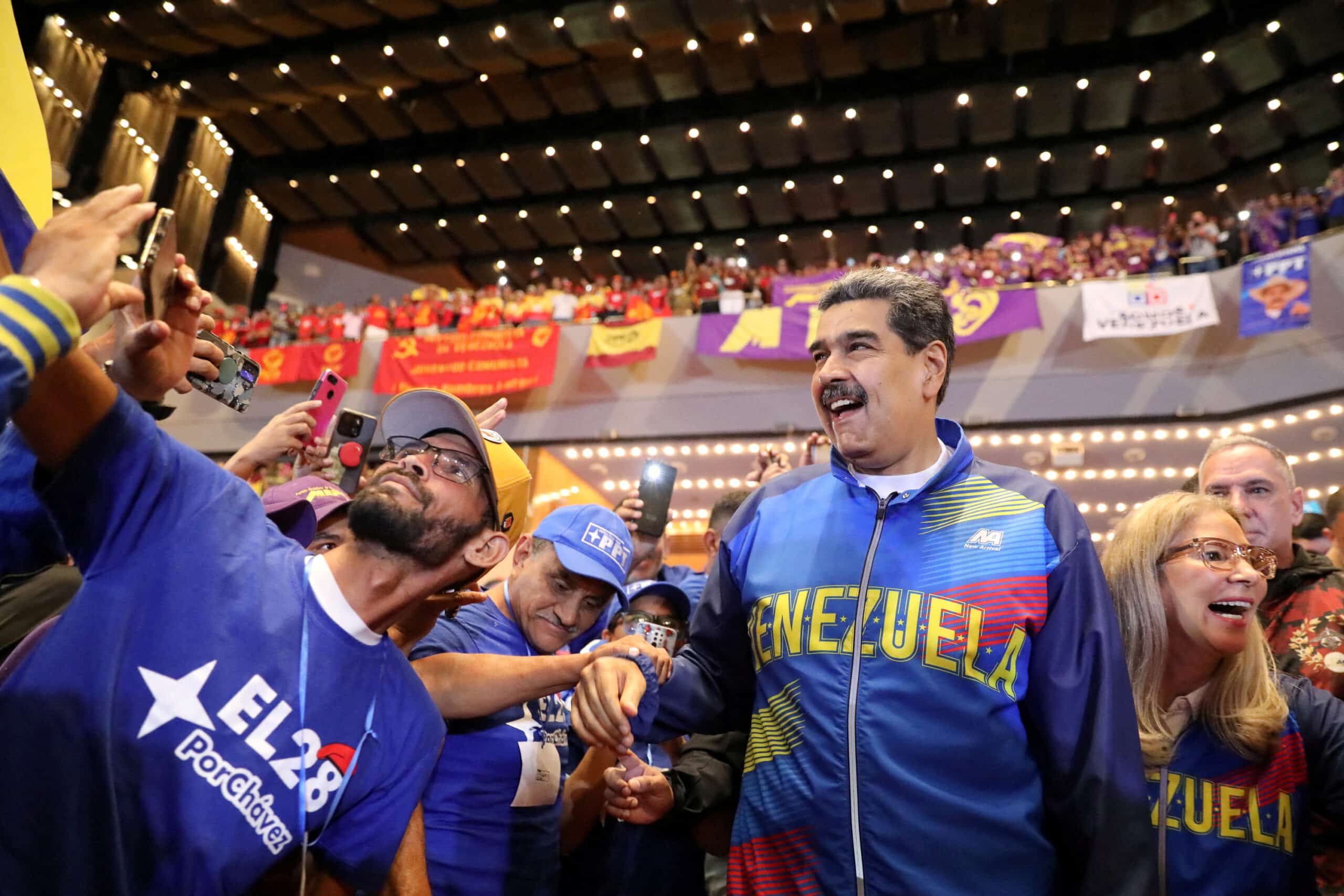
Lawmakers in Venezuela allied with President Nicolas Maduro approved the creation of a new state in the Esequibo region, which is disputed with Guyana. This decision aligns with Maduro’s claims over the 160,000-square-km territory but has no immediate effect. Venezuela and Guyana agreed to avoid force and not escalate tensions after a meeting between Maduro and the Guyanese leader. Despite an International Court of Justice (ICJ) case pending on the territory’s ownership, Venezuela does not recognize the ICJ and cites a December referendum, which allegedly had over 10 million voters, as justification for its actions, including oil exploration in Esequibo. Guyana maintains its borders are non-negotiable and will defend its sovereignty. The new state, named Guayana Esequiba, will have its temporary capital in Tumeremo, Bolivar, and its creation will be official upon publication in the gazette. Its borders will be the Atlantic Ocean, Brazil, Guyana, and the Venezuelan states of Delta Amacuro and Bolivar. This move comes as Venezuela revives its claim to the territory following significant oil and gas discoveries.
South Africa: court ruling against Israel a victory for rule of law

South Africa: court ruling against Israel a victory for rule of law

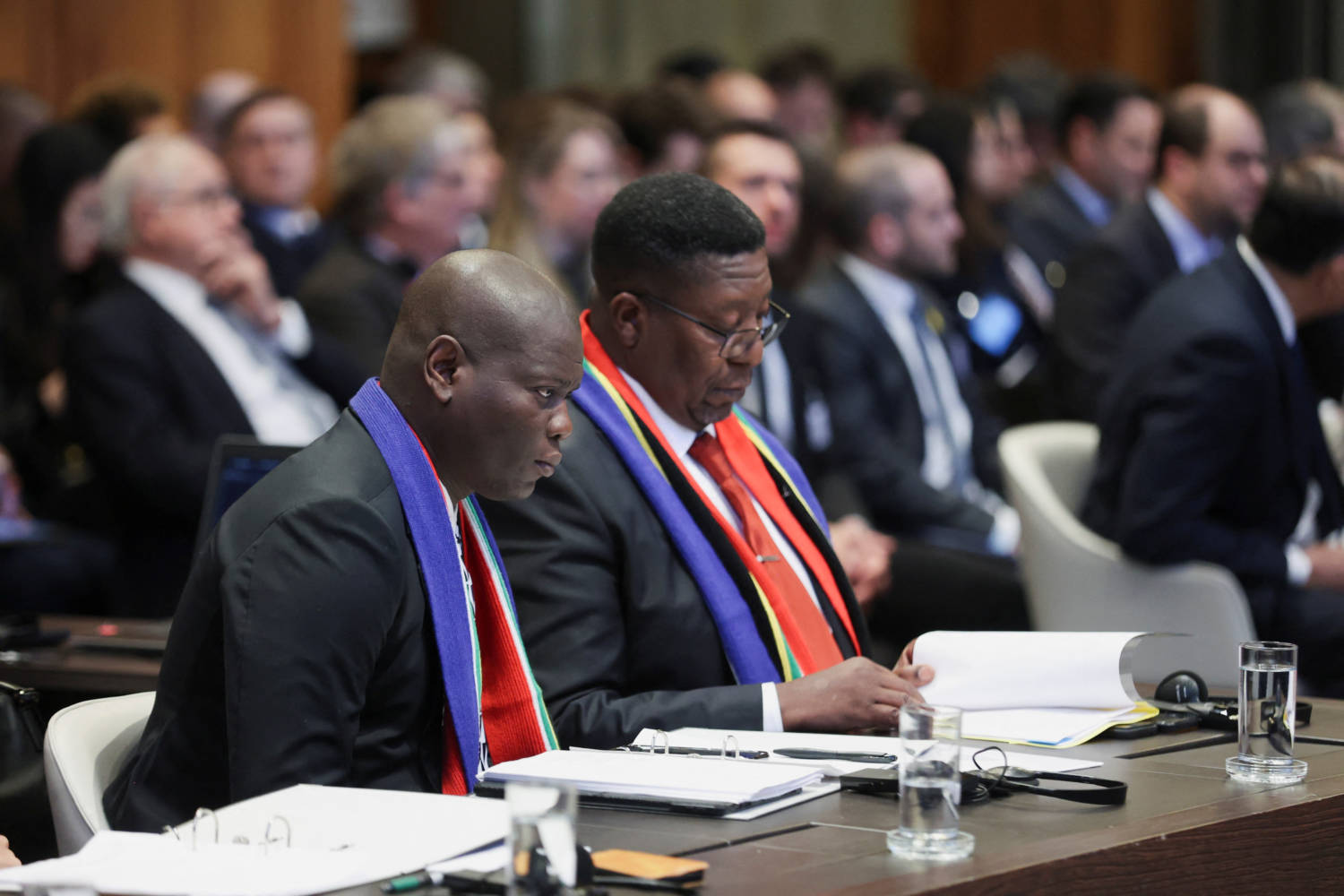
The International Court of Justice ruled in favor of South Africa’s request to impose emergency measures against Israel over its military operations in Gaza. The court ordered Israel to prevent acts of genocide against Palestinians and do more to help civilians. The court has not yet ruled on whether genocide has occurred in Gaza. South Africa hailed the ruling as a victory for international rule of law and expressed hope that Israel would comply with the order. Israel has called the allegations false and stated its efforts to avoid civilian casualties. South Africa stated it would continue to protect the rights of Palestinians in Gaza through global governance institutions.