Reports of ‘horrifying’ mass casualties in Rafah, UNRWA says [PHOTOS]

Reports of ‘horrifying’ mass casualties in Rafah, UNRWA says [PHOTOS]

UNRWA described reports of attacks on families seeking shelter in Rafah as “horrifying”. Israeli air strikes killed at least 35 Palestinians in a designated area for the displaced in Rafah. The Israeli military targeted Hamas officials in Rafah, causing civilian casualties. The International Committee of the Red Cross reported an influx of casualties in Rafah. The Israeli military continued operations in Rafah despite a U.N. court ruling. Hamas fired rockets in response to Israeli attacks. Nearly 36,000 Palestinians have been killed in Israel’s offensive in Gaza.
After World Court ruling, Palestinians want action, not words

After World Court ruling, Palestinians want action, not words

Salwa al-Masri, displaced by Israel’s offensive in Gaza, doubts that the UN’s ruling to halt the offensive in Rafah will help. The World Court ordered Israel to stop the offensive, but Israel stated it will continue the war against Hamas. The conflict has caused a high number of casualties and a new wave of displacement. Palestinians are calling for immediate action to end the war.

Israel pushes further into parts of north Gaza; new cracks in Netanyahu coalition

Israel pushes further into parts of north Gaza; new cracks in Netanyahu coalition

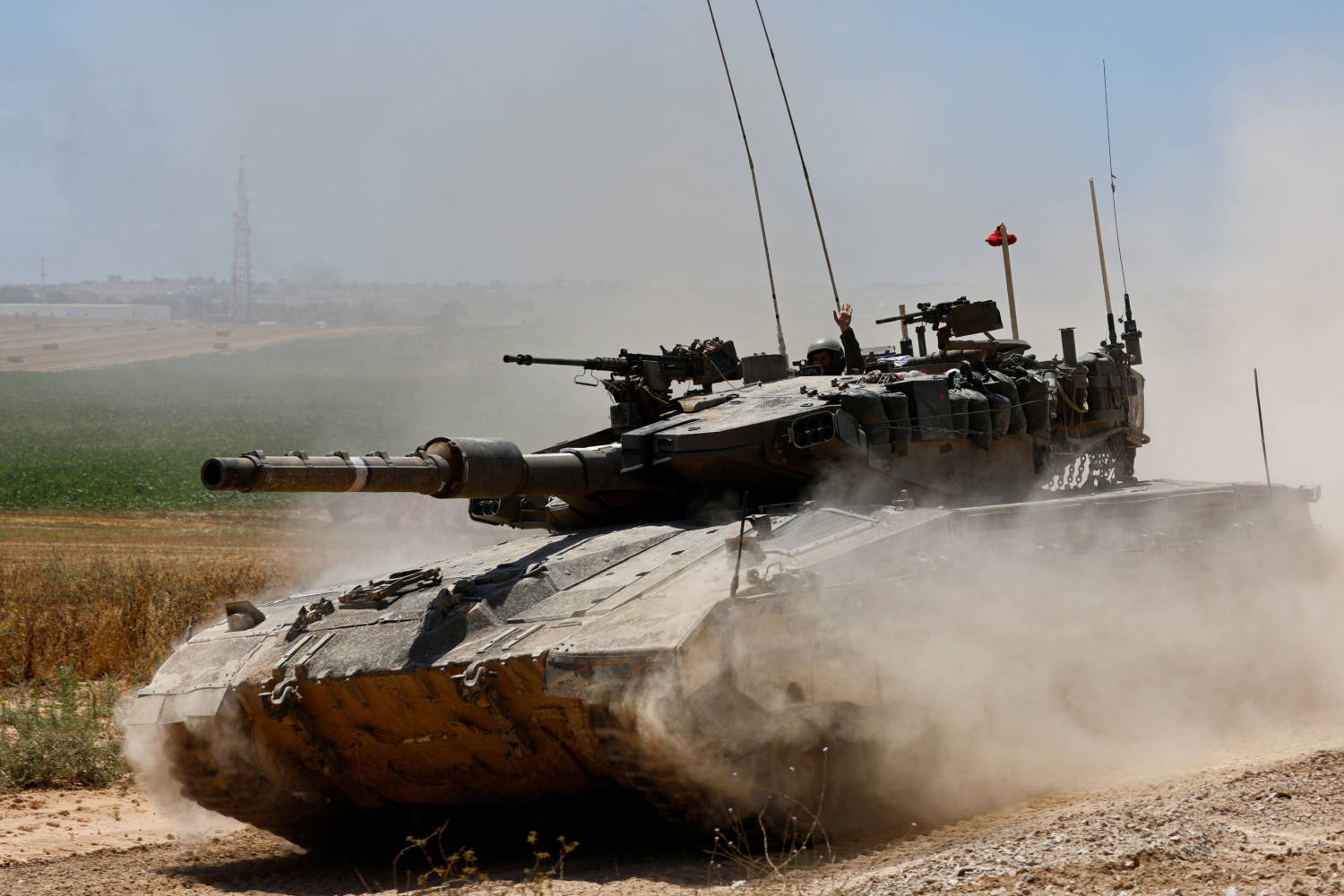
Israeli troops and tanks entered parts of the northern Gaza Strip, killing and wounding dozens of Palestinians. The Israeli forces also took over ground in Rafah, a city by the Egyptian border. Benny Gantz threatened to resign if Netanyahu does not agree to a post-war plan for Gaza by June 8. The recovery of the body of a hostage taken by Hamas triggered the latest incursions. Israeli forces have continued operations in Gaza, conducting precise operations against terrorists and infrastructure. Netanyahu has faced criticism for failing to articulate an endgame in the war. Gantz proposed a six-point plan for Gaza’s civil administration. The strain on Israel’s coalition has increased, with demands for clarity on post-war plans. Armed groups attacked Israeli forces in Jabalia and Rafah, resulting in casualties on both sides. Israel’s military reported 281 soldiers killed in fighting, while over 35,000 Palestinians have been killed in Israeli strikes. UNRWA stated that nearly 800,000 Palestinians have fled Rafah since the ground operation began. Israel aims to capture Rafah to destroy Hamas and ensure security.

US will not take part in retaliatory action against Iran, White House says

US will not take part in retaliatory action against Iran, White House says

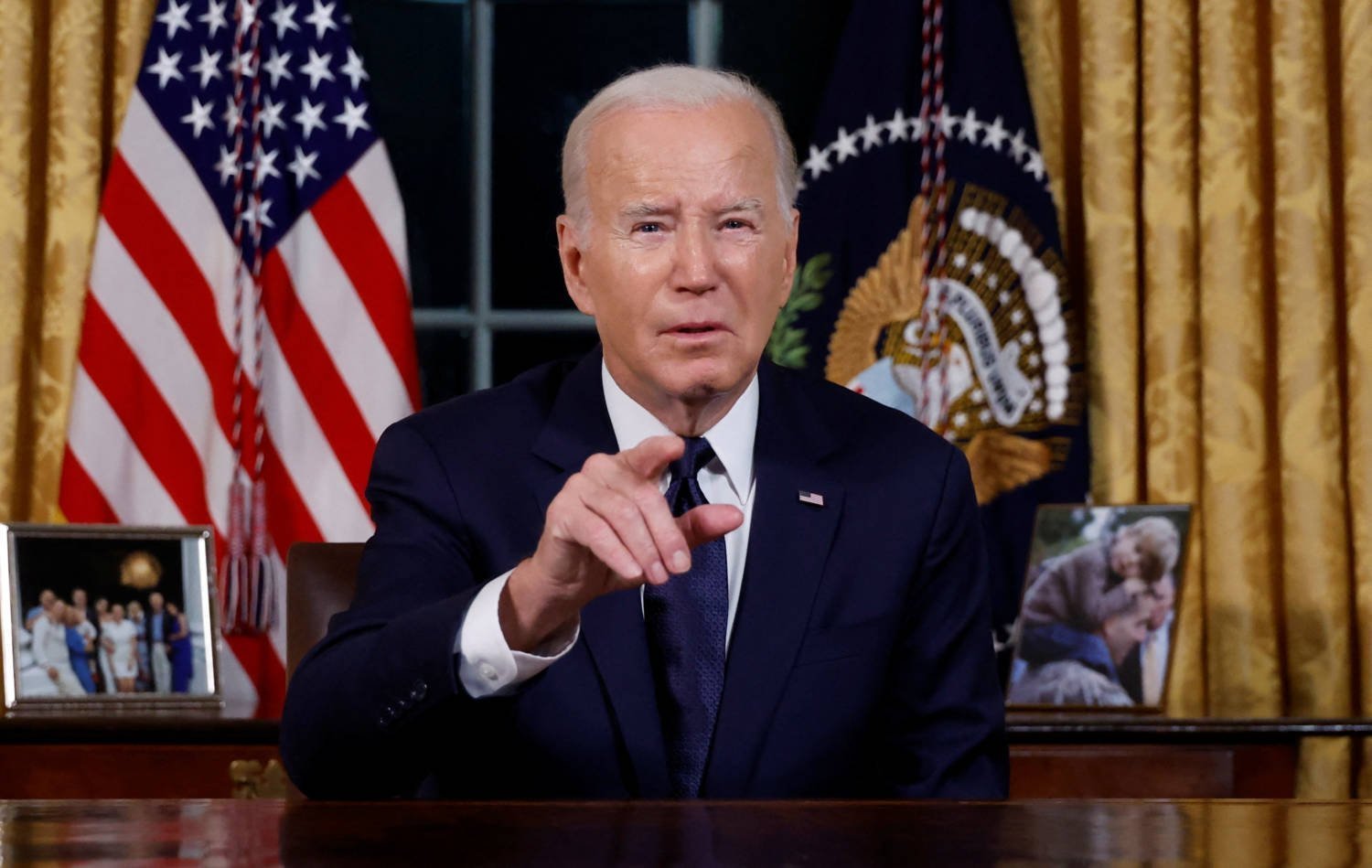
President Joe Biden warned Prime Minister Benjamin Netanyahu that the U.S. would not participate in a counter-offensive against Iran if Israel decides to retaliate for a mass drone and missile attack on Israeli territory overnight. The threat of open warfare between the two countries has caused global powers and Arab nations to urge restraint to avoid further escalation. The U.S. will continue to help Israel defend itself but does not want war, according to the White House’s top national security spokesperson. Iran launched the attack in response to a suspected Israeli strike on its consulate in Syria, causing only modest damage in Israel as most missiles were shot down with the help of the U.S., Britain, and Jordan. Israel is not planning an immediate retaliation and is seeking to build a regional coalition to address the threat posed by Iran.

Netanyahu coalition under strain after standoff with US over Gaza vote

Netanyahu coalition under strain after standoff with US over Gaza vote

Israeli Prime Minister Benjamin Netanyahu is facing strains within his coalition due to disagreements over proposals to draft ultra-Orthodox Jews into the military. The cabinet meeting to discuss changes to the conscription law was called off, and Netanyahu’s relations with U.S. President Joe Biden worsened after a disagreement over a U.N. Security Council resolution on Gaza. Despite support from his religious-nationalist coalition partners, there is pressure internationally on the government. The divide over the conscription law highlights the longstanding divide between secular and religious Israelis.

Split in Israel coalition points to return of politics as normal

Split in Israel coalition points to return of politics as normal

– A centrist bloc in Israel’s unity government led by former defence minister Benny Gantz has dissolved.
– This development is increasing pressure on Prime Minister Benjamin Netanyahu during the ongoing Gaza war, which has lasted for five months.
– Gideon Saar, a former justice minister and ex-member of Netanyahu’s Likud party, left the partnership with Gantz to form a separate centre-right bloc in parliament.
– The coalition shifts, including Saar’s move, are common in Israeli politics and are not expected to immediately affect the government’s stability.
– Analysts interpret the breakup as a sign of a return to the usual political dynamics in Israel, highlighting a growing divide between right-wing and center-left factions.
– Gantz, considered a strong candidate for Israel’s next prime minister, recently made unapproved visits to Washington and London, causing upset among right-wing and religious nationalist coalition partners.
– Gantz has called for unity in the government and suggested that elections should be held after the war to allow candidates to present their contributions to the country.
– A poll by Channel 12 showed increasing support for early elections, with 50% of right-wing voters in favor, and Gantz’s National Unity Party leading over Likud by a significant margin.