Who you gonna call? The 80s!

Who you gonna call? The 80s!

– Hollywood is capitalizing on nostalgia by making comebacks of 80s movies.
– The original “Road House” movie, released in 1989, starred Patrick Swayze and has become a cult classic over the years.
– A reimaging of “Road House” stars Jake Gyllenhaal as Elwood Dalton and features UFC fighter Conor McGregor.
– “Beverly Hills Cop,” released in 1984, starred Eddie Murphy and was a significant success, leading to a trilogy.
– In 2019, Netflix acquired the rights for “Beverly Hills Cop” and contracted Eddie Murphy for a fourth film titled “Beverly Hills Cop: Axel F,” where Murphy’s character returns to protect his daughter.
– “Ghostbusters: Frozen Empire” is a sequel to the 2021 reboot, with Paul Rudd and Finn Wolfhard returning, and features Kumal Nanjiani and Patton Oswalt.
– “Beetlejuice” (1988) is getting a sequel titled “Beetlejuice Beetlejuice,” with Michael Keaton, Catherine O’Hara, and Winona Ryder returning, and Jenny Ortega joining the cast.

First circumnavigation of Cyprus for 50 years

First circumnavigation of Cyprus for 50 years

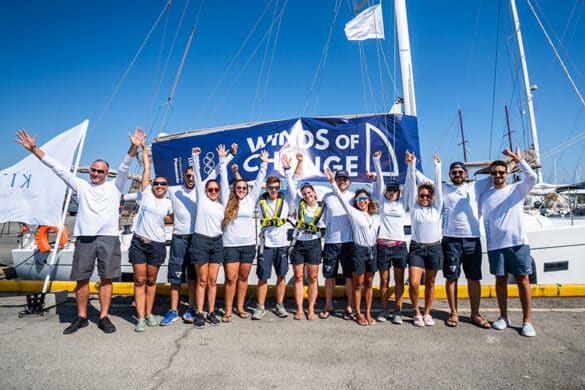
On September 21, 2023, a crew led by IOC Young Leader Sophia Papamichalopoulos completed a circumnavigation of Cyprus, a feat not achieved in over 50 years. The project, named Winds of Change, involved young Greek and Turkish Cypriots sailing around the entire island to promote peace-building and dialogue. The journey took almost 70 hours, covering 326.9 nautical miles, and ended on the International Day of Peace. The initiative has gained international attention, with a documentary set to be released at the Paris Olympics.

Pushing out plastic in consumer-goods packaging

Pushing out plastic in consumer-goods packaging

Cellulose fibers are being used as a sustainable packaging option for various products including foods and electronics. Retailers Carrefour and U-Group, in Belgium, France, and Luxembourg, plan to test packaging made from cellulose fibers for items like yogurts, cheeses, and juices in 30 to 60 stores by the end of the year. This initiative is part of the R3PACK project, funded by the EU, aiming to replace plastic packaging with fiber-based alternatives. The project involves food producers and packagers like Candia and Thiolat and is set to expand to thousands of stores by May 2025. Europe generates nearly 190 kilograms of packaging waste per person annually, with almost a fifth being plastic in 2021. The R3PACK team is also exploring reusable packaging options. A Swedish startup, Yangi, has developed a competitive cellulose-based packaging using a less energy- and water-intensive manufacturing process called “dry forming.” This new packaging can be recycled in existing paper-recycling systems. In December 2023, EU governments agreed to amend legislation on packaging waste to promote reuse and recyclability, aligning with the European Green Deal’s circular economy goals.

Cyprus , ‘paved the way’ for Gaza aid corridor

Cyprus , ‘paved the way’ for Gaza aid corridor

The Cypriot ‘Amalthia’ initiative aims to establish a maritime humanitarian aid corridor to Gaza, with a meeting attended by officials from 36 countries and international organizations discussing this effort. The initiative has received approximately EUR 80 million in pledges and has already dispatched one shipment from Larnaca port. U.S. army engineers plan to build a jetty in Gaza for receiving aid cargoes. Curtis Ried, Chief of Staff for the U.S. National Security Council, commended Cyprus for leveraging its strategic position for humanitarian purposes. The meeting focused on addressing the food crisis in Gaza amid ongoing conflict. The United States and other participants committed to addressing material and financial gaps, with plans for continued dialogue and collaboration. A secretariat is to be established in Cyprus to coordinate donor efforts effectively. The European Union is expected to contribute EUR 70 million, with the Netherlands pledging EUR 10 million. World Central Kitchen has shipped and distributed around 200 tonnes of food and aid to northern Gaza, with plans for more shipments. Preparations for a second vessel, the ‘Jennifer’, carrying about 500 tonnes of aid, are underway. U.S. troops are set to build a temporary port off the coast of Gaza to facilitate the delivery of supplies, with the mission expected to arrive around April 15. The temporary pier, part of a U.S. commitment to aid Gaza, will enable the transfer of humanitarian aid from larger to smaller ships for onshore distribution and is expected to be operational within sixty days, capable of offloading up to two million meals or bottles of water daily. Israel will assist in anchoring the pier, and security plans for the temporary port have been established.

The dangers of looking your best

The dangers of looking your best

– Fast fashion involves making and selling cheap clothes with short lifespans at mass volumes.
– Fast fashion has significant environmental costs and can contain toxic chemicals such as PFAS, azo dyes, phthalates, and formaldehyde.
– Approximately 8,000 synthetic chemicals are used in the fast fashion manufacturing process, with residues remaining on the garments.
– Azo dyes, restricted in the EU, can be absorbed through the skin, causing health issues.
– Trainers, popular for their comfort and style, can lead to poor foot posture and the widening of feet if worn excessively.
– Platform trainers can strain the feet and gait, while sock sneakers are most likely to lead to sprained ankles.
– Waist trainers, popularized by celebrities, can improve posture but may cause water loss, muscle atrophy, gastrointestinal issues, respiratory problems, and fainting due to prolonged wear.
– Heavy earrings can cause elongation and thinning of the earlobe, potentially leading to splitting, with lobe surgery becoming a common corrective procedure.
– Large hoop earrings can get caught in hair and clothes, posing a risk of tearing the earlobe.
– Thongs can cause intimate irritation and chafing, especially if made from synthetic fabrics, but well-fitting thongs made from natural fibers can be comfortable if worn with good hygiene practices.

Eight aircraft to combat fires

Eight aircraft to combat fires

The Forestry Department plans to combat fires this year with eight aircraft and over 800 forest firefighters, anticipating challenges due to climate change. A tender for leasing two firefighting aircraft, with an option for two more, has been issued with a €19.3 million budget, valid until 2027. These aircraft can carry up to 3,000 liters of water and 60 liters of foam, with the additional two carrying up to 2,500 liters of water and the same amount of foam. Currently, two of the department’s aircraft are not operational due to maintenance and repairs, but there are two leased helicopters and additional helicopters from the National Guard, Police, and potentially from Jordan and the British Bases for emergencies. The deputy director of the Forestry Department, Savvas Iezekiel, mentioned the impact of climate change and wars on the availability of firefighting aircraft and stated plans to purchase aircraft through the Recovery and Resilience Plan and national funds to reduce reliance on leased aircraft.

Tragic tale of Cyprus turtle

Tragic tale of Cyprus turtle

The beaches of north Cyprus have the second worst microplastic pollution in the world. The majority of turtles born in Cyprus are female due to the sex of a turtle being determined by the warmth of its nest, with warmer beaches resulting in fewer males being hatched. Climate change has increased sea temperatures, exacerbating this issue, especially in the Eastern Mediterranean where seas are warming 20% more quickly than the global average. Conservation efforts include shading or relocating nests and incubating eggs in controlled conditions to balance the sex ratio. Microplastics raise the temperature of the sand, negatively affecting turtle hatchlings, and larger plastics pose ingestion and entanglement risks to sea creatures. Research suggests that roughly one in 10,000 turtles survive to maturity. Jessica Mills, an executive at Intrepid Travel and author, has written a children’s book to raise awareness about marine pollution and the importance of protecting sea turtles. The book, “Wendy Wanderlust Wakes Up in Cape Greco,” has sold internationally and part of its proceeds go towards turtle conservation efforts in Cyprus.

Salty foods are making people sick

Salty foods are making people sick

Christopher Damman highlights that high levels of salt can harm the microbiome by poisoning beneficial microbes. Salt has been used historically for food preservation due to its ability to inhibit unwanted microbial growth while promoting desired bacterial growth, crucial in the development of fermented foods. Excessive salt intake, common in modern diets, is linked to various health issues including high blood pressure, heart attacks, strokes, stomach and colon cancer, Ménière’s disease, osteoporosis, and obesity. Sodium influences blood pressure by regulating water within blood vessels, and recent research suggests it also affects blood pressure by altering the gut microbiome, leading to decreased healthy microbes and metabolites that reduce inflammation and maintain relaxed blood vessels. High sodium diets are associated with metabolic disorders, obesity, and can increase cravings, potentially due to its interaction with the gut microbiome and the release of the gut hormone GLP-1. Efforts to reduce salt intake include national salt reduction initiatives and industry guidance for reduced salt in processed foods. Limiting consumption of highly processed foods and focusing on low-sodium, high-potassium, and high-fiber foods can support a healthy microbiome.

Dams below 50 per cent capacity despite adverse weather

Dams below 50 per cent capacity despite adverse weather

– Rainfall in February was only 48% of the average for that time of year, and temperatures were 2.1 degrees Celsius above normal.
– From October 2023 to February 2024, total rainfall was approximately 280.4mm, or 75% of normal.
– During the same period, 20 million cubic metres of rain flowed into reservoirs, which is below desirable levels.
– Reservoirs are at 47% capacity compared to 69% the previous year, containing 138 million cubic metres compared to over 200 million cubic metres going into the summer of 2023.
– The Kouris dam is at 40.8% capacity, Kalavasos at 30.3%, Lefkara at 63%, Asprokremmos at 55.6%, and Evretou at 54.6%.
– Inflow into reservoirs this winter has been low.
– It is unlikely there will need to be water cuts this summer, but there will be limits on the quantity given to agriculture.
– Measures are being promoted to inform farmers about improved irrigation practices and the maximum utilisation of reclaimed water.
– February’s weather included torrential rain, hail, snow in the mountains, and even a tornado, but these did not significantly contribute to reaching normal levels of rainfall for the month.
– Rainfall in Stroumbi in Paphos was 20% of the normal for February, while in Kelokedara it was 122% of the average. In the Larnaca district, rainfall ranged from 56% of normal in Meniko to 114% in Athienou.
– A tornado hit Yermasoyia on February 14, causing significant damage to houses, properties, and the electricity network, resulting in power cuts in several areas of Limassol.
– Nicosia district experienced flooding in the Potami area and damage in Kampos village due to bad weather.
– Torrential rain later in the month caused problems in Astromeritis, Evrycho, Agia Marina Xyliatou in Nicosia, and in Kofinou in Larnaca. The Kilrou dam also overflowed.
– The bad weather affected the entire island from February 13-18, impacting traffic flow on highways.
– Most weather stations recorded their highest maximum temperatures on February 6, 13, 25, and 29, reaching 16C and 17C. Only February 1 and 5 had temperatures below normal.