Hottest June since 1991, orange warning

Hottest June since 1991, orange warning

Cyprus recorded the hottest June in 23 years, with inland temperatures reaching an infernal 43.6 degrees Celsius on Wednesday, and expected to rise further to a record 44C on Thursday. The Met Office issued an Orange Alert saying that maximum temperatures on Thursday are expected to reach around 43-44 degrees Celsius over the central plain … Read more

S.,  Africans vote in most competitive election since end of apartheid

S.,  Africans vote in most competitive election since end of apartheid

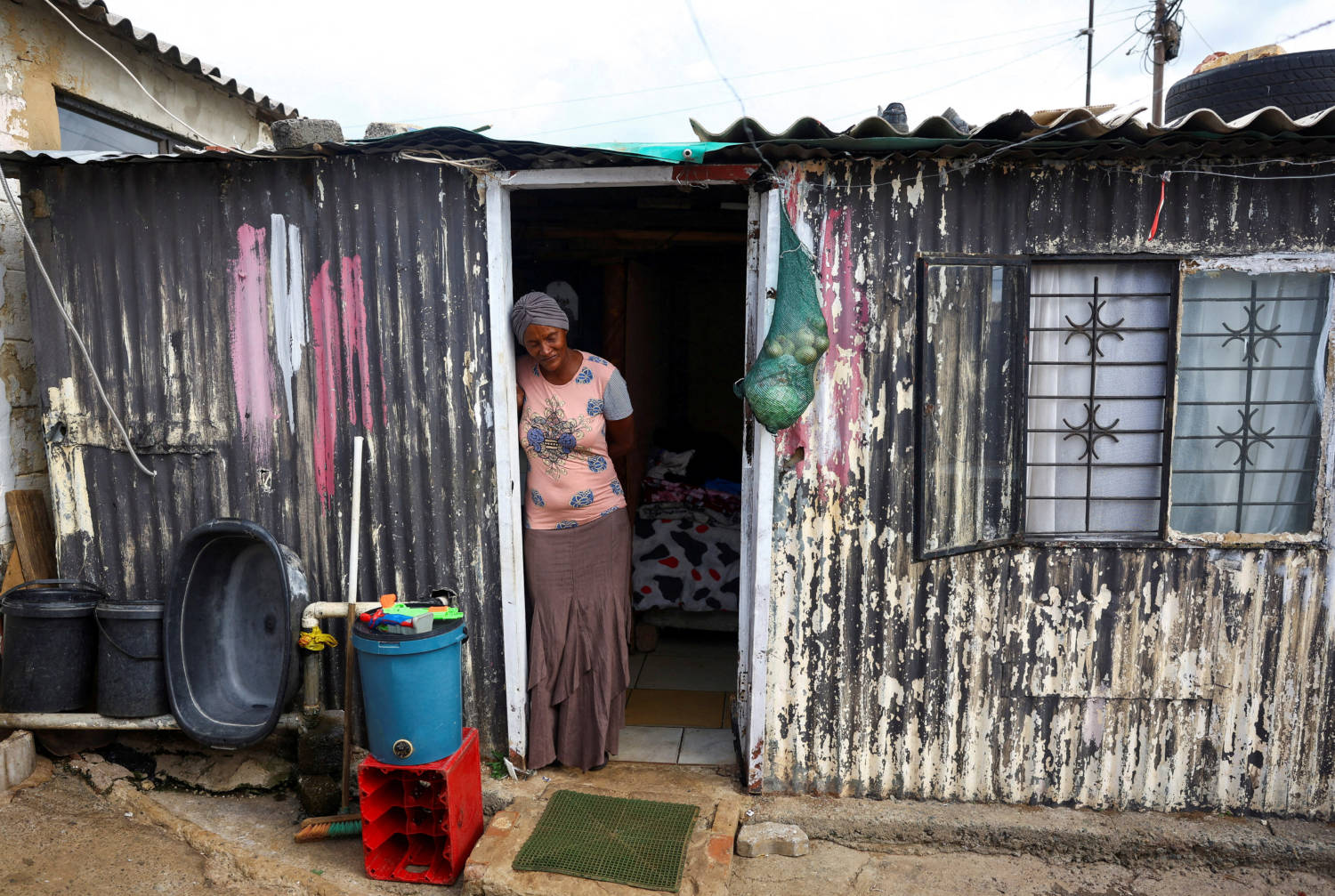
South Africans voted in a competitive election where the African National Congress (ANC) could lose its parliamentary majority after 30 years in government.

FACTBOX-Key issues for South African voters in wide open 2024 election

FACTBOX-Key issues for South African voters in wide open 2024 election

South Africans will vote in a national election on May 29 with uncertainty about the outcome, as polls suggest the African National Congress may lose its majority after 30 years in power. Key issues include high unemployment rates, sluggish economic growth, power cuts, corruption scandals, high rates of violent crime, and rising anti-immigrant sentiment. The government is working to address these issues, with a focus on job creation, economic growth, and tightening immigration laws.

Dams below 50 per cent capacity despite adverse weather

Dams below 50 per cent capacity despite adverse weather

– Rainfall in February was only 48% of the average for that time of year, and temperatures were 2.1 degrees Celsius above normal.
– From October 2023 to February 2024, total rainfall was approximately 280.4mm, or 75% of normal.
– During the same period, 20 million cubic metres of rain flowed into reservoirs, which is below desirable levels.
– Reservoirs are at 47% capacity compared to 69% the previous year, containing 138 million cubic metres compared to over 200 million cubic metres going into the summer of 2023.
– The Kouris dam is at 40.8% capacity, Kalavasos at 30.3%, Lefkara at 63%, Asprokremmos at 55.6%, and Evretou at 54.6%.
– Inflow into reservoirs this winter has been low.
– It is unlikely there will need to be water cuts this summer, but there will be limits on the quantity given to agriculture.
– Measures are being promoted to inform farmers about improved irrigation practices and the maximum utilisation of reclaimed water.
– February’s weather included torrential rain, hail, snow in the mountains, and even a tornado, but these did not significantly contribute to reaching normal levels of rainfall for the month.
– Rainfall in Stroumbi in Paphos was 20% of the normal for February, while in Kelokedara it was 122% of the average. In the Larnaca district, rainfall ranged from 56% of normal in Meniko to 114% in Athienou.
– A tornado hit Yermasoyia on February 14, causing significant damage to houses, properties, and the electricity network, resulting in power cuts in several areas of Limassol.
– Nicosia district experienced flooding in the Potami area and damage in Kampos village due to bad weather.
– Torrential rain later in the month caused problems in Astromeritis, Evrycho, Agia Marina Xyliatou in Nicosia, and in Kofinou in Larnaca. The Kilrou dam also overflowed.
– The bad weather affected the entire island from February 13-18, impacting traffic flow on highways.
– Most weather stations recorded their highest maximum temperatures on February 6, 13, 25, and 29, reaching 16C and 17C. Only February 1 and 5 had temperatures below normal.

Possible power cuts across much of island

Possible power cuts across much of island

The Electricity Authority (EAC) warned of potential power outages in parts of the Larnaca, Nicosia, and Famagusta districts due to a serious failure of a generator at the Dhekelia power station. The outages are expected to be intermittent and short, lasting up to 30 minutes. This was the second consecutive day such a warning was issued. The EAC apologized for any inconvenience and is working to resolve the issue. They also urged consumers to limit electricity use, especially during peak hours between 6pm and 9pm, and advised properties with backup generators to ensure they are operational.