Cyprus faces water shortage as reservoirs reach critical levels

Cyprus faces water shortage as reservoirs reach critical levels

Cyprus is facing a severe water shortage with reservoir levels at a record low. The lack of rainfall has left many dams below average capacity, with the largest dam, Kouris, holding only 41.9 million cubic meters of water compared to 61 million last year. Overall, national water storage is at just 42.1% of capacity, down from 65.6% last year. The situation is expected to worsen as temperatures rise in the approaching summer months.

Cyprus was inhabited earlier than previously thought

Cyprus was inhabited earlier than previously thought

Fact: The study suggests that large groups of hundreds or thousands of people arrived in Cyprus in two or three main migration events across the span of less than 100 years.

What, ’s on this weekend

What, ’s on this weekend

Fact: Live music performances, traditional spring festivals, and pop-up markets are happening in towns and cities this weekend in Cyprus.

Dams below 50 per cent capacity despite adverse weather

Dams below 50 per cent capacity despite adverse weather

– Rainfall in February was only 48% of the average for that time of year, and temperatures were 2.1 degrees Celsius above normal.
– From October 2023 to February 2024, total rainfall was approximately 280.4mm, or 75% of normal.
– During the same period, 20 million cubic metres of rain flowed into reservoirs, which is below desirable levels.
– Reservoirs are at 47% capacity compared to 69% the previous year, containing 138 million cubic metres compared to over 200 million cubic metres going into the summer of 2023.
– The Kouris dam is at 40.8% capacity, Kalavasos at 30.3%, Lefkara at 63%, Asprokremmos at 55.6%, and Evretou at 54.6%.
– Inflow into reservoirs this winter has been low.
– It is unlikely there will need to be water cuts this summer, but there will be limits on the quantity given to agriculture.
– Measures are being promoted to inform farmers about improved irrigation practices and the maximum utilisation of reclaimed water.
– February’s weather included torrential rain, hail, snow in the mountains, and even a tornado, but these did not significantly contribute to reaching normal levels of rainfall for the month.
– Rainfall in Stroumbi in Paphos was 20% of the normal for February, while in Kelokedara it was 122% of the average. In the Larnaca district, rainfall ranged from 56% of normal in Meniko to 114% in Athienou.
– A tornado hit Yermasoyia on February 14, causing significant damage to houses, properties, and the electricity network, resulting in power cuts in several areas of Limassol.
– Nicosia district experienced flooding in the Potami area and damage in Kampos village due to bad weather.
– Torrential rain later in the month caused problems in Astromeritis, Evrycho, Agia Marina Xyliatou in Nicosia, and in Kofinou in Larnaca. The Kilrou dam also overflowed.
– The bad weather affected the entire island from February 13-18, impacting traffic flow on highways.
– Most weather stations recorded their highest maximum temperatures on February 6, 13, 25, and 29, reaching 16C and 17C. Only February 1 and 5 had temperatures below normal.

Kalavasos archaeologists discover ancient room

Kalavasos archaeologists discover ancient room

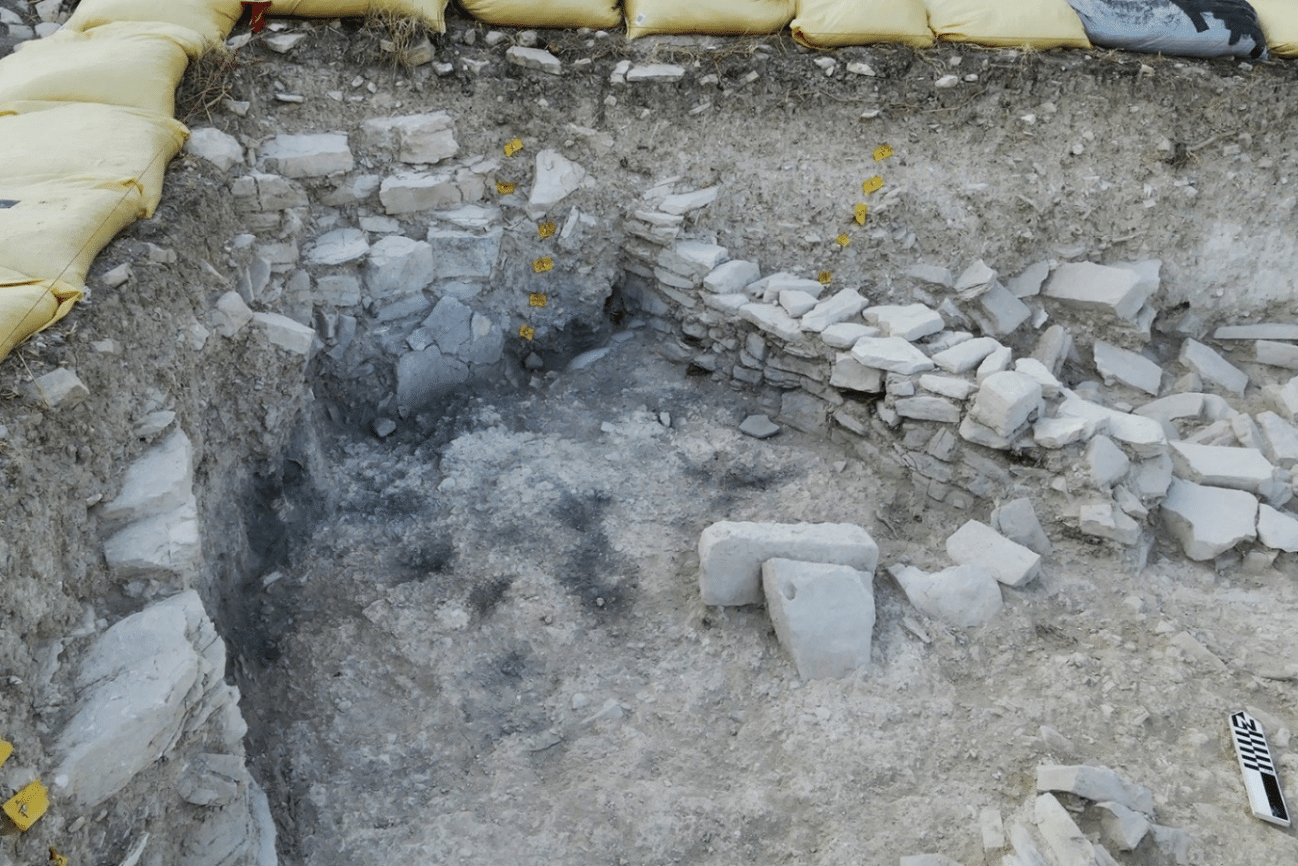
An ancient room and other artefacts were discovered during archaeological excavations at the Kalavsos-Laroumena site near Larnaca in 2023. The discoveries were made in two trenches, each measuring 16 square meters. The archaeologists found multiple large drystone walls containing pottery. One wall had thick ash and charcoal deposits, indicating the presence of architectural structures on the Laroumena hillside during the Middle Cypriot period, rather than agricultural use. One of the walls was notably thick, measuring 90 centimeters. Items such as spindle whorls, shell beads, a stone pendant, and pottery were found. Evidence of stone toolmaking was also observed, suggested by the large number of worked stone flakes and blades found near the site.

Kalavasos archaeologists discover ancient room

Kalavasos archaeologists discover ancient room

An ancient room and other artefacts were discovered at the Kalavasos-Laroumena archaeological site near Larnaca. The discoveries were made in two 16 square meter trenches. The archaeologists found multiple large drystone walls containing pottery, with one wall having thick ash and charcoal deposits. The back wall of the room was beneath a modern terrace wall, indicating that the Laroumena hillside was terraced in the Middle Cypriot period for architectural purposes, not agriculture. One of the walls was particularly thick, measuring 90 centimeters. Items such as spindle whorls, shell beads, a stone pendant, and pottery were found. The presence of a large number of worked stone flakes and blades suggests that stone toolmaking occurred near the site.