US court will not revisit ruling limiting voting rights lawsuits

Civil rights activists failed to persuade the full 8th U.S. Circuit Court of Appeals to reconsider a ruling that could limit lawsuits enforcing Section 2 of the Voting Rights Act’s protections against racial discrimination. The court maintained that only the government, not private plaintiffs, can pursue such cases. This decision, originating from a November 2-1 panel ruling, is the first of its kind from a federal appeals court and affects seven states within the 8th Circuit’s jurisdiction. The ruling was in response to a lawsuit challenging an Arkansas State House of Representatives redistricting plan, which was alleged to diminish the voting power of Black residents. The plaintiffs, represented by the American Civil Liberties Union, are considering further legal actions, potentially appealing to the U.S. Supreme Court. In 2022, U.S. District Judge Lee Rudofsky ruled that only the U.S. attorney general can file lawsuits under Section 2 of the Voting Rights Act, which prohibits racially discriminatory voting rules. Three judges dissented from the decision not to rehear the case, with U.S. Circuit Judge Steven Colloton criticizing the November ruling as “flawed.”

AG denies corruption charges

AG denies corruption charges

Attorney General George Savvides denied corruption charges after being accused by lawyer Efstathios Efstathiou of protecting Russian oligarch Oleg Boyko. Efstathiou claimed that 3.4 million worth of shares were stolen from his client, Ilya Alekseevitch Surkov, and illegally transferred to Boyko through Cyprus-registered companies. Boyko allegedly used false representations to transfer shares from Orlando Heights Ltd in Greencat Services Ltd to his company Finstroy Ltd, resulting in him holding 80% of the assets Orlando Heights had in Moscow’s Altufievo Mall. Criminal charges against Boyko were dropped due to insufficient witness material for prosecution in Cyprus. Efstathiou filed three complaints to the anti-corruption authority, which found no evidence of corruption. Boyko was subject to a Red Notice international arrest warrant but avoided questioning for four years until the warrant was scrapped. A private lawsuit filed by Efstathiou was also suspended by the AG. Surkov, who has a Greek passport and was wanted in Russia for alleged fraud, was granted political asylum in the UK. Boyko had been sanctioned by Canada and Australia but had the Canadian sanctions lifted following a lawsuit. The US Senate Intelligence Committee reported Boyko had ties to the Russian state and criminality.

Support for Germany’s far-right AfD reaches six-month low after protests

Support for the Alternative for Germany (AfD) dropped below 20% for the first time since July, according to a poll. The drop in support comes after nationwide protests against the far-right party over the past three weeks. The AfD dropped one percentage point to 19% in the poll, remaining in second place behind the main opposition conservatives. The protests against the AfD gained momentum after news reports that two senior party members had discussed plans for mass deportation of citizens of foreign origin. German companies and their CEOs have also warned about the threat of right-wing extremism to the country’s economy. The popularity of the AfD is seen as damaging Germany’s reputation as an export nation. The AfD had previously placed first in recent polls in three eastern German states holding elections this year.

Berlinale Selection 2024

The Berlinale Selection 2024 is a film series organized by the Goethe-Institut Cyprus since 2019. This year, five films that were at the Berlinale in 2023 and 2022 will be shown in Nicosia from 1 to 4 February 2024. The screening program includes films such as “Sun and Concrete,” “Lonely Oaks,” “Talking About the Weather,” “Seven Winters in Tehran,” and “Love, Deutchmarks and Death.” The films cover various themes, including coming-of-age, activism, female bonds, and Turkish-German history. The screenings will be followed by introductions and discussions, and admission is free.

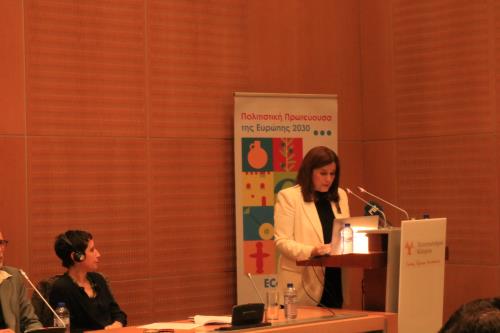
Deputy of Culture: Enormous challenges for European Capital of Culture 2030

Deputy of Culture: Enormous challenges for European Capital of Culture 2030

The first phase of pre-selection of the two most successful proposals will be completed in December 2024, and the second and final selection phase will be completed in late 2025. The Cultural Capital of Europe institution creates enormous challenges and opportunities for both the city that will receive the title and the member state. The title of European Cultural Capital for 2030 will be awarded to a city in Cyprus, a city in Belgium, and a city from a third country that is a candidate or potential candidate for EU membership. The Ministry of Culture is responsible for organizing the competition and selecting the city, and the selected city will receive a contribution of €6.5 million for its operational expenses. The title also includes the possibility of receiving the "Melina Mercouri" award, which includes a cash prize of €1.5 million. The Cultural Capital of Europe institution reminds us that culture must always have a significant place in the strategy of each state, as it can contribute to sustainable development, social inclusion, creativity, and innovation. The selection process includes formal criteria, exclusion and selection criteria, and questionnaires that cities must answer. The criteria for selecting a city are divided into six categories: contribution to the city's long-term strategy, European dimension of the application, cultural and artistic content, implementation capacity, promotion, and management.

Nuland: If the S400 issue is resolved, Turkey can return to the F35 program

Nuland: If the S400 issue is resolved, Turkey can return to the F35 program

The Deputy Minister of Foreign Affairs of the United States, Victoria Nuland, stated that if the issue of the S400 is resolved, the US will welcome Turkey back into the F35 family. She also mentioned that Turkey's approval of Sweden's accession to NATO is significant and that the US wants to revive its relationship with Turkey. Nuland emphasized the importance of Turkey's participation in the development of the F-16 fleet and the need for a strong defense system. She also discussed the possibility of resolving the S400 issue and returning to F-35 negotiations. Nuland had productive discussions in Ankara regarding various aspects of the US-Turkey relationship, including energy, environment, trade, and defense cooperation. She expressed the desire to strengthen dialogue on counterterrorism actions and address challenges in the Middle East.

Investors reassess strategies amid Middle East tensions

Investors reassess strategies amid Middle East tensions

The recent surge in tensions in the Middle East, caused by attacks carried out by Iran-backed militants, is leading investors to reassess their strategies. The attacks have increased uncertainty and market volatility, prompting investors to adopt a more cautious approach and impacting various asset classes. The Middle East is a significant player in the energy market, and disturbances in the region can have a profound impact on energy prices. Rising oil prices could have cascading effects on markets, including increased production costs, higher transportation expenses, and a potential drag on consumer spending. Investors in energy-related stocks and commodities may experience increased levels of volatility. If the events in the Middle East continue to escalate, there may be a flight to safety, with investors reallocating their portfolios to mitigate risks. This could lead to increased demand for safe-haven assets such as government bonds and certain currencies like the US dollar. Diversification strategies become even more critical during periods of heightened geopolitical tension. Investors will also be monitoring the impact on trade and supply chains, as rising tensions can lead to increased shipping costs, delays, and potential disruptions in the flow of goods. Companies operating in or dependent on the affected regions may face challenges, while those with diversified supply chains may be better positioned to navigate uncertainties. The recent attacks in the Middle East are injecting a new level of uncertainty into financial markets, and investors are actively managing the potential ramifications of escalating tensions.

Solar panels and cheaper electricity

Solar panels and cheaper electricity

The cost of electricity in Cyprus is increasing, leading the government to introduce incentives for investments in solar energy. Solar energy can significantly reduce household electricity costs. However, there are limitations to installing solar panels, such as lack of space or shading from trees. In Greece, investment companies develop solar parks and sell shares to homeowners, offsetting their electricity consumption. Similar approaches could be considered in Cyprus to install solar panels in apartment blocks and other buildings. Public pressure is influencing government decisions on this issue. The reduction in electricity costs benefits tenants and businesses, making them more competitive. Properties in mountain areas may face challenges due to shading and higher installation and maintenance costs. Seeking advice from specialized contractors or mechanical-electrical engineers can help estimate the capital investment and potential cost savings.

Republican presidential candidate Nikki Haley targeted in swatting incident

Republican presidential candidate Nikki Haley targeted in swatting incident

Authorities responded to a fake emergency at the South Carolina home of Republican presidential candidate Nikki Haley last month. A man claimed to have shot a woman and threatened to harm himself at her home, but it was determined to be a hoax. This incident is part of a wave of violent threats, bomb scares, and other acts of intimidation against government officials, members of the judiciary, and election administrators since the 2020 election. Swatting cases have increased in the past two months, targeting both allies and rivals of former President Donald Trump. The targets include figures who have publicly opposed Trump, as well as Trump supporters. Swatting is seen as a form of intimidation or harassment that is increasingly being used to target political figures.

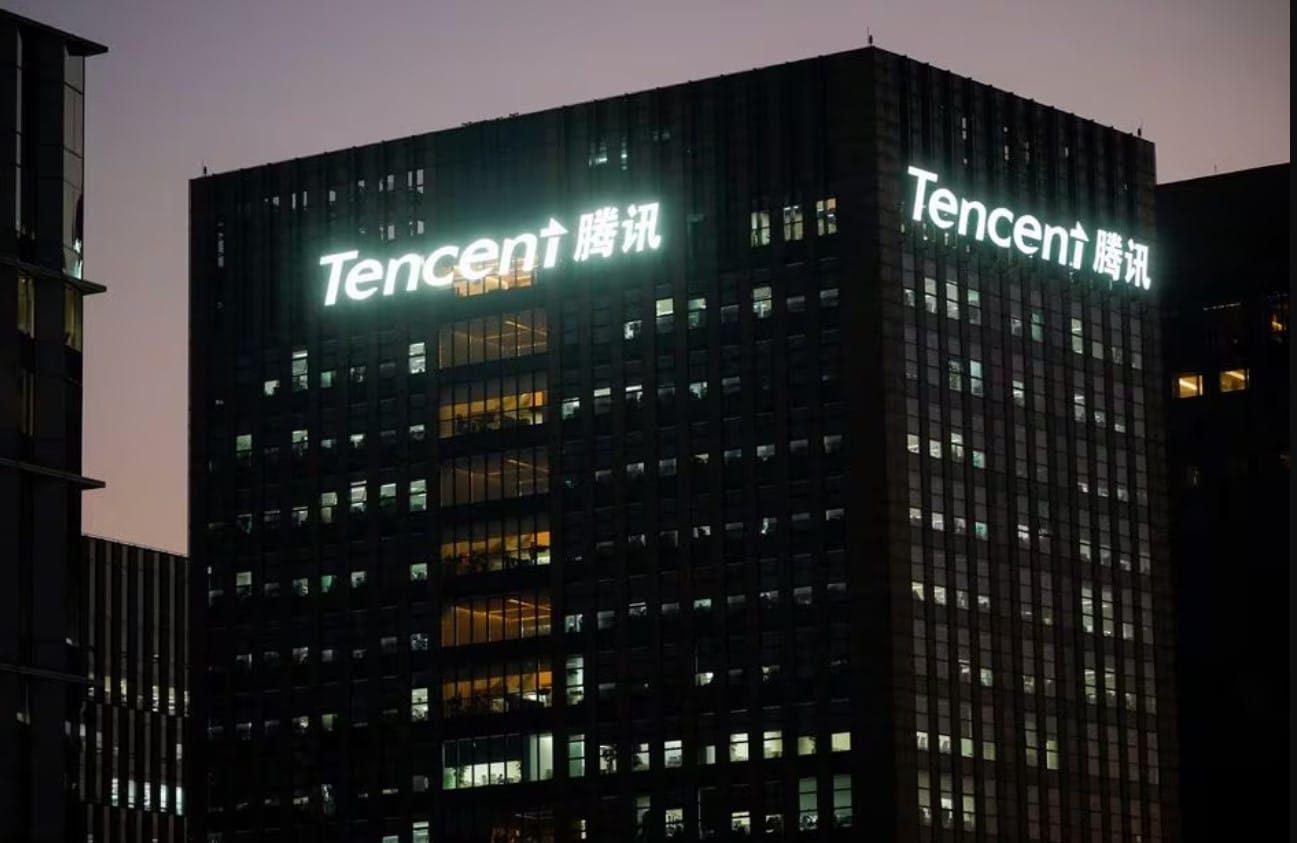
Tencent, ’s Riot Games to lay off about 11 per cent of staff

Tencent, ’s Riot Games to lay off about 11 per cent of staff

– Tencent Holdings’ subsidiary Riot Games plans to lay off 530 employees, approximately 11% of its global staff.
– The layoffs will mainly affect teams outside of core game development.
– Riot Games is known for titles such as “League of Legends.”
– The gaming industry is facing challenges with audience spending less on games due to high inflation.
– Electronic Arts Inc. previously cut 6% of its staff and reduced office space.
– Riot Games CEO Dylan Jadeja stated that the company lacks focus and has unsustainable costs.
– Riot Games will concentrate on its live games portfolio, which includes “League of Legends,” “Valorant,” “Teamfight Tactics,” and “Wild Rift.”
– Riot will cease new game development under “Riot Forge” and reduce staff and features in “Legends of Runeterra.”
– Tencent acquired a majority stake in Riot Games in 2011 and also has a stake in Epic Games.