UK economy puts recession behind it but price pressures rise, PMI survey shows

UK economy puts recession behind it but price pressures rise, PMI survey shows

Britain’s economy showed strong growth in early 2024, with a survey indicating high business optimism and robust growth for services firms. The preliminary February S&P Global/CIPS UK Composite Purchasing Managers’ Index (PMI) rose to 53.3, marking the highest in nine months. The survey highlighted potential concerns for the Bank of England, including wage growth among services firms and supply issues due to Red Sea tensions, leading to the highest measure of business price increases since July. The services PMI remained at 54.3, while manufacturing edged up to 47.1 from 47.0 in January. The economy is expected to grow by 0.2% or 0.3% in the first quarter of 2024, following a contraction in the last two quarters of the previous year. Inflation concerns are likely to make the Bank of England cautious about reducing borrowing costs, with inflation potentially remaining at 4% rather than dropping to the 2% target. The central bank has signaled the possibility of rate cuts, but inflation pressures are being closely monitored. Investors anticipate a 50% chance of a rate cut by June, with a cut fully expected by August. The survey also noted increased business costs due to higher labor and freight costs, attributed partly to the Red Sea crisis, and a cautious approach to hiring due to rising pay.
Lloyds profit rises despite murky UK outlook, motor finance charge

Lloyds profit rises despite murky UK outlook, motor finance charge

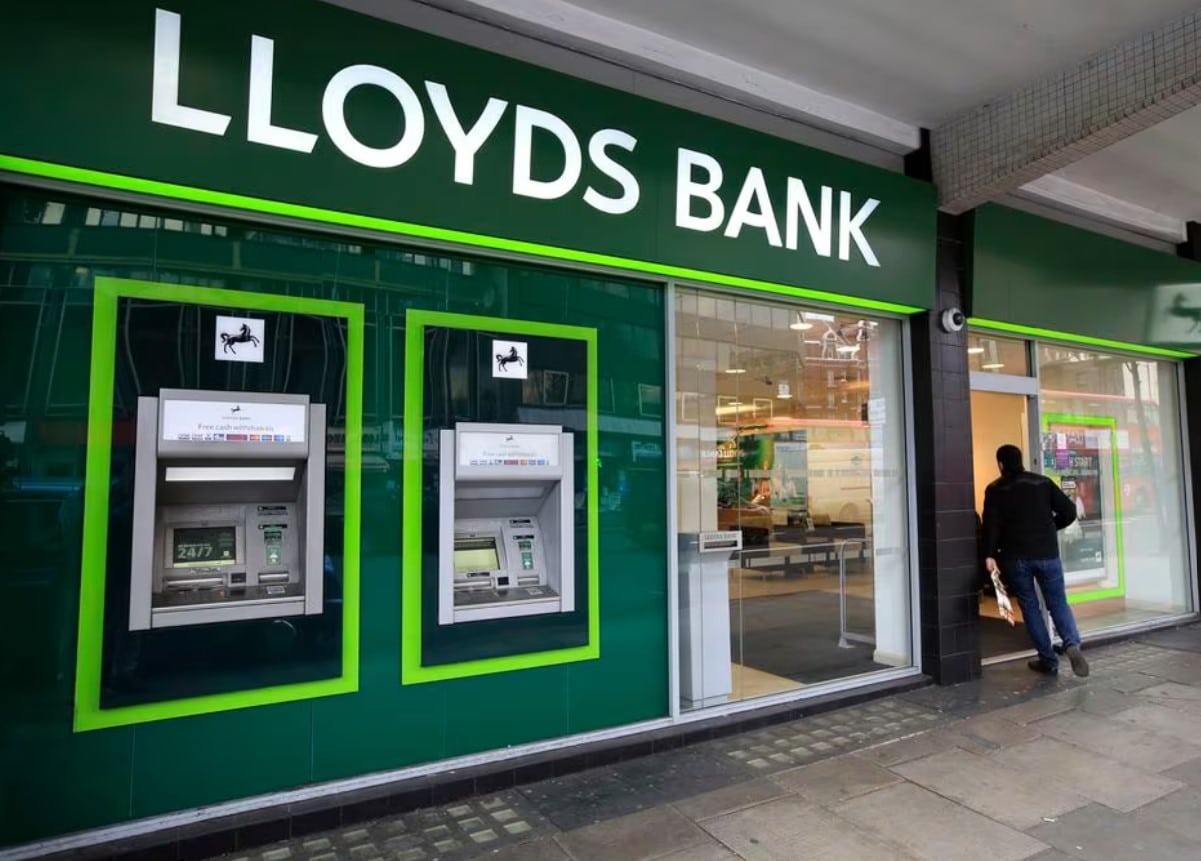
Lloyds Banking Group reported a 57% increase in full-year profit, despite a challenging economic environment in Britain and a 450 million pound charge related to a regulatory review of motor finance. The bank’s shares rose by 4.7% following the announcement of a 2 billion pound buyback. Lloyds also faces a UK investigation into its anti-money laundering controls. The bank’s profit increase was partly attributed to a lower-than-expected charge for bad loans, which amounted to 308 million pounds, compared with 1.5 billion pounds the previous year. This reduction was helped by a 700 million pound writeback on loans made against Britain’s Telegraph newspaper. Lloyds, as the largest mortgage lender in Britain, benefits from higher Bank of England interest rates. The bank forecasts UK growth of 0.5% for 2024 and a 2.2% fall in house prices. Lloyds reported a 2023 pretax profit of 7.5 billion pounds and announced a final dividend of 1.84 pence. The bank has set aside a 450 million pound provision for potential costs related to the car finance regulatory review, without admitting liability. Analysts have suggested the sector’s total compensation could reach 16 billion pounds. Lloyds’ CEO, Charlie Nunn, received a remuneration of 3.7 million pounds in 2023, a 2% decrease from 2022. Nathan Bostock, a former executive at Banco Santander, was appointed to Lloyds’ board.

Imperio: first Cyprus real-estate developer to issue ESG report

Imperio: first Cyprus real-estate developer to issue ESG report

Imperio is committed to promoting the green transition of Cyprus’ real-estate sector, integrating sustainability into its activities as shown in its 2022 ESG Report. It is the first real-estate developer in Cyprus to issue an ESG report. The report outlines Imperio’s strategy, actions, and goals regarding environmental, social, and governance (ESG) criteria, focusing on reducing its environmental footprint, supporting renewable energy sources, and enhancing tenants’ quality of life. Imperio has adopted policies benefiting employees, partners, and clients, and supports vulnerable population groups as part of its Corporate Social Responsibility strategy. Imperio Group Founder and Director Yiannis Misirlis emphasizes the importance of ESG criteria for the survival of businesses and the demand for sustainable properties.

Reforms needed to navigate the energy transition, CERA chief says

Reforms needed to navigate the energy transition, CERA chief says

– Andreas Poullikkas is the Chairman of the Cyprus Energy Regulatory Authority (CERA).
– Significant reforms are needed for the transition toward renewable energy sources.
– The regulation of the electricity sector began in the 1990s and is currently undergoing transformations due to the energy transition.
– Energy systems historically operated in a stable environment, which has been disrupted by the energy transition, leading to uncertainty and complexity.
– Key issues include minimizing curtailment rates of renewable energy, accelerating investments in infrastructure, promoting storage technologies, transitioning to a hydrogen economy, and determining beneficiaries of market reforms.
– Regulation of electricity markets is critical for adapting to new requirements, promoting sustainability, and reducing greenhouse gas emissions.
– The transition to renewable energy sources aims to reduce dependence on fossil fuels.
– Expansion of renewable energy requires investments in storage systems, hydrogen technologies, and redesign of electrical networks.
– The establishment of a unified electricity market in the EU is part of the ongoing reform.
– The EU’s internal electricity market aims to stabilize prices and enhance supply security.
– Technological progress in smart metering and energy management systems allows consumers to actively manage their energy consumption.
– Consumers are increasingly treated as market participants or energy traders.
– Shaping policies that promote sustainability, supporting research and innovation, and promoting energy efficiency are significant components of the reform.

Explainer: What you need to know about the 2024 US presidential election

Explainer: What you need to know about the 2024 US presidential election

Fact: Former President Donald Trump is on the cusp of winning the Republican nomination for the 2024 U.S. presidential election.

Cyprus GDP expected to grow, inflation to continue decreasing

Cyprus GDP expected to grow, inflation to continue decreasing

The European Commission’s interim winter forecast indicates that Cyprus is expected to see its GDP grow by 2.8% in 2024 and by 3% in 2025. Inflation in Cyprus is forecasted to slow to 3.9% in 2023, down from 8.1% in 2022, and is expected to be further contained to 2.4% in 2024 and 2.1% in 2025. The main drivers of GDP growth in Cyprus are strong domestic demand, strategic investments, and lower energy prices. The Recovery and Resilience Mechanism is expected to support investments that will strengthen growth. Economy Commissioner Paolo Gentiloni presented the winter forecast, noting that the European economy is entering 2024 on a weaker footing than previously predicted. The EU and eurozone growth forecasts for 2023 have been revised to 0.5%, and for 2024, they have been adjusted to 0.9% in the EU and 0.8% in the eurozone. The commission predicts an increase in economic activity in 2025, with growth of 1.7% in the EU and 1.5% in the eurozone. Inflation in the EU is expected to decrease from 6.3% in 2023 to 3.0% in 2024 and further to 2.5% in 2025. In the Eurozone, inflation is projected to slow from 5.4% in 2023 to 2.7% in 2024 and to 2.2% in 2025. The contribution of net exports to Cyprus’ economy is expected to remain weak due to economic uncertainty in trading partners and strong demand for imports. Real GDP growth in Cyprus slowed to 2.5% year-on-year in the first three quarters of 2023, but tourism services demand continued to recover. Economic activity in the EU is expected to pick up in 2024 after a weak start to the year. Lower energy prices have led to a faster-than-expected decline in headline inflation in 2023. The forecasts are subject to uncertainty due to geopolitical tensions and the risk of conflict expansion in the Middle East. Rising shipping costs due to trade disruptions in the Red Sea are expected to exert only a slight influence on inflation. Risks to core growth and inflation forecasts include consumption, wage growth, profit margins, interest rates, and the impact of extreme weather events due to climate change.

Cyprus GDP expected to grow, inflation to continue decreasing

Cyprus GDP expected to grow, inflation to continue decreasing

The European Commission’s interim winter forecast predicts that Cyprus will see further growth in its Gross Domestic Product (GDP) in 2024, with an expected rise of 2.8 percent, and an increase of 3 percent in 2025. Inflation in Cyprus is forecasted to slow to 3.9 percent in 2023, down from 8.1 percent in 2022, and is expected to be further contained to 2.4 percent in 2024 and 2.1 percent in 2025. The main driver of GDP growth in Cyprus is projected to be strong domestic demand, with significant contributions from strategic investments and lower energy prices. Growth is also expected to be supported by investments from the Recovery and Resilience Mechanism. However, net exports are expected to contribute weakly to the economy due to economic uncertainty in Cyprus’ main trading partners and strong demand for imports driven by investments. The European Commission revised the growth forecasts for the EU and the eurozone for 2023 to 0.5 percent and adjusted the 2024 forecasts to 0.9 percent for the EU and 0.8 percent for the eurozone. Inflation in the EU is forecasted to decrease from 6.3 percent in 2023 to 3.0 percent in 2024, and further to 2.5 percent in 2025. In the Eurozone, inflation is projected to slow from 5.4 percent in 2023 to 2.7 percent in 2024, and to 2.2 percent in 2025.

Finance Minister says new support measures imminent , — electricity subsidy may be renewed

Finance Minister says new support measures imminent , — electricity subsidy may be renewed

Finance Minister Makis Keravnos announced that new support measures will be discussed at the next Cabinet meeting and will subsequently be announced to the public. Keravnos mentioned the possibility of extending the electricity subsidy, which was launched in October and is due to expire at the end of the month. The fiscal impact of the subsidy is estimated at €45 million, and Keravnos assured that the cost is within the expected framework and that the government remains committed to fiscal discipline. The government plans to support vulnerable groups and middle-income households. Keravnos emphasized that while the European Commission requires targeted support measures, which are considered more effective, the government does not rule out the possibility of implementing horizontal measures if needed. The high cost of electricity is a significant issue and a top priority for the country. The scaled electricity subsidy is targeted and is among the priorities under consideration. The appointment of the Financial Commissioner and the governor of the Central Bank of Cyprus (CBC) are upcoming matters, with the governor being appointed by the president of the Republic of Cyprus.

Voters go to polls in double test for PM Sunak

Voters go to polls in double test for PM Sunak

– Voters cast their ballots on Thursday to elect two new British lawmakers.
– The opposition Labour Party was expected to win parliamentary seats in central and southwestern England.
– The by-elections were seen as a setback for Prime Minister Rishi Sunak’s Conservative Party.
– The Conservatives have not made significant efforts to win over voters in Wellingborough and Kingswood.
– The by-elections were expected to increase criticism of Sunak, with concerns about a potential Conservative wipe-out in the upcoming national election.
– Sunak hopes to close the poll gap with Labour and capitalize on Labour’s issues with anti-Semitism allegations and a retracted green spending target.
– Bookmakers predicted Labour victories in both Wellingborough and Kingswood by-elections.
– The by-election results were expected to be announced early on Friday.
– Labour sent many lawmakers and activists to campaign in both areas, while the Conservative presence was more subdued.
– The Wellingborough contest was triggered by a bullying and harassment scandal, and the Kingswood contest followed Chris Skidmore’s resignation over climate change policies.
– Labour leader Keir Starmer faced criticism for not immediately censuring a Labour candidate who espoused conspiracy theories about Israel.
– The UK economy entered a recession in the second half of 2023, presenting a challenge for Sunak, who prioritized economic growth before the national election.
– Labour aimed to manage expectations during the voting process, acknowledging the difficulty in winning the by-elections and focusing on the cost of living crisis.

UK in recession, but that, ’s unlikely to sway BoE

UK in recession, but that, ’s unlikely to sway BoE

The UK fell into recession in the second half of last year with a steeper contraction in GDP than expected. The economy has been stagnant for the past couple of years and is expected to bounce back this year. Weaker household spending may suggest weaker demand than anticipated. Inflation is expected to fall, which could lead to a debate around rate cuts. Oil prices remain volatile due to uncertainty in the Middle East, the economy, and interest rates. Gold has dropped below ,000, indicating that rates may not fall as soon or as fast as hoped. Bitcoin has reached a new two-year high above ,500.