Cyprus banks on track to meet MREL goals, according to SRB chief

Cyprus banks on track to meet MREL goals, according to SRB chief

Dominique Laboureix, Chair of the Single Resolution Board, praised Cypriot banks for their progress towards meeting the Minimum Requirements for Own Funds and Eligible Liabilities (MREL). MREL is a capital tool designed to enhance banks’ ability to absorb losses and facilitate restructuring without resorting to taxpayer funds. The Single Resolution Board has set MREL targets for Bank of Cyprus and Hellenic Bank, with Cypriot banks given a longer transitional period until 2024 and 2025. Laboureix expressed confidence that Cypriot banks would achieve their MREL targets on time. He highlighted the shift from liquidation to resolution, aiming to build bank resilience through capital instruments instead of relying on taxpayer or creditor funds. The Single Resolution Board, established in 2015, faces evolving risks including the Covid-19 pandemic, geopolitical tensions, and challenges from digitisation. The Single Resolution Fund has €78 billion, indicating improved bank loss absorption capacity compared to a decade ago. The SRB’s strategy focuses on addressing new risks and ensuring swift action in crises by collecting necessary bank data. Laboureix also discussed the potential for further improving the EU framework for bank crisis management and deposit insurance, moving beyond the “too big to fail” narrative.

Rising cocoa price makes chocolate products dearer

Rising cocoa price makes chocolate products dearer

Alkis H. Hadjikyriakos Public Ltd, the maker of Frou Frou brand biscuits, has announced an increase in the prices of its chocolate-containing products by 20 to 30 percent due to a 153.55 percent rise in cocoa costs over the last year. This price adjustment, effective from April 1, is a response to the significant increase in global raw material costs. The company will absorb a portion of the cost increase and reassess the situation in August. The price adjustments will not affect products without cocoa or chocolate, and prices of imported chocolate products will also increase. The company plans to adjust prices in response to future changes in international cocoa and chocolate prices.

Cyprus overcame Turkish and Russian opposition in IMO election, minister says

Cyprus overcame Turkish and Russian opposition in IMO election, minister says

Deputy Minister of Shipping Marina Hadjimanolis discussed the challenges Cyprus faced during the December 2023 elections of the International Maritime Organisation (IMO), including opposition from the Turkish and Russian blocs due to EU sanctions against Moscow following the Russian invasion of Ukraine. Despite these challenges, Cyprus successfully retained all the positive votes it had garnered in the 2021 elections and has held a position in the IMO Council’s Category C since 1987. Hadjimanolis highlighted the significance of Cyprus’ reelection, the turbulent period for global shipping due to geopolitical tensions, and Cyprus’ participation in the European operation ‘Aspides’ to protect free navigation in the Red Sea. She emphasized Cyprus’ contribution to the global shipping sector, the challenges and opportunities presented by decarbonization within the green transition, and the need for economically viable alternative fuels compatible with existing technology. The Deputy Minister also mentioned new incentives approved by the Council of Ministers to encourage the reduction of greenhouse gases, building on incentives implemented since 2021.

Limassol university partnership aims to boost maritime innovation

Limassol university partnership aims to boost maritime innovation

The University of Limassol (UoL) announced a new partnership with the Association of Information Technology and Telecommunications Executives of Maritime Companies (AMMITEC), a non-profit organization focused on digital transformation and cybersecurity in the maritime sector. This collaboration aims to exchange knowledge and expertise between academia and industry professionals, creating innovative solutions for the maritime industry. Ioannis Filippopoulos, co-director of the MSc Shipping and Operations Management at UoL, and Themistoklis Sardis, President of AMMITEC, both expressed their enthusiasm for the partnership. AMMITEC offers membership opportunities to ICT managers, staff, and individuals interested in maritime ICT, aiming to advance maritime technology and foster a professional community.

Limassol Chamber of Commerce discusses labour shortages with minister

Limassol Chamber of Commerce discusses labour shortages with minister

Labour Minister Yiannis Panayiotou emphasized the importance of collaboration between the government and the business community for economic development, advocating for rational and balanced policies to promote growth and reduce unemployment. He met with the Limassol Chamber of Commerce (Evel) to exchange information and discuss challenges faced by businesses, including worker shortages and slow public service processes. Panayiotou stressed the need for effective public administration and dialogue to find mutually beneficial solutions for economic growth. He acknowledged the necessity of employing workers from abroad due to the economy growing beyond demographic capacities but also highlighted the importance of utilizing local human resources to ensure satisfactory growth in 2024.

Cyprus tourism ministry announces plan to improve beaches

Cyprus tourism ministry announces plan to improve beaches

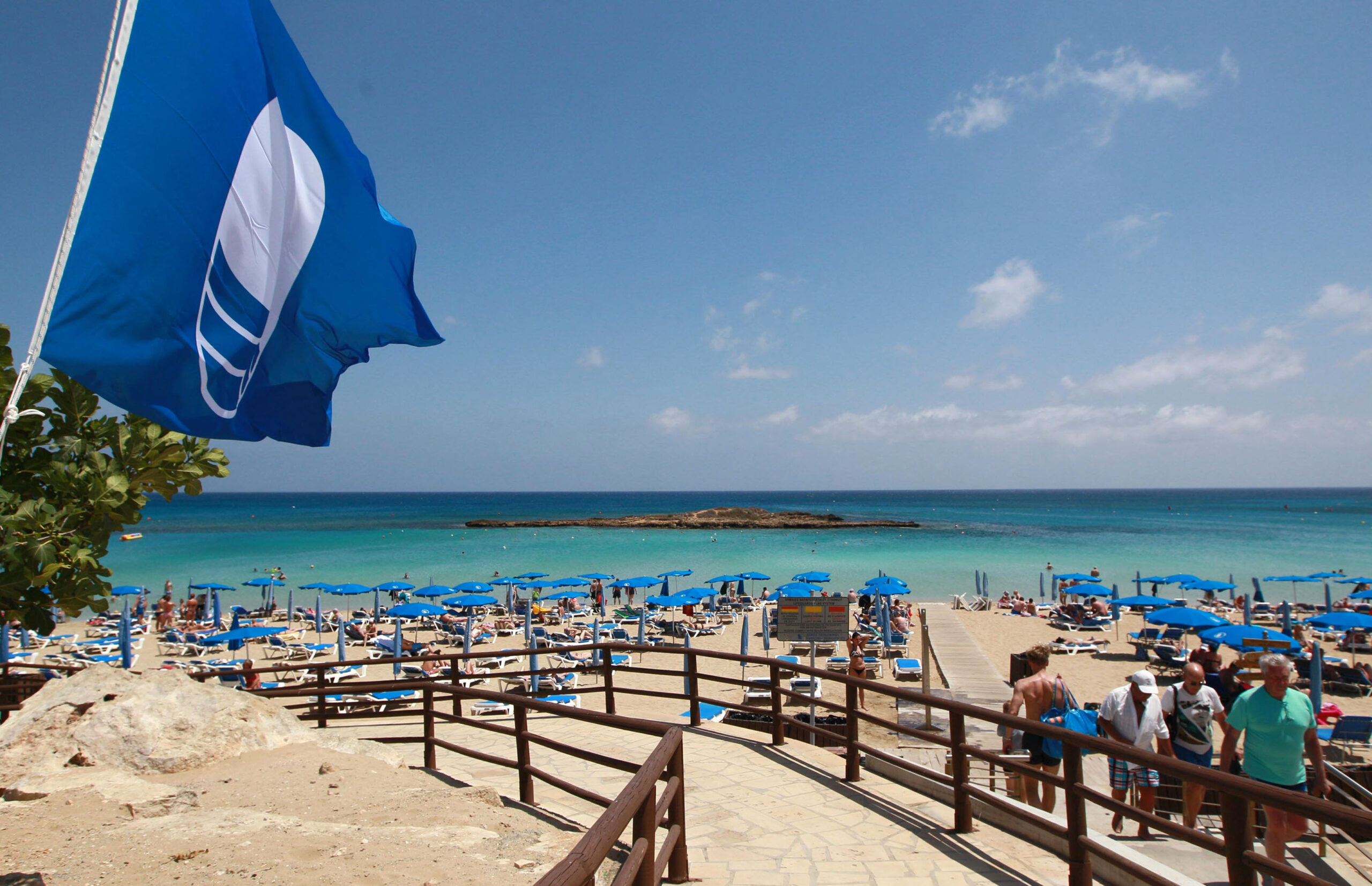
Cyprus’ tourism ministry has launched an incentive plan for the qualitative and aesthetic improvement of beaches for 2024, targeting local authorities. The plan is part of actions for sustainable beach development and the national coordination of the Blue Flag programme. It supports the Sand and Sea plastic-free initiative and aligns with the Tourism Strategy 2030. Eligible expenses include equipment purchase and infrastructure projects, with a submission deadline of March 29, 2024. Applications can be made on the Ministry of Tourism’s website, and further information is available from Vakis Loizides and Anthi Charalambous.

Reforms needed to navigate the energy transition, CERA chief says

Reforms needed to navigate the energy transition, CERA chief says

– Andreas Poullikkas is the Chairman of the Cyprus Energy Regulatory Authority (CERA).
– Significant reforms are needed for the transition toward renewable energy sources.
– The regulation of the electricity sector began in the 1990s and is currently undergoing transformations due to the energy transition.
– Energy systems historically operated in a stable environment, which has been disrupted by the energy transition, leading to uncertainty and complexity.
– Key issues include minimizing curtailment rates of renewable energy, accelerating investments in infrastructure, promoting storage technologies, transitioning to a hydrogen economy, and determining beneficiaries of market reforms.
– Regulation of electricity markets is critical for adapting to new requirements, promoting sustainability, and reducing greenhouse gas emissions.
– The transition to renewable energy sources aims to reduce dependence on fossil fuels.
– Expansion of renewable energy requires investments in storage systems, hydrogen technologies, and redesign of electrical networks.
– The establishment of a unified electricity market in the EU is part of the ongoing reform.
– The EU’s internal electricity market aims to stabilize prices and enhance supply security.
– Technological progress in smart metering and energy management systems allows consumers to actively manage their energy consumption.
– Consumers are increasingly treated as market participants or energy traders.
– Shaping policies that promote sustainability, supporting research and innovation, and promoting energy efficiency are significant components of the reform.

Companies rethink offices as they adapt to younger workers

Companies rethink offices as they adapt to younger workers

Ksenia Bitulina is an HR specialist with over 20 years of experience. She offered insights into the changing landscape of traditional office spaces at an event held by bbf: in Limassol. Her analysis included how companies are adapting to workers’ demands for remote work and the implementation of hybrid working models. Bitulina mentioned that approximately 80% of all meetings are now conducted virtually or in hybrid formats. This trend is particularly popular among younger employees who prioritize flexibility and work-life balance. The concept of the “third place” or “Office of the Future” refers to workspaces that encourage collaboration and collective intelligence, aiming to foster well-being and community. Modern office designs are inspired by these “third places,” aiming to be smarter, cooler, more homely, and environmentally friendly. Recent statistics show that only 15% of employees prefer office work, while 28% opt for remote work, and 57% favor a hybrid approach. By 2025, forecasts indicate that 27% of the workforce will be Gen Z, who value flexibility, autonomy, and work-life balance. Employers are recognizing the benefits of flexible work arrangements, including enhanced productivity and reduced operational costs. The future of office space involves creating environments that support collaboration, innovation, and well-being. Bitulina highlighted the challenge of maintaining community and collaboration in a dispersed work environment. The future office must evolve to meet the needs of a changing workforce, fostering connections and nurturing well-being. The office is seen not just as a physical location but as a concept that embodies the approach to work and community.

Cyprus GDP expected to grow, inflation to continue decreasing

Cyprus GDP expected to grow, inflation to continue decreasing

The European Commission’s interim winter forecast indicates that Cyprus is expected to see its GDP grow by 2.8% in 2024 and by 3% in 2025. Inflation in Cyprus is forecasted to slow to 3.9% in 2023, down from 8.1% in 2022, and is expected to be further contained to 2.4% in 2024 and 2.1% in 2025. The main drivers of GDP growth in Cyprus are strong domestic demand, strategic investments, and lower energy prices. The Recovery and Resilience Mechanism is expected to support investments that will strengthen growth. Economy Commissioner Paolo Gentiloni presented the winter forecast, noting that the European economy is entering 2024 on a weaker footing than previously predicted. The EU and eurozone growth forecasts for 2023 have been revised to 0.5%, and for 2024, they have been adjusted to 0.9% in the EU and 0.8% in the eurozone. The commission predicts an increase in economic activity in 2025, with growth of 1.7% in the EU and 1.5% in the eurozone. Inflation in the EU is expected to decrease from 6.3% in 2023 to 3.0% in 2024 and further to 2.5% in 2025. In the Eurozone, inflation is projected to slow from 5.4% in 2023 to 2.7% in 2024 and to 2.2% in 2025. The contribution of net exports to Cyprus’ economy is expected to remain weak due to economic uncertainty in trading partners and strong demand for imports. Real GDP growth in Cyprus slowed to 2.5% year-on-year in the first three quarters of 2023, but tourism services demand continued to recover. Economic activity in the EU is expected to pick up in 2024 after a weak start to the year. Lower energy prices have led to a faster-than-expected decline in headline inflation in 2023. The forecasts are subject to uncertainty due to geopolitical tensions and the risk of conflict expansion in the Middle East. Rising shipping costs due to trade disruptions in the Red Sea are expected to exert only a slight influence on inflation. Risks to core growth and inflation forecasts include consumption, wage growth, profit margins, interest rates, and the impact of extreme weather events due to climate change.

Cyprus GDP expected to grow, inflation to continue decreasing

Cyprus GDP expected to grow, inflation to continue decreasing

The European Commission’s interim winter forecast predicts that Cyprus will see further growth in its Gross Domestic Product (GDP) in 2024, with an expected rise of 2.8 percent, and an increase of 3 percent in 2025. Inflation in Cyprus is forecasted to slow to 3.9 percent in 2023, down from 8.1 percent in 2022, and is expected to be further contained to 2.4 percent in 2024 and 2.1 percent in 2025. The main driver of GDP growth in Cyprus is projected to be strong domestic demand, with significant contributions from strategic investments and lower energy prices. Growth is also expected to be supported by investments from the Recovery and Resilience Mechanism. However, net exports are expected to contribute weakly to the economy due to economic uncertainty in Cyprus’ main trading partners and strong demand for imports driven by investments. The European Commission revised the growth forecasts for the EU and the eurozone for 2023 to 0.5 percent and adjusted the 2024 forecasts to 0.9 percent for the EU and 0.8 percent for the eurozone. Inflation in the EU is forecasted to decrease from 6.3 percent in 2023 to 3.0 percent in 2024, and further to 2.5 percent in 2025. In the Eurozone, inflation is projected to slow from 5.4 percent in 2023 to 2.7 percent in 2024, and to 2.2 percent in 2025.