India ‘screwed up’: How the U.S. lobbied New Delhi to reverse laptop rules

India ‘screwed up’: How the U.S. lobbied New Delhi to reverse laptop rules

India reversed a laptop licensing policy after U.S. officials lobbied behind the scenes. The policy initially required companies like Apple, Dell, and HP to obtain licenses for all imported laptops, tablets, PCs, and servers, which raised concerns about potential sales slowdowns. However, India decided to only monitor imports and reassess the policy a year later. U.S. trade officials and government emails revealed concerns about India’s compliance with WTO obligations and the impact of sudden policy changes on the business climate. The U.S. Trade Representative Katherine Tai met with Indian Commerce Minister Piyush Goyal to discuss the policy, and India later admitted the policy’s sudden rollout was a mistake. The USTR is tracking India’s scrutiny of imported devices to ensure compliance with WTO obligations. India stated the policy reversal was not due to U.S. pressure but a realization that local manufacturing of laptops and tablets was not significant at this stage.


Cyprus-based Infocredit announces rebranding, new site

Cyprus-based Infocredit announces rebranding, new site

Cyprus-based Infocredit Group, specializing in business intelligence and regulatory technology (RegTech) solutions, announced a comprehensive rebranding and website redesign focused on improving customer experience. The rebranding includes a new logo and brand identity, reflecting the company’s commitment to innovation, excellence, and customer focus. The redesigned website aims to offer an enhanced user experience with intuitive navigation and a modern design, aligning with the company’s motto “Securing Ease of Mind”. The initiatives are part of Infocredit Group’s digital transformation strategy, aiming to position the company as a leader in the credit and compliance risk solutions industry.

Private education: rushing to meet growing demand

Private education: rushing to meet growing demand

English language schools in Cyprus are experiencing significant growth due to the influx of foreign companies and the arrival of families from regions experiencing conflict, such as Israel and Ukraine. This surge in demand has led to expansions and new school openings across the island, particularly in Limassol, which has seen a notable increase in students due to the Russian presence prior to the Ukrainian conflict. Both local and international families are seeking high-quality education with English as the medium of instruction, influenced by factors such as Cyprus’s EU membership, remote work opportunities, and regional conflicts. However, this growth is challenged by regulations on class sizes, bureaucratic delays, and difficulties in recruiting staff and obtaining work permits for prospective employees. Despite these challenges, the commitment to education remains strong among Cypriot families, who are willing to make financial sacrifices for their children’s education, viewing it as a crucial investment.

Cyprus and Estonia to boost ties through business forum

Cyprus and Estonia to boost ties through business forum

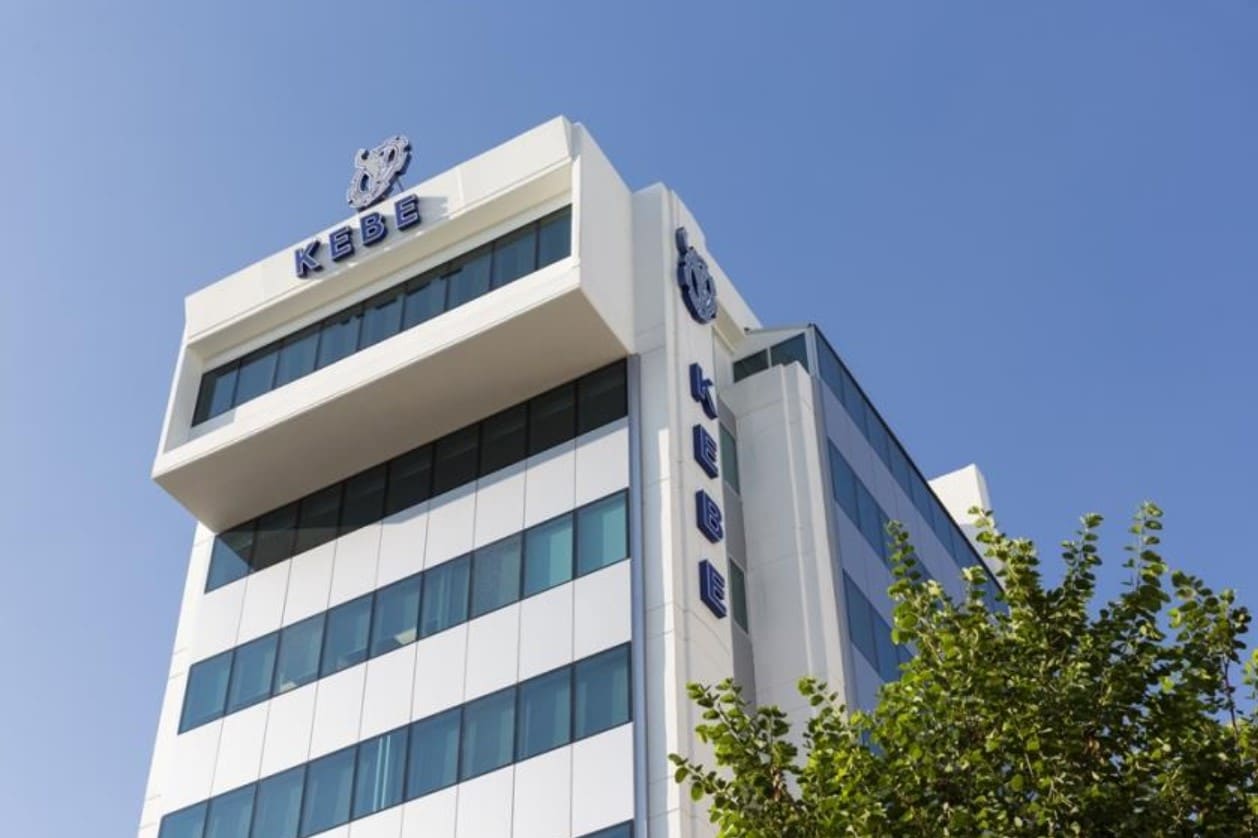
The Cyprus Chamber of Commerce and Industry (Keve) announced it will host a Business Forum on March 27, coinciding with the official visit of the President of Estonia, Alar Karis, to Cyprus. The event aims to enhance trade and economic relations between Cyprus and Estonia, focusing on shipping, cybersecurity, and information technology sectors. The forum will feature presentations by the President of Estonia, the Deputy Minister of Research, Innovation, and Digital Policy, Nicodemos Damianou, and the Deputy Minister of Shipping, Marina Hadjimanolis, discussing developmental prospects in the mentioned fields. The forum is scheduled to take place at the Keve building in Nicosia, starting with a networking session from 13:30 to 14:30, followed by presentations, discussions, and private meetings. Participants are required to pre-register and arrive by 14:30 due to security measures.

Fake diplomas scandal in north spreads to military

Fake diplomas scandal in north spreads to military

The Turkish Cypriot community is facing a scandal involving fake university diplomas and corruption, which has now affected the security forces’ command. Lieutenant Colonel Özgür Alp was remanded in custody for using a fake diploma for promotion within the Turkish military. The fake diploma was claimed to be from the Cyprus Health and Social Sciences University in Morphou. A high-ranking police officer, Serif Avcil, was also arrested over a fake diploma. This scandal is part of larger issues involving the KSTU university in Morphou, with allegations of embezzlement and fraud through fake student registrations and diplomas. The university is owned by Levent Uysal, a deputy in the Turkish Grand National Assembly. Celebi Ilik, involved in the scandal, used fake diplomas for civil service promotions and is facing charges related to forgery. Uysal attempted to obtain a €45 million loan from Swiss IntaCapital bank with fake documents in 2022 but avoided judicial proceedings by getting elected to parliament in May 2023. Turgay Avci, chairman of the Turkish Cypriot higher education watchdog Yodak, is under investigation for possibly having a fake diploma. There are also allegations against Dunya Baris Universitesi for operating illegally and investigations into irregularities in a real estate purchase by Altinbas Holding. Ali Altınbaş and Sofu Altınbaş were detained in September 2020 for involvement in a fuel profiteering network and accused of establishing a criminal organisation, aggravated fraud, and forgery.

Shifting focus in higher education

Shifting focus in higher education

The number of EU students enrolling in British universities has significantly decreased by more than half since the UK’s withdrawal from the European Union in 2016, with notable declines from Italy, Germany, and France. This trend is also observed in Cyprus, where students are now considering universities in other countries. British passport holders and children of British passport holders residing in the EU can still apply for UK universities and receive home fees until January 1, 2028. Before Brexit, EU students paid just over £9,000 in home fees and had access to student finance, but now, with no loans available, tuition fees can rise to £38,000. Despite the increase in tuition fees, some UK universities still offer home fees or scholarships to reduce costs. Students from Cyprus are exploring universities in various countries, including the Netherlands, France, Ireland, Greece, Germany, Austria, the Czech Republic, Canada, the USA, and Australia. There is also a noticeable increase in students applying to local private universities in Cyprus due to the variety of courses, scholarship opportunities, flexible entry requirements, and easy application processes. Students are increasingly pursuing courses that offer immediate employment opportunities, with a growing interest in fields such as artificial intelligence, cybersecurity, risk management, data analysis, art and design, real estate, business, economics/finance/accounting, law, medicine, engineering, psychology, and physiotherapy.

NatWest seeks approval to buy more stock to speed privatisation

NatWest seeks approval to buy more stock to speed privatisation

NatWest (NWG.L) plans to seek shareholder approval for a buyback of up to 15% of its stock from the UK government as part of its privatisation efforts. This request is an increase from the previous limit of 5% per year. The bank, which is about one-third owned by taxpayers following a bailout during the 2007-9 financial crisis, aims to accelerate the government’s exit, planned by 2026. The proposed buyback, based on current market capitalisation, would be worth around £3 billion. The UK government has been reducing its stake from a peak of 84% through sales to institutional investors and directly to NatWest. Finance Minister Jeremy Hunt announced plans to sell stock to retail investors to speed up the process. NatWest’s annual meeting will also include votes on the formal appointments of chairman Rick Haythornthwaite and CEO Paul Thwaite. The bank’s shares have increased by 9% year-to-date, following a report of its highest annual profit since the bailout. However, sales of government-owned stock have been at a loss compared to the bailout price of 502 pence.

The paradox of perfect company culture

The paradox of perfect company culture

Today’s businesses are actively striving to create the ideal workplace culture to make work more engaging and enjoyable. This trend is evident across companies of various sizes, with efforts ranging from casual social events to appointing dedicated culture managers. Surveys by Robert Half and PwC highlight the importance of cultural fit over qualifications and the competitive advantage a strong culture can provide. However, the effectiveness and return on investment of these cultural initiatives are debated, with some employees feeling obligated to participate in company-organized activities. The emphasis on culture can sometimes feel overbearing or exclusionary, potentially stifling diversity and making it difficult for new employees to integrate. Despite these challenges, the pursuit of a positive company culture is seen as a strategic necessity for attracting and retaining talent, with a focus on work-life balance, social impact, employee well-being, and skill development.

Article 23: what you need to know about Hong Kong’s new national security laws

Article 23: what you need to know about Hong Kong’s new national security laws

Hong Kong’s 90-seat legislature passed a new national security law, known as Article 23, which updates or introduces laws to prohibit treason, sabotage, sedition, the theft of state secrets, and espionage. It includes sentences of up to life imprisonment for several offenses and up to 20 years for espionage. The law aims to tighten control over foreign political bodies and organizations in the city and includes provisions against “external interference.” The need for these laws is stipulated in Article 23 of the Basic Law, which has guided Hong Kong’s relations with China since 1997. A previous attempt to enact Article 23 in 2003 was halted after significant public protest. The law also introduces a new offense related to endangering national security through the unlawful use of computers or electronic systems, with a penalty of up to 20 years in prison. Concerns have been raised about the broad definition of state secrets and the potential impact on research and information gathering. Hong Kong’s leader, John Lee, claims the laws meet international standards and protect rights and freedoms. Additionally, Beijing imposed a national security law on Hong Kong in 2020, addressing some offenses and allowing mainland national security officers to operate in the city. China updated its own state secrets laws in 2023, with Hong Kong’s legislation aiming to be compatible with the standards of British-based common law.

Methane to become key criteria for future EU energy imports, official says

Methane to become key criteria for future EU energy imports, official says

– The European Union plans to use methane emissions as a criterion for deciding its energy suppliers in the future.
– A U.N. methane conference took place in Geneva from March 18-21, with over 1,000 participants from 100 countries.
– Methane is the second-biggest cause of climate change after carbon dioxide and has a higher warming effect in the short term.
– The EU will focus on the environmental impact and carbon intensity of its energy purchases.
– In November, the EU agreed to impose methane emissions limits on its oil and gas imports from 2030.
– The EU will create “methane performance profiles” for countries and companies, favoring those that reduce emissions.
– The Geneva forum aims to advance methane emissions reduction efforts ahead of the COP29 climate summit in Azerbaijan.