Cyprus banks: interest rate policies harming borrowers and savers

Cyprus banks: interest rate policies harming borrowers and savers

By December 2023, interest rates on Cyprus bank loans for house purchases had reached an average of 5.1%, compared with the average rate of 3.8% for other euro area countries. The average interest rate on Cyprus bank loans to corporations was 5.7% in December 2023, exceeding the euro area average of 5.1%. Cyprus banks had increased their profits by 600% to over €1.1 billion in 2023. The interest income of the two largest banks increased by €830 million between 2022 and 2023, mainly due to higher interest receipts from the ECB. Cyprus banks deposited around 35% of their assets at the ECB, earning from 2% to 4% in interest in 2023. Cyprus banks offered an average interest rate of 2.06% on fixed term deposits in January 2024, compared with an average deposit rate of 3.21% in the euro area. The net interest margins for Cyprus banks exceeded three percentage points, while the average for the euro area was just over one percentage point. The Bank of Cyprus announced that €112 million of their after-tax profit of €487 million would be distributed as cash dividends to shareholders, with a share buyback of up to €25 million.


Tax department to look into scandal hit monastery

Tax department to look into scandal hit monastery

The tax department in Cyprus is examining the books at Osiou Avakoum monastery to determine if it has met all taxation requirements. This action is part of an audit to assess compliance with tax obligations by the monastery and individuals involved. The investigation follows the suspension of five monks by the Holy Synod amid scandals involving suspect economic activities, financial crimes, sexual harassment, and abuse allegations. The monastery had previously applied for a €3 million fundraiser in 2020 without submitting necessary financial statements. A safe box containing €800,000 was found at the monastery, which was transferred to the Tamassos Bishopric under police supervision.

Western banks warn of risks in EU plan to grab Russian assets, sources say

Western banks warn of risks in EU plan to grab Russian assets, sources say

Western banks are lobbying against EU proposals to redistribute billions of euros in interest earned on frozen Russian assets due to fears of costly litigation. EU leaders have agreed to work on a plan to use up to 3 billion euros a year to supply arms to Ukraine, funded by the interest from these assets. Banks are concerned about potential liability from Russia, the erosion of trust in the western banking system, and the legal implications of transferring money to Ukraine. Euroclear holds 190 billion euros of Russian central bank securities and cash, and more than 3.5 million Russians have frozen assets abroad worth around 1.5 trillion roubles. The EU plan includes paying a fee to Euroclear and allowing it to retain 10% of the profits as a safeguard against litigation. Ninety percent of the seized cash would be used to buy arms for Ukraine, with the rest for recovery and reconstruction. The proposal has raised concerns about the legal risks for banks and the potential for prolonged international legal disputes.

Swiss central bank cuts rates in surprise move, getting ahead of global peers

Swiss central bank cuts rates in surprise move, getting ahead of global peers

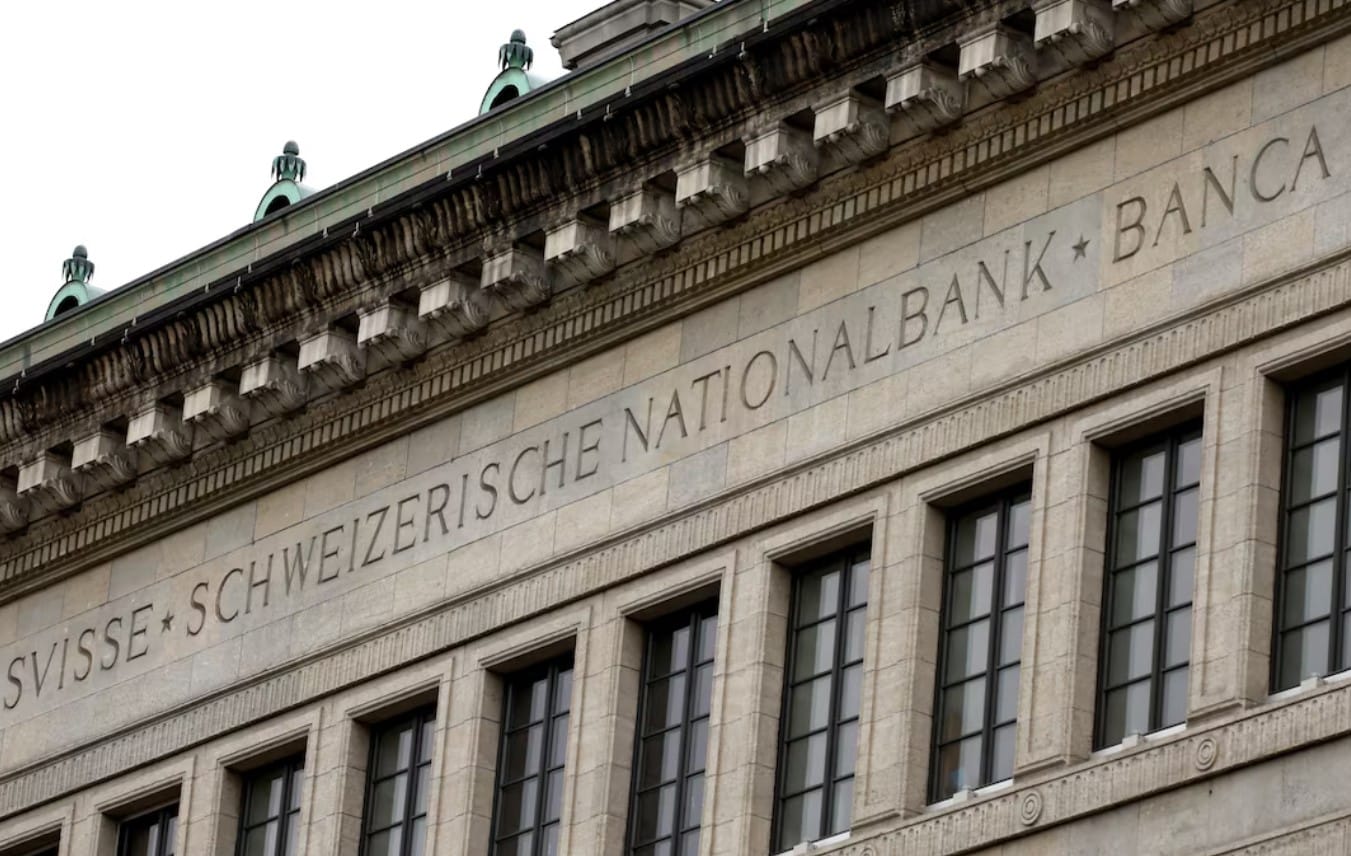
The Swiss National Bank cut its main interest rate by 25 basis points to 1.50 per cent and also reduced its interest rate on sight deposits to the same percentage. This decision marked the first rate cut in nine years and was unexpected by many, leading to a decrease in the value of the Swiss franc and a drop in Swiss government bond yields. The move was in response to a drop in Swiss inflation to 1.2 per cent in February, maintaining within the SNB’s target range of 0-2 per cent for nine consecutive months. The SNB’s action reflects its assessment that the fight against inflation over the past two and a half years has been effective, with expectations that inflation will remain within the target range in the coming years. This decision came before the chairman, Thomas Jordan, is set to step down in September.

Our View: PEP asset disclosure is in need of serious reform

Our View: PEP asset disclosure is in need of serious reform

The issue of disclosing personal assets by politically exposed persons (PEP) in Cyprus has been problematic, with no standardized or verified submission process. Former President Nicos Anastasiades submitted an asset list that was widely mocked for appearing to underrepresent his wealth. Criticism from the Council of Europe led to a proposal for submissions to be checked by a committee of auditors. Recently, Tax Commissioner Sotiris Markides suggested PEPs should publish their net asset position instead of a detailed list, to avoid disclosing sensitive information. However, deputies argued this method lacks transparency. Another proposal is for PEPs to submit a capital statement prepared by an auditor, which may offer more transparency but has raised concerns about cost. Discussions on amending the laws are ongoing, with all parties recognizing the need for a more serious and formal system.

Man injured in Mari blast awarded more damages

Man injured in Mari blast awarded more damages

A man injured by the 2011 Mari blast was awarded increased damages by the Supreme Court, raising his compensation for loss of future income from €20,000 to €60,000. The man suffered trauma to his ears, resulting in hearing loss in high frequencies and tinnitus, which was medically evaluated as permanent and irreversible on October 13, 2012. He also suffers from post-traumatic stress disorder, experiences anxiety, isolation, and has no future aspirations. The initial court decision in 2020 awarded him €100,000 in overall damages, with €80,000 for his pain and €20,000 for loss of future income, which was later increased. The Mari blast in July 2011 resulted in 13 deaths and 62 injuries. Defence Minister Costas Papacostas was sentenced in July 2013 to five years in prison for manslaughter and causing death by reckless or dangerous acts.

BoE must cut rates at next meeting, says deVere CEO

BoE must cut rates at next meeting, says deVere CEO

The Bank of England left interest rates unchanged at 5.25%, a 16-year high, on Thursday. Critics and financial experts, including Nigel Green, CEO of the deVere Group, are calling for the central bank to reduce rates at their next opportunity to alleviate financial strains on businesses and households, enhance business profitability, make homeownership more accessible, boost consumer confidence and spending, and stimulate economic growth. Lower interest rates are also seen as beneficial for investors, as they tend to increase demand for risk assets like equities. Green argues that proactive rate cuts are essential to prevent economic downturns and mitigate recession risks, despite concerns that such actions could fuel inflation. He emphasizes that the Bank of England has the tools and expertise to manage inflation effectively while supporting growth through rate adjustments.

‘, A very big and increasing presence of Israeli businesses in Cyprus’

‘, A very big and increasing presence of Israeli businesses in Cyprus’

The Israel Tax Authority (ITA) is investigating Israeli assets in Cyprus due to the increasing presence of Israeli businesses on the island. Cyprus’ finance ministry and accounting associations acknowledge this growth. Finance ministry spokesperson Michalis Papadopoulos stated that the ITA’s operation is a result of the increased presence of Israeli nationals in Cyprus but clarified that Cyprus is not directly involved in the operation. The head of the accountants’ association, Nikos Chimarides, mentioned the significant presence of Israeli businesses in sectors like fintech, investment, real estate, and foreign exchange trading in Cyprus and noted that these businesses do pay their taxes in Cyprus. However, he also highlighted the absence of a double tax treaty between Cyprus and Israel, which has been a longstanding issue. The ITA’s operation is part of a wider campaign against tax evasion and the black economy in Israel. The investigation involves analyzing travel patterns of businesspeople between Cyprus and Italy, examining offshore companies linked to Israelis, and leveraging information sharing agreements with several countries. It is estimated that between 10,000 to 20,000 Israelis reside in Cyprus.

St Habakkuk fundraisers under scrutiny

St Habakkuk fundraisers under scrutiny

– A fundraiser was conducted by the Saint Habakkuk Monastery between May-November 2021, raising €85,000 for construction work within the monastery.
– The Ministry of Interior required a building permit for the fundraiser, which the monastery did not submit.
– The monastery’s application for a second fundraiser was rejected due to the lack of submitted documents.
– The Ministry of Interior sent eight letters to the monastery requesting documents, which were eventually provided in 2023.
– Among the documents were receipts for expenses, which may be investigated by the police.
– There is a question regarding how €85,000 from the fundraiser grew to €807,000 found in the monastery’s safe.
– Two applications for a fundraiser to support a monastery on Mount Athos were submitted through the Archbishopric, and a third application was rejected.
– The Ministry of Interior stopped considering applications for the support of churches and monasteries due to citizen complaints.
– Priests can request donations within churches without a permit, but fundraisers outside require a permit.
– The Ministry of Interior grants approximately 80 permits annually for fundraisers, with proceeds amounting to about €10 million.
– There is a phenomenon of illegal fundraisers, which became more noticeable with stricter controls.
– The “Law on the Conduct of Fundraisers of 2014” defines a fundraiser and excludes activities within religious institutions and/or their precincts.
– Activities coordinated by the Commissioner for Volunteering and NGOs or the Pancyprian Coordinating Council of Volunteering involve addressing emergency needs and do not require a permit from the Licensing Authority.
– Anyone wishing to organize a fundraiser must obtain a permit from the competent Licensing Authority.
– The Licensing Authority may license organized entities for fundraisers within church precincts with the consent of the Ecclesiastical Authority.

Our View: Labour minister is biased against businesses

Our View: Labour minister is biased against businesses

Yiannis Panayiotou is the Minister of Labour in the Christodoulides government, known for his strong support of union interests. Over the past year, he has implemented several measures favoring workers, including increasing the Cost of Living Adjustment (CoLA), raising the minimum wage and the minimum wage in the hotel industry, introducing telework legislation, stopping outdoor work during heatwaves, drafting a law to protect workers from standing too long, extending maternity leave to five-and-a-half months, and raising the income of practising lawyers and engineers by €100. Plans for the coming year include stronger regulation of work terms and conditions, more support for working parents, tackling illegal work, extending parental leave, increasing birth allowance, and enhancing workplace safety. Despite these efforts, there is a concern about addressing the labor shortage of about 150,000 workers, especially in the hotel industry. Panayiotou aims to clamp down on illegal employment by increasing inspections by 65% and raising fines, but there are doubts about his approach to the labor market’s needs and his perceived bias against business interests.