Netanyahu coalition under strain after standoff with US over Gaza vote

Netanyahu coalition under strain after standoff with US over Gaza vote

Israeli Prime Minister Benjamin Netanyahu is facing strains within his coalition due to disagreements over proposals to draft ultra-Orthodox Jews into the military. The cabinet meeting to discuss changes to the conscription law was called off, and Netanyahu’s relations with U.S. President Joe Biden worsened after a disagreement over a U.N. Security Council resolution on Gaza. Despite support from his religious-nationalist coalition partners, there is pressure internationally on the government. The divide over the conscription law highlights the longstanding divide between secular and religious Israelis.

Israel besieges two more Gaza hospitals, 5 doctors killed

Israel besieges two more Gaza hospitals, 5 doctors killed

Israeli forces besieged two Gaza hospitals, leading to the evacuation of patients and displaced people sheltering there. The Palestinian Red Crescent reported heavy gunfire and shelling around Al-Amal and Nasser hospitals in Khan Younis, resulting in the death of one of its staff and a displaced Palestinian. Israeli forces demanded the complete evacuation of Al-Amal Hospital and fired smoke bombs to facilitate this. The Red Crescent evacuated patients and displaced people to Al Mawasi. Israeli forces also formed a cordon around Nasser Hospital. The Israeli military claimed to have captured 480 militants in a raid on Al Shifa Hospital in Gaza City, where dozens of patients and medical staffers were detained, and five Palestinian doctors were reported killed. The health ministry in Gaza reported over 32,226 Palestinians killed and 74,518 injured since the beginning of the conflict on October 7, triggered by a Hamas-led incursion into southern Israel. Concerted mediation efforts for a ceasefire and aid to Gaza civilians have not yet been successful.

Bane of Cyprus solution: too much power in one man

Bane of Cyprus solution: too much power in one man

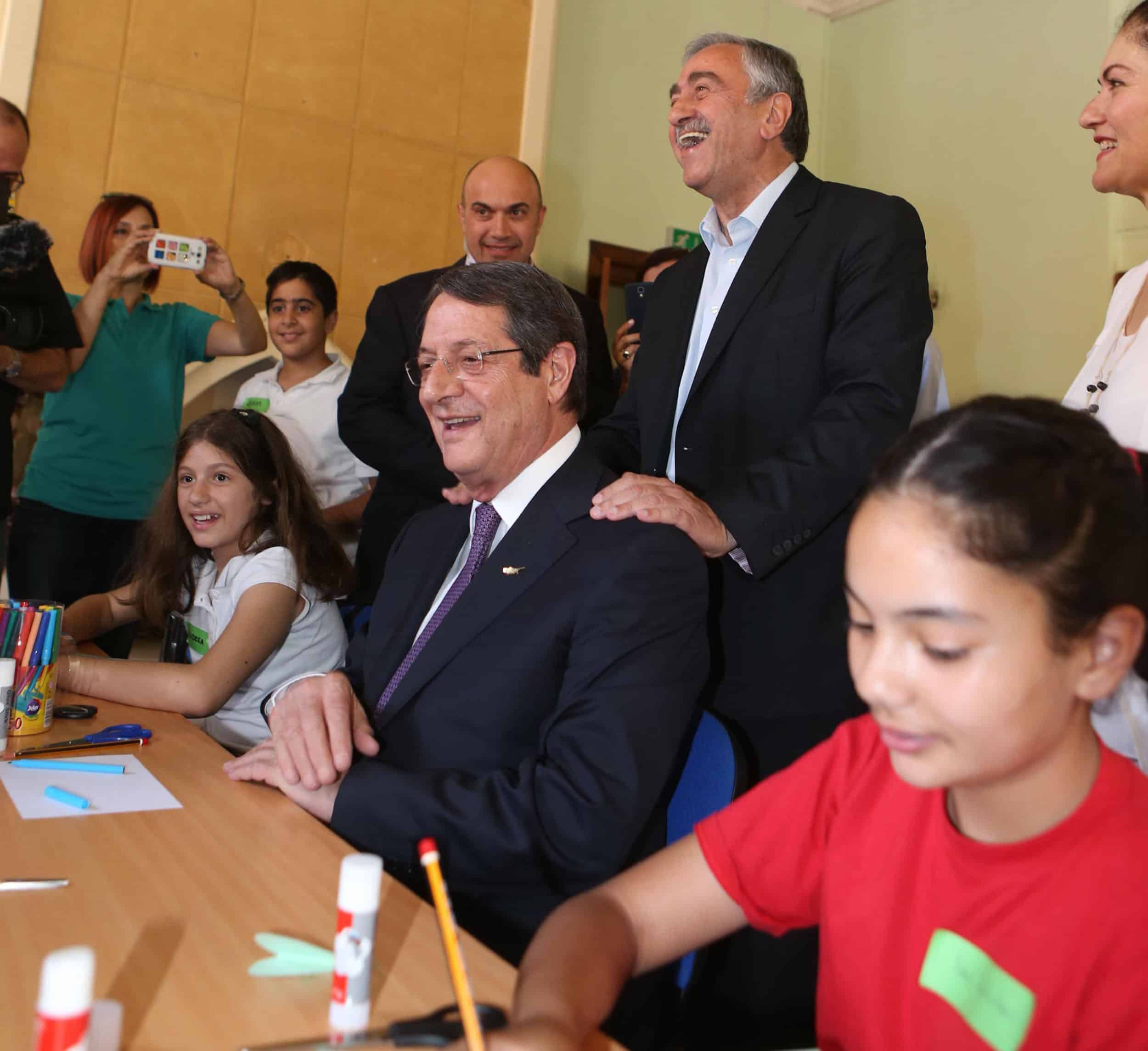
Leontios Ierodiakonou, in his analysis of the Cyprus problem, focuses on the Crans-Montana talks in 2017. Mustafa Akinci, elected Turkish Cypriot leader in April 2015, and Nicos Anastasiades, the Cyprus president, both showed a willingness for a settlement, leading to a positive climate and meetings in Mont Pelerin (2016) and Geneva (January 2017). The UN Secretary-General’s report from September 28, 2017, highlighted convergences on many issues, including the exchange of maps for the first time. The Crans-Montana conference on June 30, 2017, saw the introduction of the “Guterres framework,” which proposed the abolition of the Treaty of Guarantee and the unilateral right of intervention, and discussed the withdrawal of foreign troops. However, disagreements persisted, particularly regarding the role of Turkey in a future monitoring mechanism. Anastasiades’ behavior at the conference, questioning proposals and showing reluctance to negotiate, contributed to the talks’ collapse. Despite this, the Greek Cypriot side later expressed a willingness to resume negotiations from where they left off at Crans-Montana. Akinci’s proposal on April 30, 2018, for a “strategic agreement” based on the Guterres Framework was not responded to by the Greek Cypriot side. Ierodiakonou criticizes the decision-making process in Cyprus, suggesting a more collective approach to national issues.

Two years into the Ukraine crisis, what, ’s next?

Two years into the Ukraine crisis, what, ’s next?

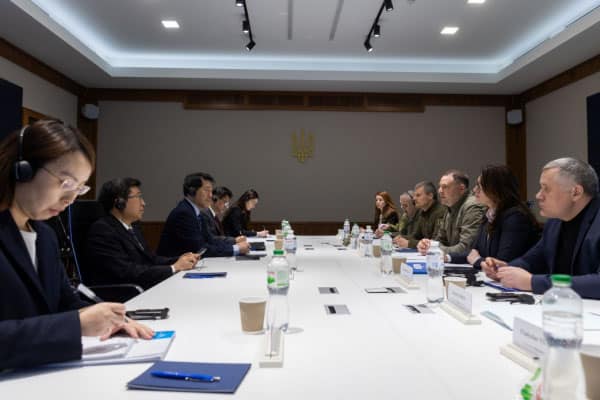
On February 24, the Ukraine crisis marked its two-year anniversary, with ongoing fighting and no sign of abating. The crisis has affected not only Ukraine but also its European neighbors, leading to uncertainty and a crumbling security architecture. The Munich Security Conference last month highlighted concerns about a lose-lose outcome. Both Russia and Ukraine, the parties to the conflict, appear unprepared or unwilling to stop fighting and enter negotiations. There have been efforts to encourage peace talks, including international peace conferences hosted by France and Malta, but without the participation of both conflicting parties, these efforts have seen limited success. Ambassador Li Hui, the Chinese special representative on Eurasian affairs, engaged in shuttle diplomacy, holding talks with officials in Moscow, Kiev, and several European capitals to bridge differences and promote peace. China, under President Xi Jinping, has advocated for respecting sovereignty and territorial integrity, observing UN Charter principles, addressing legitimate security concerns, and supporting peaceful crisis resolution. China aims to promote a negotiated peace and encourages the international community to support peace efforts.

A sociologist, ’s view of the Cyprus problem

A sociologist, ’s view of the Cyprus problem

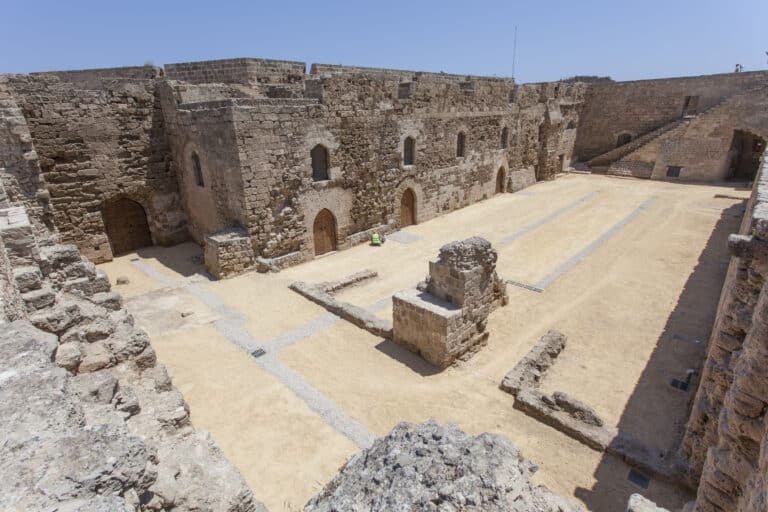
The Cyprus problem has been unresolved for 50 years, with significant changes in both the physical landscape and the mindset of its people since 1974. The UN-led negotiations have focused on constitutional and legal challenges, often overlooking the social realities and expectations of Greek Cypriots and Turkish Cypriots regarding a federal Cyprus. The social structure and the passage of time have influenced the local dimension of the Cyprus issue, with Greek Cypriots generally expecting a reversal of the northern occupation and Turkish Cypriots aiming to retain benefits supported by Turkey. Urban expansion and new economic interests in the north have altered perceptions of life. Sociological analysis is deemed necessary to understand the underlying contradictions in the images of Cypriot society and to foster progress towards settlement. Examples of successful bicommunal cooperation include the Nicosia Master Plan and the Bicommunal Technical Committee on Cultural Heritage. These initiatives demonstrate the potential for building solidarity and mutual understanding through shared efforts, yet they have not significantly influenced the formal negotiation process. The article emphasizes the importance of sociological insight in addressing the Cyprus problem and fostering a bicommunal society.

Our View: The two sides have over-complicated the peace process

Our View: The two sides have over-complicated the peace process

Maria Angela Holguin, the personal envoy of the UN Secretary-General, completed her second visit to Cyprus after meeting President Christodoulides. During her week-long visit, she engaged with party chiefs, mayors, chambers of commerce, and civil society members from both sides of Cyprus. Holguin plans to return next month following visits to Brussels and several EU member-states. She had previously visited the three guarantor states. Details of her meetings are scarce, but it is known that she sought opinions on breaking the deadlock in Cyprus without revealing her own views. Holguin has expressed interest in engaging with civil society groups, although their influence is considered limited. The text suggests that a breakthrough in the peace process should come from the leadership level rather than civil society, emphasizing the roles of President Erdogan and President Christodoulides in potentially advancing towards a settlement.

Overnight pharmacies for Saturday, 16 March

Overnight pharmacies for Saturday, 16 March

– Tappas Tonia is located at Methochiou 51, Block B-D, Agios Andreas, Nicosia, near the American Embassy. Contact: 22570999.
– Aristodimou Konstantina is located at Stavrou Avenue 71E, Strovolos, Nicosia, opposite the kiosk “Octagon”. Contact: 22492929, 22494102.
– Pontos Andreas is located at Leoforos Eleftherias 27, Lakatamia, Nicosia, near the Anthoupolis Settlement Elementary School. Contact: 22382550, 99318764, 97688587.
– Chloe Michaelidou (Peter) is located at Digeni Akrita 12, Nicosia. Contact: 22433480, 22337979.
– Vasiliki Malama is located at Arch. Makarios III Avenue & Doiranis 1, Nicosia, below the former clinic “Angeli”. Contact: 22374939.
– Konstantinos Iasonidis is located at Spyrou Kyprianou 23B, Mesa Geitonia, Limassol, near Luna Park “Galaktika”. Contact: 25358000, 99746622.
– Irma Kalaitzidi is located at Georgiou A’ 61, Block G, Germasogeia, Limassol, between Dasoudi & Pizza Hut. Contact: 25312012, 25342612.
– Charalambos Papadopoulos is located at Theodorou Potamianou 52, Kato Polemidia, Limassol, near Jumbo Polemidia. Contact: 25735505.
– Dina Papadopoulou is located at N. Pattichi 121, Limassol, near the roundabout of Polemidia. Contact: 25387216, 99826409.
– Pavlos Apostolidis is located at Kosma Lysioti 20, Larnaca, towards the beach. Contact: 24627213, 24423271.
– Flora Antoniou is located at Grigori Afxentiou 9-10, Livadia, Larnaca. Contact: 24322868, 97810079.
– Stefanos Diomedous is located at Anth. Georgiou Savva 2, Geroskipou, Paphos, near Pafiako Stadium. Contact: 26961999, 99683122.
– Alexandra Pirpa is located at Eleftheriou Venizelou 80, Paphos, opposite “Zorpas” bakery. Contact: 26948222.
– Christina Alapai is located at Griva Digeni 8, Paralimni, next to KEDIPEPS – Paralimni Square. Contact: 23742002, 23744155.