ELAM takes cues from Italian far-right during ECR gathering

ELAM takes cues from Italian far-right during ECR gathering

The ECR Conference in Nicosia, promoted by ELAM, focused on immigration and criticized the European Union. ELAM aims to follow the model of Italian Prime Minister Giorgia Meloni’s party. Delegations from 22 countries attended the conference, discussing challenges facing Europe. Marinos Sizopoulos of EDEK warned of “genocidal plans brewing” and emphasized the need for a democratic solution to the Cyprus issue.

Cyprus economy on healthy trajectory, European Commission says

Cyprus economy on healthy trajectory, European Commission says

The European Commission released a report on Cyprus’ economy, noting that GDP is expected to grow and inflation to decrease. The report also highlighted risks related to interconnections with economies within and outside the EU, as well as vulnerabilities related to debt. The GDP growth rate in 2023 was 2.4%, down from 5.1% in 2022, with expectations of rebounding growth in 2024 and 2025. The Cypriot labor market remains robust, with employment rising and unemployment expected to fall. The country’s fiscal position is strong, with a surplus expected to be maintained. Cyprus’ high integration with EU and non-EU economies makes it susceptible to economic developments in those regions, posing risks to its economy.

Wood: building on an abundant natural resource

Wood: building on an abundant natural resource

Forests in the EU can contribute to greening the European construction industry and support architectural improvements. In the Gironde department of France, a secondary school was built in 2022 using wood from local pine trees, aiming to utilize wood from nearby forests while preserving them. This project is part of the BASAJAUN research initiative, funded by the EU, which promotes the use of wood as a versatile and recyclable material. The initiative’s flagship is a wooden apartment building near the Pian-Médoc school, designed to demonstrate sustainable forest management and the potential for greening the construction industry. The building, made from non-local wood, features a disassemblable facade and uses natural wood fibre for insulation, highlighting the environmental benefits of using wood in construction. BASAJAUN aligns with the European Green Deal’s goals and the New European Bauhaus initiative, emphasizing sustainability, aesthetics, and inclusion in architecture. Buildings in the EU account for significant energy consumption and greenhouse gas emissions, with traditional materials like concrete and steel being energy-intensive. Using wood in construction can reduce the carbon footprint and even turn buildings into carbon sinks. The EU aims to ensure sustainable sourcing of wood to support biodiversity, ecosystems, and local communities. The potential carbon storage of new residential wood buildings in the EU is significant, and bio-based materials, including wood, currently represent a small fraction of building materials used in Europe. BASAJAUN has partners across 11 EU countries and has developed a system for digitally tracking wooden materials in construction. Another EU-funded project, WOODCIRCLES, focuses on recycling wood waste, aiming to address the challenge of its variable quality and promote the reuse of wood in a sustainable manner.

33 countries to meet in Cyprus for Gaza aid summit

33 countries to meet in Cyprus for Gaza aid summit

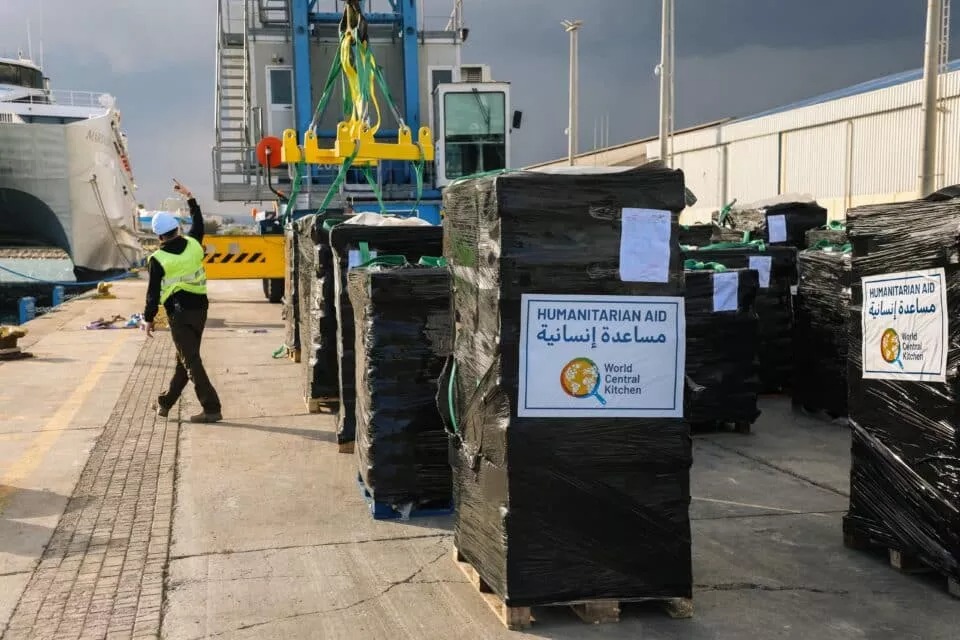
A total of 33 countries, four organizations, and two NGOs have confirmed their participation in an international summit on March 21st to address the food crisis in Gaza. The countries include the United States, United Kingdom, France, United Arab Emirates, Italy, Greece, Spain, Switzerland, Portugal, Poland, Brazil, Denmark, Czech Republic, Israel, Australia, Germany, Bulgaria, Singapore, Netherlands, Slovenia, Japan, Canada, Malta, Qatar, Hungary, Belgium, Latvia, Luxembourg, Austria, Ireland, Sweden, Finland, Slovakia, and Cyprus as the host. The organizations are the European Union, the United Nations, USAID, and WHO. The NGOs are WCK and FOGBOW. Approximately 100 attendees are expected to be physically present at the summit.

Bringing life back to Cyprus hillsides

Bringing life back to Cyprus hillsides

Marathasa wines are produced in a modern winery located in the Marathasa valley near Kalopanayiotis, Cyprus. The winery, owned by John Papadouris, focuses on producing fine Cypriot wine and has replanted abandoned vineyards around the village of Kalopanayiotis. The vineyards are grown at high altitudes, up to 1,125 meters, on steep stony terraces among native mountain plants and trees. The winery produces wines from both indigenous and international grape varieties, including the dominant Xynisteri grape, Promara, Sauvignon Blanc, Moschophilero, Assyrtiko, Syrah, Yiannoudi, Zinfandel (or Primitivo), Grenache, and Mataro (Mourvèdre). The winery uses the latest technology in winemaking and is led by Viktoras Finopoulos, who has experience making wine in various countries. The winery offers a tasting floor for visitors, 4X4 tours of the vineyards, and an a la carte restaurant. Marathasa Wines aims to revive mountain village communities and surrounding vineyards. The text also describes specific wines produced by Marathasa Wines, including the 2022 Marathasa Wines Athassi Xynisteri, Anelikou Sauvignon Blanc, Rosé Laouri Syrah, and Marathos Syrah, along with their tasting notes and prices.

The future of work: Why we need to think beyond the hype of the four-day week

The future of work: Why we need to think beyond the hype of the four-day week

Since the 19th century, the number of hours spent at work has been steadily declining in developed countries. The four-day week emerged in the 90s as a demand for a more equal division of work, developed in 1993 by French economist Pierre Larrouturou and tested in 1996 with France’s de Robien law. Antoine Riboud, CEO of Danone, supported the idea, and Volkswagen adopted the four-day week in 1994 but abandoned it in 2006. The Covid crisis renewed interest in the four-day week, with 56% of British employees willing to earn less for more free time. New Zealand introduced a four-day week post-pandemic to boost productivity and work-life balance, with Japan and several companies, including Hitachi and Microsoft, following suit. Belgium and the Nordic countries implemented a model where working hours are concentrated over four days without salary reduction. In contrast, Southern Europe, including Spain and Portugal, has explored a 32-hour week aiming to maintain productivity by reducing unproductive time. The concept of the four-day week challenges traditional work paradigms and suggests a shift towards valuing personal and collective fulfillment over individual success.

Catholic bishop to be ordained in Nicosia

Catholic bishop to be ordained in Nicosia

Bruno Varriano has been appointed as the Auxiliary Bishop of the Latin Patriarchate of Jerusalem in Cyprus and will be ordained in Nicosia. This ordination is significant as it marks the first of its kind in modern Cyprus since the Ottoman Empire. The Episcopal Ordination is scheduled to take place at the Filoxenia Conference Centre at 4:30pm. Varriano, of Brazilian origin, was born in Sao Paulo in 1971, joined the Custody of the Holy Land in 1996, and is a priest and a psychotherapist specializing in clinical psychology. He holds a Licentiate in Spiritual Theology from the Pontifical “Antonianum” University in Rome and a Diploma in Biblical Formation. In August 2022, he was appointed Vicar of the Patriarch of Jerusalem of the Latins for Cyprus.

New bbf: portfolio transforms how people live, work and play

New bbf: portfolio transforms how people live, work and play

bbf:, a developer specializing in residential and commercial properties in Cyprus and Greece, has released its 2024 portfolio featuring high-end living spaces and Class-A offices. The portfolio includes a range of developments in Cyprus, such as apartments, villa complexes, business centers, and live-and-work communities, all designed to offer magnificent views and foster community. Notable projects include :synergy, a gated complex in Oroklini, Larnaca with 89 family villas, and :marco polo, a luxurious beachfront apartment project in Limassol. Another key development, :flow, is a mixed-use project in Limassol combining high-end living and Class-A work environments. The portfolio also highlights the company’s focus on Class-A commercial developments, with :benchmark in Limassol being a prime example of contemporary architecture and business infrastructure. bbf: has over 15 years of expertise and has developed over 145 projects in Cyprus, Greece, Portugal, and Canada, including Sky Tower, Marco Polo, Eden Roc, and the restoration of Cyprus’ historic Berengaria Hotel.

The Greek debt crisis and its misconceptions

The Greek debt crisis and its misconceptions

The text discusses the Greek debt crisis, highlighting inaccuracies and misconceptions in public debate. It references Nikos Garganas’ book, which outlines the crisis’s causes, including the misuse of fiscal space and increased government spending leading to significant debt. The crisis was exacerbated by the global financial crisis and Greece’s inability to find investors. The European Union initially refused a bailout, citing the ‘no bailout’ clause, but eventually provided a €110 billion Memorandum to prevent bankruptcy and potential contagion. The IMF participated despite concerns over debt sustainability. A debt restructuring, including a 53.5% bond haircut, was implemented in 2012, which, despite criticisms, was deemed necessary and led to improved debt sustainability. The text also refutes myths about the crisis, emphasizing that memoranda were a response to, not a cause of, the crisis and that debt relief alone would not have ended austerity. It concludes that understanding the crisis’s causes and implementing structural reforms are crucial for preventing future crises.

MP seeks to end compound interest on delayed loans

MP seeks to end compound interest on delayed loans

MP Kostis Efstathiou submitted a bill proposal to the Parliament’s Plenary Session aiming to amend the Law on Interest Rate Liberalization to prevent banks from capitalizing compounded interest on delayed loans. Compounded interest, which increases the total borrowed amount through direct or indirect methods, can lead to over-indebtedness and is considered by Efstathiou to contradict principles of good faith and non-abusive rights exercise by banks. The proposal is expected to face opposition from credit institutions and the Central Bank. A study by the Parliament’s Research and Studies Sector, following Efstathiou’s instructions, revealed varied international approaches to interest capitalization, with specific regulations in Austria, Belgium, Greece, Spain, Lithuania, Portugal, and Slovakia, reflecting different consumer protection policies and financial contract regulations.