Government to intensify penalties, enhance firefighting measures

Government to intensify penalties, enhance firefighting measures

On the International Day of Forests, Agriculture Minister Maria Panayiotou announced the government’s plans to submit amendments by the end of March to increase penalties for individuals causing fires. She spoke at Athalassa Park, stating that district administrations would conduct wild brush clearance by the end of May to prevent wildfires. Panayiotou emphasized the government’s focus on enhancing the forestry department’s operational readiness, infrastructure, technology, and human resources. She highlighted the introduction of technology, including drones and electromagnetic methods, for fire detection and forest surveillance, as part of the Recovery and Resilience Plan. The plan has also facilitated the acquisition of firefighting vehicles and equipment through national funds. Additionally, a coordination meeting at the Presidential Palace led to decisions on further measures for fire prevention and response, including a proposal for integrating the airborne firefighting unit into the National Guard and the reopening of the forestry college in 2025. Additional sensors for early wildfire detection are also to be installed.

Ambassador optimistic over LNG terminal

Ambassador optimistic over LNG terminal

The liquefied natural gas (LNG) terminal in Cyprus is expected to be completed by the end of the year, as stated by China’s ambassador to Cyprus. The project, located at Vasiliko, had been delayed due to a dispute but has now resumed. The floating, storage, and regasification unit (FSRU) for the project is more than 99% complete and is in Shanghai, with delivery to Cyprus expected by April or May. The land-based infrastructure at Vasiliko is 50% complete. The completion of this project is anticipated to lower the cost of generating electricity in Cyprus and strengthen the relationship between Cyprus and China.

Canada plans to reduce temporary residents, cap future intake

Canada plans to reduce temporary residents, cap future intake

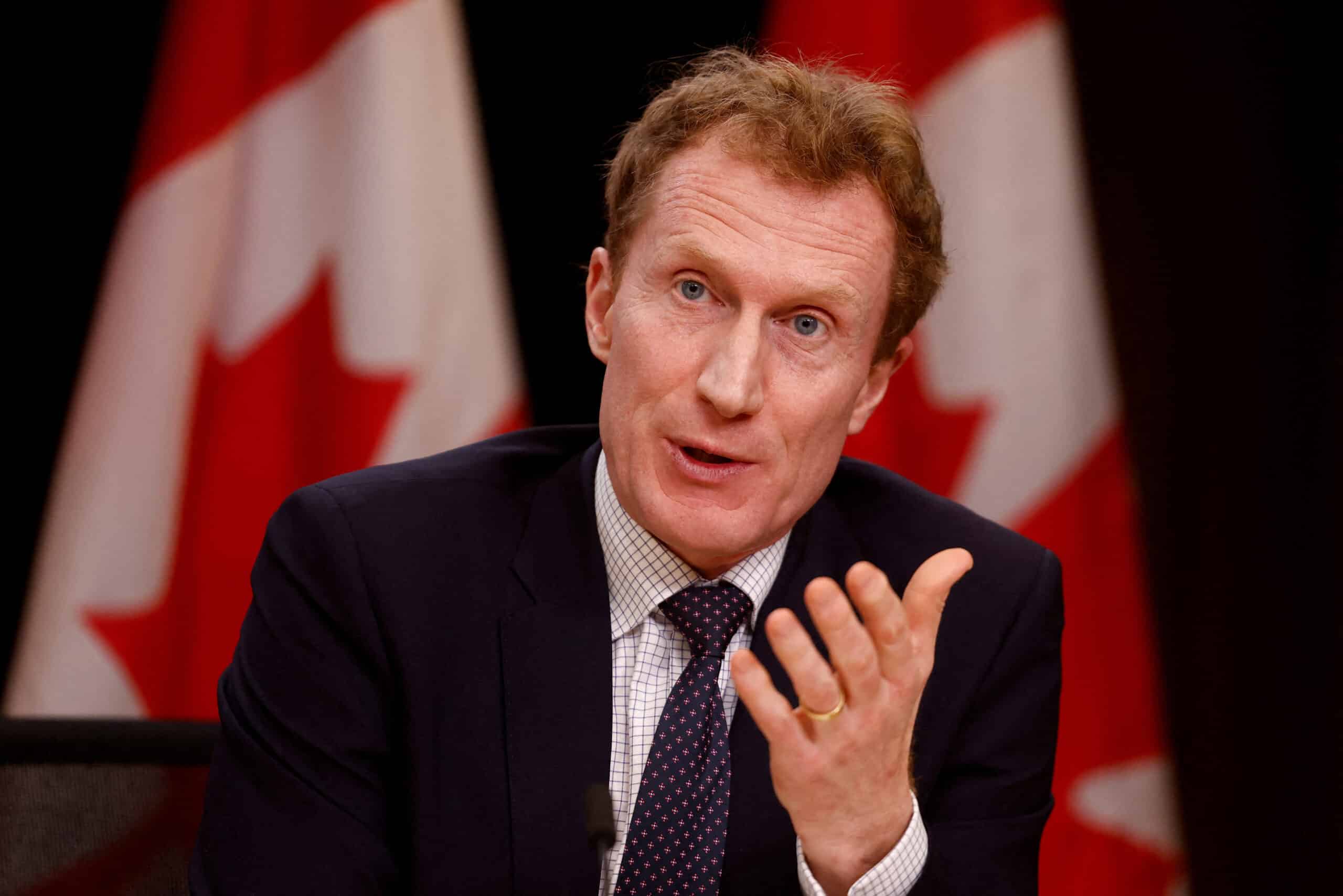
Canada plans to reduce its temporary residents and set a cap on temporary immigration for the first time, aiming to address a housing shortage and stretched essential services. The government intends to decrease temporary residents to 5% of the total population over the next three years from 6.5% in 2023, which is about a 20% cut from the 2.5 million temporary residents in 2023. Immigration Minister Marc Miller announced the plan and will meet with provincial and territorial counterparts in May to finalize it. The government will also include temporary resident arrivals in the immigration levels plan starting this fall. Additionally, Canada announced a two-year cap on the intake of foreign students and will stop issuing work permits to some students after graduation.

Venezuela creates new state in territory under dispute with Guyana

Venezuela creates new state in territory under dispute with Guyana

Lawmakers in Venezuela allied with President Nicolas Maduro approved the creation of a new state in the Esequibo region, which is disputed with Guyana. This decision aligns with Maduro’s claims over the 160,000-square-km territory but has no immediate effect. Venezuela and Guyana agreed to avoid force and not escalate tensions after a meeting between Maduro and the Guyanese leader. Despite an International Court of Justice (ICJ) case pending on the territory’s ownership, Venezuela does not recognize the ICJ and cites a December referendum, which allegedly had over 10 million voters, as justification for its actions, including oil exploration in Esequibo. Guyana maintains its borders are non-negotiable and will defend its sovereignty. The new state, named Guayana Esequiba, will have its temporary capital in Tumeremo, Bolivar, and its creation will be official upon publication in the gazette. Its borders will be the Atlantic Ocean, Brazil, Guyana, and the Venezuelan states of Delta Amacuro and Bolivar. This move comes as Venezuela revives its claim to the territory following significant oil and gas discoveries.

BOCH shares gain on dividend news

BOCH shares gain on dividend news

– Bank of Cyprus Holdings announced a 25c dividend and a €25 million share buyback.
– Shares traded at recent highs on the London and Cyprus stock exchanges.
– The share price on the London Stock Exchange opened at 307p and reached an intra-day high of 316p, the best since its listing at 285p on January 31, 2017.
– The share price hit its lowest at 39.6p on September 30, 2020, and recovered above 300p at the end of 2023.
– The closing trading price on Thursday was 309p/369c.
– The 25c dividend is based on €487 million in after-tax profits for 2023, marking the second reward to shareholders in over a decade.
– The CEO aims to increase the profit distribution to 30-50% over the next few years.
– The European Central Bank approved the cash dividend and share buyback.
– The total distribution for FY2023 amounts to €137 million, with a cash dividend of €112 million and a share buyback of up to €25 million.
– Last year’s profit distribution was €22 million.
– The cash dividend will be paid on June 14 to stockholders registered as of April 26, with BOCH trading ex-dividend as of April 25.
– The bank is considering alternatives to issuing dividend cheques to speed up the process.
– The share buyback will occur on both the London Stock Exchange and the Cyprus Stock Exchange, with two brokerage firms handling the transaction.
– The bank plans to give bonuses to about 30% of its staff, who also received 11% pay increases last year.
– Bank of Cyprus Holdings Chairman stated the distribution reflects the Group’s strong financial performance in 2023 and its commitment to delivering value to shareholders.

Traffic camera fines generate , €9.3 million

Traffic camera fines generate , €9.3 million

Revenues from fines issued for traffic violations caught by cameras from January 1, 2022, to March 14, 2024, amounted to €9,329,369. Within this period, 323,176 violations were detected, with fines issued for 320,447 of them. Of these, 147,188 fines have been paid, 149,094 are pending payment, and 24,165 are being contested in court. The majority of the fines, totaling 244,665, were for speeding, followed by 38,726 for traffic light violations. Fixed cameras recorded 137,838 violations, while mobile cameras recorded 202,172. Concerns were raised about the system being more focused on collecting fines than deterring traffic violations.

Pound tumbles, gilts rally after BoE nods at rate cut ahead

Pound tumbles, gilts rally after BoE nods at rate cut ahead

– The Bank of England (BoE) kept its benchmark interest rate at 5.25%, the highest since 2008.
– The decision followed data showing inflation fell to its lowest in almost two-and-a-half years but remained high.
– After the BoE’s decision, the pound fell by as much as 0.48% to a session low of .2726 and was down 0.3% against the euro at 85.63.
– Two-year gilt yields dropped by as much as 12.8 basis points to 4.103%.
– The BoE’s interest rate-setters voted 8-1 to keep borrowing costs at 5.25%.
– Britain’s headline inflation rate fell to 3.4% in February from 4.0% in January, the highest in the Group of Seven.
– Money markets were pricing a 75% chance of a BoE rate cut in June after the decision.
– The Swiss National Bank delivered a surprise quarter-point rate cut, the first major central bank to dial back tighter monetary policy aimed at tackling inflation.
– The Bank of Japan raised rates for the first time in 17 years, and the Federal Reserve indicated it might cut rates three times this year.
– A survey showed British businesses continued to recover from recession, with inflationary pressures persisting.

Cyta defends data centre plans in House committee meeting

Cyta defends data centre plans in House committee meeting

Telecommunications company Cyta is conducting a study on establishing a new data centre, with interest from ten companies. Cyta aims to find a strategic partner for the project, holding a 51% stake. An initial feasibility study was conducted but withdrawn for further scrutiny. Cyta approached 39 companies, with eight initially showing interest. The project focuses on sustainable development, including renewable energy sources. The Auditor General described Cyta as a healthy organization but criticized the previous board and highlighted issues with a submarine data cable project involving political connections. Cyta withdrew from this project due to changed financing terms, denying any political influence.

Parties favour legislation requiring insurance for doctors

Parties favour legislation requiring insurance for doctors

The legislation introduced by Disy to the House health committee, which mandates insurance coverage for all doctors to practice in Cyprus, received favorable responses from political parties and stakeholders. This legislation aims to benefit both doctors and patients by ensuring doctors are covered against professional negligence. Currently, doctors within the national health scheme Gesy are covered, but private sector doctors are covered based on their contracts with private hospitals. However, there are many private doctors without insurance coverage. Issues regarding the amount and procedures of insurance coverage were discussed, with the Cyprus Medical Association and insurance companies expected to address these internally to issue specific regulations. Akel MP Marina Nicolaou expressed agreement with the principle of insurance coverage for all healthcare professionals but is awaiting answers to questions about doctors employed by the health ministry and not by the state health service (Okypy).

Turkey central bank stuns market with 500-point rate hike to 50%

Turkey central bank stuns market with 500-point rate hike to 50%

Turkey’s central bank raised interest rates by 500 basis points to 50% due to a deteriorating inflation outlook and may tighten further if inflation worsens significantly and persistently. This decision, seen as a demonstration of the central bank’s independence, occurred 10 days before nationwide local elections. Following the rate hike, the lira appreciated by up to 1.5% against the dollar, and Turkey’s dollar bonds rallied. Since last June, the central bank has increased the key one-week repo rate by 4,150 basis points from 8.5%, following a shift towards more orthodox economic policies after President Tayyip Erdogan’s election victory in May. The central bank also adjusted its policy operational framework, setting the overnight borrowing and lending rates 300 basis points below and above the repo rate. Inflation in Turkey rose to 67% last month, higher than expected, despite a series of rate hikes since June. A Reuters poll showed that while most respondents expected the rate to remain steady in March, a majority anticipated further hikes later in the year. The central bank has also taken steps to tighten credit, including adjusting reserve requirements and raising the maximum rate on credit card cash withdrawals. Tighter fiscal policy is expected after the upcoming elections, which could increase credit costs and exacerbate the cost-of-living crisis in Turkey.