Dhekelia residents threaten to shut down power station
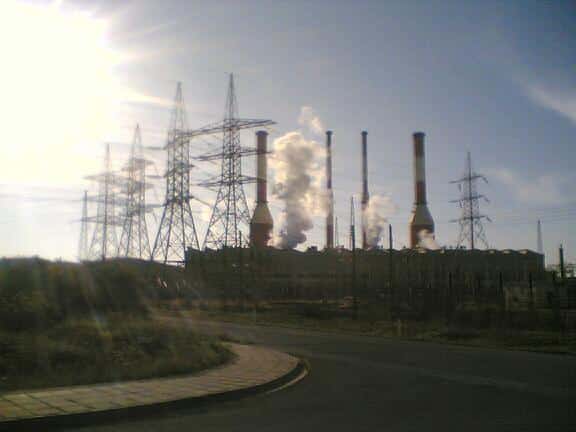
Dhekelia residents threaten to shut down power station

Residents near the Dhekelia power plant have threatened to shut down the station due to unfulfilled promises of its closure by 2019. Community leaders from Ormidia and Xylotymbou have expressed dissatisfaction with the compensation provided since 2016, which was contingent on the plant’s closure by 2019. Ormidia’s community leader, Christofis Kasiaouris, highlighted the frustration of the area’s 20,000 residents, as the power station continues to operate. Xylotymbou’s community leader, Kyriacos Papageorgiou, disagreed with plans to upgrade and keep the power station operational until 2029. The Electricity Authority of Cyprus (EAC) has plans to install two new internal combustion engines at the plant, which has a capacity of 460 MW and is located about 15 kilometers east of Larnaca. Alexis Michaelides of the EAC stated that new compensation for the communities would be considered once the upgrade is confirmed. Ormidia has received €1 million, and Xylotymbou has received €200,000 in compensation for infrastructure projects. The House energy committee chair, Kyriacos Hadjiyiannis, mentioned the power plant’s adverse health effects on residents, and Akel MP Andreas Pashiourtides suggested that compensation should be similar to that given to residents near the Vasiliko power station.

IMF says global ‘soft landing’ in sight, lifts 2024 growth outlook

The International Monetary Fund (IMF) has upgraded its forecast for global economic growth, citing faster-than-expected easing of inflation. The IMF’s chief economist, Pierre-Olivier Gourinchas, stated that a “soft landing” was in sight, but overall growth and global trade still remained lower than the historical average. The IMF forecast global growth of 3.1% in 2024, up from its previous forecast of 2.9%, and expected global trade to expand by 3.3% in 2024. However, risks such as geopolitical tensions in the Middle East and attacks in the Red Sea could disrupt commodity prices and supply chains. The IMF also warned that delays in fiscal consolidation and the potential violation of global trade rules by certain countries could impact economic activity.

Nuland: If the S400 issue is resolved, Turkey can return to the F35 program

Nuland: If the S400 issue is resolved, Turkey can return to the F35 program

The Deputy Minister of Foreign Affairs of the United States, Victoria Nuland, stated that if the issue of the S400 is resolved, the US will welcome Turkey back into the F35 family. She also mentioned that Turkey's approval of Sweden's accession to NATO is significant and that the US wants to revive its relationship with Turkey. Nuland emphasized the importance of Turkey's participation in the development of the F-16 fleet and the need for a strong defense system. She also discussed the possibility of resolving the S400 issue and returning to F-35 negotiations. Nuland had productive discussions in Ankara regarding various aspects of the US-Turkey relationship, including energy, environment, trade, and defense cooperation. She expressed the desire to strengthen dialogue on counterterrorism actions and address challenges in the Middle East.

The prospects of the Greek economy in 2024

The prospects of the Greek economy in 2024

The Greek economy continues to show positive performance despite global economic slowdown due to currency tightening, energy crisis, and conflicts in Ukraine and the Middle East. The International Monetary Fund (IMF), the European Commission, and the Organization for Economic Cooperation and Development (OECD) predict a growth rate of 2.0%-2.3% for 2024, slightly lower than 2023 but higher than the eurozone average. The positive performance is attributed to cheap financing from the Recovery and Resilience Fund, strong tourism, and ongoing reforms. The main challenges for the Greek economy include the investment gap, high public debt and non-performing loans, and high current account deficit. Reducing the debt will be difficult in the coming years due to various factors such as the need for primary surpluses, higher interest rates, and the expiration of certain financial support. The government's reform efforts have been praised, but further reforms are needed to attract investments and improve infrastructure. The article emphasizes the importance of balancing fiscal space for social benefits with the need to reduce debt.

Investors reassess strategies amid Middle East tensions

Investors reassess strategies amid Middle East tensions

The recent surge in tensions in the Middle East, caused by attacks carried out by Iran-backed militants, is leading investors to reassess their strategies. The attacks have increased uncertainty and market volatility, prompting investors to adopt a more cautious approach and impacting various asset classes. The Middle East is a significant player in the energy market, and disturbances in the region can have a profound impact on energy prices. Rising oil prices could have cascading effects on markets, including increased production costs, higher transportation expenses, and a potential drag on consumer spending. Investors in energy-related stocks and commodities may experience increased levels of volatility. If the events in the Middle East continue to escalate, there may be a flight to safety, with investors reallocating their portfolios to mitigate risks. This could lead to increased demand for safe-haven assets such as government bonds and certain currencies like the US dollar. Diversification strategies become even more critical during periods of heightened geopolitical tension. Investors will also be monitoring the impact on trade and supply chains, as rising tensions can lead to increased shipping costs, delays, and potential disruptions in the flow of goods. Companies operating in or dependent on the affected regions may face challenges, while those with diversified supply chains may be better positioned to navigate uncertainties. The recent attacks in the Middle East are injecting a new level of uncertainty into financial markets, and investors are actively managing the potential ramifications of escalating tensions.

Saudi Arabia abandons plan to increase peak oil production

The Saudi Arabian national oil company, Aramco, has been instructed by the Ministry of Energy to maintain its maximum production capacity at 12 million barrels per day, instead of increasing it to 13 million barrels per day as previously planned. This decision is not expected to have an immediate impact on production and crude oil exports. The company will announce its investment forecasts when it releases its annual results in March 2023. The decision not to increase production capacity is unrelated to technical issues and the company is prepared to increase it again if requested. This announcement does not reflect any changes in future oil demand scenarios. Aramco is the world's largest exporter of crude oil.

Solar panels and cheaper electricity

Solar panels and cheaper electricity

The cost of electricity in Cyprus is increasing, leading the government to introduce incentives for investments in solar energy. Solar energy can significantly reduce household electricity costs. However, there are limitations to installing solar panels, such as lack of space or shading from trees. In Greece, investment companies develop solar parks and sell shares to homeowners, offsetting their electricity consumption. Similar approaches could be considered in Cyprus to install solar panels in apartment blocks and other buildings. Public pressure is influencing government decisions on this issue. The reduction in electricity costs benefits tenants and businesses, making them more competitive. Properties in mountain areas may face challenges due to shading and higher installation and maintenance costs. Seeking advice from specialized contractors or mechanical-electrical engineers can help estimate the capital investment and potential cost savings.

Time to consider maritime security

Time to consider maritime security

Cyprus has been unsuccessful in establishing itself in the eastern Mediterranean geopolitical sphere and has been considered too small to be taken seriously by allies and neighbors. However, recent tensions in the Middle East and the need for increased security have created an opportunity for Cyprus to change this perception. Cyprus lacks the means to defend its own rights, such as natural resources and commercial interests, and is unable to prevent migrant traffickers from diverting refugees to its shores. Additionally, Cyprus-flagged vessels face risks in areas of conflict. Developing a navy could enhance maritime academies and provide a means for Cyprus to protect its interests. As Europe seeks military autonomy and Turkey’s military power remains unchallenged, Cyprus should consider joining a joint European navy or military group. The importance of energy resources, particularly natural gas, gives Cyprus the incentive to establish a naval presence to reassure commercial partners of its ability to protect its sovereign rights and resources.

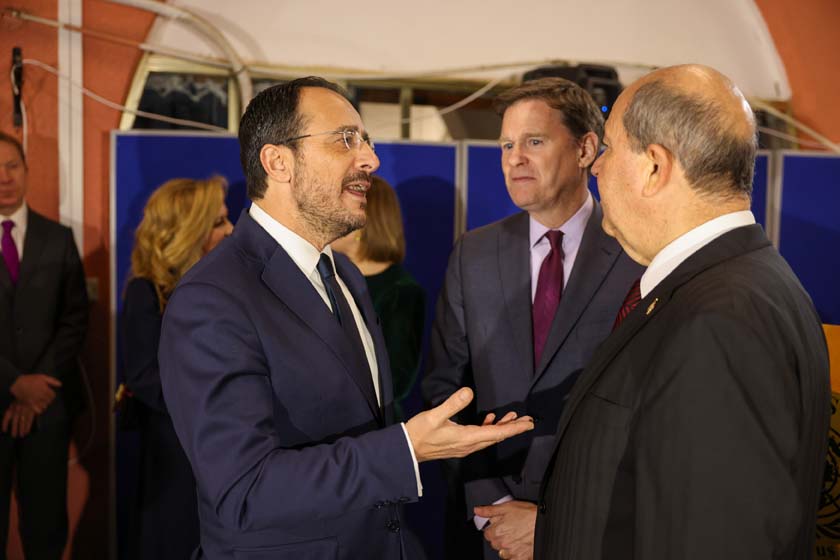
Christodoulides reveals 14 CBMs for Turkish Cypriots

Christodoulides reveals 14 CBMs for Turkish Cypriots

President Nikos Christodoulides has announced a set of confidence-building measures aimed at improving the daily lives of Turkish Cypriots. One of the main measures is to grant citizenship to the children of a Turkish Cypriot and a Turkish parent. Other measures include enhancing the ‘Green Line Trade’ facility and implementing various social and economic initiatives. These measures are seen as significant gestures towards the Turkish Cypriots and could help in resolving the Cyprus problem. However, Turkish Cypriot leader Ersin Tatar has described the measures as “full of traps.” The measures will be implemented in line with national law, international law, and the European Union (EU) acquis.

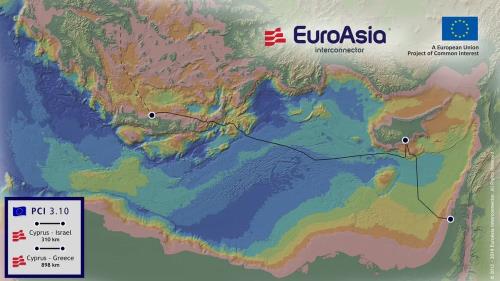
Energy and Finance Ministers meeting next week on Great Sea Interconnector

Energy and Finance Ministers meeting next week on Great Sea Interconnector

The International Energy Agency (IEA) predicts a 2.5% increase in global natural gas demand in 2024. The increase is attributed to colder weather and lower prices. However, the limited new production of liquefied natural gas (LNG) will result in constrained supply. The IEA also highlights geopolitical risks as a major factor of uncertainty for the global natural gas market in 2024. The report mentions Russia's invasion of Ukraine, increased tensions in the Middle East, and concerns about deliberate interventions in critical infrastructure as potential sources of instability.