WTI timid at $78.00 ahead of US PPI

WTI timid at $78.00 ahead of US PPI

West Texas Intermediate remains steady with thin trading, possibly due to anticipation of upcoming producer price figures from the US. The WTI crude oil hovers around $78.00 per barrel in European trading on Thursday. Oil traders have absorbed the hawkish stance maintained by the US Federal Reserve, with the Federal Open Market Committee (FOMC) keeping … Read more

Shipping industry to gather in Athens

Shipping industry to gather in Athens

The Poseidonia 2024 World Expo will take place in Athens, Greece from June 3 to 7. Many Cypriot shipping companies and professionals will attend the event.

US lawmakers table bill to extend lifting of Cyprus arms embargo

US lawmakers table bill to extend lifting of Cyprus arms embargo

Fact: A group of United States congressmen tabled a bill to extend the waiver renewal period for the country’s arms embargo on Cyprus from one year to five years.

Israel’s Netanyahu vows victory after Iran strikes, fears of wider conflict grow

Israel’s Netanyahu vows victory after Iran strikes, fears of wider conflict grow

Israel’s Prime Minister Benjamin Netanyahu stated that his country would achieve victory after the military successfully shot down almost all of the more than 300 drones and missiles launched by Iran. The attacks by Tehran, in response to an Israeli air strike in Damascus that killed officers of the Islamic Revolutionary Guard Corps, raised the threat of a wider regional conflict. Netanyahu posted on social media that “together we shall win,” and the Israeli military reported that over 99% of the Iranian drones and missiles were intercepted. Israel is considering a significant response to the attack, which has escalated tensions in the region.

Somali pirates’ return adds to crisis for global shipping companies

Somali pirates’ return adds to crisis for global shipping companies

A speed boat carrying more than a dozen Somali pirates attacked a Bangladeshi-owned bulk carrier in the western Indian Ocean, taking the captain and second officer hostage. The ship, named the Abdullah, later anchored off the coast of Somalia. This incident is part of a resurgence of piracy in the region, with more than 20 attempted hijackings since November. The increase in piracy has led to higher costs for shipping companies due to the need for armed security guards, insurance coverage, and the potential for ransom payments. The Indian Navy recently intercepted and freed another hijacked ship, the Ruen, capturing 35 pirates and rescuing 17 hostages without injuries. The resurgence of piracy is attributed to a reduction in international naval operations off the coast of Somalia and the distraction provided by Houthi militia strikes in nearby waters. Somali President Hassan Sheikh Mohamud emphasized the importance of stopping piracy early to prevent it from escalating. The global economy suffered approximately billion in costs due to Somali pirate activities at their peak in 2011. The current rate of attacks is significantly less, but the threat persists, especially with the end of the monsoon season. Insurers have extended the area in which additional war risk premiums are imposed, and the demand for private armed guards has increased, driving up prices. No ransom payments have been reported for the recent hijackings, but negotiations have taken place. International efforts to combat piracy have been hampered by reduced naval patrols and the lapse of a U.N. resolution authorizing foreign vessels to patrol in Somali waters. Somali President Mohamud highlighted the need to bolster Somalia’s law enforcement capacity at sea and on land to contain the piracy threat.

Aid ship heads to Gaza

Aid ship heads to Gaza

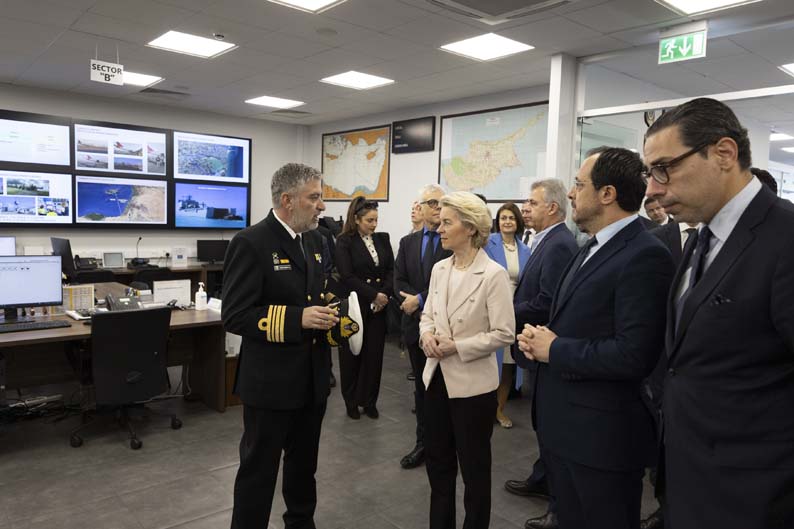
The maritime corridor for humanitarian aid from Cyprus to Gaza is likely to be launched on Sunday, as stated by European Commission President Ursula von der Leyen in Larnaca after inspecting the port installations with President Nikos Christodoulides. The Amalthea Initiative, aimed at delivering aid to Gaza following five months of war, was led by Cyprus and supported by the EU, the United Arab Emirates, the U.S., and the U.K. The first vessel, belonging to the Spanish NGO Open Arms, is anchored in Larnaca, ready to deliver food and supplies provided by the World Central Kitchens charity. The U.S. military plans to set up a temporary port off Gaza’s coast to support the initiative, as announced by President Joe Biden. The Cyprus maritime corridor intends to scale up aid by complementing other routes, including the Rafah crossing from Egypt and airdrops from Jordan. The UN Special Coordinator for Gaza, Sigrid Kaag, plays a crucial role in coordinating humanitarian assistance to Gaza. The European Commission President emphasized the dire humanitarian situation in Gaza and the need for aid, mentioning Europe’s financing of a major humanitarian effort for Palestinians in Gaza and the region, amounting to €250 million this year. The EU has launched 41 flights carrying over 1,800 tonnes of aid and is considering all options, including airdrops. The EU naval force operation Aspides was launched to ensure freedom of navigation in the Red Sea amid deteriorating maritime security. Von der Leyen highlighted the importance of preparing for a viable two-state solution, calling for an immediate humanitarian pause leading to a sustainable ceasefire, opposing forced displacement of Palestinians and the blockade of Gaza, and condemning Gaza as a safe haven for terrorists.

Time to consider maritime security

Time to consider maritime security

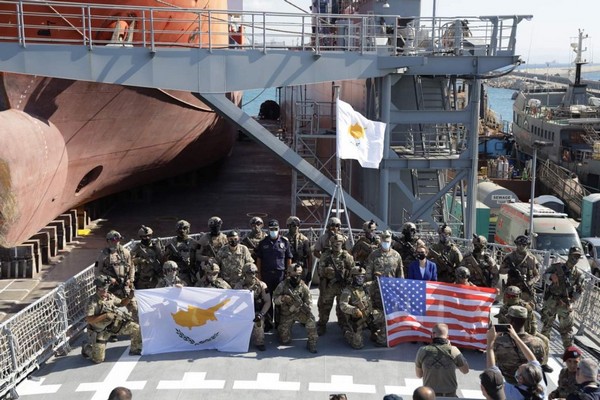
Cyprus has been unsuccessful in establishing itself in the eastern Mediterranean geopolitical sphere and has been considered too small to be taken seriously by allies and neighbors. However, recent tensions in the Middle East and the need for increased security have created an opportunity for Cyprus to change this perception. Cyprus lacks the means to defend its own rights, such as natural resources and commercial interests, and is unable to prevent migrant traffickers from diverting refugees to its shores. Additionally, Cyprus-flagged vessels face risks in areas of conflict. Developing a navy could enhance maritime academies and provide a means for Cyprus to protect its interests. As Europe seeks military autonomy and Turkey’s military power remains unchallenged, Cyprus should consider joining a joint European navy or military group. The importance of energy resources, particularly natural gas, gives Cyprus the incentive to establish a naval presence to reassure commercial partners of its ability to protect its sovereign rights and resources.