Former north , ‘minister’ denies taking bribes

Ziya Ozturkler denied allegations of taking bribes from a university in relation to the ongoing “fake diploma scandal.”
Ziya Ozturkler denied allegations of taking bribes from a university in relation to the ongoing “fake diploma scandal.”

By December 2023, interest rates on Cyprus bank loans for house purchases had reached an average of 5.1%, compared with the average rate of 3.8% for other euro area countries. The average interest rate on Cyprus bank loans to corporations was 5.7% in December 2023, exceeding the euro area average of 5.1%. Cyprus banks had increased their profits by 600% to over €1.1 billion in 2023. The interest income of the two largest banks increased by €830 million between 2022 and 2023, mainly due to higher interest receipts from the ECB. Cyprus banks deposited around 35% of their assets at the ECB, earning from 2% to 4% in interest in 2023. Cyprus banks offered an average interest rate of 2.06% on fixed term deposits in January 2024, compared with an average deposit rate of 3.21% in the euro area. The net interest margins for Cyprus banks exceeded three percentage points, while the average for the euro area was just over one percentage point. The Bank of Cyprus announced that €112 million of their after-tax profit of €487 million would be distributed as cash dividends to shareholders, with a share buyback of up to €25 million.
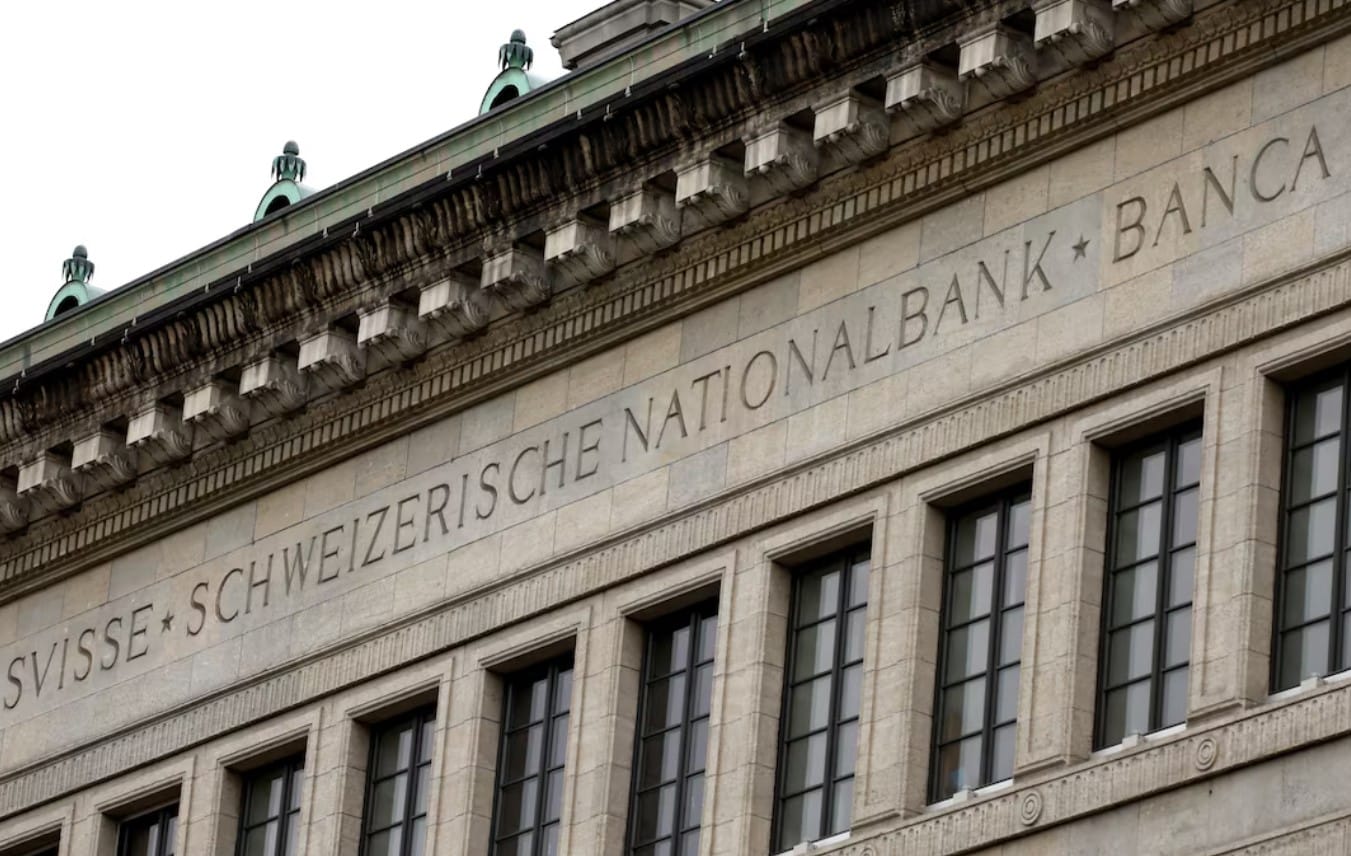
The Swiss National Bank cut its main interest rate by 25 basis points to 1.50 per cent and also reduced its interest rate on sight deposits to the same percentage. This decision marked the first rate cut in nine years and was unexpected by many, leading to a decrease in the value of the Swiss franc and a drop in Swiss government bond yields. The move was in response to a drop in Swiss inflation to 1.2 per cent in February, maintaining within the SNB’s target range of 0-2 per cent for nine consecutive months. The SNB’s action reflects its assessment that the fight against inflation over the past two and a half years has been effective, with expectations that inflation will remain within the target range in the coming years. This decision came before the chairman, Thomas Jordan, is set to step down in September.

The issue of disclosing personal assets by politically exposed persons (PEP) in Cyprus has been problematic, with no standardized or verified submission process. Former President Nicos Anastasiades submitted an asset list that was widely mocked for appearing to underrepresent his wealth. Criticism from the Council of Europe led to a proposal for submissions to be checked by a committee of auditors. Recently, Tax Commissioner Sotiris Markides suggested PEPs should publish their net asset position instead of a detailed list, to avoid disclosing sensitive information. However, deputies argued this method lacks transparency. Another proposal is for PEPs to submit a capital statement prepared by an auditor, which may offer more transparency but has raised concerns about cost. Discussions on amending the laws are ongoing, with all parties recognizing the need for a more serious and formal system.

The Audit Service report on the Ministry of Justice highlights several issues, including non-compliance with laws and regulations, deficiencies in expense control, and incomplete adherence to General Accounting Office circulars. It covers the administration of the ministry, prisons, and the fire service, with a special report on the police published in 2023. The report recommends establishing a reliable internal control system for compliance and monitoring. It notes that some NGOs have not submitted required documentation for funded programs, suggesting legal action to recover funds and possibly withholding future grants. The Ministry of Finance reported an outstanding return of €3,700 from programs/actions in 2017 and 2021, with a Grants Scheme amendment under consideration. Additionally, it highlights the issue of supervisors for released prisoners being overburdened, suggesting a cap on the number of prisoners per supervisor. The report also points out discrepancies in prisoner account balances and unregistered transactions in violation of General Accounting Office provisions. Lastly, it recommends withholding increments for temporary guards who have not passed required exams.

The Organisation for Economic Cooperation and Development (OECD) has stated that UBS’s rescue takeover of Credit Suisse has introduced new risks and challenges for the Swiss economy, despite stabilizing financial stability. The merger, which was the largest bank merger since the global financial crisis, has significantly increased UBS’s size, making it a more dominant force in the Swiss banking sector. The OECD has raised concerns about UBS’s domestic dominance and the potential need for stronger financial regulation. The Financial Stability Board has also highlighted the risks posed by UBS’s failure to Switzerland and has called for stronger bank controls. The Swiss government is considering proposals to enhance regulations for big banks. The OECD report also mentions that the merger could lead to significant job losses but believes the Swiss labor market can absorb these losses. Additionally, the report notes that the Swiss housing market, while showing signs of cooling, still has vulnerabilities with properties being overvalued by up to 40%. The average price for an apartment in Switzerland has risen to over 1 million Swiss francs, with prices in Zurich reaching 1.8 million francs. The OECD forecasts that the Swiss economy will grow by 0.9% in 2024 and 1.4% in 2025, which is below the country’s long-term average growth rate.

Hellenic Bank has introduced a new product called the “18-month Euro Fixed Deposit,” designed for both retail and corporate customers. This product offers an 18-month fixed-term deposit with a 1.5 percent interest rate, applicable for amounts of €20,000 and above, and is available in euros. Customers have the option to either automatically renew the deposit upon maturity or have the interest paid into their account. This product offers a higher interest rate compared to other deposit products by Hellenic Bank and is available for creation online through Online Banking for individual customers.

– Eurobank’s financial results for 2023 exceeded initial expectations.
– Eurobank has a business plan for 2024-2026 aiming to become a regional banking powerhouse.
– The bank has a strong presence in Cyprus, which is expected to deepen.
– The bank’s board of directors will meet in Cyprus on March 20-22.
– Eurobank’s 2023 financial highlights include a per-share net profit of €0.31 and a return on equity of 18.1%.
– Earnings per share increased by 21.1% compared to 2022, reaching €2.07.
– 37% of net profits came from international activities.
– The Capital Adequacy Ratio (CAD) was 20.2% and the Common Equity Tier 1 (CET1) ratio was 17%.
– Non-performing exposures (NPEs) were at 3.5%, with a coverage ratio for non-performing loans of 86.4%.
– The loans-to-deposits ratio was 72.3%, and the liquidity coverage ratio was 178.6%.
– The business plan for 2024-2026 includes integrating Hellenic Bank in Cyprus and expanding in the region.
– About 50% of profits are expected to come from international operations.
– The plan targets a capital return of about 15% on a recurring basis and a dividend payout ratio of nearly 50% by 2026.
– Net interest income increased by 46.9% compared to 2022, reaching €2.17 billion.
– Fee and commission income grew by 4.2% in 2023, totaling €544 million.
– Organic revenues increased by 35.8% annually, reaching €2.71 billion.
– Operating expenses increased by 5.2% compared to 2022, reaching €902 million.
– The cost-to-income ratio improved to 33.2% in 2023.
– Organic pre-provision operating income increased by 58.6% annually, totaling €1.816 billion.
– Provisions for impaired loans increased by 24.7% compared to 2022, reaching €345 million.
– Organic pre-tax operating profits surged by 69.4% in 2023, totaling €1.47 billion.
– Adjusted pre-tax profits amounted to €1.55 billion, with adjusted net profits increasing by 6.6% to €1.256 billion.
– Adjusted net profits from international activities increased to €468 million in 2023.
– Operational performance in Cyprus and Bulgaria showed substantial improvement.
– Eurobank acquired a majority stake in Hellenic Bank and completed the acquisition of BNP Paribas Personal Finance in Bulgaria.
– Eurobank’s regional presence is significant, contributing approximately 37% to its profitability in 2023.
– Eurobank Cyprus began operations in 2007 and is the third-largest bank on the island.
– Eurobank Cyprus operates in five core business pillars.
– Eurobank has no intention of using Hellenic Bank’s excess liquidity elsewhere in the group.
– Eurobank and Hellenic Bank will continue to operate separately until conditions are met for their merger.
– Eurobank signed a Memorandum of Understanding with NPCI International Payments Limited to enhance remittances from Greece to India.

Financial crime prosecutors are investigating Saint Habakkuk, examining documents and reports from the bishop’s deposition and summoning individuals for testimony. They are investigating property acquisitions by monks in Cyprus and Greece, bank account disclosures, and the origin of €807,000 in cash found at the monastery. The Tax Department is investigating the monastery’s financial obligations to the state. The Economic Crime Unit has received 15 testimonies and continues to evaluate evidence. Police Internal Affairs is investigating complaints against bishop Isaiah and others for alleged abduction and assault. Two policemen admitted to transporting valuable items from the monastery at bishop Tamasou’s request. Lawyers for two archimandrites claimed a videotape concerning myrrh found in the monastery was forged and illegally processed.

The European Central Bank (ECB) maintained borrowing costs at record highs but indicated a move towards reducing them, noting that inflation is decreasing faster than expected. The ECB’s main interest rate remains at 4.0 percent, reflecting a continued decrease in inflation over the past 1.5 years and revised, lower economic projections. Despite this, domestic price pressures, including wages, are still high. The ECB plans to base future decisions on the path of underlying inflation. It is unlikely to lower borrowing costs before its June 6 meeting, with crucial wage data expected in May. The ECB has revised its inflation forecast for this year from 2.7 percent to 2.3 percent, suggesting it might achieve its 2 percent inflation target earlier than the previously expected 2025. However, core inflation, excluding food and fuel, remains at 3.1 percent. Economic growth in the eurozone is projected to be 0.6 percent, down from a previous estimate of 0.8 percent.