The hidden costs of feeding the world

The hidden costs of feeding the world

Kathleen Merrigan finds that the true cost of food is far higher than what consumers pay at the checkout counter, taking into account economic, environmental, social, and health impacts. The United Nations Food and Agriculture Organization’s 2023 report using true cost accounting reveals that the global cost of the agrifood system in 2020 was up to US.7 trillion more than retail prices, about 10% of global GDP or per person per day worldwide. Hidden costs in wealthy countries are mainly due to unhealthy dietary patterns, while in low-income countries, they stem from poverty and undernourishment. Environmental costs, including nitrogen runoff and greenhouse gas emissions, represent about 20% of the global hidden costs. True cost accounting could guide policy changes, potentially reallocating 0 billion in agricultural subsidies worldwide to support more sustainable and equitable food production methods.

Greek parliament approves private foreign universities, bucking protests [PHOTOS]

Greek parliament approves private foreign universities, bucking protests [PHOTOS]

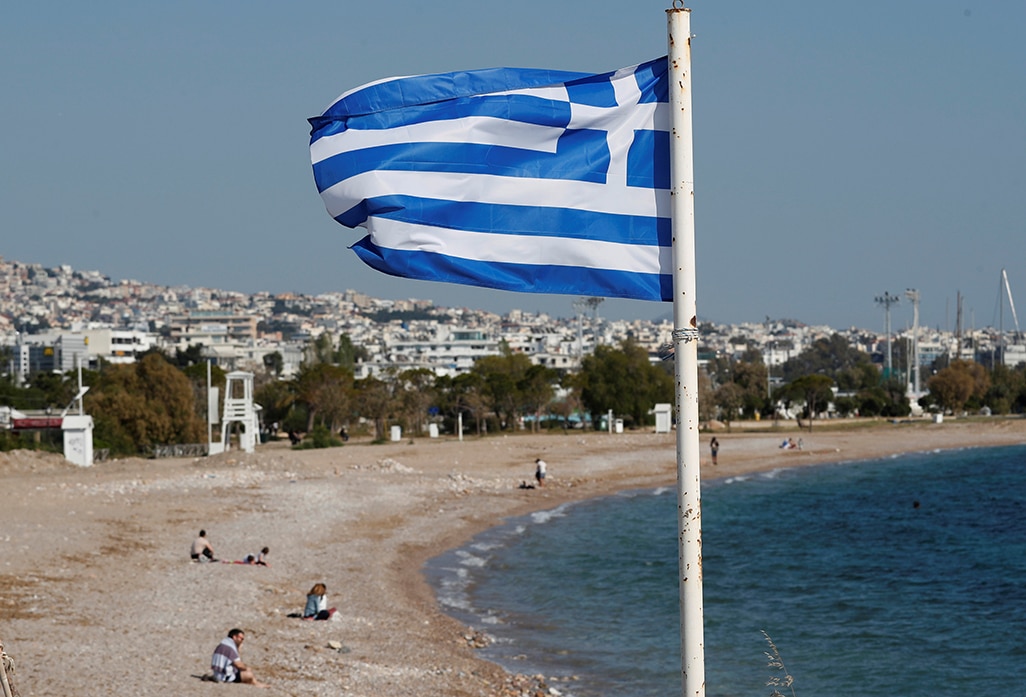
Greece’s parliament passed a bill allowing foreign private universities to establish branches in the country, approved by 159 lawmakers in the 300-seat parliament. Prime Minister Kyriakos Mitsotakis stated the legislation aims to reduce the number of Greek students studying abroad and align Greece with the rest of the European Union by boosting competition in higher education. The bill has faced weeks of student protests, with concerns over the devaluation of public university degrees and job prospects. Additionally, the government’s reform agenda includes a same-sex marriage law passed last month. Greece allocates 3%-4% of its GDP to education, below the EU average, but the bill includes provisions for increased funding for state universities.

Sterling is on the move

Sterling is on the move

The British Pound is experiencing its strongest performance against the US dollar and other major currencies in over seven months. This change is attributed to investors and traders adjusting to a new perspective on the UK’s economy, which has shown resilience despite challenges such as Brexit and geopolitical tensions. Initially, there was an expectation of four interest rate cuts by the Bank of England to address the cost of living crisis and prevent a deep recession. However, current expectations have shifted to potentially only two interest rate cuts this year, based on economic data indicating better-than-expected GDP growth and consumer spending. Additionally, comments from the Fed Chairman have led traders to believe that the Federal Reserve might implement more interest rate cuts than the Bank of England, further influencing the strength of the British Pound.

ECB takes small step towards rate cut as inflation falls

ECB takes small step towards rate cut as inflation falls

The European Central Bank (ECB) maintained borrowing costs at record highs but indicated a move towards reducing them, noting that inflation is decreasing faster than expected. The ECB’s main interest rate remains at 4.0 percent, reflecting a continued decrease in inflation over the past 1.5 years and revised, lower economic projections. Despite this, domestic price pressures, including wages, are still high. The ECB plans to base future decisions on the path of underlying inflation. It is unlikely to lower borrowing costs before its June 6 meeting, with crucial wage data expected in May. The ECB has revised its inflation forecast for this year from 2.7 percent to 2.3 percent, suggesting it might achieve its 2 percent inflation target earlier than the previously expected 2025. However, core inflation, excluding food and fuel, remains at 3.1 percent. Economic growth in the eurozone is projected to be 0.6 percent, down from a previous estimate of 0.8 percent.

Eurozone bonds dance to the beat of US markets

Eurozone bonds dance to the beat of US markets

Eurozone bonds are trading in sync with US bonds, with correlations between the markets reaching a record high. The 52-week correlation between German and US two-year bond yields has hit a record, with longer bonds also showing high correlations. The US economy has grown more than Europe’s, with US GDP rising 2.5% and Eurozone GDP growing 0.5% in 2023. Inflation, which surged in both regions in 2021, has become a key focus for markets. The Federal Reserve raised rates in March 2022, followed by the European Central Bank in July. Inflation peaked at 9.1% in the US in June 2022 and at 10.6% in the eurozone before falling to around 3% in both regions. The US bond market, with .9 trillion of government securities outstanding, influences global borrowing costs. Investors expect the correlation between Eurozone and US bonds to decrease as macro and policy outcomes diverge. The European Central Bank is anticipated to cut interest rates in April, ahead of the Federal Reserve in June.

The Greek debt crisis and its misconceptions

The Greek debt crisis and its misconceptions

The text discusses the Greek debt crisis, highlighting inaccuracies and misconceptions in public debate. It references Nikos Garganas’ book, which outlines the crisis’s causes, including the misuse of fiscal space and increased government spending leading to significant debt. The crisis was exacerbated by the global financial crisis and Greece’s inability to find investors. The European Union initially refused a bailout, citing the ‘no bailout’ clause, but eventually provided a €110 billion Memorandum to prevent bankruptcy and potential contagion. The IMF participated despite concerns over debt sustainability. A debt restructuring, including a 53.5% bond haircut, was implemented in 2012, which, despite criticisms, was deemed necessary and led to improved debt sustainability. The text also refutes myths about the crisis, emphasizing that memoranda were a response to, not a cause of, the crisis and that debt relief alone would not have ended austerity. It concludes that understanding the crisis’s causes and implementing structural reforms are crucial for preventing future crises.

Explainer: What you need to know about the 2024 US presidential election

Explainer: What you need to know about the 2024 US presidential election

Fact: Former President Donald Trump is on the cusp of winning the Republican nomination for the 2024 U.S. presidential election.

Cyprus GDP expected to grow, inflation to continue decreasing

Cyprus GDP expected to grow, inflation to continue decreasing

The European Commission’s interim winter forecast indicates that Cyprus is expected to see its GDP grow by 2.8% in 2024 and by 3% in 2025. Inflation in Cyprus is forecasted to slow to 3.9% in 2023, down from 8.1% in 2022, and is expected to be further contained to 2.4% in 2024 and 2.1% in 2025. The main drivers of GDP growth in Cyprus are strong domestic demand, strategic investments, and lower energy prices. The Recovery and Resilience Mechanism is expected to support investments that will strengthen growth. Economy Commissioner Paolo Gentiloni presented the winter forecast, noting that the European economy is entering 2024 on a weaker footing than previously predicted. The EU and eurozone growth forecasts for 2023 have been revised to 0.5%, and for 2024, they have been adjusted to 0.9% in the EU and 0.8% in the eurozone. The commission predicts an increase in economic activity in 2025, with growth of 1.7% in the EU and 1.5% in the eurozone. Inflation in the EU is expected to decrease from 6.3% in 2023 to 3.0% in 2024 and further to 2.5% in 2025. In the Eurozone, inflation is projected to slow from 5.4% in 2023 to 2.7% in 2024 and to 2.2% in 2025. The contribution of net exports to Cyprus’ economy is expected to remain weak due to economic uncertainty in trading partners and strong demand for imports. Real GDP growth in Cyprus slowed to 2.5% year-on-year in the first three quarters of 2023, but tourism services demand continued to recover. Economic activity in the EU is expected to pick up in 2024 after a weak start to the year. Lower energy prices have led to a faster-than-expected decline in headline inflation in 2023. The forecasts are subject to uncertainty due to geopolitical tensions and the risk of conflict expansion in the Middle East. Rising shipping costs due to trade disruptions in the Red Sea are expected to exert only a slight influence on inflation. Risks to core growth and inflation forecasts include consumption, wage growth, profit margins, interest rates, and the impact of extreme weather events due to climate change.

Cyprus GDP expected to grow, inflation to continue decreasing

Cyprus GDP expected to grow, inflation to continue decreasing

The European Commission’s interim winter forecast predicts that Cyprus will see further growth in its Gross Domestic Product (GDP) in 2024, with an expected rise of 2.8 percent, and an increase of 3 percent in 2025. Inflation in Cyprus is forecasted to slow to 3.9 percent in 2023, down from 8.1 percent in 2022, and is expected to be further contained to 2.4 percent in 2024 and 2.1 percent in 2025. The main driver of GDP growth in Cyprus is projected to be strong domestic demand, with significant contributions from strategic investments and lower energy prices. Growth is also expected to be supported by investments from the Recovery and Resilience Mechanism. However, net exports are expected to contribute weakly to the economy due to economic uncertainty in Cyprus’ main trading partners and strong demand for imports driven by investments. The European Commission revised the growth forecasts for the EU and the eurozone for 2023 to 0.5 percent and adjusted the 2024 forecasts to 0.9 percent for the EU and 0.8 percent for the eurozone. Inflation in the EU is forecasted to decrease from 6.3 percent in 2023 to 3.0 percent in 2024, and further to 2.5 percent in 2025. In the Eurozone, inflation is projected to slow from 5.4 percent in 2023 to 2.7 percent in 2024, and to 2.2 percent in 2025.

UK in recession, but that, ’s unlikely to sway BoE

UK in recession, but that, ’s unlikely to sway BoE

The UK fell into recession in the second half of last year with a steeper contraction in GDP than expected. The economy has been stagnant for the past couple of years and is expected to bounce back this year. Weaker household spending may suggest weaker demand than anticipated. Inflation is expected to fall, which could lead to a debate around rate cuts. Oil prices remain volatile due to uncertainty in the Middle East, the economy, and interest rates. Gold has dropped below ,000, indicating that rates may not fall as soon or as fast as hoped. Bitcoin has reached a new two-year high above ,500.