Cypriots can, ’t get rid of the blues

Cypriots can, ’t get rid of the blues

– Cyprus ranked 50th in the World Happiness Report, falling four spots from the previous year.
– The report covers 143 countries and notes Cyprus’s decline in happiness rankings over the past two years, from a high of 41st place.
– According to the report, younger people in Cyprus (under 30s) rank 51st in happiness, while those over 60 rank 57th.
– Finland is ranked as the happiest country for the fourth consecutive year, followed by Denmark, Iceland, and Sweden.
– Cyprus ranks higher in happiness than neighboring countries Greece (64th) and Turkey (98th).
– Afghanistan is ranked as the least happy country, with Lebanon, Lesotho, Sierra Leone, and the Congo also in the bottom five.

Christodoulides to address college during official meetings in Belgium

Christodoulides to address college during official meetings in Belgium

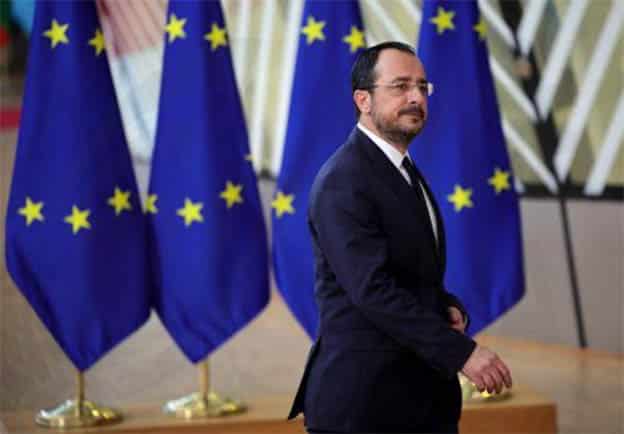
President Nikos Christodoulides of Cyprus is visiting Bruges, Belgium, to address the College of Europe on invitation by the Cypriot students association during the national week dedicated to Cyprus. This marks the first visit by a Cypriot President to the college. Christodoulides will be greeted by Rector Federica Mogherini, speak to students and academics, and meet with Vice-President of the European Commission, Margaritis Schinas. His agenda also includes participating in European People’s Party deliberations, discussing global issues with UN Secretary General Antonio Guterres and EU heads of state, and attending the 30th anniversary of the European Economic Area. Christodoulides will have another meeting with Guterres and will return to Cyprus on Friday evening.

Christodoulides in Brussels for EU Council

Christodoulides in Brussels for EU Council

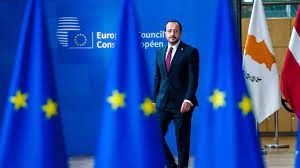
President Nikos Christodoulides of Cyprus will visit Belgium to attend the College of Europe in Bruges, participate in the European Council summit in Brussels, and engage in both public and private meetings with officials. He will also attend a working lunch with the UN Secretary General and other EU member state leaders, focusing on the Middle East and Ukraine. Additionally, Christodoulides will visit the College of Europe following an invitation from the Society of Cypriot Students and will meet with Federica Mogherini, the college’s rector and former Vice President of the European Commission. He will also meet with Margaritis Schinas, the Vice President of the European Commission, before attending activities of the European People’s Party and a commemorative event for the 30th anniversary of the European Economic Area. Christodoulides will return to Cyprus on Friday evening.

President to visit College of Europe

President to visit College of Europe

President Nikos Christodoulides of Cyprus will travel to Bruges and Brussels for official engagements. In Bruges, he will visit the College of Europe, addressing students and academics as part of a national week dedicated to Cyprus, marking the first visit by a Cypriot President to the College. His agenda includes a private meeting with Rector Mogherini and a meeting with European Commission Vice-President Margaritis Schinas. In Brussels, President Christodoulides will participate in the European People’s Party proceedings, attend a working lunch with the UN Secretary-General and EU member state heads focusing on the Middle East, Ukraine, and global challenges, and engage in the European Council Summit discussions on the Middle East, Ukraine, Migration, Security, EU Enlargement, and External Relations. He will also attend a commemorative event for the 30 years of the European Economic Area and a Eurozone Summit. President Christodoulides, accompanied by officials, will return to Cyprus on March 22. A potential private meeting with the UN Secretary-General is under consideration.

Iceland lava flows slow after fourth eruption since December

Iceland lava flows slow after fourth eruption since December

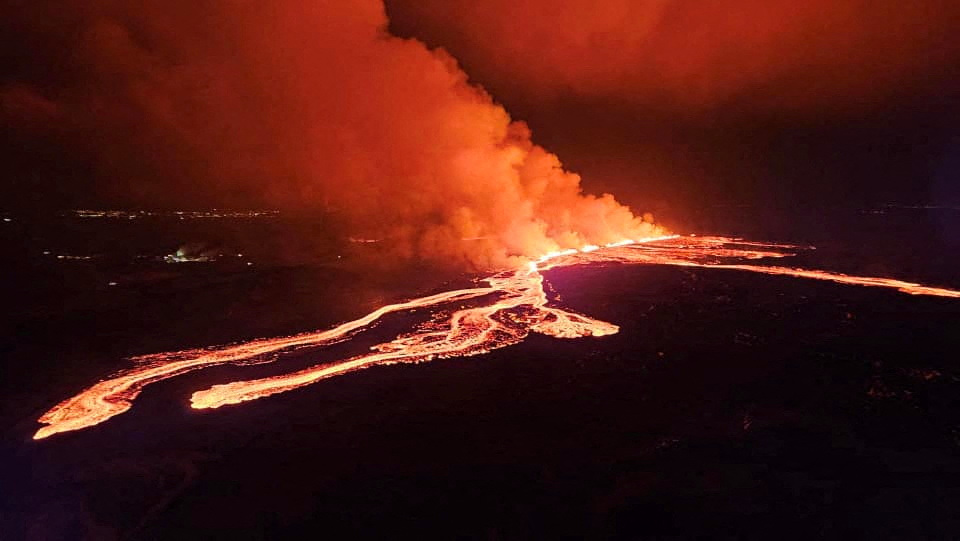
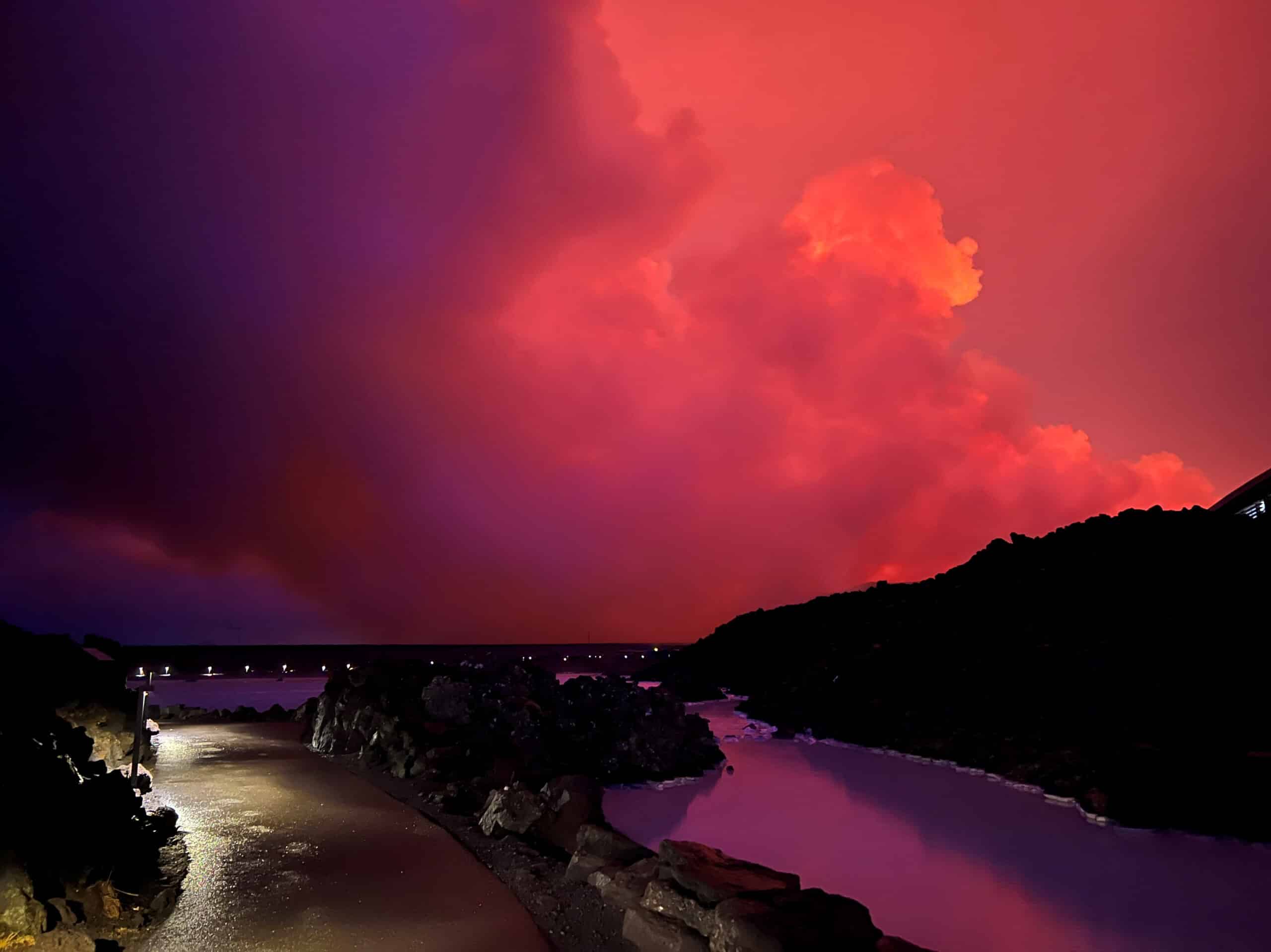
A volcano in southwest Iceland erupted, causing lava flows that initially threatened nearby infrastructure, including a fishing town. The eruption, which began on Saturday evening, was the fourth since December and occurred at the same location as the previous one in February. The fissure from which the lava flowed was approximately 3 km long. Authorities had anticipated the eruption due to underground magma accumulation. Lava flows slowed by Sunday, and man-made barriers were effective in diverting the lava away from the town and towards the sea. Some residents of Grindavik, a nearby fishing town, were evacuated. The Icelandic Meteorological Office monitored the situation, including lava flow towards a geothermal power plant. The eruption was a fissure eruption, which typically does not cause large explosions or significant ash dispersal. By Sunday noon, the eruption’s activity had decreased, with lava flowing from three locations. Keflavik Airport and regional airports remained operational, while the Blue Lagoon geothermal spa closed. The February eruption had disrupted heating for over 20,000 people by destroying roads and pipelines.

Iceland lava flows slow after fourth eruption since December

Iceland lava flows slow after fourth eruption since December

– Lava flows from a volcano in southwest Iceland slowed on Sunday after lighting up the night sky on Saturday.
– The eruption, the fourth since December, began at 2023 GMT on Saturday from a 3 km-long fissure.
– Authorities had predicted the eruption due to magma accumulation under the Reykjanes peninsula, near Reykjavik.
– Seismic activity decreased since the eruption began.
– Lava flowed close to Grindavik, a fishing town of about 4,000 residents, which was evacuated.
– Barriers redirected lava flows away from key infrastructure.
– Authorities monitored lava nearing the Svartsengi geothermal power plant.
– Some residents of Grindavik evacuated on Saturday.
– Keflavik Airport and regional airports remained operational.
– The Blue Lagoon geothermal spa closed due to the eruption.
– The February eruption disrupted heating for over 20,000 people by destroying roads and pipelines.

Wildfire resilience project completed

Wildfire resilience project completed

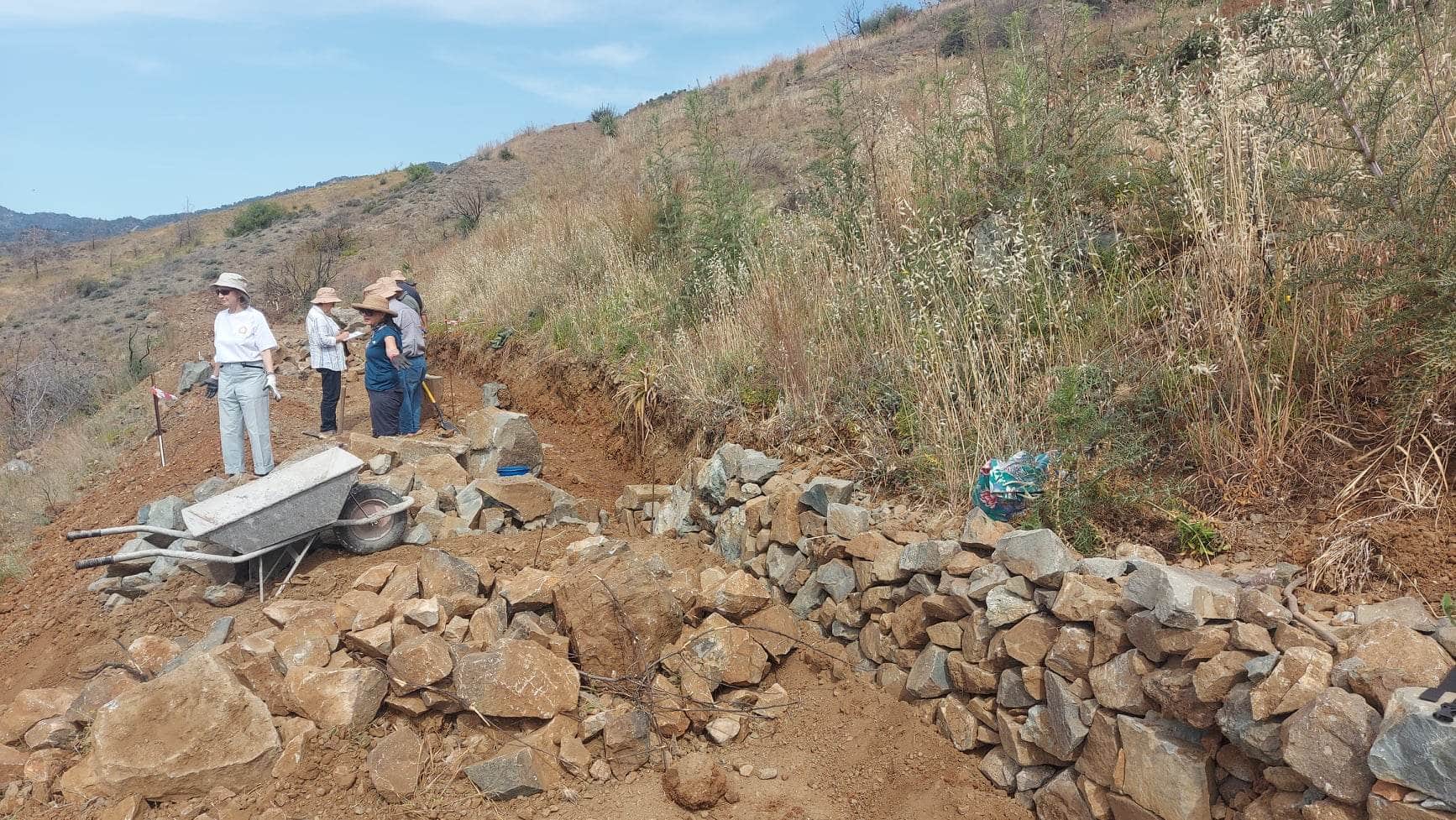
The PyrΑnankampsi/Alevlerden Gelecege Project, established under the Laona Foundation with Greek and Turkish Cypriot collaboration, has been completed after two years. It aimed at enhancing civic action in fire-affected communities across Cyprus, training over 650 participants in fire prevention and recovery techniques. The project, which received funding from the Active Citizens Fund Cyprus program supported by Iceland, Liechtenstein, and Norway, as well as the A.G Leventis Foundation, involved around 470 Greek Cypriots and 180 Turkish Cypriots. It focused on rural areas in Larnaca, Limassol, Paphos, and the Pentadaktylos range, teaching participants SWOT analysis, and the construction of dry stone walls to prevent erosion. The project also involved tree planting with a focus on using heat-resistant trees and plants.

Gender disparity remains in the workplace, says PwC study

Gender disparity remains in the workplace, says PwC study

– Global progress on achieving gender parity at work is slow, according to PwC’s Women in Work Index and Inclusion Matters studies published for International Women’s Day 2024.
– The 2024 Women in Work Index indicates it will take over 50 years to close the gender pay gap across 33 OECD countries.
– The Women in Work Index measures gender equality at work in the OECD using five indicators: the gender pay gap, female labor force participation rate, gap between male and female labor force participation rates, female unemployment rate, and female full-time employment rate.
– Over the past decade, the average Index score increased from 56.3 in 2011 to 68 in 2022, with a two-point improvement from 66 in 2021 to 68 in 2022.
– Between 2021 and 2022, improvements in the OECD were mainly due to an increase in the female labor force participation rate (from 70.8% to 72.1%) and a decrease in the female unemployment rate (from 6.4% to 5.3%).
– The average gender pay gap in the OECD widened from 13.2% to 13.5% between 2021 and 2022.
– The gender pay gap has narrowed by only three percentage points between 2011 and 2022 across the OECD.
– Luxembourg ranks first on the Index, particularly due to having the lowest gender pay gap in the OECD at -0.2%, indicating higher median pay for women than men.
– PwC’s Inclusion Matters research, part of the Global Hopes and Fears Survey 2023, found that only 39% of women feel fairly rewarded financially at work.
– The research shows a significant gender gap in asking for promotions and pay raises, but women with high Inclusion Index scores are more likely to ask for raises, promotions, and recommend their employer.
– Women’s turnover intentions increased, with one in four planning to change employers within the next 12 months, slightly below the rate for men at 27%.
– Higher inclusion scores correlate with less likelihood of changing employers and more active pursuit of development and new skills by women.

Palestinian pop singer hopes to compete for Iceland at Eurovision

Palestinian pop singer hopes to compete for Iceland at Eurovision

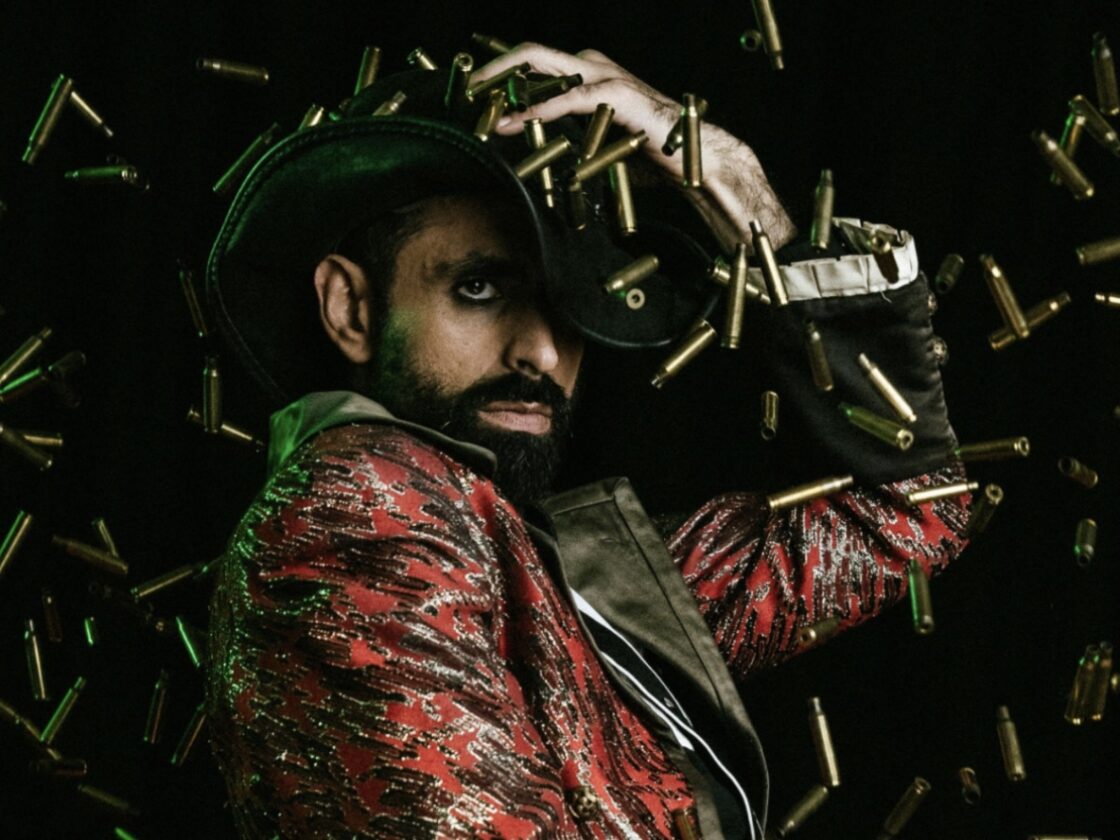
Palestinian pop singer Bashar Murad hopes to represent Iceland at the Eurovision Song Contest in May, aiming to bring a Palestinian voice to the event. The Eurovision Song Contest, taking place from May 7-11 in Malmo, Sweden, is a non-political event, but political issues often arise, such as the current scrutiny over the Israeli submission’s lyrics potentially referring to a recent conflict. Murad is competing in Iceland’s national final with a song co-written by Einar Stefansson of Hatari, a band known for its political statements. Murad, born and living in Jerusalem, finds learning Icelandic challenging but sees similarities to Arabic. His song “Wild West” is about overcoming obstacles and pursuing dreams. He expressed a desire to bring a Palestinian perspective to Eurovision, despite the contest’s rules and the political context. Russia was banned from the contest in 2022 due to its invasion of Ukraine, and while there is no Palestinian entry due to the lack of a Palestinian member broadcaster in the European Broadcasting Union, Murad’s participation is notable. He has mixed feelings about Israel’s participation but focuses on representing Palestinian voices. Israel has won the Eurovision Song Contest four times.

Cyprus healthier than EU but health spending less

Cyprus healthier than EU but health spending less

Cyprus is outperforming the European Union average in various public health metrics. The average life expectancy in Cyprus is 81.7 years, which is higher than the EU average of 80.7 years. Older people in Cyprus live longer without activity limitations compared to the EU average, with men expecting 19.1 years and women 21.5 years without limitations at age 65. Cyprus has the lowest rate of preventable and treatable deaths in the EU, at less than 200 per 100,000 people. It also has the lowest rate of unmet needs for medical care in Europe, with less than one percent of people reporting unmet healthcare needs.

Despite these positive outcomes, Cyprus spends less on health than the EU average, with 9.4 percent of its GDP going to health expenditure and a per capita annual spend of €2,686, compared to the EU average of €4,028. The proportion of healthcare costs paid out of pocket in Cyprus is 10 percent, lower than the EU average of 15 percent.

However, Cyprus faces challenges with antibiotic-resistant bacteria, with 43 percent of people with bloodstream infections testing positive for such bacteria, nearly three times the EU average of 15 percent. The number of nursing graduates is also low, with 15 per year per 100,000 people, resulting in 4.8 practicing nurses per 1,000 people, which is below the EU average of 8.5. Conversely, Cyprus has five doctors per 1,000 people, which is above the EU average.

Regarding lifestyle factors, 23 percent of people in Cyprus smoke daily, which is higher than the EU average of 19 percent. Only four percent of Cypriots reported heavy drinking, significantly lower than the EU average of 19 percent. The obesity rate in Cyprus is 15 percent, slightly lower than the EU average.