Resistance to reforms in EU must be dealt with

Resistance to reforms in EU must be dealt with

The main challenges facing the EU include sluggish growth, low investment levels, slow technology adaptation, tight labour markets, and over-reliance on conventional energy sources, leading to inflationary pressures and a lack of consensus on fiscal policy direction. Cyprus has satisfactory short- and medium-term economic performance but faces long-term challenges like low productivity, investment, chronic balance of payments deficits, and delays in green and digital transitions. The EU and Cyprus need to accelerate reforms and increase investments, supported by the Resilience and Recovery Fund. The European Commission is assessing the effectiveness of national resilience and recovery programs, with preliminary results showing significant fund absorption but underachievement in reform objectives, partly due to resistance to structural reforms and transitions. Immigration, under the right conditions, is seen as necessary for addressing labour shortages but has led to societal challenges and the rise of populist movements. Other factors contributing to reform resistance include the time it takes for reforms to show results and the sense of insecurity radical changes can cause. Recommended policy approaches include designing comprehensive policies, focusing on transparency and communication, and taking compensatory measures to support vulnerable populations. The EU’s fiscal policy framework needs adaptation to current circumstances to ensure reform success.

The fifth freedom: Corporate mobility within the EU

The fifth freedom: Corporate mobility within the EU

The text discusses the impact of Directive (EU) 2019/2121, which amends Directive (EU) 2017/1132, on the legal and business environment in Cyprus. This Directive enhances the mobility of companies within the EU internal market by facilitating cross-border conversions, mergers, and divisions, thus acting as an extension of the freedom of establishment. It aims to promote economic growth, competitiveness, and stability within the European single market by harmonizing rules and procedures across member states. The Directive includes provisions to protect the interests of shareholders, employees, and creditors during cross-border operations. Its implementation in Cyprus is expected to increase cross-border business activity, enhance competitiveness, improve legal certainty, and ensure stakeholder protections, but it may also present challenges in terms of compliance and adaptation for Cypriot companies. The text also notes that the existing Companies Law in Cyprus, CAP 113, already regulates cross-border mergers and the transfer of company seats in line with the Directive, but the new provisions on cross-border divisions represent a significant development for the Cyprus legal corporate system.

Our View: PEP asset disclosure is in need of serious reform

Our View: PEP asset disclosure is in need of serious reform

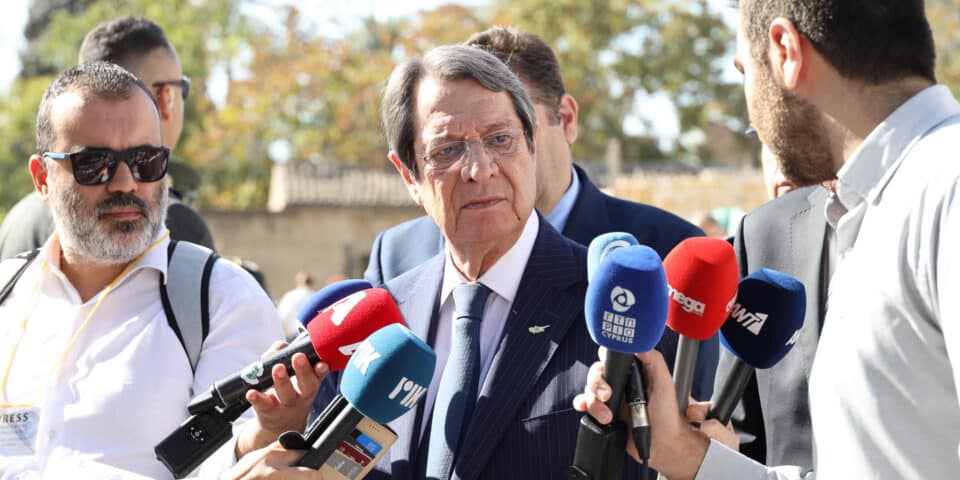
The issue of disclosing personal assets by politically exposed persons (PEP) in Cyprus has been problematic, with no standardized or verified submission process. Former President Nicos Anastasiades submitted an asset list that was widely mocked for appearing to underrepresent his wealth. Criticism from the Council of Europe led to a proposal for submissions to be checked by a committee of auditors. Recently, Tax Commissioner Sotiris Markides suggested PEPs should publish their net asset position instead of a detailed list, to avoid disclosing sensitive information. However, deputies argued this method lacks transparency. Another proposal is for PEPs to submit a capital statement prepared by an auditor, which may offer more transparency but has raised concerns about cost. Discussions on amending the laws are ongoing, with all parties recognizing the need for a more serious and formal system.

AI tokens outpace record-breaking bitcoin

AI tokens outpace record-breaking bitcoin

The artificial intelligence (AI) boom has significantly impacted the cryptocurrency market, with coins related to AI-focused crypto projects experiencing substantial growth alongside tech stocks like Nvidia. The market value of these AI crypto tokens has increased from .7 billion to .4 billion within a year, according to CoinGecko data. Some tokens have seen a 145% to 297% increase in the past 30 days. The CoinDesk Indices Computing Index, which includes AI-linked tokens, has surged over 165% in the past 12 months, surpassing bitcoin’s 151% rise. Trading volumes in AI tokens reached an all-time high of .8 billion in late February. Top blockchain projects in this space include the Render Network, Fetch.AI, and SingularityNET. Investment manager VanEck predicts that revenue from AI crypto projects could reach .2 billion by 2030 in their base case scenario, and over billion in their bullish scenario. Blockchain technology is seen as offering real-world value to AI development through crypto tokens as rewards, developing physical computation infrastructure, data verification, and transparency in proving digital ownership.

North a safe haven for criminals

North a safe haven for criminals

– At least 11 fugitives wanted by Interpol have been located in Northern Cyprus in the last 20 months.
– These fugitives, including notable criminals from Australia, Russia, China, and Italy, had purchased real estate and obtained residence permits from the Turkish Cypriot administration.
– All arrested fugitives were extradited to Turkey, as Northern Cyprus, not recognized by any state other than Turkey, has no extradition treaties and relies on Turkey for Interpol-related arrests and extraditions.
– Northern Cyprus is described as a safe haven for criminals due to lack of international recognition, oversight, and adequate controls on entry and activities within the country.
– Moldovan authorities believe fugitive oligarch Vladimir Plahotniuc is hiding in Northern Cyprus.
– The 2023 Global Organised Crime Index indicates that Northern Cyprus has a significant presence of individuals wanted by Interpol and is a hub for organized crime activities.
– A study based on Transparency International’s methodology found widespread bribery in Northern Cyprus, with 40% of business executives admitting to engaging in bribery.
– The uncontrolled entry of individuals into Northern Cyprus poses a security threat, with instances of apprehended terrorists and foiled terror attacks highlighted.
– Authorities estimate that the number of Iranians living in Northern Cyprus has reached 15,000, with over 40,000 entering through air and seaports in 2023.
– In the last 20 months, 21 individuals were deported for reasons such as threatening public law and order, and 29 Nigerians, many affiliated with violent cults, were also deported.
– The issuance of student visas and the presence of 23 universities hosting around 110,000 students, many of whom are not attending classes, are identified as factors contributing to illegal activities.

Energy minister promises support for consumers

Energy minister promises support for consumers

Energy Minister George Papanastasiou invoked the name of late United States President John F. Kennedy in a speech for World Consumer Rights Day, highlighting Kennedy’s view of consumers as central to the economy. Papanastasiou discussed the economic challenges exacerbated by global crises like the Covid-19 pandemic and the energy crisis, leading to economic instability and high inflation. He emphasized the government’s focus on introducing cheap energy, promoting renewable energy sources, and energy conservation, including the launch of the “Photovoltaics for All” scheme. Additionally, he mentioned the planned “e-basket” scheme for price transparency and a bill to allow the government to set maximum retail prices on certain products, alongside a policy of zero VAT on essential products to alleviate financial pressures on consumers.

Chemicals in plastics far more numerous than previous estimates, report says

Chemicals in plastics far more numerous than previous estimates, report says

A report found that plastics contain at least 3,000 more chemicals than previously estimated by environment agencies, totaling over 16,000 chemicals, a quarter of which are considered hazardous to human health and the environment. This discovery raises concerns over pollution and consumer safety. The report, funded by the Norwegian Research Council, highlights the importance of addressing the full life cycle of plastics and the chemicals they contain to solve plastic pollution effectively. The research indicates that plastic chemicals can leach into water and food, potentially leading to adverse health outcomes such as fertility issues and cardiovascular disease. The study also points out the need for greater transparency regarding the chemicals used in plastics, including recycled products, noting that a quarter of the identified chemicals lack basic information on their chemical identity. Only 6% of the chemicals found in plastics are regulated internationally, underscoring the need for a global treaty to address these issues. Negotiations for such a treaty are ongoing, with the aim of finalizing it by December in Busan, South Korea.

Cyprus government takes aim at influencer marketing

Cyprus government takes aim at influencer marketing

The Consumer Protection Service (CPS) and the Advertising Control Agency (ACA) signed a 5-year memorandum of understanding to inform consumers about the commercial intent of influencers’ posts on social media. They aim to educate businesses, consumers, and influencers on the necessity of clear promotional disclosures in posts, establishing rules for these disclosures to be easily understandable across various content forms on platforms like Instagram, YouTube, Facebook, and TikTok. The ACA has also created a Guide for Influencer Marketing, recognized by the Ministry of Health as a best practice. This initiative responds to the significant growth of influencer marketing and its impact on the digital economy, highlighted by the European Commission’s 2023 Sweep survey on influencers, which indicated the need for further actions in this domain.

Methane emissions from energy sector near record high in 2023, IEA says

Methane emissions from energy sector near record high in 2023, IEA says

Methane emissions from the energy sector remained near a record high in 2023 despite commitments from the oil and gas industry to address leaking infrastructure, according to a report by the International Energy Agency (IEA). The IEA is optimistic that new satellites could improve monitoring and transparency of methane leaks, a significant greenhouse gas. Methane emissions have been stable since 2019, with over 120 million metric tonnes released into the atmosphere in the last year, a slight increase over 2022. Large methane plumes from leaky fossil fuel infrastructure increased by 50% in 2023 compared to 2022, with a notable event being a well blowout in Kazakhstan lasting over 200 days. Nearly 200 countries agreed at the United Nations climate summit in Dubai to cut methane emissions substantially, building on a previous commitment to reduce global methane emissions by at least 30% from 2020 levels by the end of the decade. However, countries and companies are under-reporting their methane emissions compared to the IEA’s estimates. New satellites, including one backed by Alphabet Inc’s Google and the Environmental Defense Fund, are expected to enhance methane emission monitoring. The IEA anticipates that 2024 will be a significant year for action and transparency on methane emissions.

Media independence safeguarded in EU law

Media independence safeguarded in EU law

The European Parliament approved a new EU regulation for the protection of journalists and media from political and economic interventions, with 464 votes in favor, 92 against, and 65 abstentions. This regulation mandates member states to ensure media independence and prohibits any forms of intervention in editorial decisions. It includes measures against pressuring journalists to disclose sources, establishes rules for the use of surveillance software by authorities, sets criteria for the editorial independence and funding of public media, requires transparency regarding media ownership, ensures fair distribution of state advertising, and protects media freedom from arbitrary actions by major online platforms.