Stranded Cyprus migrants pushed back to buffer zone; two missing, UNHCR says

Stranded Cyprus migrants pushed back to buffer zone; two missing, UNHCR says

The United Nations High Commissioner for Refugees (UNHCR) in an announcement expresses deep concern for the safety and well-being of approximately 31 asylum seekers, including seven children, who are trapped in the buffer zone (BZ) in Cyprus. It is noted that “Five of them entered the Pournara reception centre to apply for asylum after crossing … Read more

Housing scheme for mountain and rural areas extended

Housing scheme for mountain and rural areas extended

Newly revised housing plans were approved by the cabinet to regenerate mountain villages, rural areas, and areas on the Green Line. 1,500 applications have been approved under the schemes, corresponding to the granting of €55 million in financial assistance. 14,000 households, corresponding to 29,500 people, benefited from the allowances in 2023, with a total grant of €7.5 million. The plan has been extended until December 31, 2025, and becomes a two-year plan to allow interested parties sufficient time to secure the necessary planning and building permits required to apply.

Digital Taxation around the World

Digital Taxation around the World

Digital Taxation around the World | Tax Foundation Skip to content taxA tax is a mandatory payment or charge collected by local, state, and national governments from individuals or businesses to cover the costs of general government services, goods, and activities. policies, a significant number of countries adopted unilateral tax measures targeted at digital businesses, … Read more

2024 Federal Budget analysis

2024 Federal Budget analysis

– The 2023 budget proposed a refundable ITC for clean electricity, equal to 15% of the capital cost of eligible property.
– The 2024 budget provides the design and implementation details of the ITC, including the eligibility criteria.
– The ITC will be available only to eligible Canadian corporations, including taxable Canadian corporations, provincial and territorial Crown corporations, and corporations owned by municipalities or Indigenous communities.
– Property eligible for the ITC includes equipment used to generate electricity from various sources, including solar, wind, water, nuclear fission, geothermal energy, and specified waste materials.
– The ITC will be subject to potential repayment obligations if the property is converted to an ineligible use, exported from Canada, or disposed of.
– The EV Supply Chain Investment Tax Credit is equal to 10% of the cost of buildings used in electric vehicle supply chain segments.
– The Clean Technology Manufacturing Investment Tax Credit has been updated to include production of qualifying minerals at polymetallic projects.
– An accelerated CCA of 10% is provided for new eligible purpose-built rental projects that begin construction after April 15, 2024.
– Immediate expensing is provided for certain productivity-enhancing assets acquired after April 15, 2024.
– The budget proposes to extend an exemption for certain interest and financing expenses relating to arm’s length financing used to build or acquire purpose-built rental housing.
– The government is considering introducing a new tax on residentially zoned vacant land to spur development.
– The government intends to restrict the acquisition of existing single-family homes by very large corporate investors.
– The government is exploring measures to expand access to alternative financing products for home purchasers, such as halal mortgages.
– Amendments are proposed to the CRA’s information gathering provisions to enhance tax audits and facilitate the collection of tax revenues.
– The budget proposes to remove the tax-indifferent investor exception to the anti-avoidance rule for synthetic equity arrangements.
– Specific amendments are proposed to preclude a corporation from qualifying as a mutual fund corporation if it is controlled by or for the benefit of a corporate group.
– The budget introduces the Canada Carbon Rebate for Small Business, to return a portion of the federal backstop pollution pricing fuel charge proceeds collected from a province to CCPCs with less than 500 employees.
– The budget proposes measures to address tax debt avoidance planning, including joint and several liability for taxpayers who participate in such planning.
– The budget proposes to remove the failure to file an information return in respect of a reportable or notifiable transaction under the mandatory disclosure rules from the general penalty provision.
– The budget proposes to repeal the exception to the debt forgiveness rules for bankrupt corporations and the loss restriction rule applicable to bankrupt corporations.
– The government launched consultations on the existing SR&ED tax incentives and announces a second phase of consultations to focus on specific policy parameters.

Capital gains tax upped for wealthiest Canadians

Capital gains tax upped for wealthiest Canadians

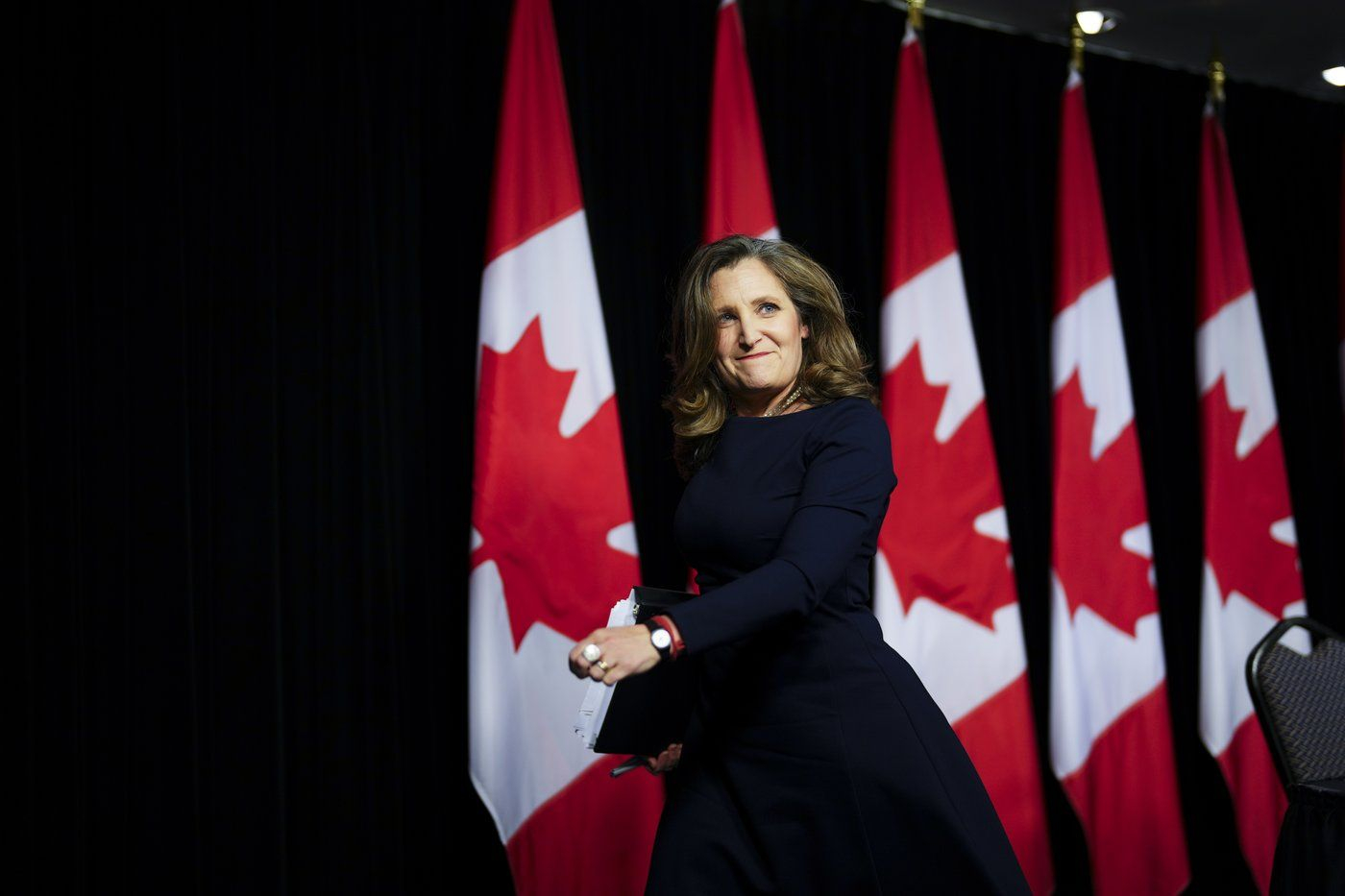
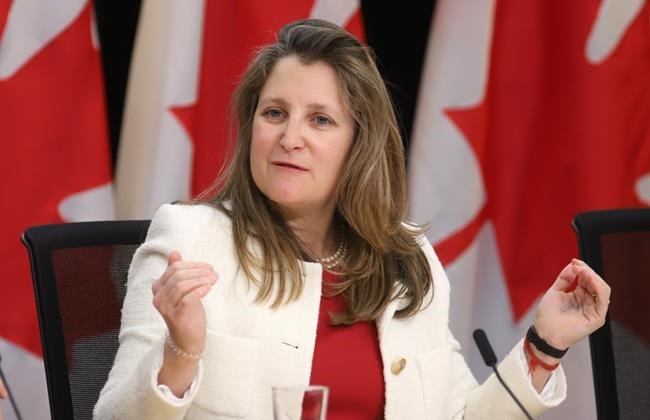
Finance Minister Chrystia Freeland delivered a federal budget that keeps the deficit capped at billion, thanks to higher-than-expected government revenues and new taxes that largely offset new spending. The budget pledges billion in new spending focused on economic justice for younger generations. The government plans to pay for most of its new spending initiatives with higher taxes on the wealthiest Canadians and businesses, including increasing the capital gains inclusion rate. The deficit, deficit-to-GDP ratio, and debt-to-GDP ratio are projected to fall every year until 2028-29. The federal budget also includes initiatives aimed at boosting the economy’s productivity, such as expanding artificial intelligence capacity and research support.

Chapter 8: Tax Fairness for Every Generation

Chapter 8: Tax Fairness for Every Generation

Canada is one of the wealthiest countries in the world. For generations, this has meant Canada is a place where everyone could secure a better future for themselves and their children. This is in no small part is due to our commitment to progressive taxation, investments in Canada’s strong social safety net, and an effective, … Read more

Freeland doesn’t rule out new taxes on wealthy or corporate Canada in upcoming budget

Freeland doesn't rule out new taxes on wealthy or corporate Canada in upcoming budget

Finance Minister Chrystia Freeland has ruled out raising taxes on the middle class in the upcoming federal budget, but has not confirmed if corporations or the wealthy will face tax increases.

Israel denies Turkey’s request to drop aid into Gaza, Turkish foreign minister says

Israel denies Turkey’s request to drop aid into Gaza, Turkish foreign minister says

Israel has denied Turkey’s request to join air drops of humanitarian aid to Palestinians in Gaza. Turkey will take new measures against Israel in response, as it has already sent tens of thousands of tons of aid to Gaza since the start of the conflict. The United States and other countries have been dropping aid into Gaza by air, but Israel rejected Turkey’s request to participate. Turkey’s Foreign Minister stated that the new measures against Israel will be implemented until a ceasefire is declared and humanitarian aid is allowed to reach Gaza without interruption.

World Court orders Israel to halt Gaza famine; Hamas says ceasefire needed

World Court orders Israel to halt Gaza famine; Hamas says ceasefire needed

The World Court ordered Israel to ensure basic food supplies to Gaza’s Palestinian population and halt spreading famine.

ANALYSIS-Russian veto points to ‘grim future’ for North Korea sanctions enforcement

ANALYSIS-Russian veto points to ‘grim future’ for North Korea sanctions enforcement

Russia vetoed the renewal of the panel of experts monitoring UN sanctions against North Korea, signaling a grim future for sanctions enforcement. Russia and China have denied breaking sanctions and have blocked new measures at the UN Security Council. Russia’s veto highlights its deepening ties with North Korea and its violation of sanctions by buying conventional arms. The end of the panel could lead to more evidence of sanctions violations being released to the public. Russia’s veto suggests it does not want its illegal procurement of North Korean weapons to be reported. The US and South Korea have launched a task force to prevent North Korea from procuring illicit oil, particularly from Russia.