Q1 growth rate seen at 3.5%
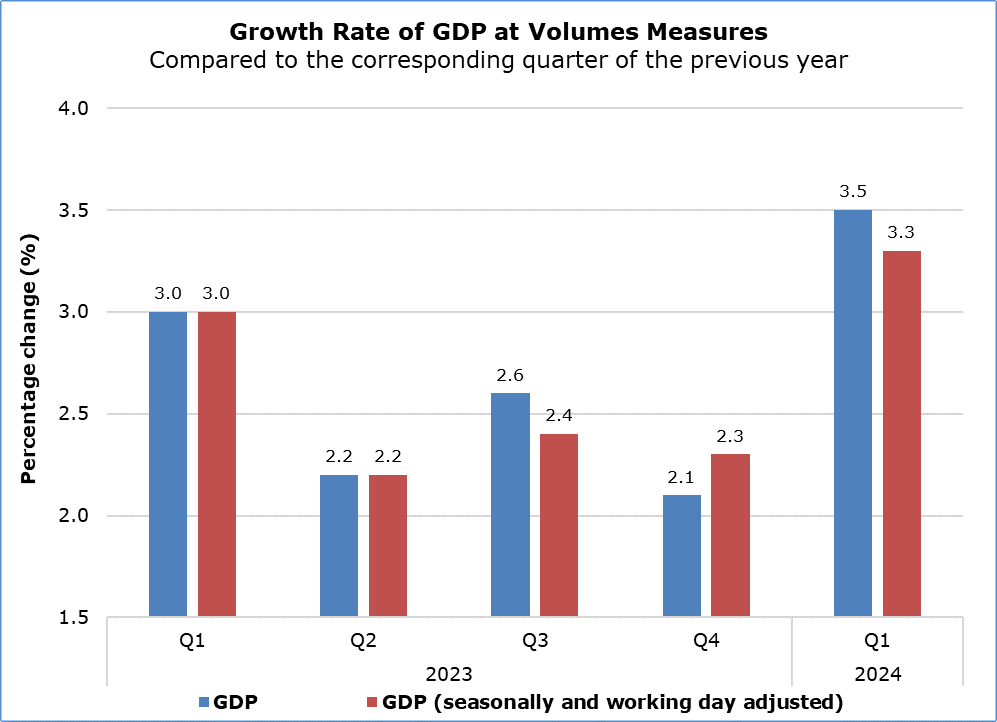
The Cyprus economy’s growth rate in real terms during the first quarter of 2024 is positive, with a gross domestic product estimated at 3.5% year-on-year according to Cystat.
The Cyprus economy’s growth rate in real terms during the first quarter of 2024 is positive, with a gross domestic product estimated at 3.5% year-on-year according to Cystat.

The trade unions and the Minister of Finance in Cyprus are in disagreement over the automatic wage indexation policy. The government had previously agreed to adjust salaries and pensions of public employees at a cost of 1.2 billion euros, but now the finance ministry is reconsidering this decision due to warnings from the European Commission, the IMF, and the country’s Fiscal Council about the risks to fiscal stability. The unions are trying to reverse reforms that were made as part of the country’s rescue package by the EU, IMF, and ECB. The author suggests that the government should implement policy measures to address fiscal risks and drive growth and competitiveness, such as incentivizing employees to work past retirement age and creating a sovereign fund. Additionally, the author recommends addressing the demographic risk by providing affordable housing to new couples with EU citizenship. It is unclear if the president has the vision and priorities to implement these policies.

The growth prospects of the Cyprus economy are struggling due to ongoing regional geopolitical tensions, which is keeping the annual growth rate at a subdued pace. The year-over-year growth rate of the Cyprus Composite Leading Economic Index (CCLEI) has continued to slow down in November. The slowdown reflects the burdened geopolitical and unstable economic environment, which negatively affects the growth prospects of the Cypriot economy. The CCLEI recorded a year-over-year increase of 1.8% in November. The positive growth rate is attributed to the growth of various domestic sectors, including real estate, tourism, retail trade, and electricity production. The drop in the CCLEI is restrained by the international price of oil, which fell significantly in November. The components of the CCLEI are selected from a pool of domestic and international leading indicators.