Archbishop expresses regret over monastery scandal
Archbishop expresses regret over monastery scandal

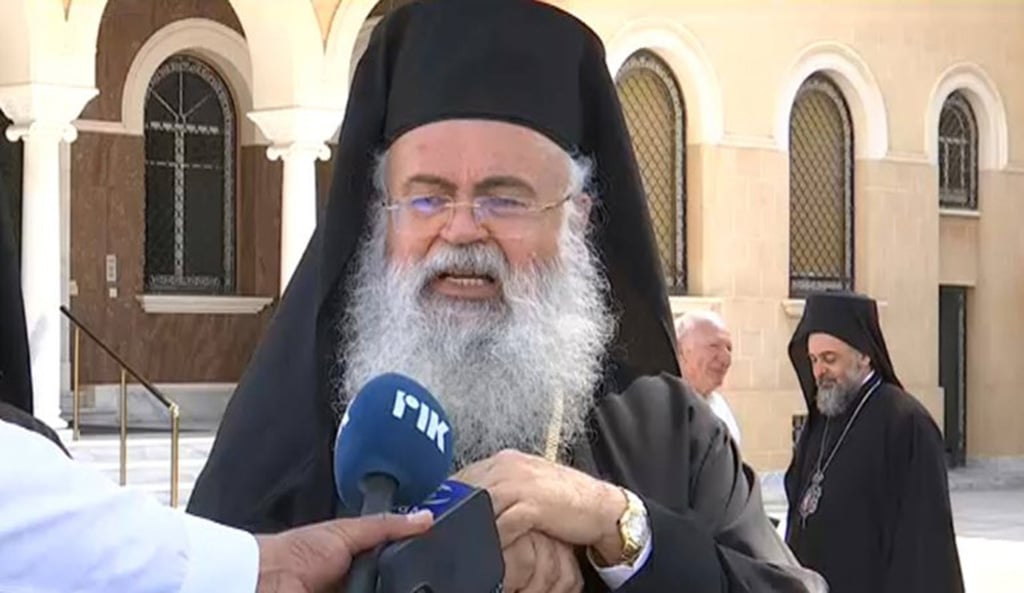
Cyprus’ Archbishop Georgios expressed regret over the scandal at the Osiou Avakoum monastery involving allegations of fraud, misconduct, and immorality among clergy members. He announced a thorough investigation into the scandals and urged police and authorities to fully investigate. The Holy Synod has tasked its judicial bodies with investigating the case. Additionally, the monastery is under scrutiny for being built on land protected under the Natura 2000 environmental policy, leading to legal action against the monastery, the church committee, and Archimandrite Nektarios Georgiou for unauthorised constructions. Two investigators have been appointed to examine any criminal offences related to the case, and there are calls for the money laundering unit to investigate the church. Justice Minister Marios Hartsiotis committed to fully investigating the scandal.

Two arrested for money laundering

Two arrested for money laundering

Police in Limassol arrested two individuals on Thursday for suspected money laundering. A property under surveillance for alleged financial crimes led to the arrests when a car arrived, and both occupants were detained. The individuals, a 33-year-old driver and a 34-year-old passenger, both third country nationals, were found with significant amounts of cash. The passenger had €161,425 in cash within 17 envelopes. A further search of the property revealed €706,300, ,539, and £1,375 in cash, along with two banknote counting machines and empty envelopes, leading to the arrest of a 41-year-old claiming partial ownership of the property. Additional searches at the 34-year-old’s house found €815 in cash, multiple mobile phones, and empty envelopes. The financial crime investigation unit in Limassol is continuing the investigation.

‘Investigate church donations for money laundering’

‘Investigate church donations for money laundering’

The attorney-general’s office in Cyprus has appointed two investigators, Ninos Kekkos and George Papaioannou, to examine criminal offenses related to an ongoing scandal involving monks. MPs have urged the money laundering unit (Mokas) to investigate the church following revelations about monks paying for social media posts to increase cash flow. Justice Minister Marios Hartsiotis has committed to a thorough investigation of the scandal. Allegations have emerged involving the far-right Elam party leader Christos Christou, former police chief Kypros Michaelides, Mokas, and the police. Concerns were raised about €800,000 in cash found at the Osiou Avvakoum monastery and the handling of the money. MPs have suggested that the church might be involved in money laundering, citing donations from Russian oligarchs and Malaysian businessman Jho Low. The church’s financial dealings, including those with foreign donors, are under scrutiny, with calls for a more rigorous investigation into the source of the funds. There are also allegations of police misconduct in the handling of the money transfer operation related to the scandal.

Calls for resignation over money laundering oversight

Calls for resignation over money laundering oversight

MPs in Cyprus have expressed concerns over the country’s compliance with money laundering regulations due to a lack of coordination and communication between the police, the money laundering unit (Mokas), and the customs office. Over €160 million in cash has entered Cyprus in the past four years, raising questions about tax evasion and money laundering investigations. A recent case involved the arrest of a 31-year-old Ukrainian woman facing 60 counts of money laundering, having brought €8 million in cash to the country. There is criticism over a “strange” meeting in 2023 where police allegedly instructed the customs office to route information through them before reaching Mokas, a directive not supported by law. The customs office provides Mokas with a USB detailing declared cash sums every three months, indicating a delay in communication. Concerns were raised about the lack of real-time information sharing, the effectiveness of the legal framework against money laundering, and the existence of a shadow economy. The committee chair criticized the absence of coordination among state services and described the situation as “criminal” due to the inaction of Mokas and the police.

Cyprus: weak tax administration and prolific tax evasion

Cyprus: weak tax administration and prolific tax evasion

– Tax evasion in Cyprus is defined as the deliberate non or underpayment of taxes and is illegal, while tax avoidance involves using legal methods to minimize tax owed.
– Weak and ineffective tax administration in Cyprus contributes to large-scale tax evasion.
– The Tax Department’s primary goal is to collect taxes and enforce payment in accordance with tax laws.
– Tax collections in Cyprus are below potential, with a significant shortfall attributed to widespread tax evasion.
– It is difficult to quantify tax evasion levels, but as of end-September 2023, taxes owed to the state amounted to €3.4 billion, with nearly €900 million deemed uncollectible.
– Self-employed persons in Cyprus paid on average €1,080 in personal income taxes in 2022, compared to employees who paid on average €1,920.
– Tax evasion and avoidance deprive the government of revenue, limit the scope for reducing tax rates, and hurt honest taxpayers.
– Cyprus’s reputation for weak law enforcement and corruption attracts corrupt politicians and criminals from abroad.
– The inefficiency of Cyprus’s tax administration contributes to tax evasion, with personal income tax returns taking about five years to process.
– The government has been promised €24.2 million from the EU’s Recovery and Resilience fund to improve tax administration efficiency.
– Increased digitalization and coordination between tax units could help curtail tax evasion and avoidance.
– Simplifying the tax registration and filing process could encourage greater tax compliance.
– Government policies that delay the submission of tax returns and payments foster tax evasion and avoidance.
– Enhanced digitalization of public services and harsh penalties for late tax payments are suggested to enforce timely tax payment and compliance.

Ukrainian laundering suspect to face trial on April 17

Ukrainian laundering suspect to face trial on April 17

A Ukrainian woman was arrested in Cyprus for attempting to stage a theft of €420,000, which led to the discovery of a money laundering ring. She had made 20 trips to Cyprus, bringing in about €8 million over six months for property purchases. The 31-year-old will face trial on April 17 and remains in custody. She faces 60 charges related to money laundering and other offenses. Her activities included declaring large sums of money at customs and claiming to invest in property. Further investigations will involve Europol and Interpol, focusing on her financial activities in Cyprus.

Woman carrying €420,000 in handbag travelled twenty times to Cyprus transporting millions

Woman carrying €420,000 in handbag travelled twenty times to Cyprus transporting millions

A 31-year-old woman is suspected of money laundering after traveling to Cyprus twenty times in eight months, transporting nearly eight million euros. She passed through Cypriot airports without issue, declaring the money as her own for real estate purchases. The case emerged when she reported a theft of €420,000 in Limassol. Investigations led to her arrest on money laundering suspicions. She frequently traveled from Poland to Athens to Cyprus, declaring over one million euros on multiple trips, including over two million euros within 20 days in February 2024.