Corporate Finance And Tax Departments, Buckle Up; It’s An Election Year

Corporate Finance And Tax Departments, Buckle Up; It’s An Election Year

Pivotal elections are set to be held in the UK and U.S. this year, which can have significant impacts on the global tax landscape for corporations. The UK’s exit from the EU, known as Brexit, resulted in major shifts in tax policy and revenue. In the U.S., President Trump’s Tax Cuts and Jobs Act and President Biden’s Inflation Reduction Act have also brought significant changes to corporate tax rates. The upcoming elections in 2024 are expected to bring more tax-focused volatility, leaving corporate decision makers unsure of how to prepare for potential changes. The key for businesses will be to focus on data integrity, regulatory compliance, and quick decision-making in the face of uncertainty.

Egypt, ’s natgas woes continue

Egypt, ’s natgas woes continue

Egypt is unlikely to export any LNG to Europe this summer due to declining production at the Zohr field, which is prioritizing domestic energy needs.

Oil prices to keep on rising

Oil prices to keep on rising

– The oil price is now over /barrel due to tight supply, increasing demand, Middle East conflict, and Houthi attacks on vessels in the Red Sea, with expectations of further increases.
– The International Energy Agency (IEA) now predicts a global oil supply deficit throughout 2024, reversing its earlier forecast of a surplus.
– The IEA and OPEC agree on supply deficits due to OPEC+ cuts and rising global demand.
– The IEA forecasts a crude consumption increase of 1.3 million barrels per day (b/d) this year, while OPEC maintains its growth estimate at 2.25 million b/d for 2024.
– The US is producing more crude oil than any other country, averaging 12.9 million b/d in 2023, with Saudi Arabia and Russia close to 10 million b/d.
– Oil and gas executives expect a slower transition to net-zero due to geopolitical turmoil, macroeconomic conditions, and AI.
– Shell aims to reduce its net carbon intensity by 15%-20% by 2030, adjusting from its previous goal of 20%.
– Adnoc and BP suspended their billion bid for a stake in Israel’s NewMed Energy due to the conflict in Gaza but remain interested.
– Adnoc and BP announced a new joint venture centered on Egypt on 14 February.
– European refineries may have a profitable future due to elevated margins for refined oil products like diesel and gasoline, amidst war in Ukraine and Red Sea tensions.
– On 13 March, Ukraine conducted drone strikes on Russian refineries, reducing refining capacity by 370,500 b/d.
– Falling refining capacity has increased diesel premiums ahead of crude by about /b.
– By 2026, Europe will have reduced its crude distillation capacity by about 7% compared to 2020, becoming more reliant on imports of refined products and more vulnerable to supply shocks.
– The IEA and OPEC continue to have contrasting biases in oil market forecasts.
– CERAWeek in Houston saw top oil executives and ministers discuss the energy sector, with less pressure for a large-scale move to clean fuels.
– ExxonMobil CEO Darren Woods emphasized the cost concerns in reducing emissions.
– Shell CEO Wael Sawan highlighted the critical role of LNG in Shell’s future.
– Saudi Aramco’s CEO criticized the energy transition approach, advocating for efficient hydrocarbon use.
– US Secretary of Energy Granholm emphasized meeting current energy needs while preparing for future realities.
– Wind turbine blades, which can’t be recycled, are accumulating in landfills.
– Methane emissions from the energy sector remained near a record high in 2023, according to the IEA.
– Germany has opened its first EUR 4 billion bidding round for ‘Carbon Contracts for Difference’ for industrial users to switch to green hydrogen or other low-emissions technology.
– Engie urges caution on the pace of hydrogen deployment in hard-to-abate industries.
– Global greenhouse gas emissions from food systems are growing, with livestock being the biggest driver.
– Jim Skea of the IPCC stated the world is in ‘unknown territory’ after heat records were broken, indicating more science is needed to understand extraordinary temperatures.

Russia stages major airstrike on Ukraine; one missile enters Polish airspace

Russia stages major airstrike on Ukraine; one missile enters Polish airspace

– Russia conducted a missile strike on critical infrastructure in Lviv, Ukraine, and also targeted Kyiv.
– One Russian cruise missile entered Polish airspace according to Warsaw.
– Moscow launched 57 missiles and drones in the attack.
– Lviv’s regional governor, Maksym Kozytskyi, reported two hits on a critical infrastructure facility in Lviv using Kinzhal hypersonic missiles.
– The energy ministry reported a critical energy facility in Lviv was attacked, causing a fire and power loss.
– Ukraine’s air defenses destroyed 18 of 29 inbound missiles and 25 of 28 attack drones.
– The attacks on Ukraine’s energy system led to widespread blackouts and a halt in electricity exports from Ukraine.
– In Kyiv, air defenses destroyed about a dozen missiles, resulting in only minor damage.
– The attacks are portrayed by Moscow as retaliation for Ukrainian actions during Russia’s presidential election.
– A downed Kh-55 cruise missile was found in a Kyiv park.
– Poland reported a Russian cruise missile violated its airspace, staying for 39 seconds and traveling about 2 km inside.
– Poland demanded an explanation from Moscow and pledged continued support for Ukraine.

India ‘screwed up’: How the U.S. lobbied New Delhi to reverse laptop rules

India ‘screwed up’: How the U.S. lobbied New Delhi to reverse laptop rules

India reversed a laptop licensing policy after U.S. officials lobbied behind the scenes. The policy initially required companies like Apple, Dell, and HP to obtain licenses for all imported laptops, tablets, PCs, and servers, which raised concerns about potential sales slowdowns. However, India decided to only monitor imports and reassess the policy a year later. U.S. trade officials and government emails revealed concerns about India’s compliance with WTO obligations and the impact of sudden policy changes on the business climate. The U.S. Trade Representative Katherine Tai met with Indian Commerce Minister Piyush Goyal to discuss the policy, and India later admitted the policy’s sudden rollout was a mistake. The USTR is tracking India’s scrutiny of imported devices to ensure compliance with WTO obligations. India stated the policy reversal was not due to U.S. pressure but a realization that local manufacturing of laptops and tablets was not significant at this stage.

Methane to become key criteria for future EU energy imports, official says

Methane to become key criteria for future EU energy imports, official says

– The European Union plans to use methane emissions as a criterion for deciding its energy suppliers in the future.
– A U.N. methane conference took place in Geneva from March 18-21, with over 1,000 participants from 100 countries.
– Methane is the second-biggest cause of climate change after carbon dioxide and has a higher warming effect in the short term.
– The EU will focus on the environmental impact and carbon intensity of its energy purchases.
– In November, the EU agreed to impose methane emissions limits on its oil and gas imports from 2030.
– The EU will create “methane performance profiles” for countries and companies, favoring those that reduce emissions.
– The Geneva forum aims to advance methane emissions reduction efforts ahead of the COP29 climate summit in Azerbaijan.

‘PV for all’ supporting China, not EU

‘PV for all’ supporting China, not EU

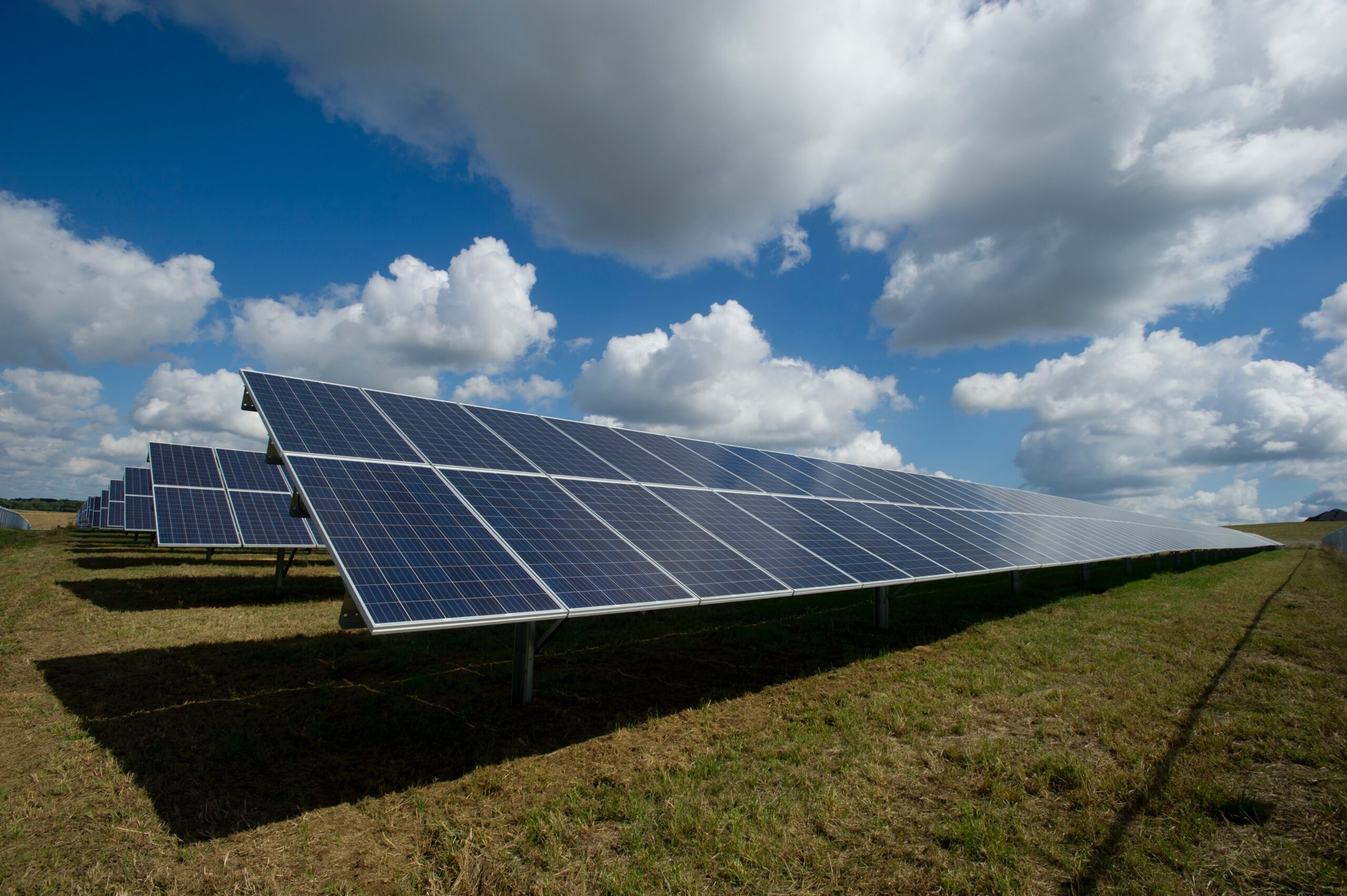
The Cyprus government’s ‘photovoltaics for all’ scheme, aimed at encouraging households to install solar energy panels to meet the EU’s climate-neutral target by 2050, has been criticized for favoring Chinese manufacturers. European solar manufacturers are considering laying off about 4,000 skilled workers due to competition from Chinese PV panel imports, which have flooded the market with cheaper options. The scheme offers no-deposit funding for up to 4kW of PV panels on 6,000 homes, primarily benefiting Chinese solar panel importers. These panels are considered to have inferior efficiency ratings and questionable durability compared to European variants, which often come with 30-year guarantees. The average cost of a kit is between 6,000 to 6,500 euros, with a grant of up to 5,000 euros provided, which is added to the consumer’s electricity bill as a no-interest loan over 4 to 5 years. There is an additional 1,500 euro grant available for those who can afford to invest directly in a PV system with their own money. However, the government is known for delayed payments to suppliers, leading some to prefer dealing directly with solar energy companies for the refund.

Trade deficit narrows in January after plunge in imports

Trade deficit narrows in January after plunge in imports

– The January foreign trade deficit in Cyprus decreased to a third of the level from the previous year, primarily due to a significant reduction in imports, especially in the transfer of ships and other vessels.
– The trade deficit for the entire year of 2023 narrowed by €313 million.
– Total imports of goods in January were €848.1 million, a 51.1% decrease from €1,735.1 million in January 2023.
– Total exports in January were €281.5 million, a 10.7% decrease from €315.2 million in January 2023.
– The trade deficit in January 2024 was €566.5 million, down from €1,419.9 million in January 2023.
– Imports from other EU member states were €510.7 million, and from third countries were €337.4 million, compared to €529.1 million and €1,206.0 million, respectively, in January 2023.
– Exports to other EU member states were €103.5 million, and to third countries were €178.1 million, compared to €69.8 million and €245.4 million, respectively, in January 2023.
– January imports included the transfer of economic ownership of vessels worth €65.2 million, compared to €936.3 million in January 2023.
– January exports included the transfer of economic ownership of vessels and aircraft worth €69.5 million, compared to €107.5 million in January 2023.
– Excluding ships, the January foreign trade deficit slightly increased from €570.9 million in 2024 to €591.1 million in the same month of the previous year.
– Total imports of goods in December amounted to €928.4 million, a 9.6% increase from €847.3 million in December 2022.
– Total exports in December reached €389.9 million.
– Total imports for all of 2023 were €12,948.9 million, and exports were €4,686.3 million.
– The foreign trade deficit for all of 2023 was adjusted to €8,262.6 million, narrower than the €8,575 million based on provisional data for December.