IMF says global ‘soft landing’ in sight, lifts 2024 growth outlook

The International Monetary Fund (IMF) has upgraded its forecast for global economic growth, citing faster-than-expected easing of inflation. The IMF’s chief economist, Pierre-Olivier Gourinchas, stated that a “soft landing” was in sight, but overall growth and global trade still remained lower than the historical average. The IMF forecast global growth of 3.1% in 2024, up from its previous forecast of 2.9%, and expected global trade to expand by 3.3% in 2024. However, risks such as geopolitical tensions in the Middle East and attacks in the Red Sea could disrupt commodity prices and supply chains. The IMF also warned that delays in fiscal consolidation and the potential violation of global trade rules by certain countries could impact economic activity.

Tencent, ’s Riot Games to lay off about 11 per cent of staff

Tencent, ’s Riot Games to lay off about 11 per cent of staff

– Tencent Holdings’ subsidiary Riot Games plans to lay off 530 employees, approximately 11% of its global staff.
– The layoffs will mainly affect teams outside of core game development.
– Riot Games is known for titles such as “League of Legends.”
– The gaming industry is facing challenges with audience spending less on games due to high inflation.
– Electronic Arts Inc. previously cut 6% of its staff and reduced office space.
– Riot Games CEO Dylan Jadeja stated that the company lacks focus and has unsustainable costs.
– Riot Games will concentrate on its live games portfolio, which includes “League of Legends,” “Valorant,” “Teamfight Tactics,” and “Wild Rift.”
– Riot will cease new game development under “Riot Forge” and reduce staff and features in “Legends of Runeterra.”
– Tencent acquired a majority stake in Riot Games in 2011 and also has a stake in Epic Games.

Economic growth slows, to pick up from 2025

Economic growth slows, to pick up from 2025

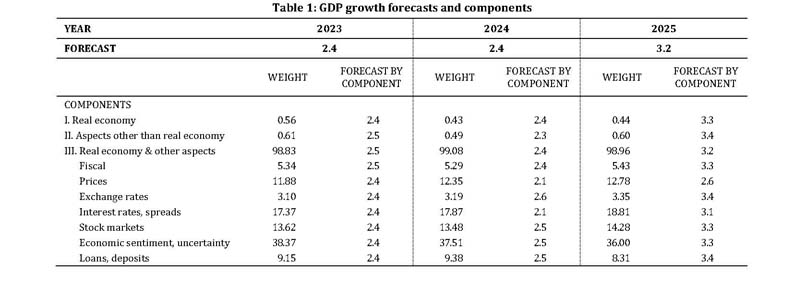
The University of Cyprus has estimated that real GDP growth in Cyprus will slow from 5.1% in 2022 to 2.4% in 2023. Economic growth is projected to remain at 2.4% in 2024 and improve to 3.2% in 2025. The forecast for 2023 has remained unchanged, but the forecast for 2024 has been revised down by 0.4 percentage points. The slowdown in growth in 2023 is attributed to tightening monetary policy and geopolitical turmoil. Despite the slowdown, economic activity and the labor market in Cyprus have remained resilient, and inflation has gradually decelerated. Inflation is projected to decrease from 3.5% in 2023 to 2.1% in 2024 and 2.0% in 2025. Risks to the growth outlook are tilted to the downside, while risks to the inflation outlook are skewed to the upside due to increased geopolitical turmoil.

US inflation opens door to March Fed rate cut

US inflation opens door to March Fed rate cut

The US inflation, income, and spending data released on Friday were generally in line with expectations. Spending increased by 0.7%, surpassing the expected 0.5%. This suggests that the US consumer and economy are in good shape. The inflation data released alongside the spending data indicates that inflationary pressures are not increasing significantly. Oil prices remained flat after reaching a two-month high, and gold prices remained above ,000. The data supports the case for rate cuts in March, but steady prices prevent excessive optimism.

February brings German consumer sentiment back in doldrums

February brings German consumer sentiment back in doldrums

German consumer sentiment is projected to decline in February, with the consumer sentiment index dropping to -29.7 points from -25.4 the previous month, contrary to analysts’ expectations of a slight increase to -24.5. The willingness to save among consumers reached its highest level since August 2008, contributing to the fall in overall sentiment, alongside lower income expectations and a reduced propensity to buy. Factors such as crises, wars, and high inflation are impeding any significant improvement in sentiment. The GfK institute and the Nuremberg Institute for Market Decisions (NIM) conduct a monthly survey of around 2,000 consumers to produce these findings. The consumer climate indicator is used to forecast the progress of real private consumption in the following month, with a reading above zero indicating year-on-year growth and below zero indicating a decline. A one-point change in the indicator corresponds to a 0.1 percent year-on-year change in private consumption. The “willingness to buy” indicator assesses consumer opinions on purchasing major items, while the income expectations sub-index gauges household financial outlook over the next 12 months. The business cycle expectations index reflects the general economic situation assessment for the coming year.

ECB,  holds rates at 4%, investors need vigilance

ECB,  holds rates at 4%, investors need vigilance

The European Central Bank has decided to keep interest rates unchanged at 4% for the third consecutive meeting. The bank is focused on bringing inflation down to 2% and is committed to maintaining interest rates at their current levels for a long duration. Investors are advised to pay attention to the ECB’s messaging and not be swayed by market hype and speculation. The decision to hold interest rates steady is part of a broader global context where central banks are closely monitoring economic indicators and working towards economic stability.

Strong batch of US data, ECB gives little away

Strong batch of US data, ECB gives little away

The US economy is performing well, with GDP data for the fourth quarter exceeding expectations. The European Central Bank (ECB) has left interest rates on hold at 4% and has not provided clear guidance on when rates will start falling. The euro has drifted lower after the ECB press conference and US data, but it has not broken out of its recent trading range.

European Central Bank leaves interest rates unchanged – No signs of easing

European Central Bank leaves interest rates unchanged - No signs of easing

The European Central Bank (ECB) has decided to keep its interest rates unchanged, reaffirming its commitment to combat inflation. The main refinancing rate, as well as the marginal lending facility and deposit facility rates, will remain at their current levels. The ECB is not considering a change in its policy at this time, as inflation pressures have not yet fully dissipated and many wage negotiations are still ongoing. Investors believe that the ECB is mistaken in its assessment of economic growth and inflation, and expect the bank to make five interest rate cuts starting in the spring. However, the ECB did not signal such a shift in its statement, stating that keeping interest rates at current levels for a prolonged period of time will help achieve the inflation target of 2%. The ECB also emphasized that it will continue to adjust its policy based on economic data. The President of the ECB will provide further details on the decision during a press conference.

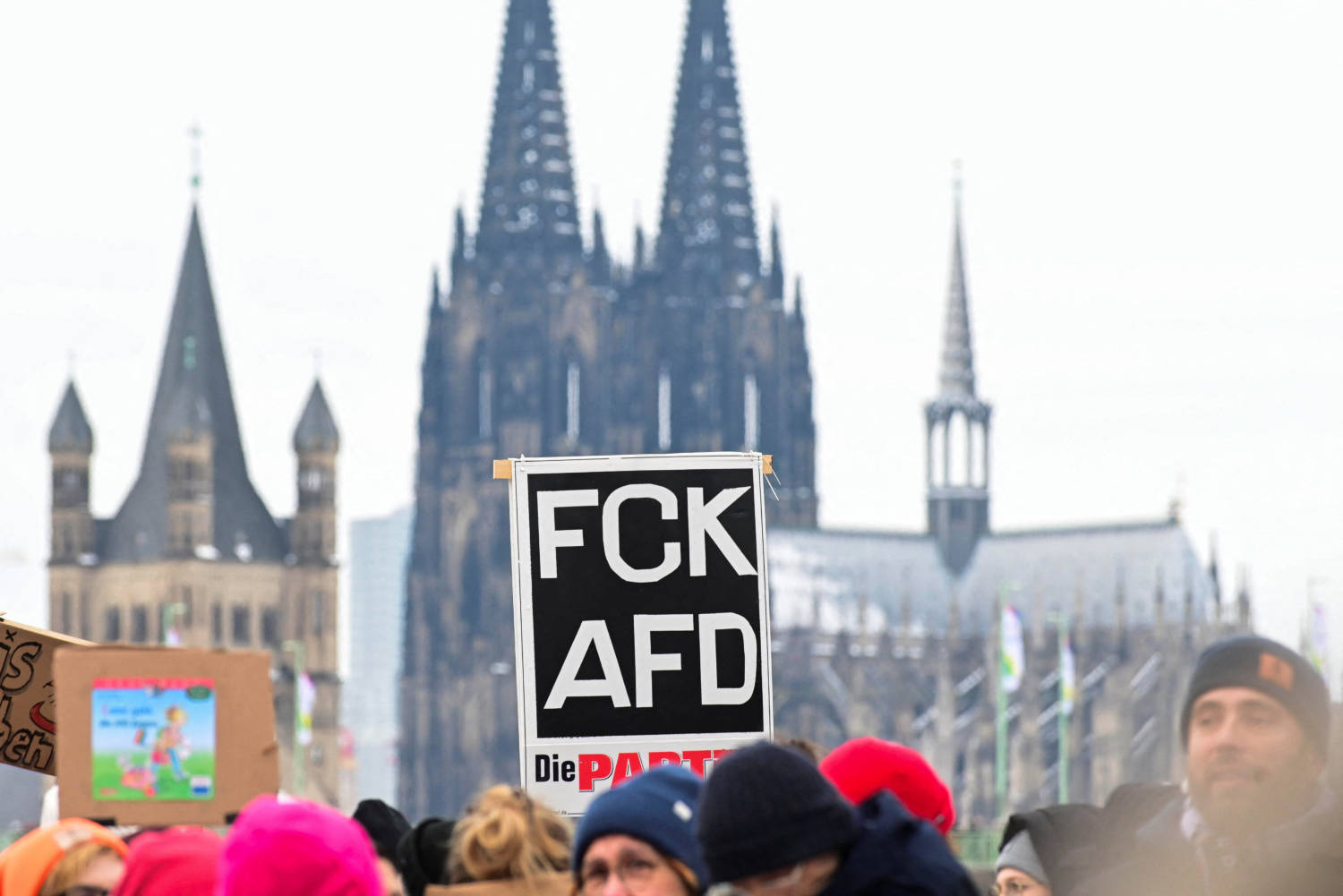
EXPLAINER-German protests against far-right head into third week

EXPLAINER-German protests against far-right head into third week

Fact: Hundreds of thousands of Germans have been protesting against right-wing extremism and the nationalist Alternative for Germany (AfD) party.
Fact: The protests were sparked by a report that some senior AfD officials discussed policies such as mass deportation of citizens of foreign origin.
Fact: Civil society groups, mainstream parties, trade unions, and churches are organizing the protests.
Fact: The AfD has sought to distance itself from the deportation proposal and minimize the protests.
Fact: The protesters are calling for curbing support for the AfD and raising awareness of the danger it represents.
Fact: The AfD gained popularity by criticizing Angela Merkel’s open-door policy on migration, campaigning against COVID-19 lockdowns, and opposing Germany’s green transition and support for Ukraine.
Fact: The protests have had a slight impact on support for the AfD, but the party remains number two in polls.
Fact: Mainstream politicians have welcomed the protests and some have attended them.

German business activity deteriorates in January

German business activity deteriorates in January

Germany’s economic downturn worsened in January, with both manufacturing and services activity contracting. The HCOB German Flash Composite Purchasing Managers’ Index (PMI) fell to 47.1, below economists’ forecast of 47.8. The manufacturing PMI rose to 45.4, but still in contraction territory. Business activity in the services sector fell to a 5-month low of 47.6. The survey showed continued weakness in demand but limited impact on the labor market.