Our View: PEP asset disclosure is in need of serious reform
Our View: PEP asset disclosure is in need of serious reform

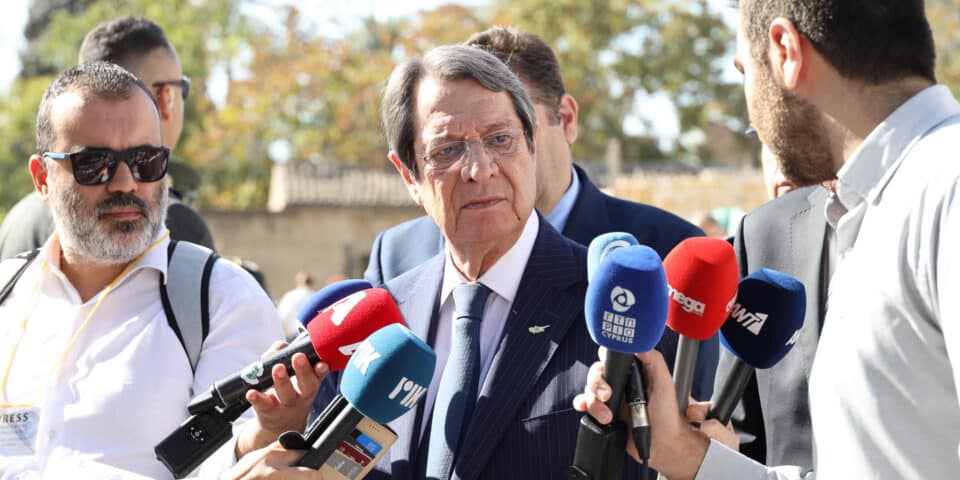
The issue of disclosing personal assets by politically exposed persons (PEP) in Cyprus has been problematic, with no standardized or verified submission process. Former President Nicos Anastasiades submitted an asset list that was widely mocked for appearing to underrepresent his wealth. Criticism from the Council of Europe led to a proposal for submissions to be checked by a committee of auditors. Recently, Tax Commissioner Sotiris Markides suggested PEPs should publish their net asset position instead of a detailed list, to avoid disclosing sensitive information. However, deputies argued this method lacks transparency. Another proposal is for PEPs to submit a capital statement prepared by an auditor, which may offer more transparency but has raised concerns about cost. Discussions on amending the laws are ongoing, with all parties recognizing the need for a more serious and formal system.

US takes on Apple in major antitrust lawsuit

US takes on Apple in major antitrust lawsuit

The U.S. Department of Justice and 15 states, along with the District of Columbia, filed a lawsuit against Apple, accusing it of using its market power to drive up prices and harm smaller competitors. This marks a significant antitrust action by the Biden administration against Apple, which joins other major tech companies like Google, Meta Platforms, and Amazon that have faced similar lawsuits. The lawsuit alleges that Apple’s practices result in higher prices for consumers, developers, content creators, artists, publishers, small businesses, and merchants. Filed in U.S. federal court in Newark, New Jersey, the 88-page lawsuit aims to address Apple’s alleged anticompetitive behavior, particularly concerning its App Store’s commission fees and restrictions on third-party access to iPhone’s hardware and services. Apple has faced antitrust scrutiny and legal challenges in other regions, including Europe, Japan, and Korea, as well as from corporate rivals like Epic Games. Despite a legal challenge from Epic, Apple’s App Store commission structure has largely remained intact in the U.S., though a federal judge ordered Apple to allow alternative payment methods within apps. In response to new legislation in Europe, Apple plans to allow developers to offer their own app stores without commissions, though this move has faced criticism. The lawsuit also highlights complaints from consumer hardware firms about restricted access to iPhone’s sensors and chips, exemplified by Apple’s AirTags product and its exclusive control over contactless payment additions through Apple Pay. Apple defends its practices by citing privacy and security reasons.

Explainer: How will the West use Russia’s frozen assets?

Explainer: How will the West use Russia’s frozen assets?

The European Union is expected to move closer to seizing profits from approximately 0 billion worth of Russian assets frozen since the invasion of Ukraine in February 2022. EU leaders aim to send confiscated money to Ukraine, facing complex legal challenges. Options include siphoning off proceeds from matured assets held mainly in Euroclear, confiscating Russian reserves under international law, issuing “reparation bonds” tied to war reparations from Russia, and arranging a syndicated loan where allies could use frozen assets to pay off loans if Moscow refuses to pay damages. The EU estimates it could send Ukraine 2.5 to 3 billion euros annually from seized profits. Belgium plans to send 1.5 billion euros to Ukraine immediately from taxed profits. Euroclear will retain a portion of the profits for operational and litigation costs. There are concerns about potential legal challenges from Russia and the impact on international asset holdings in Europe.

Apple accused of monopolising smartphone markets in US antitrust lawsuit

Apple accused of monopolising smartphone markets in US antitrust lawsuit

The U.S. Department of Justice and 15 states filed a lawsuit against Apple, accusing the company of using its market dominance to inflate prices for its services and suppress smaller competitors. This legal action is part of a broader U.S. effort to regulate major technology companies. The lawsuit aims to challenge Apple’s business practices, which have historically involved charging premium prices for technology products and controlling the user experience. The Justice Department’s complaint focuses on restoring competition in the smartphone market, reducing prices for consumers, lowering fees for developers, and encouraging innovation. The lawsuit cites instances where Apple allegedly hindered competition, including issues related to messaging apps, smartwatches, and digital wallets. The Justice Department also referenced an email from Apple co-founder Steve Jobs indicating an intent to lock in developers and consumers to Apple’s payment systems. Apple responded by defending its business model, emphasizing the integration of hardware, software, and services in its products. The complaint seeks to prevent Apple from using its control over app distribution and other means to disadvantage rivals. Apple has faced similar antitrust challenges in Europe, Japan, Korea, and from companies like Epic Games. The U.S. Justice Department expressed confidence in its case, while Apple has argued that its restrictions on third-party developers are for privacy and security reasons. However, the Justice Department contends that Apple’s actions have sometimes reduced privacy and security. In Europe, new legislation has forced Apple to allow developers to offer their own app stores without paying commissions, although challenges remain in implementing alternative app stores. The lawsuit also examines Apple’s practices concerning hardware access and services like Apple Pay and iMessage.

Swedish Eurovision host city braces for possible protests

Swedish Eurovision host city braces for possible protests

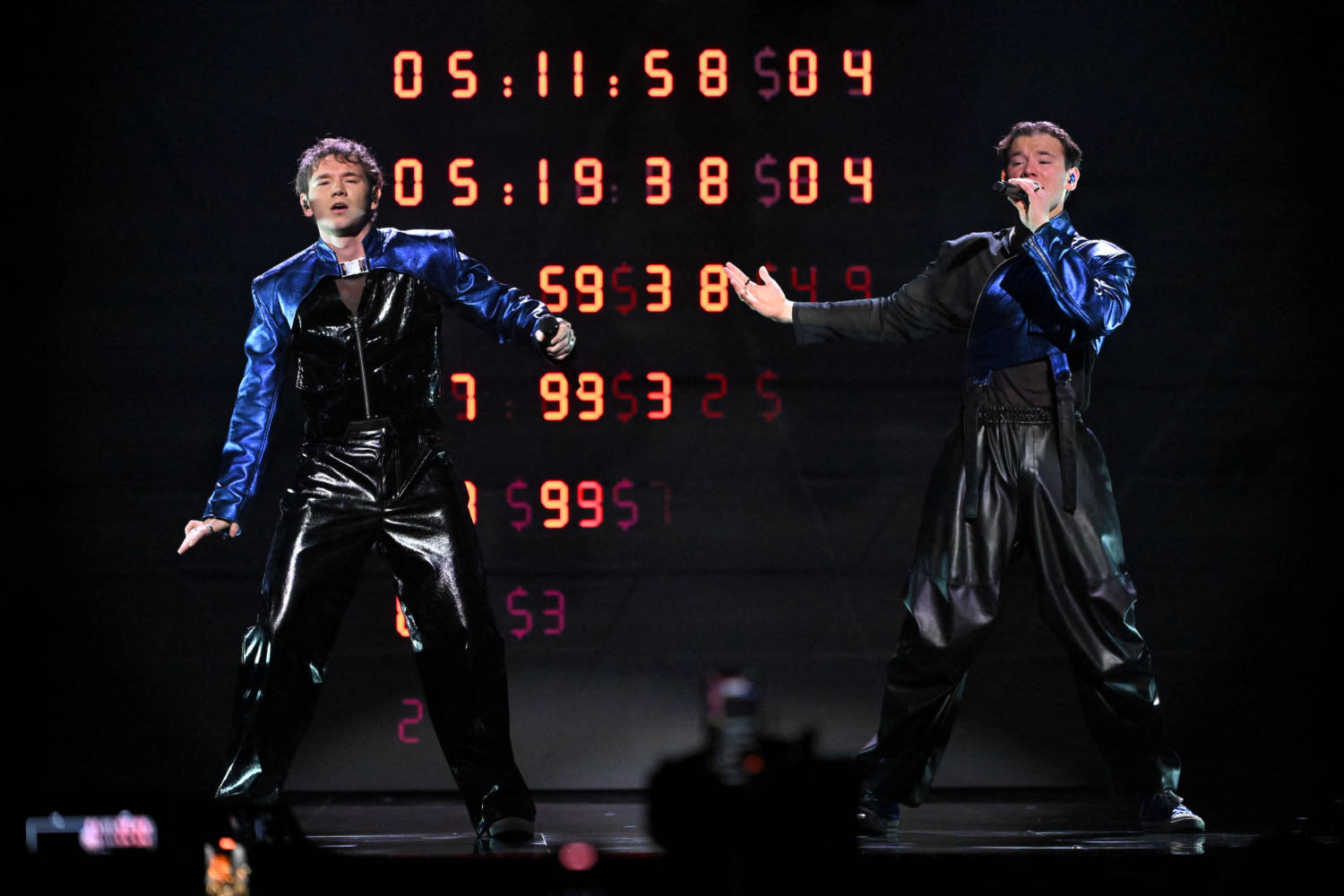
The Swedish city of Malmo, hosting the Eurovision Song Contest in May, expects guests from 80 countries and is preparing for possible unrest. The event, which is the world’s biggest music competition of its kind, aims to be non-political. Despite this, the European Broadcasting Union has faced pressure to exclude Israel due to its actions in Gaza but has resisted these calls. Malmo’s Safety Director, Per-Erik Ebbestahl, mentioned there is no direct threat to Eurovision, but the situation could change. Cultural events in Europe have recently been impacted by protests related to the Gaza conflict. Israel modified its Eurovision song to comply with the event’s non-political requirements. Malmo’s Mayor, Katrin Stjernfeldt Jammeh, emphasized the city’s support for democratic expression while acknowledging the potential for disruptive actions. The contest is scheduled for May 7-11.

Somali pirates’ return adds to crisis for global shipping companies

Somali pirates’ return adds to crisis for global shipping companies

A speed boat carrying more than a dozen Somali pirates attacked a Bangladeshi-owned bulk carrier in the western Indian Ocean, taking the captain and second officer hostage. The ship, named the Abdullah, later anchored off the coast of Somalia. This incident is part of a resurgence of piracy in the region, with more than 20 attempted hijackings since November. The increase in piracy has led to higher costs for shipping companies due to the need for armed security guards, insurance coverage, and the potential for ransom payments. The Indian Navy recently intercepted and freed another hijacked ship, the Ruen, capturing 35 pirates and rescuing 17 hostages without injuries. The resurgence of piracy is attributed to a reduction in international naval operations off the coast of Somalia and the distraction provided by Houthi militia strikes in nearby waters. Somali President Hassan Sheikh Mohamud emphasized the importance of stopping piracy early to prevent it from escalating. The global economy suffered approximately billion in costs due to Somali pirate activities at their peak in 2011. The current rate of attacks is significantly less, but the threat persists, especially with the end of the monsoon season. Insurers have extended the area in which additional war risk premiums are imposed, and the demand for private armed guards has increased, driving up prices. No ransom payments have been reported for the recent hijackings, but negotiations have taken place. International efforts to combat piracy have been hampered by reduced naval patrols and the lapse of a U.N. resolution authorizing foreign vessels to patrol in Somali waters. Somali President Mohamud highlighted the need to bolster Somalia’s law enforcement capacity at sea and on land to contain the piracy threat.

Easing UK inflation keeps BoE on track for rate cuts later in 2024

Easing UK inflation keeps BoE on track for rate cuts later in 2024

British inflation slowed in February, with consumer prices rising by 3.4% in annual terms after a 4.0% increase in January. This was the weakest rate of inflation since September 2021. Core inflation, which excludes energy, food, and tobacco prices, also slowed to 4.5% from 5.1% in January. Despite the moderation, Britain still has the highest rate of headline inflation among the Group of Seven advanced economies, with consumer prices having increased by more than 21% since the end of 2020. The Bank of England (BoE) has indicated that underlying inflation pressures remain too persistent for it to cut interest rates now, although it has signaled that lower borrowing costs are likely later this year. Finance Minister Jeremy Hunt mentioned that the fall in inflation could help the government with its goal of abolishing social security taxes, provided it does not lead to increased borrowing or cuts in funding for public services.

Piano trio to tour Paphos, Limassol and Nicosia

Piano trio to tour Paphos, Limassol and Nicosia

A series of concerts featuring musicians Grigoris Theodoridis (double bass) from Greece, Attila Gyárfás (drums) from Hungary, and Christos Yerolatsitis (piano) from Cyprus will take place in early April in Paphos, Limassol, and Nicosia. The concerts will include original compositions from Grigoris Theodoridis’ debut album “Green of Silence” and new music by Christos Yerolatsitis. The performances are scheduled for April 5 at Technopolis 20 in Paphos, April 6 at Cornaro Art Center in Limassol, and April 7 at Windcraft Music Centre in Nicosia. Ticket prices range from €12 to €15.

Shifting focus in higher education

Shifting focus in higher education

The number of EU students enrolling in British universities has significantly decreased by more than half since the UK’s withdrawal from the European Union in 2016, with notable declines from Italy, Germany, and France. This trend is also observed in Cyprus, where students are now considering universities in other countries. British passport holders and children of British passport holders residing in the EU can still apply for UK universities and receive home fees until January 1, 2028. Before Brexit, EU students paid just over £9,000 in home fees and had access to student finance, but now, with no loans available, tuition fees can rise to £38,000. Despite the increase in tuition fees, some UK universities still offer home fees or scholarships to reduce costs. Students from Cyprus are exploring universities in various countries, including the Netherlands, France, Ireland, Greece, Germany, Austria, the Czech Republic, Canada, the USA, and Australia. There is also a noticeable increase in students applying to local private universities in Cyprus due to the variety of courses, scholarship opportunities, flexible entry requirements, and easy application processes. Students are increasingly pursuing courses that offer immediate employment opportunities, with a growing interest in fields such as artificial intelligence, cybersecurity, risk management, data analysis, art and design, real estate, business, economics/finance/accounting, law, medicine, engineering, psychology, and physiotherapy.

New Dacia Spring remains Europe, ’s most economical EV

New Dacia Spring remains Europe, ’s most economical EV

– The Dacia Spring is now in its second generation following its recent launch.
– It is Dacia’s first all-electric model and is considered the most economical all-electric car in Europe.
– The model has a new exterior and interior design, aligning with Dacia’s new design identity.
– The Dacia Spring was first introduced in 2021.
– It was the third most popular electric car sold to individuals in 2022 and 2023.
– Over 140,000 units of the Dacia Spring have been sold worldwide since its launch.
– It has received the “Best Buy Car of Europe” award from Autobest magazine and a five-star rating from Green NCAP.
– The average daily journey made by Spring users is 37 km at speeds of around 37 km/h, with 75% charging their cars at home.
– The new generation features greater interior space, the best load capacity in its class, an intelligent digital dashboard with a seven-inch screen, and a 10-inch central multimedia display.
– Dacia cars are sold in 44 countries, including Cyprus.
– Other Dacia models include the Sandero, Sandero Stepway, Jogger, and Duster.