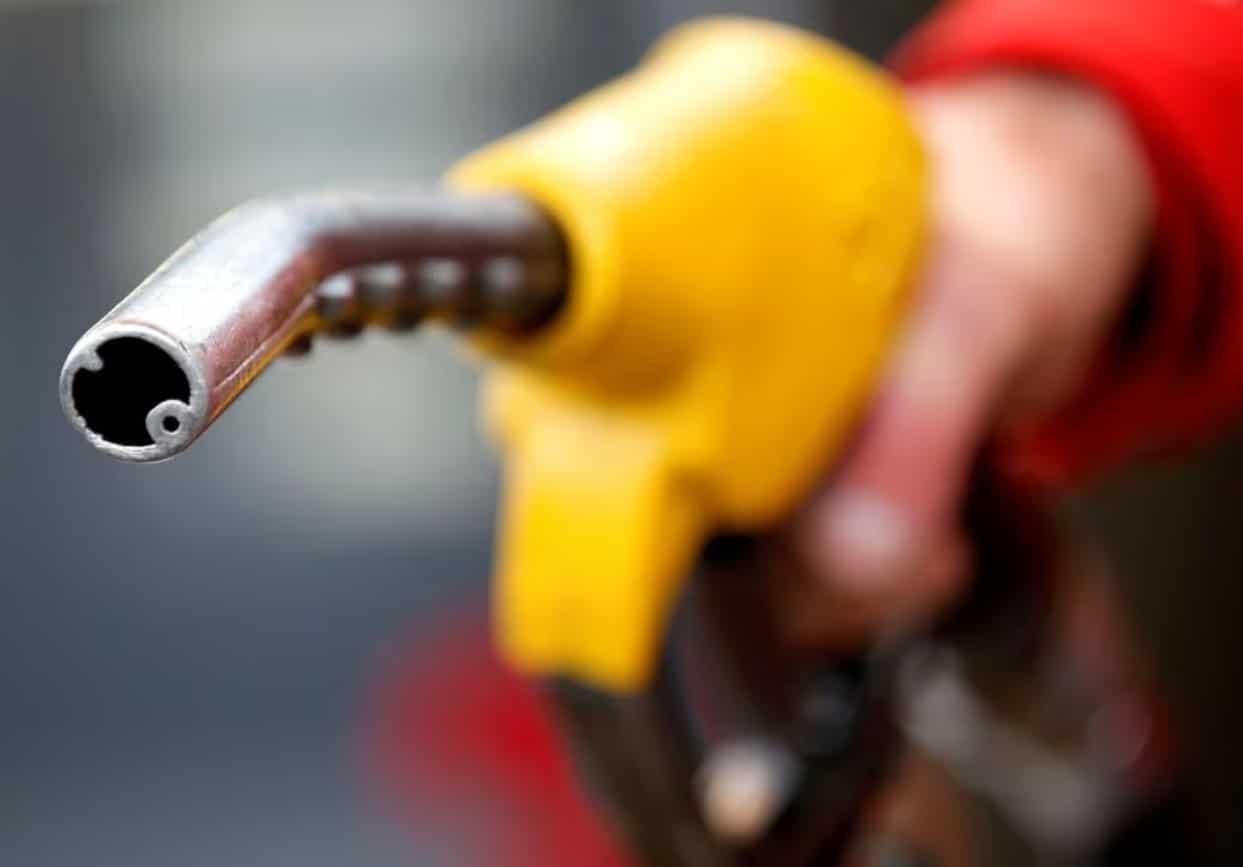
Fuel prices surge after government tax measures end

Fuel prices surge after government tax measures end

Fuel prices have surged following the termination of the government’s zero tax measure on petrol and diesel, resulting in an average increase of 8.3 cents per litre. The average price of unleaded 95 fuel was €1.413,47.

Canada’s mild winter disrupts key ice road to remote Arctic diamond mines

Canada’s mild winter disrupts key ice road to remote Arctic diamond mines

An unusually warm winter in Canada has delayed the opening of a 400-kilometer ice road used by mining companies to access their diamond mines in the Arctic. The delay is the longest in recent years and is due to climate change and the El Nino climate pattern. The warm winter could risk an early closure of the ice road, impacting the transportation of goods to the mines. The lack of infrastructure in the region is a challenge, and mining companies are pushing for a mega infrastructure project to unlock the mineral riches in the area.

Petrol stations packed as motorists beat price hike

Petrol stations packed as motorists beat price hike

– Petrol stations were packed as motorists rushed to fill up their tanks before the reduced tax measure ends on April 1.
– More price hikes are expected soon due to increasing fuel prices on the international market.
– Prices have already gone up 2 to 3 cents, varying across different companies.
– The subsidy on fuel consumption tax will end on Monday, resulting in an 8.3 cent hike per litre on petrol and diesel and 6.4 cents on heating oil.

Government determined to pull plug on fuel subsidies

Government determined to pull plug on fuel subsidies

The Cyprus government is ending an 8 cent subsidy on fuels after it expires on March 31, resulting in an initial increase of 7 to 8.3 cents a litre for motor petrol and diesel, along with a 6.3c hike on heating oil. The government also plans to introduce a green tax on fuel, which has been delayed until after the summer holidays. The impact of the green taxation on businesses and households is expected to be small, with compensatory measures provided to vulnerable population groups.

Egypt, ’s natgas woes continue

Egypt, ’s natgas woes continue

Egypt is unlikely to export any LNG to Europe this summer due to declining production at the Zohr field, which is prioritizing domestic energy needs.

Oil prices to keep on rising

Oil prices to keep on rising

– The oil price is now over /barrel due to tight supply, increasing demand, Middle East conflict, and Houthi attacks on vessels in the Red Sea, with expectations of further increases.
– The International Energy Agency (IEA) now predicts a global oil supply deficit throughout 2024, reversing its earlier forecast of a surplus.
– The IEA and OPEC agree on supply deficits due to OPEC+ cuts and rising global demand.
– The IEA forecasts a crude consumption increase of 1.3 million barrels per day (b/d) this year, while OPEC maintains its growth estimate at 2.25 million b/d for 2024.
– The US is producing more crude oil than any other country, averaging 12.9 million b/d in 2023, with Saudi Arabia and Russia close to 10 million b/d.
– Oil and gas executives expect a slower transition to net-zero due to geopolitical turmoil, macroeconomic conditions, and AI.
– Shell aims to reduce its net carbon intensity by 15%-20% by 2030, adjusting from its previous goal of 20%.
– Adnoc and BP suspended their billion bid for a stake in Israel’s NewMed Energy due to the conflict in Gaza but remain interested.
– Adnoc and BP announced a new joint venture centered on Egypt on 14 February.
– European refineries may have a profitable future due to elevated margins for refined oil products like diesel and gasoline, amidst war in Ukraine and Red Sea tensions.
– On 13 March, Ukraine conducted drone strikes on Russian refineries, reducing refining capacity by 370,500 b/d.
– Falling refining capacity has increased diesel premiums ahead of crude by about /b.
– By 2026, Europe will have reduced its crude distillation capacity by about 7% compared to 2020, becoming more reliant on imports of refined products and more vulnerable to supply shocks.
– The IEA and OPEC continue to have contrasting biases in oil market forecasts.
– CERAWeek in Houston saw top oil executives and ministers discuss the energy sector, with less pressure for a large-scale move to clean fuels.
– ExxonMobil CEO Darren Woods emphasized the cost concerns in reducing emissions.
– Shell CEO Wael Sawan highlighted the critical role of LNG in Shell’s future.
– Saudi Aramco’s CEO criticized the energy transition approach, advocating for efficient hydrocarbon use.
– US Secretary of Energy Granholm emphasized meeting current energy needs while preparing for future realities.
– Wind turbine blades, which can’t be recycled, are accumulating in landfills.
– Methane emissions from the energy sector remained near a record high in 2023, according to the IEA.
– Germany has opened its first EUR 4 billion bidding round for ‘Carbon Contracts for Difference’ for industrial users to switch to green hydrogen or other low-emissions technology.
– Engie urges caution on the pace of hydrogen deployment in hard-to-abate industries.
– Global greenhouse gas emissions from food systems are growing, with livestock being the biggest driver.
– Jim Skea of the IPCC stated the world is in ‘unknown territory’ after heat records were broken, indicating more science is needed to understand extraordinary temperatures.

Petrol prices to increase from April 1st

Petrol prices to increase from April 1st

– The reduced fuel consumption tax, which was lowered by 8.3 cents per litre for petrol (95 octane) and diesel, and by 6.3 cents for heating oil, will end starting from 1st April.
– The consumption tax on fuel is set to be reintroduced at midnight on the last day of the current month.
– There has been a significant reduction in fuel prices in the last quarter, which stabilized two weeks ago, with very small increases observed in recent days.
– Cyprus has the cheapest fuel in Europe according to the European price observatory issued by the EU.
– VAT will be reinstated for 9 product categories on 30th April and for the remaining two categories related to meat and vegetables on 31st May.
– The public consultation on the draft law for green tax reform has been completed, with the taxation expected to be introduced within 2024, accompanied by compensatory measures decided by the Ministry of Finance.
– The termination of the reduced consumption tax on fuel is expected to lead to an increase in the retail price of fuel due to the imposition of green taxation, with an overall increase of about 10%.
– The cost for dealers will double with every one-cent increase in fuel prices, requiring them to spend approximately 2,000 euros for their stocks and monthly customers.
– The price of diesel is expected to exceed 1.50 euros per litre with the termination of the reduced VAT rate.
– The Pancyprian Association of Petroleum Dealers has requested that price adjustments be made on the first working day after their decision and not on a holiday, specifically on the 6th morning of the first working day.

Consumers brace for fuel price shock

Consumers brace for fuel price shock

Petrol prices in Cyprus are expected to increase by 14 cents per litre on April 1 due to the end of a government subsidy and the potential introduction of a green tax. The initial increase will be 7 to 8.3 cents a litre for motor petrol and diesel, and 6.3 cents for heating oil. The consumption tax on fuel is set to be reinstated at midnight on March 31. An additional increase of 5 cents may occur if the new green tax is approved. The green tax is expected to start from April 1, with an annual escalation from 5 cents in 2023 to 25 cents by 2033. Cyprus ranks among the EU countries with comparatively cheaper fuel. Petrol station owners warn of further increases due to pricier fuel shipments. The fuel tax exemption, introduced in March 2022, reduced the price of petrol by 7 cents a litre, diesel by 8.3 cents, and heating oil by 6.4 cents. In March 2022, the average price of 95 octane unleaded petrol was €1.44. As of the last reported Friday, the average prices were €1.412 for a litre of 95 octane petrol, €1.508 for diesel, and €1.067 for heating oil.