The future of LNG exports

Fact: Future LNG demand is expected to be led by Asia, particularly China, with global LNG demand projected to increase to about 700mtpa by 2040.
Fact: Future LNG demand is expected to be led by Asia, particularly China, with global LNG demand projected to increase to about 700mtpa by 2040.
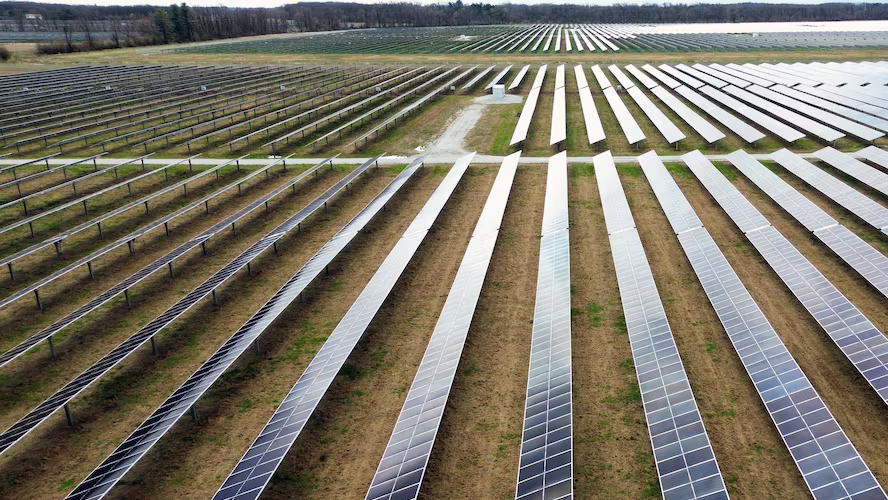
Dave Duttlinger leased 445 acres of his Indiana farm to Dunns Bridge Solar LLC for a solar development project, despite concerns about damage to his land. The solar panels were installed on some of the most productive cropland classified by the USDA, impacting future crop potential. Solar energy firms argue that the industry’s use of farmland is minimal compared to the need for renewable energy to combat climate change. Indiana farmer Norm Welker found leasing his land for a solar project more profitable than growing corn due to low prices.

Bank of Cyprus issued its first green bond, raising €300 million to fund renewable energy projects, climate-friendly buildings, and transport. The bond was more than four times oversubscribed, with the orderbook reaching €1.3 billion.

Fact: Shipping Deputy Minister Marina Hadjimanolis traveled to Guangzhou, China to attend the naming ceremony of the cargo ship ‘AAL Limassol’, owned by AAL Shipping, a subsidiary of Schoeller Holdings.

Cypriot consumers should not pay anything for the Great Sea Interconnector until the project is operational.

Authorities have approved the first renewable energy storage systems in Cyprus, as suppliers of electricity generated from renewables are losing around €40 million annually due to discarded energy.

Fact: Chief Scientist Demetris Skourides presented Cyprus’ “Cyprus 2035” long-term strategy to make the country one of the most desirable for living, working, and investing in, focusing on technology, research, and innovation.

Egypt is unlikely to export any LNG to Europe this summer due to declining production at the Zohr field, which is prioritizing domestic energy needs.

– The oil price is now over /barrel due to tight supply, increasing demand, Middle East conflict, and Houthi attacks on vessels in the Red Sea, with expectations of further increases.
– The International Energy Agency (IEA) now predicts a global oil supply deficit throughout 2024, reversing its earlier forecast of a surplus.
– The IEA and OPEC agree on supply deficits due to OPEC+ cuts and rising global demand.
– The IEA forecasts a crude consumption increase of 1.3 million barrels per day (b/d) this year, while OPEC maintains its growth estimate at 2.25 million b/d for 2024.
– The US is producing more crude oil than any other country, averaging 12.9 million b/d in 2023, with Saudi Arabia and Russia close to 10 million b/d.
– Oil and gas executives expect a slower transition to net-zero due to geopolitical turmoil, macroeconomic conditions, and AI.
– Shell aims to reduce its net carbon intensity by 15%-20% by 2030, adjusting from its previous goal of 20%.
– Adnoc and BP suspended their billion bid for a stake in Israel’s NewMed Energy due to the conflict in Gaza but remain interested.
– Adnoc and BP announced a new joint venture centered on Egypt on 14 February.
– European refineries may have a profitable future due to elevated margins for refined oil products like diesel and gasoline, amidst war in Ukraine and Red Sea tensions.
– On 13 March, Ukraine conducted drone strikes on Russian refineries, reducing refining capacity by 370,500 b/d.
– Falling refining capacity has increased diesel premiums ahead of crude by about /b.
– By 2026, Europe will have reduced its crude distillation capacity by about 7% compared to 2020, becoming more reliant on imports of refined products and more vulnerable to supply shocks.
– The IEA and OPEC continue to have contrasting biases in oil market forecasts.
– CERAWeek in Houston saw top oil executives and ministers discuss the energy sector, with less pressure for a large-scale move to clean fuels.
– ExxonMobil CEO Darren Woods emphasized the cost concerns in reducing emissions.
– Shell CEO Wael Sawan highlighted the critical role of LNG in Shell’s future.
– Saudi Aramco’s CEO criticized the energy transition approach, advocating for efficient hydrocarbon use.
– US Secretary of Energy Granholm emphasized meeting current energy needs while preparing for future realities.
– Wind turbine blades, which can’t be recycled, are accumulating in landfills.
– Methane emissions from the energy sector remained near a record high in 2023, according to the IEA.
– Germany has opened its first EUR 4 billion bidding round for ‘Carbon Contracts for Difference’ for industrial users to switch to green hydrogen or other low-emissions technology.
– Engie urges caution on the pace of hydrogen deployment in hard-to-abate industries.
– Global greenhouse gas emissions from food systems are growing, with livestock being the biggest driver.
– Jim Skea of the IPCC stated the world is in ‘unknown territory’ after heat records were broken, indicating more science is needed to understand extraordinary temperatures.
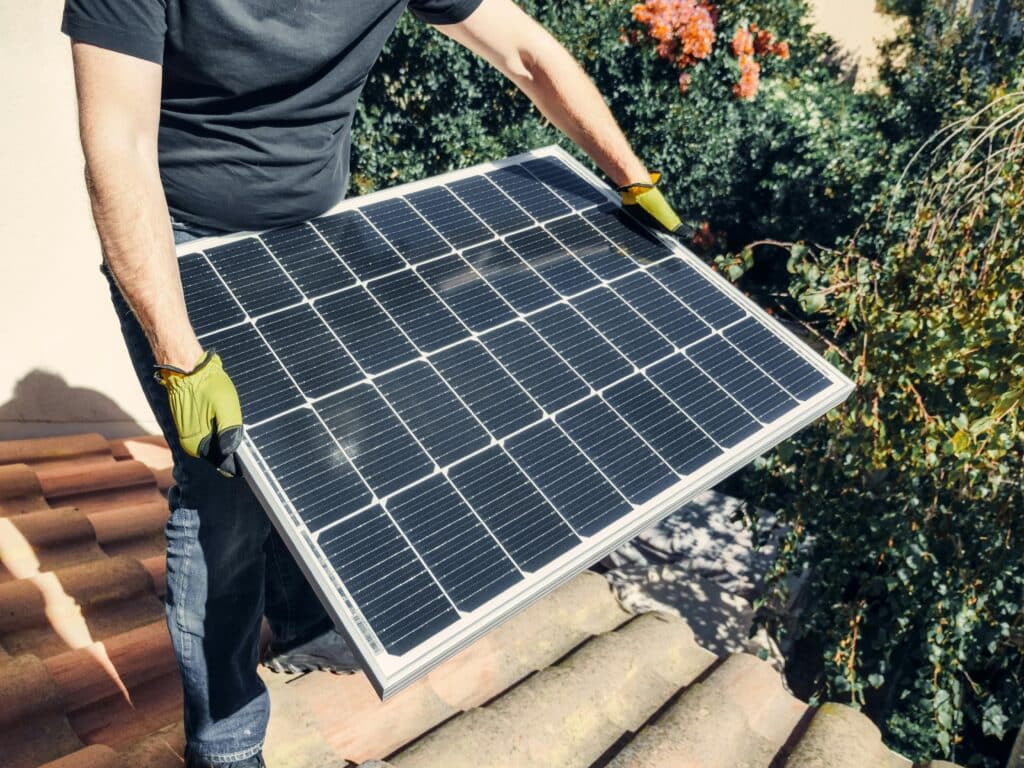
Cyprus, despite its abundant sunlight, has experienced a slow transition to renewable energy due to various issues. Two significant developments include the statement by the Electricity Authority of Cyprus (EAC) president regarding the new turbine at the Vasilikos power plant, which can operate on natural gas and potentially hydrogen after modifications, and a letter by ETEK to the Cyprus Energy Regulatory Authority (CERA) advocating for the acceleration of ‘Energy Communities’. The past decade has seen a lack of direction in renewable energy development in Cyprus, with the licensing process being restrictive and causing delays. This has resulted in renewable electricity being expensive and not contributing to the reduction of Cyprus’s high energy prices. The introduction of competitive bidding for future projects and the concept of ‘Energy Communities’ are deemed imperative. Green hydrogen, produced from water by electrolysis using renewable energy, has potential in various industries but faces challenges such as the need for large amounts of renewable energy and land, as well as the development of safe storage and transportation methods. The US Geological Survey (USGS) has announced the existence of ‘gold’ hydrogen in underground reservoirs, which could potentially meet global demand for hundreds of years. For Cyprus, developing green hydrogen production depends on land availability and increasing renewable power generation. Preparations for a long-term hydrogen production plan are necessary, focusing on reducing high electricity prices through the switch from diesel/HFO to natural gas and accelerating renewable projects.