Are Billionaire Taxes Falling? That Depends On Who You Think Pays Corporate Taxes

Are Billionaire Taxes Falling? That Depends On Who You Think Pays Corporate Taxes

Fact: Berkeley economist Gabriel Zucman calculated that the highest-income Americans pay only about 23% of their income in taxes, resulting in billionaires having a lower effective tax rate than working-class Americans for the first time in US history.

Rising Share of Personal Income Tax and Indirect Tax

Rising Share of Personal Income Tax and Indirect Tax

– The collection of personal income tax and indirect taxes has increased, while collections from corporate taxes have reduced.
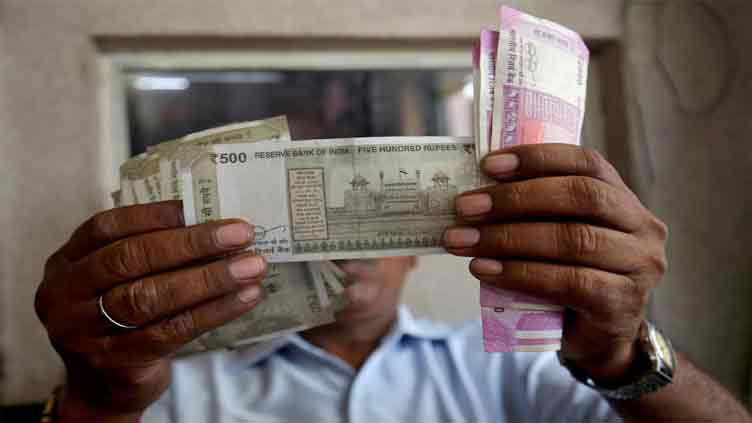
– India’s net direct tax collections grew 17.7% in 2023-24 to hit Rs.19.58 lakh crores.
– The share of corporate taxes contribution to overall tax collection dipped to 46.5% from 49.6% in 2022-23.
– Indirect taxes, including union excise duties and the Goods and Services Tax, have increased from 2010-11 onwards.
– The majority of individuals filing personal income tax have an annual income ranging from Rs 1 lakh to Rs. 5 lakh.
– India has among the highest effective personal income tax rates among BRICS economies.
– Rising share of personal income tax and indirect taxes can lead to income inequality, consumer burden, economic inefficiency, tax evasion, and macroeconomic instability.

Congratulations, you survived another tax season—and paid a higher rate than top American companies

Congratulations, you survived another tax season—and paid a higher rate than top American companies

Fact: The pharmaceutical industry pays the lowest effective tax rate in 2022 at 11.6%, with some companies like Pfizer and Abbvie paying even lower rates.

Govt may lower corporate tax to encourage compliance

Govt may lower corporate tax to encourage compliance

The government may reduce the corporate tax rate in fiscal 2024-25 to encourage compliance and boost collection, with the National Board of Revenue likely proposing a 2.5 percentage point reduction for both listed and non-listed companies.

Bangladesh may lower corporate tax to encourage compliance

Bangladesh may lower corporate tax to encourage compliance

The government may reduce the corporate tax rate in fiscal 2024-25 to encourage compliance and boost collection, with the National Board of Revenue likely proposing a 2.5 percentage point reduction for both listed and non-listed companies.

Guest commentary California needs higher taxes on corporations and the wealthy

President Biden proposed to reverse the 2017 Trump tax cuts for the wealthiest Americans by raising the corporate tax rate, denying tax breaks for corporations whose CEOs earn more than million in annual compensation, and requiring billionaires to pay at least 25 percent of their income in taxes. California faces a billion budget deficit and has a regressive tax system, with the lowest income earners paying the largest share of taxes. State and local governments can take action to ensure the ultra-wealthy and large corporations pay their fair share by ending tax breaks, increasing the corporate tax rate, and implementing a wealth tax on extreme wealth. Governor Newsom opposes the wealth tax, but public pressure is building with a majority of California voters supporting the idea.

India income tax collection up 17.7pc in 2023-24 to nearly $235bn

India income tax collection up 17.7pc in 2023-24 to nearly $235bn

Fact: India’s income tax collection increased by 17.7% in the 2023-24 financial year, reaching nearly 5 billion.

ANALYSIS | Do wealthy Canadians pay enough taxes? That depends how we define ‘fair share’ | CBC News

ANALYSIS | Do wealthy Canadians pay enough taxes? That depends how we define 'fair share' | CBC News

The federal government announced an increase in capital gains taxes in the recent budget to ensure the wealthiest Canadians pay their fair share. The government plans to increase the inclusion rate of the capital gains tax for high-income earners. Data from the Fraser Institute and Statistics Canada show that high-income earners already pay a disproportionately large share of taxes. However, some argue that this data does not consider the totality of income inequality, with the wealthiest 20 percent of Canadians holding more than two-thirds of total net wealth.

Combating market power through a graduated U.S. corporate income tax – Equitable Growth

Combating market power through a graduated U.S. corporate income tax - Equitable Growth

– Corporate taxpayers with billion in income would pay 21 percent on their first 0 million in income, 25 percent on 0 million of their income, and 30 percent on billion of their income, resulting in a total tax bill of 6 million and an average tax rate of 27.3 percent.
– Graduated rate of corporate taxation was a feature of the corporate tax until recently.
– Approximately 99.7 percent of corporate taxpayers fall below the thresholds of million in tax payments.
– 87 percent of tax payments are made by corporations above the million tax payment threshold.
– Companies with tax payments of more than 0 million generate about billion in additional tax revenue.
– Tax revenues would increase by about billion in 2019 with the proposed reform.
– The tax code can discourage market power by levying a higher tax on firms likely to exercise it.
– International tax cooperation can limit tax competition pressures and reduce profit-shifting incentives.
– Market power provides a rationale for reconsidering tax preferences for very-high-profit large companies.
– Graduated corporate tax brackets would be straightforward to administer, especially for large companies.
– Tax policy should distinguish the normal return to capital from the above-normal return to capital to improve efficiency and equity of capital taxation.

Guest Op-Ed: California Needs Higher Taxes on Corporations and the Wealthy – Beyond Chron

Guest Op-Ed: California Needs Higher Taxes on Corporations and the Wealthy - Beyond Chron

President Biden proposed to reverse the 2017 Trump tax cuts for the wealthiest Americans by raising the corporate tax rate, denying tax breaks for corporations whose CEOs earn more than million in annual compensation, and requiring billionaires to pay at least 25 percent of their income in taxes.