OPINION: Alaska has a revenue problem, and expanding corporate tax credits won’t help

OPINION: Alaska has a revenue problem, and expanding corporate tax credits won’t help

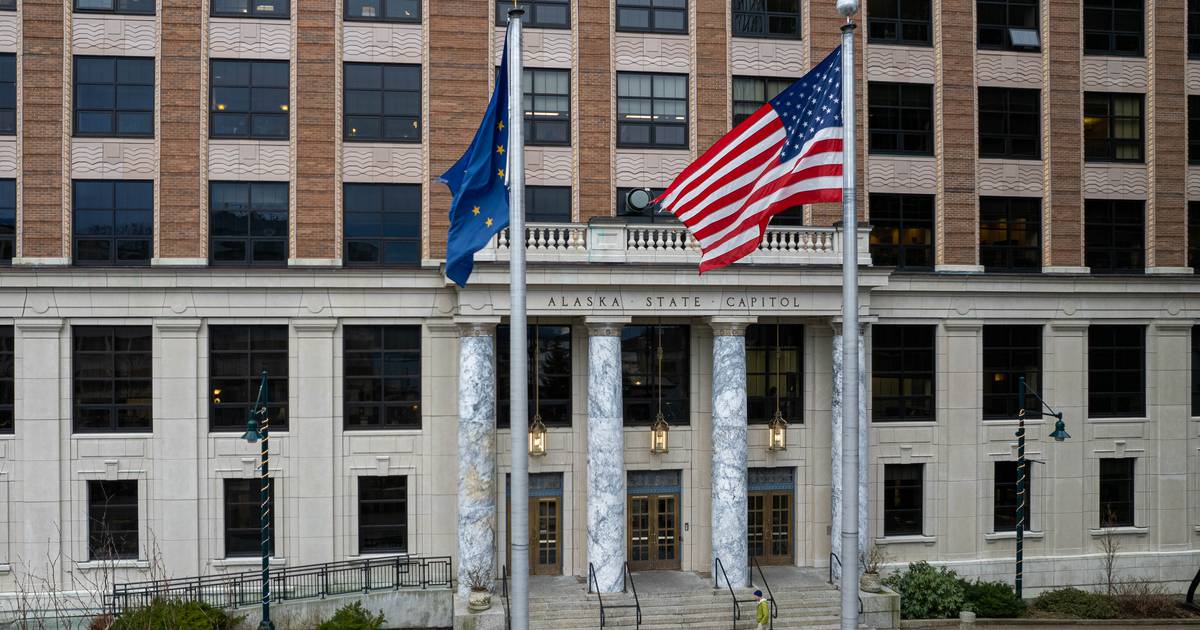
Tax credits are popular and allow businesses or individuals to make donations or investments in projects to reduce their taxes. Governor Mike Dunleavy introduced legislation to expand corporate donations eligible for tax credits, potentially costing the state a quarter-million dollars in lost revenue. The bill lacks research and may not benefit communities without large corporations. The use of tax credits adds complexity to the tax code and can lead to increased demand for subsidies.

Yen trades at multi-decade lows

Yen trades at multi-decade lows

The Japanese Yen weakened against the US Dollar, reaching its highest level since 1990 near 152.00. Finance Minister Shunichi Suzuki stated that they won’t rule out any steps, including decisive ones, to respond to disorderly moves in the foreign exchange market. BoJ board member Naoki Tamura mentioned the possibility of hiking rates again if certain conditions are met.

Fed posts record loss of $114.3 billion in 2023

Fed posts record loss of $114.3 billion in 2023

The Federal Reserve reported a record loss of 4.3 billion in 2023, mainly due to expenses related to managing the US central bank’s short-term interest rate target.

“C’mon Man! Tax the Rich!” Business Owners Face Tax Increases* | JD Supra

“C’mon Man! Tax the Rich!” Business Owners Face Tax Increases* | JD Supra

Sen. Warren reintroduced her “Ultra-Millionaires” wealth tax proposal to the Senate, inspired by the Administration’s Fiscal Year 2025 Budget which includes its own version of a wealth tax. The tax proposals are part of the upcoming contest for the White House and focus on tax avoidance by the wealthy. Business owners should familiarize themselves with the proposed changes to federal income tax and develop plans in response as there is a possibility that the Democrats may have another opportunity to turn their income tax agenda into law.

Treasury Minister: There are no plans to raise income taxes

Treasury Minister: There are no plans to raise income taxes

The government of Jersey has no plans to increase income tax or introduce new corporate taxes that would harm the international competitiveness of the finance sector. Deputy Elaine Millar stated that the Island does not need to follow the Isle of Man in raising income tax, and instead her department will focus on finding efficiencies to manage public sector costs. Additional funding has been allocated to Health and Community Services, and there are no plans to introduce measures such as capital taxes on second property sales.

US Congress averts government shutdown, passing $1.2 trillion bill

US Congress averts government shutdown, passing $1.2 trillion bill

The U.S. Congress passed a .2 trillion budget bill early on Saturday, which keeps the government funded through the fiscal year that began six months ago, avoiding a partial shutdown. The bill was sent to President Joe Biden for his signature. The vote for passage was 74-24. The bill ensures funding for key federal agencies including the departments of Homeland Security, Justice, State, and Treasury through September 30. However, it did not include funding for military aid to Ukraine, Taiwan, or Israel. Senate leaders negotiated amendments to the budget bill, which were ultimately defeated. The White House Office of Management and Budget was confident the Senate would pass the bill. The bill provides 6 billion in funding for the Defense Department, including a raise for U.S. troops. The bill passed the House with a vote of 286-134, showing more Democratic support than Republican. The government had been funded with four short-term measures for most of the past six months. The bill is seen as a national security bill, with 70% of the funding for defense, including investments in military readiness and support for allies. Opponents criticized the bill as too expensive and inflationary. The last partial federal government shutdown occurred from Dec. 22, 2018, until Jan. 25, 2019.

Dollar struggles to find demand in Fed aftermath

Dollar struggles to find demand in Fed aftermath

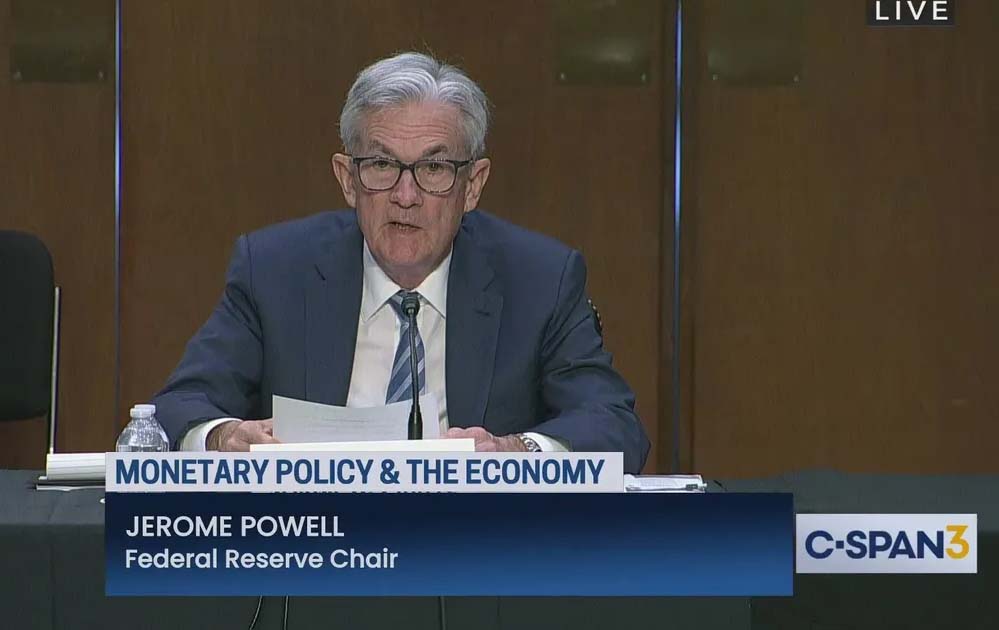
– The US Dollar experienced significant losses against major rivals after the Federal Reserve left the interest rate unchanged and due to Chairman Jerome Powell’s comments on the policy outlook.
– Investors are awaiting the Bank of England’s policy announcements and S&P Global PMI data for Germany, the Euro area, the UK, and the US.
– The US economic docket will include weekly Initial Jobless Claims and Existing Home Sales data for February.
– The Federal Reserve’s Summary of Projections indicates a total of 75 basis points reduction in the policy rate expected in 2024.
– Chairman Powell noted high inflation numbers in January and February but attributed them to seasonal effects, suggesting they do not alter the disinflation narrative.
– Following the Federal Reserve event, the 10-year US Treasury bond yield approached 4.25%, Wall Street indexes rallied, and the USD Index dropped nearly 0.5%, ending a four-day winning streak.
– In Asian trading, Australian unemployment decreased to 3.7% in February, better than the expected 4%, and employment rose by 116,500, significantly above the anticipated 40,000.
– The AUDUSD pair saw gains, rising more than 0.5% above 0.6620.
– The USDJPY pair experienced fluctuations, with a notable correction below 150.50 before regaining momentum.
– The Bank of England is anticipated to maintain the policy rate at 5.25%, with market participants looking for indications on policy direction following soft UK inflation data.
– The GBPUSD rose 0.5%, trading near 1.2800.
– Gold reached a new all-time high of ,222 before retreating toward ,200.
– The EURUSD pair rallied above 1.0900, trading slightly below 1.0950.
Audit office raises illegalities at justice ministry

Audit office raises illegalities at justice ministry

The Audit Office reported that the justice ministry needs to develop a reliable internal audit system for receipts and payments, highlighting weaknesses in compliance with relevant laws and regulations regarding spending for the fiscal year 2022. It found irregularities in the disbursement of down payments for programmes related to the National Mechanism for Women’s Rights, with payments made without supporting documentation for actual expenditures. The Audit Office recommends legal action against recipients of these funds and deducting the amount given from the next state grant if beneficiaries also receive an annual state grant. It noted issues with invoices under the National Mechanism for Women’s Rights lacking supplier details and receipt dates. The report also mentioned that parole supervisors are overburdened, affecting their performance, and recommended setting a maximum number of parolees per supervisor. Additionally, it flagged the use of a building by the justice ministry without a final certificate of approval, a discrepancy in inmate account balances at prisons, and overpayments to two retired prison guards. The fire service was noted for not having dedicated functionaries to check invoices before payments, and a separate report was published for the police force in November 2023.

UBS, ’s rescue of Credit Suisse creates new risks for Switzerland, OECD says

UBS, ’s rescue of Credit Suisse creates new risks for Switzerland, OECD says

The Organisation for Economic Cooperation and Development (OECD) has stated that UBS’s rescue takeover of Credit Suisse has introduced new risks and challenges for the Swiss economy, despite stabilizing financial stability. The merger, which was the largest bank merger since the global financial crisis, has significantly increased UBS’s size, making it a more dominant force in the Swiss banking sector. The OECD has raised concerns about UBS’s domestic dominance and the potential need for stronger financial regulation. The Financial Stability Board has also highlighted the risks posed by UBS’s failure to Switzerland and has called for stronger bank controls. The Swiss government is considering proposals to enhance regulations for big banks. The OECD report also mentions that the merger could lead to significant job losses but believes the Swiss labor market can absorb these losses. Additionally, the report notes that the Swiss housing market, while showing signs of cooling, still has vulnerabilities with properties being overvalued by up to 40%. The average price for an apartment in Switzerland has risen to over 1 million Swiss francs, with prices in Zurich reaching 1.8 million francs. The OECD forecasts that the Swiss economy will grow by 0.9% in 2024 and 1.4% in 2025, which is below the country’s long-term average growth rate.

Euro awaits US data, ECB speakers

Euro awaits US data, ECB speakers

The EURUSD exchange rate was trading in the mid 1.0900s after reaching a peak at 1.0981 the previous week. Upcoming data releases and events are expected to introduce some volatility to the Euro-dollar pair. In the US, upcoming factory gate inflation and Retail Sales data could influence expectations regarding the Federal Reserve’s timeline for interest rate cuts, which is a significant factor for the US Dollar. Economists anticipate a decrease in Core PPI to 1.9% year-over-year in February from 2.0% in January, with a month-on-month forecast showing a 0.2% increase compared to the 0.5% increase the previous month. The headline Producer Price Index (PPI) is expected to show a 1.1% year-over-year gain, up from 0.9% in January, and a 0.3% month-on-month gain, consistent with the previous month. This data is a crucial indicator for CPI inflation, as increases in wholesale costs are typically passed on to consumers. Market participants are betting on a 67.2% probability of the Fed cutting interest rates in June, according to the CME FedWatch Tool. US Treasury Secretary Janet Yellen stated that it seems unlikely for interest rates to return to pre-COVID-19 levels and deemed the interest rate projections in President Biden’s budget plan as “reasonable.” In Europe, several ECB officials are set to speak, potentially providing insights into whether interest rates will be cut in April or June. If inflation remains high, interest rates are likely to stay elevated, supporting the Euro. ECB Governing Council member Francois Villeroy de Galhau indicated a preference for an April rate cut, while Bank of Austria Governor Robert Holzmann and ECB President Christine Lagarde suggested a June timeline for revisiting rate policies. The timing of ECB rate cuts could impact the Euro and EURUSD exchange rate. After recent US inflation data, a calmer period is expected in the EURUSD pair ahead of the next week’s Federal Reserve meeting.