Emergency cash at a cost: The reality of payday loans

Emergency cash at a cost: The reality of payday loans

A payday loan is a short-term financial solution offering immediate cash, typically up to £1,000, expected to be repaid by the borrower’s next paycheck. These loans have an average annual percentage rate (APR) often exceeding 400%, making them one of the most expensive forms of credit. The high interest rates and penalties for late payment can trap borrowers in a cycle of debt. Alternatives to payday loans include building an emergency savings account, borrowing from family or friends, seeking an advance from an employer, or exploring financial assistance from local charities, credit unions, and banks which may offer lower interest rates.

European banks set to return record sums to shareholders

European banks set to return record sums to shareholders

European banks are projected to distribute a record 120 billion euros in dividends and share buybacks to investors in 2023, driven by profits from higher interest rates. Bank of Ireland and other major banks like BNP Paribas, Deutsche Bank, and Santander have announced increased payouts. UBS is restarting its buyback program, and Monte dei Paschi di Siena will pay its first dividend in 13 years. UniCredit plans to distribute all of its 2023 profits, totaling 8.6 billion euros, including 5.6 billion euros in buybacks, and aims to share 90% of its 2024 net profit. Dividend payouts for 2024 are expected to reach nearly 80 billion euros, with total capital returns to shareholders nearing 120 billion euros. Over the next 15 months, European banks are anticipated to pay out a total of 172 billion euros, about 17% of their market capitalisation. The profit increase is attributed to the gap between interest rates charged to borrowers and paid on deposits, boosting share prices. The top 50 European banks are expected to have a dividend yield of 7.3% in 2024. However, concerns about falling interest rates and a weaker economic outlook have some investors worried, with predictions of reduced bank capital returns starting from next year.

Australian gender pay gap report exposes top companies

Australian gender pay gap report exposes top companies

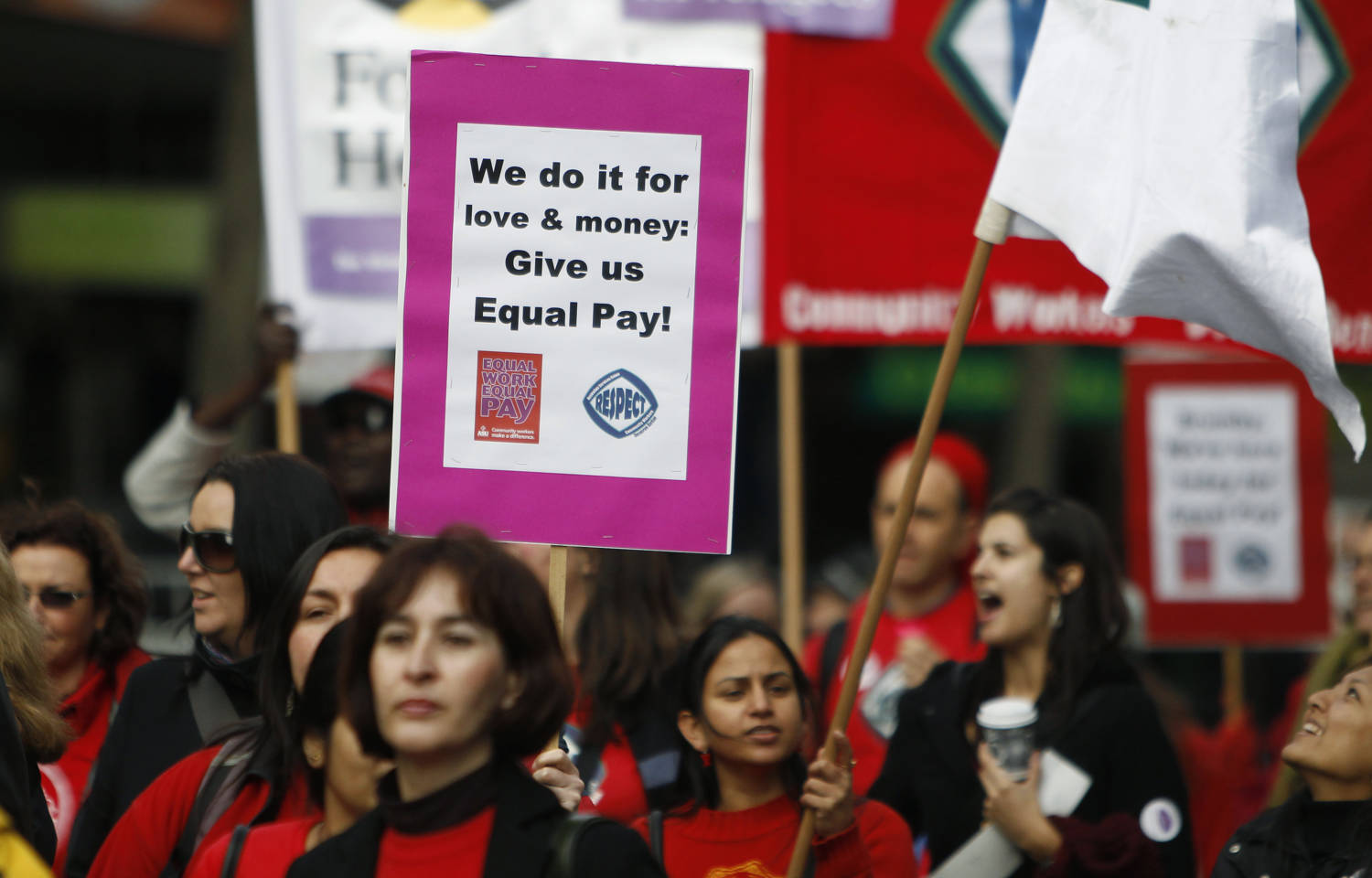
The gender pay gap at some of Australia’s top corporations, including Commonwealth Bank, Qantas, and Woodside, exceeds the national average of 19%. New legislation passed in March 2023 requires firms with more than 100 employees to disclose the pay of male and female employees. The median total remuneration gap for 2022/23 was 19% in favor of men, with a median base pay difference of 14.5% and an average total pay gap of 21.7%. Only one-third of companies had a median gender pay gap within the target range of -5% to +5%. The median total remuneration gender pay gap at Commonwealth Bank was 29.9%, at AGL it was 33.2%, and at Woodside Energy it was 30.2%. International investment banks like UBS and Morgan Stanley had pay gaps over 40% due to more men holding top jobs. Woolworths had a gap of just 5.7%, while it was 28.5% at the Australian operations of Thomson Reuters. The report also highlighted significant industry variations, with a 31.8% gap in construction and a 1.9% gap in hotels and restaurants. The Australian government plans to publish the pay gaps of public companies and agencies next year.

The Greek debt crisis and its misconceptions

The Greek debt crisis and its misconceptions

The text discusses the Greek debt crisis, highlighting inaccuracies and misconceptions in public debate. It references Nikos Garganas’ book, which outlines the crisis’s causes, including the misuse of fiscal space and increased government spending leading to significant debt. The crisis was exacerbated by the global financial crisis and Greece’s inability to find investors. The European Union initially refused a bailout, citing the ‘no bailout’ clause, but eventually provided a €110 billion Memorandum to prevent bankruptcy and potential contagion. The IMF participated despite concerns over debt sustainability. A debt restructuring, including a 53.5% bond haircut, was implemented in 2012, which, despite criticisms, was deemed necessary and led to improved debt sustainability. The text also refutes myths about the crisis, emphasizing that memoranda were a response to, not a cause of, the crisis and that debt relief alone would not have ended austerity. It concludes that understanding the crisis’s causes and implementing structural reforms are crucial for preventing future crises.

MP seeks to end compound interest on delayed loans

MP seeks to end compound interest on delayed loans

MP Kostis Efstathiou submitted a bill proposal to the Parliament’s Plenary Session aiming to amend the Law on Interest Rate Liberalization to prevent banks from capitalizing compounded interest on delayed loans. Compounded interest, which increases the total borrowed amount through direct or indirect methods, can lead to over-indebtedness and is considered by Efstathiou to contradict principles of good faith and non-abusive rights exercise by banks. The proposal is expected to face opposition from credit institutions and the Central Bank. A study by the Parliament’s Research and Studies Sector, following Efstathiou’s instructions, revealed varied international approaches to interest capitalization, with specific regulations in Austria, Belgium, Greece, Spain, Lithuania, Portugal, and Slovakia, reflecting different consumer protection policies and financial contract regulations.

Lloyds profit rises despite murky UK outlook, motor finance charge

Lloyds profit rises despite murky UK outlook, motor finance charge

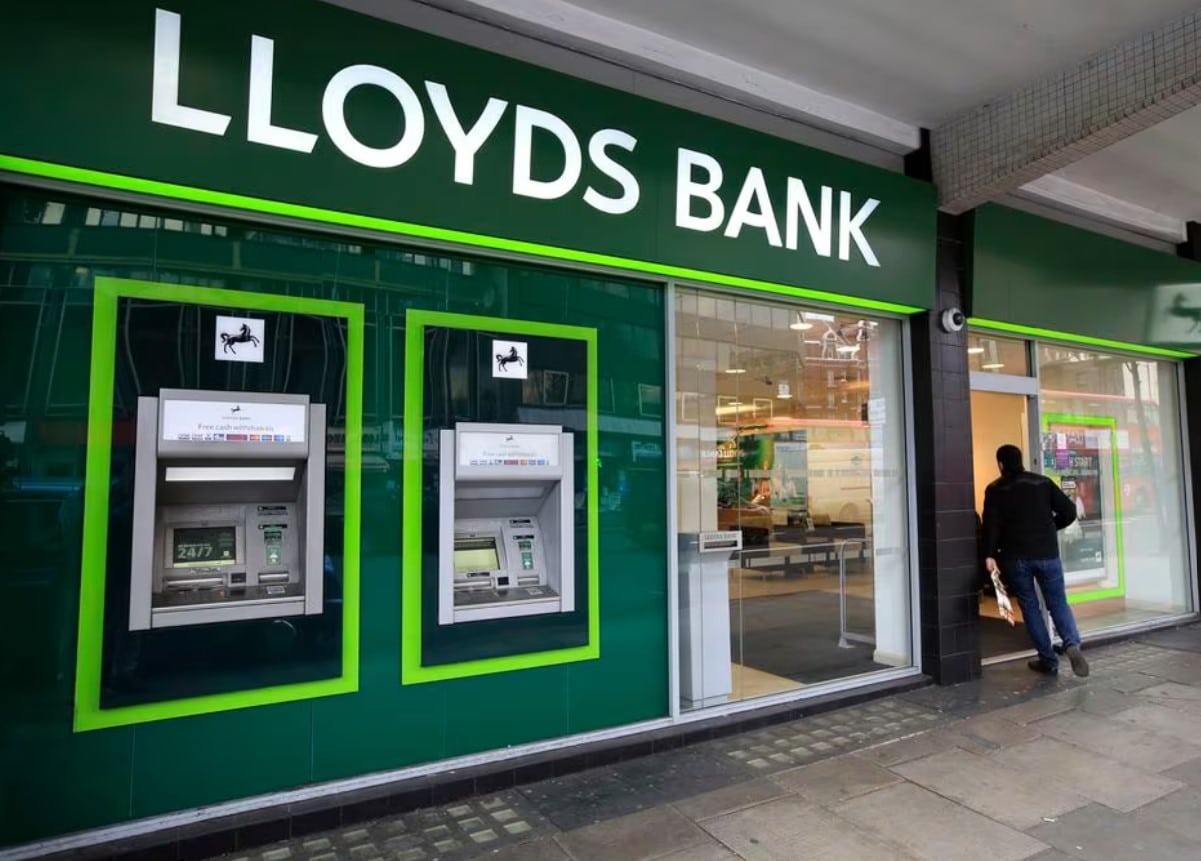
Lloyds Banking Group reported a 57% increase in full-year profit, despite a challenging economic environment in Britain and a 450 million pound charge related to a regulatory review of motor finance. The bank’s shares rose by 4.7% following the announcement of a 2 billion pound buyback. Lloyds also faces a UK investigation into its anti-money laundering controls. The bank’s profit increase was partly attributed to a lower-than-expected charge for bad loans, which amounted to 308 million pounds, compared with 1.5 billion pounds the previous year. This reduction was helped by a 700 million pound writeback on loans made against Britain’s Telegraph newspaper. Lloyds, as the largest mortgage lender in Britain, benefits from higher Bank of England interest rates. The bank forecasts UK growth of 0.5% for 2024 and a 2.2% fall in house prices. Lloyds reported a 2023 pretax profit of 7.5 billion pounds and announced a final dividend of 1.84 pence. The bank has set aside a 450 million pound provision for potential costs related to the car finance regulatory review, without admitting liability. Analysts have suggested the sector’s total compensation could reach 16 billion pounds. Lloyds’ CEO, Charlie Nunn, received a remuneration of 3.7 million pounds in 2023, a 2% decrease from 2022. Nathan Bostock, a former executive at Banco Santander, was appointed to Lloyds’ board.

Explainer: European banks and their $1.5 trillion commercial property headache

Explainer: European banks and their $1.5 trillion commercial property headache

European banks have approximately 1.4 trillion euros (.50 trillion) in loans to the troubled commercial property industry. German banks, in particular, are heavily exposed due to the country’s worst real estate slump in decades. Commercial property prices have dropped in Germany and across the euro area. Deutsche Bank has the most outstanding loans to the sector among German banks, followed by two state-backed Landesbanken. Deutsche Pfandbriefbank (PBB), one of Germany’s top property financiers, has 5 billion euros tied up in the U.S. commercial market. The outlook for the real estate market is bleak, with experts predicting a continuing downturn.

Jeffrey Epstein victims sue FBI, allege coverup

Jeffrey Epstein victims sue FBI, allege coverup

A dozen victims of Jeffrey Epstein have filed a lawsuit accusing the FBI of covering up its failure to investigate the late financier, allowing his sex trafficking to continue for over 20 years. The victims claim that the FBI received credible tips as early as 1996 but failed to interview victims or share information with law enforcement. The FBI began a probe in 2006 but ended it two years later after Epstein pleaded guilty to a prostitution charge. The victims argue that the FBI’s negligence allowed them to be sex trafficked, abused, and threatened. The lawsuit seeks damages from the U.S. government. The number of Epstein’s victims is believed to be over 100.

A step in right direction for UK, BoE cautious

A step in right direction for UK, BoE cautious

The text discusses the progress of the UK in cutting interest rates and the challenges involved in doing so. It mentions that wage growth is slowing, but it is uncertain if it will fall to a level consistent with 2% inflation. The unemployment rate has fallen to 3.8%, but it is no longer a reliable indicator. The Bank of England is relying on various data and surveys to make judgments about the labor market. The text also briefly mentions oil prices, gold prices, and the milestone of bitcoin breaking above ,000.

Interest rate cuts likely to take place in 2024, CBC governor says

Interest rate cuts likely to take place in 2024, CBC governor says

– Finance Minister Makis Keravnos and Cyprus Central Bank Governor Constantinos Herodotou discussed a potential decrease in interest rates by the European Central Bank during 2024.
– They agreed that interest rates are likely to fall before the end of the year, barring unforeseen events.
– Herodotou mentioned the positive trajectory of the Cypriot economy, which was echoed by Keravnos.
– Inflation in Cyprus was at 8.1% in 2022, peaking at 10.6% in July, then falling to 1.9% in December 2023, with a minimal increase expected in January due to the base effect.
– The positive progress in inflation was attributed to monetary policy and targeted support measures.
– Increased uncertainty exists due to geopolitical developments, including attacks on the Suez Canal and the situation in the Middle East.
– Herodotou indicated that interest rate cuts are expected within 2024, but cautioned against reducing them too soon to avoid a resurgence of inflation.
– The majority of Cypriot consumer products are imported from European countries, but the economy is affected by issues such as cruise ship tourism due to regional instability.
– There has been a decrease in the prices of basic products, including fuel, in Cyprus.
– Despite interest rate hikes, a surge in non-performing loans (NPLs) has not occurred, partly due to measures ensuring banks consider borrowers’ repayment capacity and increased savings.
– A new framework for NPLs has seen a positive response from borrowers and includes a stable foreclosure framework with a safety net.
– Banks and credit acquisition companies have restructured £2.4 billion worth of loans in 2023.
– The CBC, in collaboration with the Ministry of Finance, is working on a plan to help smaller banks reduce their NPL ratios, which is currently in its second phase.