Ireland to keep , ‘sexist’ constitutional language about mother’s role

Ireland to keep , ‘sexist’ constitutional language about mother’s role

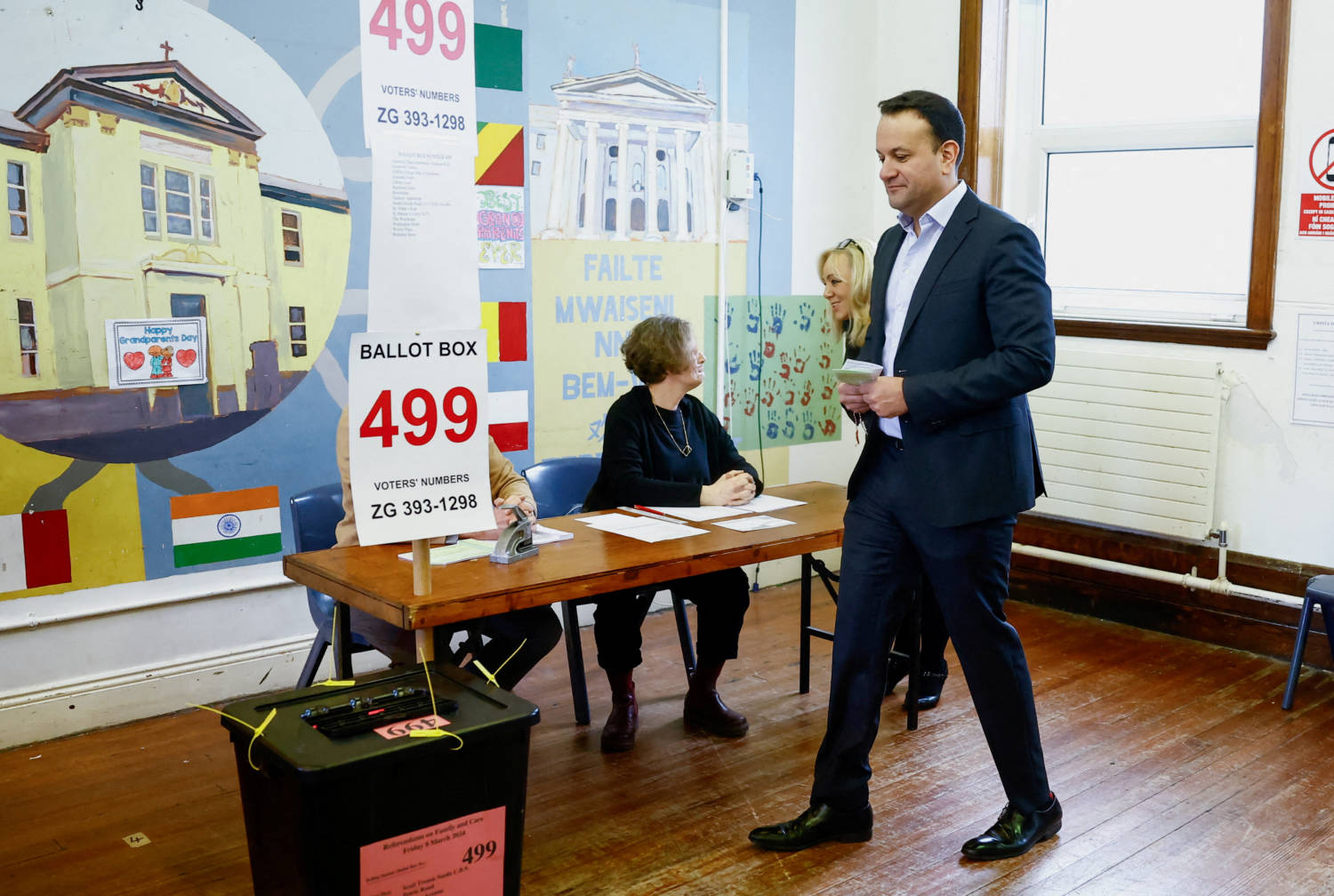
Ireland was set to reject proposals to amend constitutional references to family makeup and “mother’s duties in the home,” marking a significant defeat for the government. Prime Minister Leo Varadkar described the referendum, coinciding with International Women’s Day, as an opportunity to remove outdated, sexist language. However, he acknowledged the defeat of the family and care amendments based on a respectable turnout. The proposals aimed to update Article 41 of the 1937 Irish constitution by broadening the definition of family and replacing language about a mother’s duties with a clause recognizing care by family members due to their bonds. This sparked debate over the state’s role in supporting carers. Official results were expected later that day.

The hidden costs of feeding the world

The hidden costs of feeding the world

Kathleen Merrigan finds that the true cost of food is far higher than what consumers pay at the checkout counter, taking into account economic, environmental, social, and health impacts. The United Nations Food and Agriculture Organization’s 2023 report using true cost accounting reveals that the global cost of the agrifood system in 2020 was up to US.7 trillion more than retail prices, about 10% of global GDP or per person per day worldwide. Hidden costs in wealthy countries are mainly due to unhealthy dietary patterns, while in low-income countries, they stem from poverty and undernourishment. Environmental costs, including nitrogen runoff and greenhouse gas emissions, represent about 20% of the global hidden costs. True cost accounting could guide policy changes, potentially reallocating 0 billion in agricultural subsidies worldwide to support more sustainable and equitable food production methods.

Greek parliament approves private foreign universities, bucking protests [PHOTOS]

Greek parliament approves private foreign universities, bucking protests [PHOTOS]

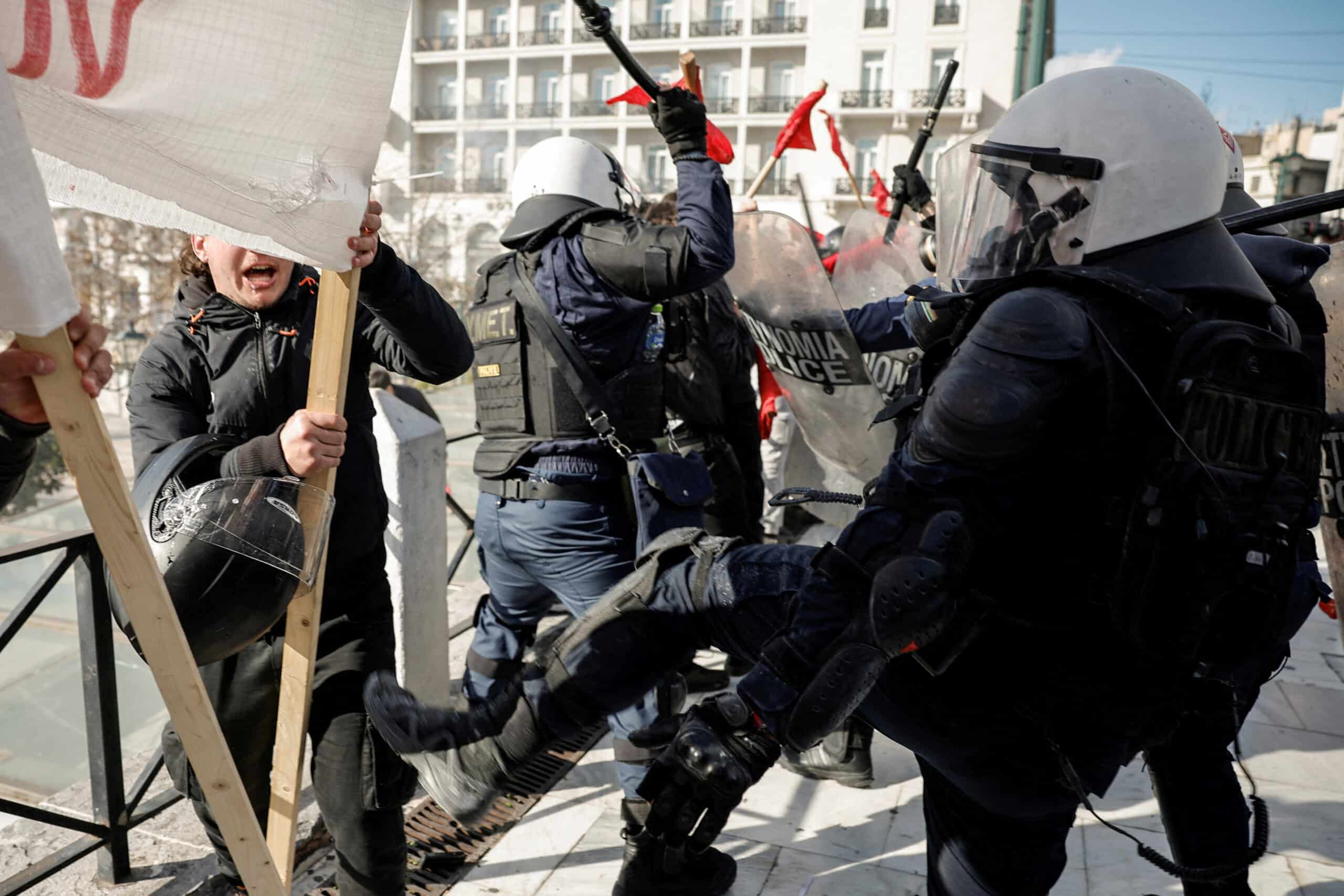
Greece’s parliament passed a bill allowing foreign private universities to establish branches in the country, approved by 159 lawmakers in the 300-seat parliament. Prime Minister Kyriakos Mitsotakis stated the legislation aims to reduce the number of Greek students studying abroad and align Greece with the rest of the European Union by boosting competition in higher education. The bill has faced weeks of student protests, with concerns over the devaluation of public university degrees and job prospects. Additionally, the government’s reform agenda includes a same-sex marriage law passed last month. Greece allocates 3%-4% of its GDP to education, below the EU average, but the bill includes provisions for increased funding for state universities.

Armenia is considering seeking EU membership, foreign minister says

Armenia is considering seeking EU membership, foreign minister says

Armenia is considering applying for European Union membership, according to Foreign Minister Ararat Mirzoyan. This consideration is part of Armenia’s efforts to strengthen its ties with the West amidst tensions with Russia. Since the 2018 revolution that brought Prime Minister Nikol Pashinyan to power, Armenia has been enhancing its relationships with Europe and the United States. Armenia’s alliance with Russia does not extend to the conflict in Ukraine, and Pashinyan has accused Russia of attempting to undermine his government. Additionally, Armenia criticizes Russia for not defending it against Azerbaijan, a country that has been growing closer to Moscow.

Ireland looks set to reject constitutional changes

Ireland looks set to reject constitutional changes

Ireland was expected to reject proposals to amend constitutional references regarding family structure and women’s roles in the home, based on early tallies from referendums. The votes, referred to as the family amendment and the care amendment, aimed to update Article 41 of the Irish constitution, which dates back to 1937. The first proposal sought to broaden the definition of family beyond marriage-based relationships, and the second aimed to replace outdated language about a mother’s duties with recognition of care provided by family members due to their bonds. Critics argued the changes would shift the responsibility of care to families rather than the state. The results were anticipated to be announced on the day following the vote, which coincided with International Women’s Day.

Greek parliament approves private foreign universities, bucking protests

Greek parliament approves private foreign universities, bucking protests

Greece’s parliament approved a bill allowing foreign private universities to establish branches in the country, despite student protests. The legislation passed with 159 votes in the 300-seat parliament. Prime Minister Kyriakos Mitsotakis argued that the move would counter the trend of Greek students studying abroad and align Greece with European Union standards, enhancing competition in higher education. The bill is part of broader government reforms, including a recent same-sex marriage law. It also promises increased funding for state universities. Protests against the bill included a significant rally outside parliament, with some incidents of violence reported.

President and AG clash over pardoning grandfather

President and AG clash over pardoning grandfather

The attorney-general’s office is blocking President Nikos Christodoulides from pardoning an 82-year-old man who was sentenced to 2.5 years in jail for shooting an attempted cable thief. The incident occurred in the Limassol village of Alassa last June when the man, seeking to protect his property during a power outage, fired a shot that hit the thief in the back. The man had previously reported thefts to the police and lived in fear of thieves. His lawyer stated that he did not intend to kill the thief, who suffered no lasting health problems from the incident. The president’s desire to pardon the man is based on humanitarian reasons, but so far, the attorney-general’s agreement has not been secured.

EC chief to inspect Gaza aid facilities

EC chief to inspect Gaza aid facilities

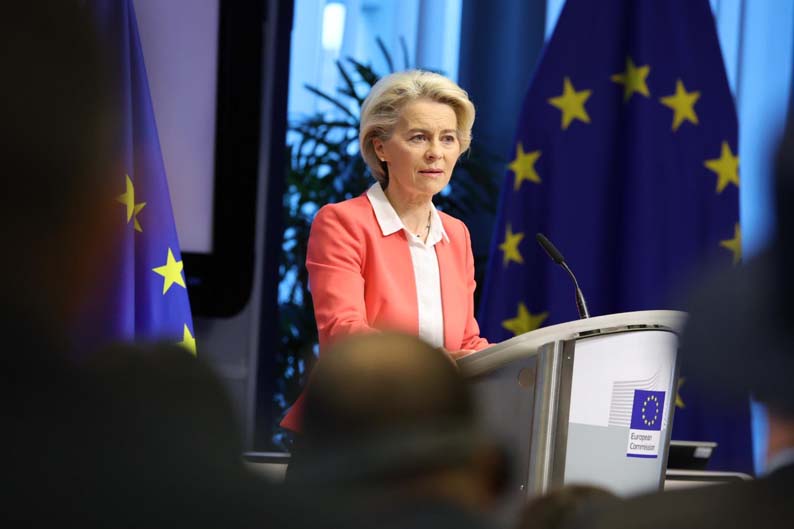
European Commission President Ursula von der Leyen, who has the support of the European People’s Party for a second term, will inspect Larnaca port facilities prepared for the Gaza aid maritime corridor. She will be hosted by President Nikos Christodoulides in Cyprus, where they will visit the port to inspect facilities for the humanitarian corridor to Gaza, including the dock, storages, and an X-ray mobile scanning machine. They will also visit the Joint Rescue Coordination Centre in Larnaca. Von der Leyen discussed the humanitarian situation in Gaza with Christodoulides, emphasizing the need for swift action and humanitarian aid access. The EU Commission supports Cyprus’ maritime corridor initiative, recognizing its value in delivering aid to Gaza. Cyprus has designed this corridor to deliver high volumes of aid to Gaza, with increased interest from regional states, EU member states, and institutions. The initiative aims solely at providing humanitarian aid to Gaza’s civilian population, amidst a significant humanitarian crisis.

Political consensus forming over lowering voting age

Political consensus forming over lowering voting age

A legislative proposal to lower the voting age from eighteen to seventeen in Cyprus has been discussed by the House Interior Affairs Committee. The proposal, tabled by DISY MP Averof Neophytou, has garnered agreement from the government and is seen as technically feasible. If approved, the new voting age would enable an additional 8,680 Greek Cypriots and 78 Turkish Cypriots in the free areas to vote in parliamentary elections, and 746 Turkish Cypriots for European elections. The change, if passed, would be applicable from May 2026. The proposal aligns with a broader pan-European trend to lower voting ages and requires a constitutional amendment. The committee also highlighted the need to address other electoral modernization efforts, such as automatic registration in electoral rolls and postal voting, in a comprehensive manner.

Hamas delegation leaves Cairo, ceasefire talks ongoing 

Hamas delegation leaves Cairo, ceasefire talks ongoing 

– Hamas’s delegation left Cairo on Thursday after four days of talks mediated by Qatar and Egypt aimed at securing a 40-day ceasefire before Ramadan, but no progress was made on key issues.
– Both sides blame each other for the lack of progress, with Hamas seeking an end to Israel’s offensive, withdrawal of its forces, and freedom of entry for aid and the return of displaced people.
– Israel insists on continuing its campaign against Hamas and demands a list of hostages held by militants in Gaza.
– The U.S. President mentioned that a ceasefire deal depends on Hamas, which includes freeing some hostages held by Hamas since the Oct. 7 attack and releasing Palestinian prisoners held in Israel.
– Hamas wants a ceasefire before addressing the hostage situation, demands Israeli forces leave Gaza, and allows all Gazans to return home.
– News of the failed talks led to despair in Gaza, facing a humanitarian crisis after five months of war.
– The U.S. believes a truce accord is still possible and continues to push for one.
– Health officials in Gaza report over 30,800 deaths due to Israel’s offensive, with 83 deaths in the last 24 hours.
– Israel returned 47 bodies of Palestinians killed during the offensive.
– Hamas calls for increased visits to the Al-Aqsa Mosque during Ramadan to pressure Israel for a ceasefire.
– Negotiators aimed for an accord before Ramadan due to concerns that the Al-Aqsa Mosque could become a violence flashpoint.
– Israel plans to allow a similar level of access to the Al-Aqsa Mosque as in previous years.