President to visit College of Europe
President to visit College of Europe

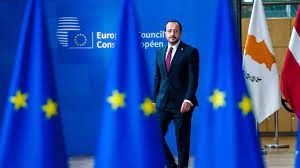
President Nikos Christodoulides of Cyprus will travel to Bruges and Brussels for official engagements. In Bruges, he will visit the College of Europe, addressing students and academics as part of a national week dedicated to Cyprus, marking the first visit by a Cypriot President to the College. His agenda includes a private meeting with Rector Mogherini and a meeting with European Commission Vice-President Margaritis Schinas. In Brussels, President Christodoulides will participate in the European People’s Party proceedings, attend a working lunch with the UN Secretary-General and EU member state heads focusing on the Middle East, Ukraine, and global challenges, and engage in the European Council Summit discussions on the Middle East, Ukraine, Migration, Security, EU Enlargement, and External Relations. He will also attend a commemorative event for the 30 years of the European Economic Area and a Eurozone Summit. President Christodoulides, accompanied by officials, will return to Cyprus on March 22. A potential private meeting with the UN Secretary-General is under consideration.

Second humanitarian aid ship to sail for Gaza

Second humanitarian aid ship to sail for Gaza

Within the upcoming days, the second ship will depart from Cyprus carrying humanitarian aid to the civilian population of Gaza, stated the Government Spokesperson, Konstantinos Letymbiotis, today.Speaking to journalists at the Presidential Palace, the Spokesperson, when asked about the departure date of the second ship from Cyprus with humanitarian aid to Gaza, stated that “the … Read more

Washington makes new push for Gaza ceasefire to head off famine, Rafah assault

Washington makes new push for Gaza ceasefire to head off famine, Rafah assault

– The United States is pushing for a ceasefire in Gaza to prevent a famine and is urging Israel not to launch a ground assault on Rafah, where over a million displaced people are taking refuge.
– Secretary of State Antony Blinken is planning a trip to the Middle East to meet leaders of Egypt and Saudi Arabia to discuss peace, but no visit to Israel has been announced.
– Israeli air strikes in Rafah killed 14 people, and Gaza’s food shortages have surpassed famine levels according to the international hunger monitor.
– Israel denies causing Gaza’s hunger, claiming it is opening new routes for aid and that U.N. and other agencies should distribute food more effectively.
– The U.N. suggests Israel’s restrictions and conduct in the conflict could constitute a war crime.
– Ceasefire talks are resuming in Qatar, with discussions around a six-week truce that would involve the release of hostages and detainees and the provision of aid to Gaza.
– The humanitarian situation in Gaza and the potential assault on Rafah have caused tension between the Israeli government and the U.S. administration.
– White House National Security Advisor Jake Sullivan expressed that a ground operation in Rafah would be a mistake and that Israel’s goals can be achieved by other means.
– Israel insists a ground assault is necessary to defeat Hamas in Gaza, including in Rafah.
– Hamas reported the death of a senior police commander and his family in northern Gaza due to overnight air strikes.
– Israel aims to continue its military operations in Gaza until Hamas is defeated and claims to have killed senior Hamas officials, including the deputy commander of the Hamas military wing.
– Talks hosted in Qatar between Israel and Hamas are ongoing, with hopes for a truce that would benefit over two million people in Gaza.

Israel’s restrictions to Gaza aid may be war crime, says UN rights office

Israel’s restrictions to Gaza aid may be war crime, says UN rights office

Israel’s restrictions on humanitarian aid for Gaza might constitute a war crime due to potential starvation tactics, as stated by the U.N. human rights chief, Volker Turk. A U.N.-backed report warned of a possible famine in Gaza by May if the conflict between Israel and Hamas continues. Israel, however, claims it is facilitating aid delivery and blames the U.N. and relief groups for any issues related to aid distribution. The Israeli diplomatic mission in Geneva asserted that Israel is actively working to provide Gaza with aid through various means. The U.N. High Commissioner emphasized Israel’s obligations as the occupying power to ensure food and medical care for Gaza’s population and support humanitarian organizations in their aid delivery efforts. The report highlighted severe malnutrition and food insecurity in northern Gaza, with people resorting to eating bird seeds, animal fodder, wild grass, and weeds due to the lack of food. Turk described the crisis as “human-made” and called for international pressure on Israel to allow full aid delivery and restore essential services in Gaza.

Taliban says it hit back at Pakistan military after air strikes in Afghanistan kill 8

Taliban says it hit back at Pakistan military after air strikes in Afghanistan kill 8

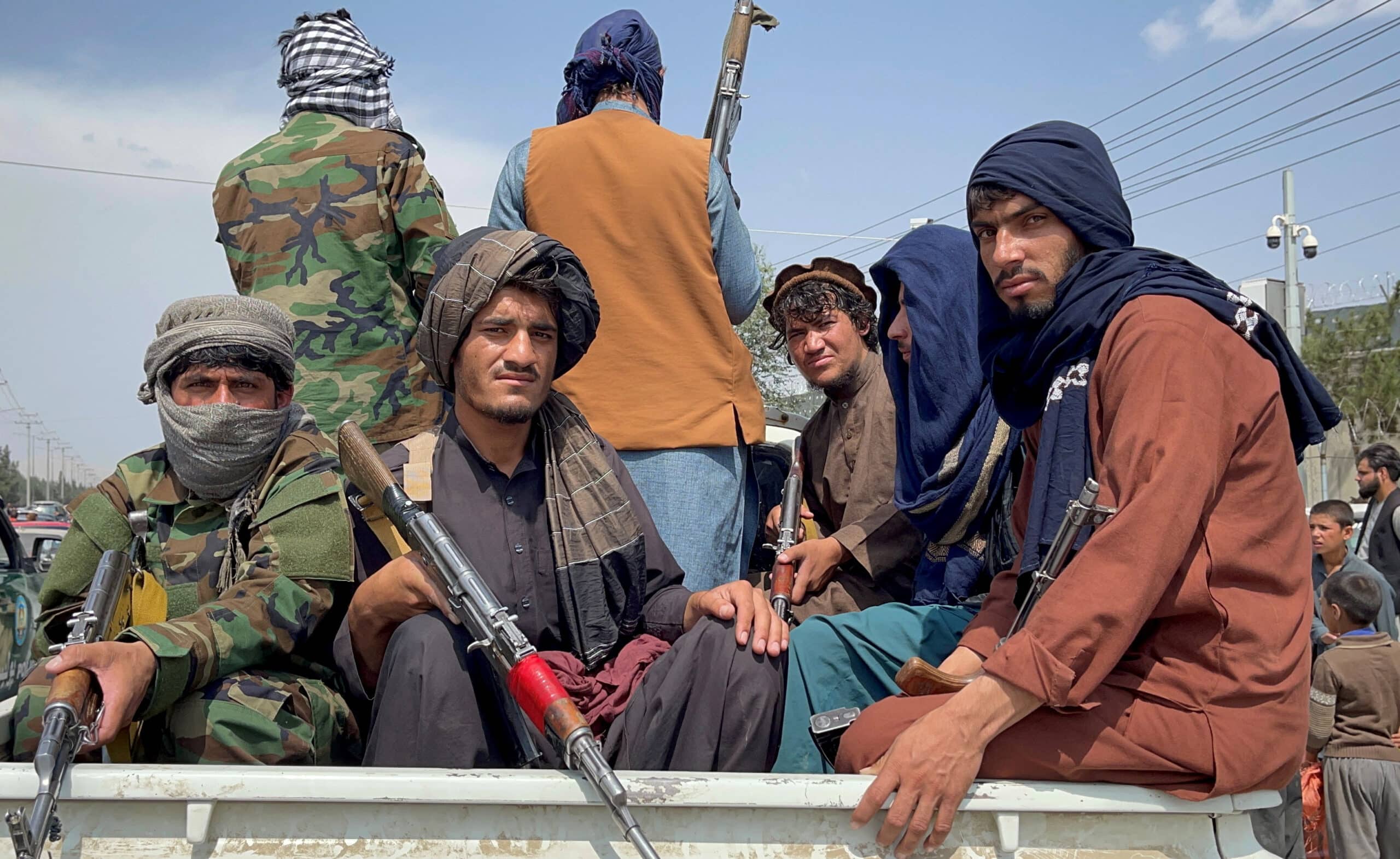
Afghanistan’s Taliban reported that Pakistan conducted two air strikes on Afghan territory, resulting in the deaths of five women and three children. In retaliation, the Taliban’s security forces used heavy weapons against the Pakistani military. These incidents occurred amid mutual accusations between the two countries regarding responsibility for recent militant attacks in Pakistan, which Pakistan attributes to groups operating from Afghan soil, an allegation the Afghan Taliban denies. The air strikes targeted the eastern border provinces of Khost and Paktika. Following the air strikes, the Taliban’s defence ministry stated it had targeted Pakistani troops at the border. The context for these events includes a recent attack by unknown militants on a Pakistani military post, killing seven security forces, with such attacks reportedly increasing in recent months, many claimed by the Pakistani Taliban (TTP) and said to be launched from Afghan territory.

The future of work: Why we need to think beyond the hype of the four-day week

The future of work: Why we need to think beyond the hype of the four-day week

Since the 19th century, the number of hours spent at work has been steadily declining in developed countries. The four-day week emerged in the 90s as a demand for a more equal division of work, developed in 1993 by French economist Pierre Larrouturou and tested in 1996 with France’s de Robien law. Antoine Riboud, CEO of Danone, supported the idea, and Volkswagen adopted the four-day week in 1994 but abandoned it in 2006. The Covid crisis renewed interest in the four-day week, with 56% of British employees willing to earn less for more free time. New Zealand introduced a four-day week post-pandemic to boost productivity and work-life balance, with Japan and several companies, including Hitachi and Microsoft, following suit. Belgium and the Nordic countries implemented a model where working hours are concentrated over four days without salary reduction. In contrast, Southern Europe, including Spain and Portugal, has explored a 32-hour week aiming to maintain productivity by reducing unproductive time. The concept of the four-day week challenges traditional work paradigms and suggests a shift towards valuing personal and collective fulfillment over individual success.

Rain fails to spoil Limassol carnival parade (photos)

Rain fails to spoil Limassol carnival parade (photos)

Limassol celebrated its biggest annual party with a ten-day carnival, culminating in a large final parade. The parade featured 120 floats and involved an estimated 30,000 participants. It started at 1pm and concluded at 6pm. The carnival ended with a party at the old port, including a mask competition.

‘PV for all’ supporting China, not EU

‘PV for all’ supporting China, not EU

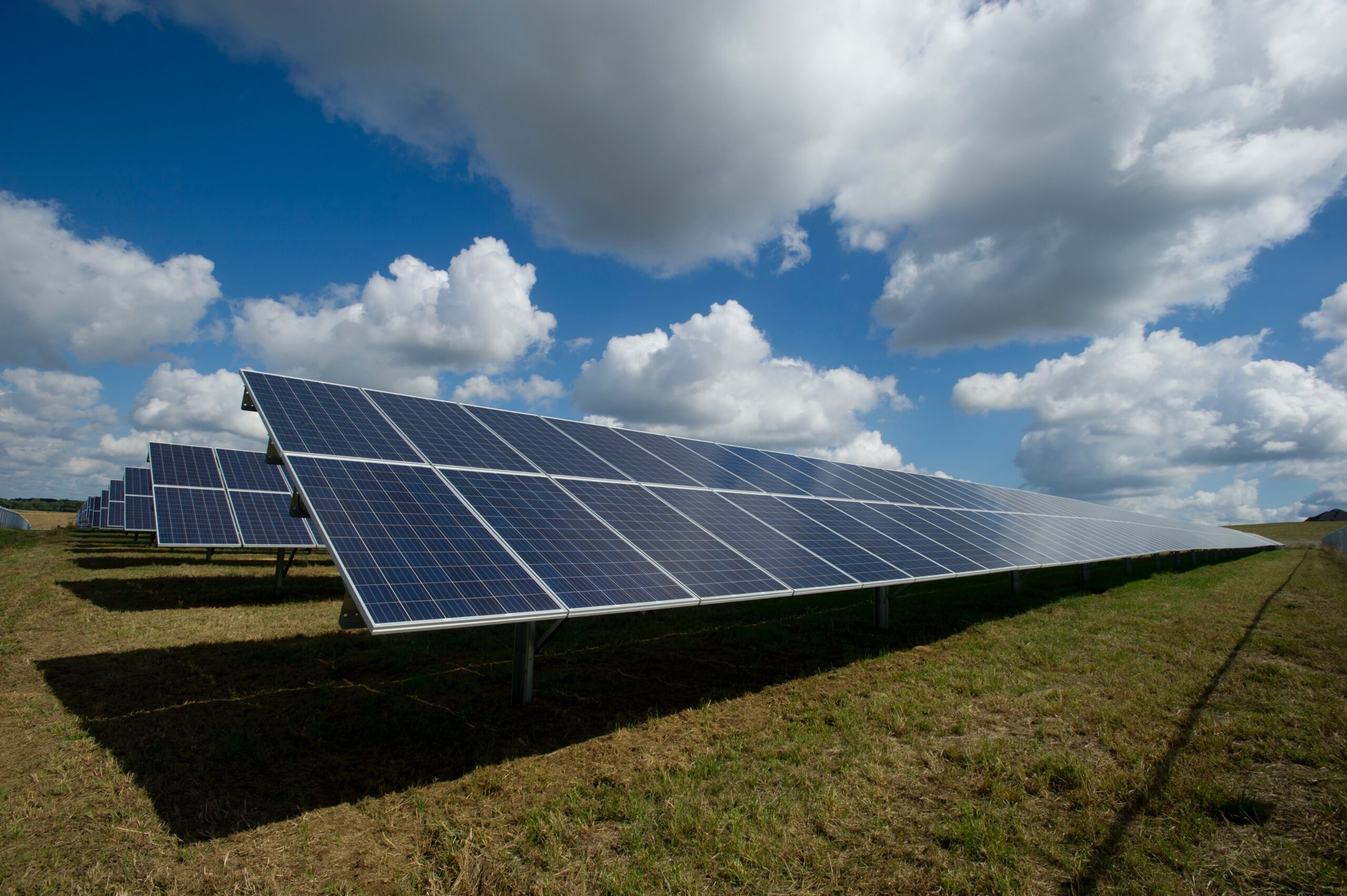
The Cyprus government’s ‘photovoltaics for all’ scheme, aimed at encouraging households to install solar energy panels to meet the EU’s climate-neutral target by 2050, has been criticized for favoring Chinese manufacturers. European solar manufacturers are considering laying off about 4,000 skilled workers due to competition from Chinese PV panel imports, which have flooded the market with cheaper options. The scheme offers no-deposit funding for up to 4kW of PV panels on 6,000 homes, primarily benefiting Chinese solar panel importers. These panels are considered to have inferior efficiency ratings and questionable durability compared to European variants, which often come with 30-year guarantees. The average cost of a kit is between 6,000 to 6,500 euros, with a grant of up to 5,000 euros provided, which is added to the consumer’s electricity bill as a no-interest loan over 4 to 5 years. There is an additional 1,500 euro grant available for those who can afford to invest directly in a PV system with their own money. However, the government is known for delayed payments to suppliers, leading some to prefer dealing directly with solar energy companies for the refund.

Akamas works , ‘on the right track’

Akamas works , ‘on the right track’

Environmentalists expressed satisfaction with a government report on construction works in the Akamas, which proposes corrective measures to restore environmental damage. The report was welcomed by environmental organizations such as BirdLife Cyprus, Terra Cypria, the Wildlife Protection Association, and the Initiative for the Conservation of Natural Coasts. The infringements addressed include non-compliance with the terms of the Special Ecological Assessment for construction works aimed at improving the road network in Akamas, including unnecessary walls, dumping materials on undisturbed ground, and arbitrary widening of roads. The environmental organizations view the proposed remedies as a positive development for Akamas’ future and appreciate the commitment to re-evaluate future road network improvements and visitor service junctions. However, they are concerned about the incomplete conclusions of the administrative investigation into the works and the lack of responsibility assignment. They await the outcome of a third investigation to attribute responsibility. This issue is underscored by the EU’s decision to refer Cyprus to the European Court of Justice for inadequate protection of Natura 2000 sites, highlighting the urgency of implementing Management Plans for these sites, which are still in progress and lack legal force.

President arrives in Cairo

President arrives in Cairo

Cyprus President Nikos Christodoulides has arrived in Cairo to participate in a meeting with European leaders and the President of Egypt. This meeting is part of the EU-Egypt Strategic and Comprehensive Partnership, during which a Joint Declaration will be signed between the EU and Egypt. The meeting will include coordination among European leaders, bilateral meetings with Egyptian President Abdel Fattah el-Sisi, and expanded talks with the participation of delegations from the participating countries. The Joint Declaration will be signed by European Commission President Ursula von der Leyen and President al-Sisi. President Christodoulides is accompanied by government spokesman Konstantinos Letympiotis, the head of his diplomatic office Doros Venezis, and officials, and will return to Cyprus on Sunday night.