A career in the world of money

A career in the world of money

Cleopatra Kitti launched Queens of Money before Covid to empower women and improve financial literacy, drawing from her own experiences with money management. She comes from a background in the corporate and financial world, having worked abroad for two decades with various prestigious clients, including governments. Kitti has served on the board of Eurobank Cyprus and is a member of the Insead Independent Directors Network. She has been involved with the International Crisis Group as a philanthropist for peace. The seed money for Queens of Money came from the United Nations Development Programme (UNDP). Kitti’s professional journey includes working for the Bank of Cyprus, founding her own PR and public affairs firm, and being engaged in various projects like the Mediterranean Growth Initiative (MGI) and a podcast called Koumanto Stin Tsepi Sou. She has faced personal challenges, including overcoming impostor syndrome and navigating life through two divorces while raising a son. Kitti emphasizes the importance of understanding and managing money effectively, especially for women, and advocates for Cyprus to be more proactive and involved in shaping EU policies.

NatWest seeks approval to buy more stock to speed privatisation

NatWest seeks approval to buy more stock to speed privatisation

NatWest (NWG.L) plans to seek shareholder approval for a buyback of up to 15% of its stock from the UK government as part of its privatisation efforts. This request is an increase from the previous limit of 5% per year. The bank, which is about one-third owned by taxpayers following a bailout during the 2007-9 financial crisis, aims to accelerate the government’s exit, planned by 2026. The proposed buyback, based on current market capitalisation, would be worth around £3 billion. The UK government has been reducing its stake from a peak of 84% through sales to institutional investors and directly to NatWest. Finance Minister Jeremy Hunt announced plans to sell stock to retail investors to speed up the process. NatWest’s annual meeting will also include votes on the formal appointments of chairman Rick Haythornthwaite and CEO Paul Thwaite. The bank’s shares have increased by 9% year-to-date, following a report of its highest annual profit since the bailout. However, sales of government-owned stock have been at a loss compared to the bailout price of 502 pence.

Our View: Finally something positive to say about LNG plant

Our View: Finally something positive to say about LNG plant

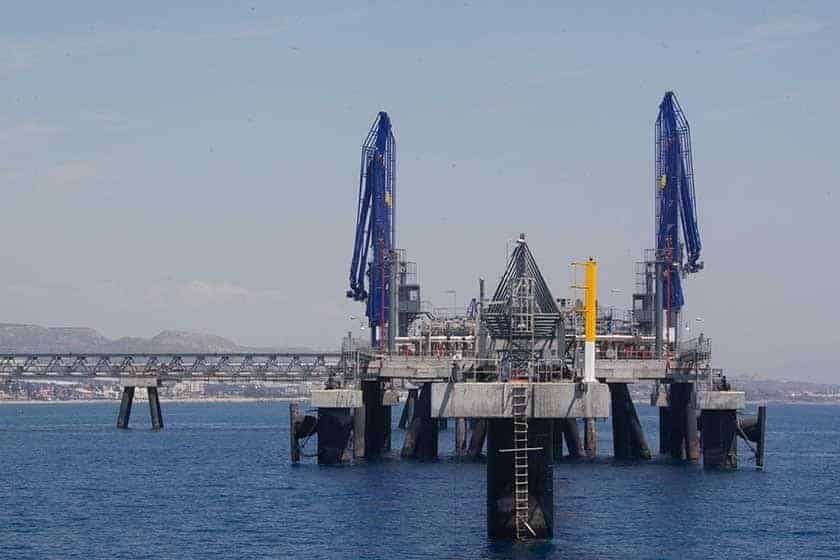
The government and the CPP-Metron Consortium Ltd (CMC), contracted for the construction and operation of the Vasiliko LNG terminal, have mended their relationship after previously heading towards a costly separation. Energy Minister George Papanastasiou had considered terminating the contract with CMC due to their work stoppage at Vasiliko since the end of January and a €200 million claim against Cyprus at a London arbitration court for higher costs and alleged failure by the project manager, Etyfa, to fulfill its obligations. A meeting between CMC representatives and Papanastasiou resolved differences, and President Nikos Christodoulides subsequently inspected the project site. CMC expressed gratitude for the meeting, highlighting prior unaddressed meeting requests with Etyfa. The energy ministry will now directly manage the project, sidelining Etyfa due to its inadequate response and unclear project instructions, and will establish a body for project monitoring and a group for dispute resolution. The financial disputes remain unresolved but will be addressed by Defa and Etyfa, who had signed the contracts with CMC. The project is set to proceed, with CMC bringing in 120 workers from China with the necessary expertise, aiming for completion by the end of the year.

Cyprus lifts final Covid restriction, masks in hospitals

Cyprus lifts final Covid restriction, masks in hospitals

Cyprus has lifted the last COVID-19 restriction, which was mandatory testing for visits to hospitals and care homes, on the fourth anniversary of the coronavirus reaching the island. The decision was announced by Health Minister Michalis Damianou after a Cabinet meeting. The change will take effect on Friday, with the amended decree to be published in the government’s Official Gazette. However, wearing a mask will still be required in hospitals, care homes, and other closed structures. This decision comes as the positive test results were a few hundred out of 80,000 samples, and hospitalizations were minimal. The coronavirus has taken 1,365 lives in Cyprus to date.

MPs hear LNG grant could be lost

MPs hear LNG grant could be lost

Cyprus risks losing part or all of an EU grant for the liquefied natural gas (LNG) terminal in Vasiliko due to not meeting certain requirements. The LNG terminal project is 80% complete, with the floating, storage, and regasification unit at 97% and the land-based infrastructures at 50%. Cyprus has received two extensions from the European Commission for the project, with the latest extension expiring at the end of 2024. To receive the remaining €28.9 million of the €101 million grant, Cyprus must have €253 million in recognized expenditures for the terminal by the end of 2023 and complete the project with the necessary certification by the end of 2024. Failure to meet these conditions could result in losing 20% of the remaining EU grant or more.

North rules out amnesty for fake diplomas

North rules out amnesty for fake diplomas

Nazim Cavusoglu, the ‘education minister’ of the north, announced on Tuesday that there will be no amnesty for individuals who obtained fake diplomas without using them. He emphasized that his ministry does not support those who have committed wrongdoings and is against making any concessions in this matter. Both the government and opposition agree on the need to eliminate dishonest practices in the higher education sector. The ministry is also considering transferring fake diplomas to the police for forgery prosecutions. Opposition party CTP MP Sila Usar Incirli criticized the higher education accreditation authority (Yodak) for its inability to effectively oversee higher education and stressed the urgency of addressing the issues within the north’s higher education system, highlighting their significant impact on the country.

US Supreme Court lets Texas border enforcement law take effect

US Supreme Court lets Texas border enforcement law take effect

The US Supreme Court allowed a Texas law to take effect that permits state law enforcement to arrest individuals suspected of illegally crossing the US-Mexico border. This decision was made despite opposition from President Joe Biden’s administration, which argued that the law violates the US Constitution and federal law by interfering with the federal government’s authority over immigration regulation. The Supreme Court has a 6-3 conservative majority, and its three liberal justices dissented from the decision. Texas Governor Greg Abbott signed the law, known as SB 4, citing Biden’s failure to enforce federal immigration laws. The law makes illegal entry or re-entry into Texas a state crime, with penalties ranging from 180 days in jail to 20 years in prison. The Justice Department sued to block the measure, arguing it violates federal law and constitutional provisions. However, the 5th US Circuit Court of Appeals paused a ruling that would have blocked the law, leading to the Supreme Court’s decision to let the law take effect.

Article 23: what you need to know about Hong Kong’s new national security laws

Article 23: what you need to know about Hong Kong’s new national security laws

Hong Kong’s 90-seat legislature passed a new national security law, known as Article 23, which updates or introduces laws to prohibit treason, sabotage, sedition, the theft of state secrets, and espionage. It includes sentences of up to life imprisonment for several offenses and up to 20 years for espionage. The law aims to tighten control over foreign political bodies and organizations in the city and includes provisions against “external interference.” The need for these laws is stipulated in Article 23 of the Basic Law, which has guided Hong Kong’s relations with China since 1997. A previous attempt to enact Article 23 in 2003 was halted after significant public protest. The law also introduces a new offense related to endangering national security through the unlawful use of computers or electronic systems, with a penalty of up to 20 years in prison. Concerns have been raised about the broad definition of state secrets and the potential impact on research and information gathering. Hong Kong’s leader, John Lee, claims the laws meet international standards and protect rights and freedoms. Additionally, Beijing imposed a national security law on Hong Kong in 2020, addressing some offenses and allowing mainland national security officers to operate in the city. China updated its own state secrets laws in 2023, with Hong Kong’s legislation aiming to be compatible with the standards of British-based common law.

AKEL, Greens voice concerns over Akamas

AKEL, Greens voice concerns over Akamas

AKEL and the Green Party have expressed concerns regarding the Cyprus government’s handling of the Akamas peninsula issue. The parties met to discuss a memorandum sent by the Green Party to the government. They criticized the government for not complying with European directives concerning habitats, leading to severe criticism from the European Parliament and legal proceedings initiated by the European Commission against Cyprus. AKEL and the Green Party have raised the issue in Parliament and are monitoring the situation in cooperation with environmental organizations. The Green Party submitted memoranda to the President of the Republic and the Minister of Agriculture, expressing dissatisfaction with the government’s response and calling for upgraded protection of the Akamas area to establish a real national park. They criticized the government’s handling of administrative investigations related to Akamas, with ongoing investigations into the projects deemed destructive to the habitat. The parties are concerned about the government’s actions and the potential legal consequences from the EU.

Food aid from Cyprus reaches starving people in northern Gaza, says charity

Food aid from Cyprus reaches starving people in northern Gaza, says charity

– A U.S.-based charity reported that nearly 200 tons of food aid reached northern Gaza, having been shipped from the Cypriot port of Larnaca.
– The charity involved is World Central Kitchen (WCK), in collaboration with the United Arab Emirates and Spanish charity Open Arms.
– The food was transported over a 200-mile sea route from Larnaca to Gaza and arrived off Gaza’s coast on Friday, with delivery completed on Tuesday by a convoy of eight trucks from the World Food Programme (WFP).
– The delivered aid is equivalent to half a million meals.
– A U.N.-backed report indicated that famine is “imminent” in northern Gaza, affecting some 300,000 people, with 1.1 million people across Gaza facing “catastrophic hunger.”
– A second shipment of 240 tons of food is prepared in Larnaca, awaiting departure based on weather conditions.
– WCK has expressed readiness to send weekly food shipments to Gaza with international support.
– Aid agencies have highlighted that the amount of food that can be delivered by sea is insufficient for the needs in Gaza and have called for more aid to be allowed in by road.
– Cyprus supports the WCK initiative and plans to coordinate further aid, hosting discussions with officials from various countries on March 21.