India’s net direct tax kitty surges 17.7% to 19.58 lakh cr in FY24, exceeds revised estimates

India's net direct tax kitty surges 17.7% to 19.58 lakh cr in FY24, exceeds revised estimates

India’s net direct tax collections grew by 17.7% in fiscal year 2023-24, reaching ₹19.58 lakh crore, surpassing the revised estimates for the year. Gross direct tax collections for the same period amounted to ₹23.37 lakh crore, showing an 18.48% year-on-year growth. The boost in net tax collections during the final fortnight of the fiscal year was driven by personal income tax and securities transaction tax collections, while net corporate tax collections experienced a slight decrease.

Direct Tax Collections Grow 18 Per Cent To Rs 19.58 Lakh Crore In FY24, Beat Revised Estimates

Direct Tax Collections Grow 18 Per Cent To Rs 19.58 Lakh Crore In FY24, Beat Revised Estimates

Fact: The direct tax collections for the 2023-24 fiscal year increased almost 18 per cent against the funds collected in the previous fiscal year.

Net direct tax collections exceed 2023-24 target

Net direct tax collections exceed 2023-24 target

India’s net direct tax collections grew 17.7% in 2023-24 to hit ₹19.58 lakh crore, with personal income taxes contributing 53.3% and corporate taxes contributing 46.5%. March saw the second-highest gross GST revenue of ₹1.78 lakh crore, lifting FY24 collections to ₹20.2 lakh crore. The gross direct tax kitty for 2023-24 stood at ₹23.37 lakh crore, exceeding the target by 97%. Refunds for tax made in 2023-24 rose 22.74% to ₹3.79 lakh crore.

Direct tax collections up 18% in FY24, top revised budget estimate

Direct tax collections up 18% in FY24, top revised budget estimate

Government’s net direct tax collections for the financial year 2023-24 grew by 17.7% year-on-year to Rs 19.58 lakh crore, exceeding the revised estimate by 0.67%. Refunds for the year stood at Rs 3.79 lakh crore, an increase of 22.74% over the previous year.

Corporate Jet Use Crackdown Is a Poor Way to Boost Tax Revenue

Corporate Jet Use Crackdown Is a Poor Way to Boost Tax Revenue

The US government intends to focus on taxing business aircraft, but it is inappropriate to characterize large corporations and high-net-worth individuals who use business aircraft as “flying under the radar with their tax responsibilities.” The IRS plans to increase audits of business aircraft usage, which could be costly and disruptive for affected companies. A letter from six senators supported the IRS audit initiative and requested an increase in the rate at which income is imputed to executives for their personal flights on company aircraft. President Joe Biden’s budget proposes lengthening the depreciation life of business aircraft and increasing the fuel tax rate on jet fuel used by business aircraft, both of which would increase taxes with respect to business aircraft.

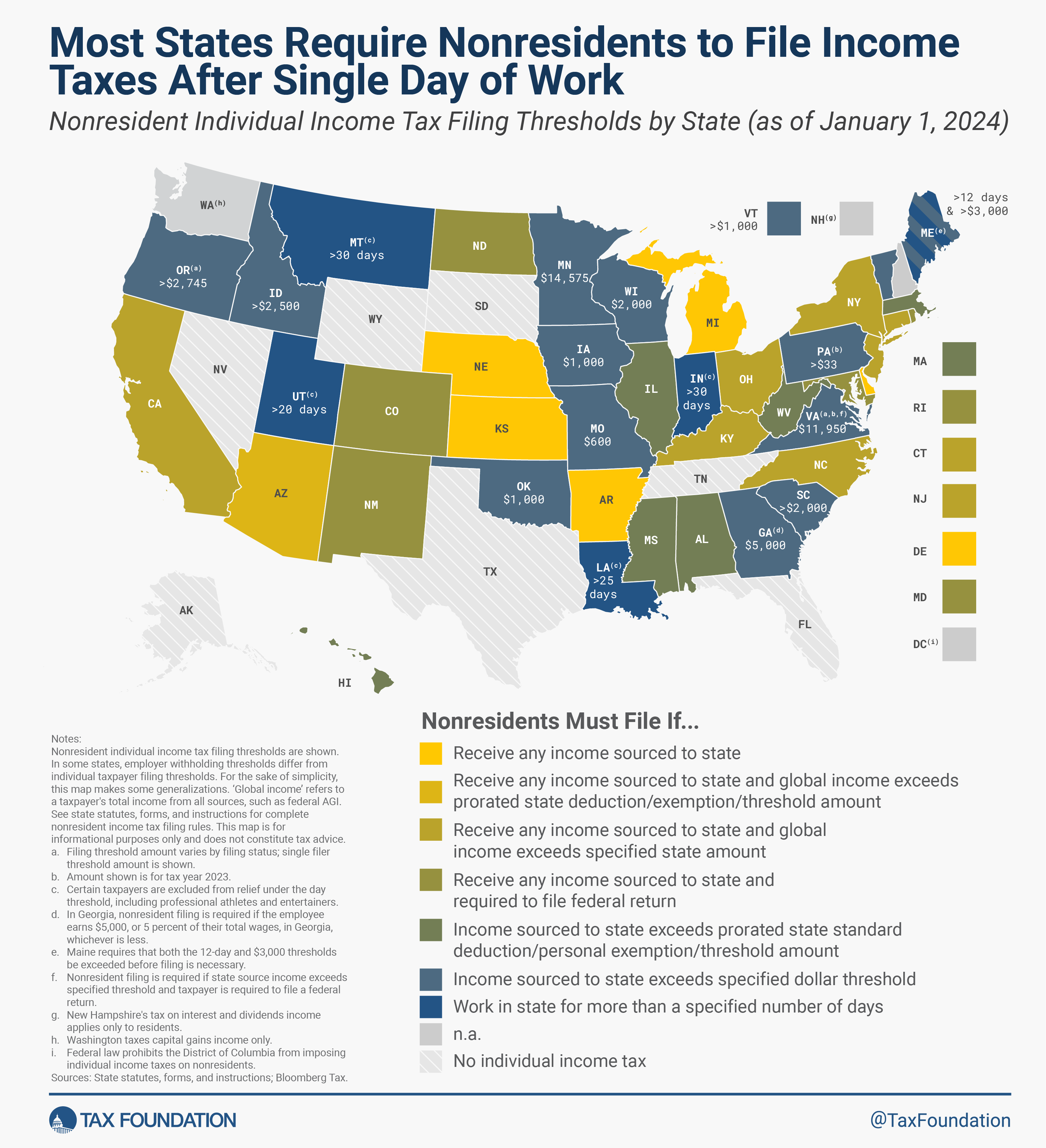
How Burdensome Are Your State’s Nonresident Income Tax Filing Laws?

How Burdensome Are Your State’s Nonresident Income Tax Filing Laws?

Fact: Nearly half the states in the US require individuals to file nonresident individual income tax returns if they work for even a single day within that state.

Canada Hikes Capital Gains Tax to Raise Billions for Housing – BNN Bloomberg

Canada Hikes Capital Gains Tax to Raise Billions for Housing - BNN Bloomberg

Canada will raise capital gains taxes on businesses and wealthy individuals to help pay for new spending aimed at making housing more affordable and improving the lives of young people. Finance Minister Chrystia Freeland said the government will tax Canadian companies on two-thirds of their capital gains, up from half currently.

Chapter 8: Tax Fairness for Every Generation

Chapter 8: Tax Fairness for Every Generation

Canada is one of the wealthiest countries in the world. For generations, this has meant Canada is a place where everyone could secure a better future for themselves and their children. This is in no small part is due to our commitment to progressive taxation, investments in Canada’s strong social safety net, and an effective, … Read more

Combating market power through a graduated U.S. corporate income tax – Equitable Growth

Combating market power through a graduated U.S. corporate income tax - Equitable Growth

– Corporate taxpayers with billion in income would pay 21 percent on their first 0 million in income, 25 percent on 0 million of their income, and 30 percent on billion of their income, resulting in a total tax bill of 6 million and an average tax rate of 27.3 percent.
– Graduated rate of corporate taxation was a feature of the corporate tax until recently.
– Approximately 99.7 percent of corporate taxpayers fall below the thresholds of million in tax payments.
– 87 percent of tax payments are made by corporations above the million tax payment threshold.
– Companies with tax payments of more than 0 million generate about billion in additional tax revenue.
– Tax revenues would increase by about billion in 2019 with the proposed reform.
– The tax code can discourage market power by levying a higher tax on firms likely to exercise it.
– International tax cooperation can limit tax competition pressures and reduce profit-shifting incentives.
– Market power provides a rationale for reconsidering tax preferences for very-high-profit large companies.
– Graduated corporate tax brackets would be straightforward to administer, especially for large companies.
– Tax policy should distinguish the normal return to capital from the above-normal return to capital to improve efficiency and equity of capital taxation.

Former Labor minister calls for major tax shake-up

Former Labor minister calls for major tax shake-up

David Bradbury, the OECD’s departing tax executive, believes Australia needs a new review of tax and spending across the federation to implement difficult reforms.