Government spent €40 million on Ukrainian refugee accommodation, audit finds

Government spent €40 million on Ukrainian refugee accommodation, audit finds

The Cypriot government spent approximately €40 million on accommodation for Ukrainian refugees, primarily covering housing costs until March 4, 2024. Other expenses included transportation and translation services. The Audit Office recommended developing an emergency contingency plan for managing future influxes of displaced people. Standard tendering procedures were advised for transparency, despite no violations found in the audit. The European Commission provided €6.7 million in support for the refugee aid program, with management of accommodation contracts transferred to the Municipality of Paralimni. Expenditure details for accommodation in various hotels were provided, totaling €39,680,831.65.

Guest commentary California needs higher taxes on corporations and the wealthy

President Biden proposed to reverse the 2017 Trump tax cuts for the wealthiest Americans by raising the corporate tax rate, denying tax breaks for corporations whose CEOs earn more than million in annual compensation, and requiring billionaires to pay at least 25 percent of their income in taxes. California faces a billion budget deficit and has a regressive tax system, with the lowest income earners paying the largest share of taxes. State and local governments can take action to ensure the ultra-wealthy and large corporations pay their fair share by ending tax breaks, increasing the corporate tax rate, and implementing a wealth tax on extreme wealth. Governor Newsom opposes the wealth tax, but public pressure is building with a majority of California voters supporting the idea.

No cost to Cypriots until Great Sea Connector is operational

No cost to Cypriots until Great Sea Connector is operational

Cypriot consumers should not pay anything for the Great Sea Interconnector until the project is operational.

Call to suspend legal costs in Astrasol case

Call to suspend legal costs in Astrasol case

Residents involved in the Astrasol case have been vindicated for the link between cancer incidents and pollution from a factory. However, due to procedural errors, they lost the case and are now facing payment of legal costs. They have appealed to the European Court of Human Rights, highlighting the high toll of cancer in the area with 47 deaths and 67 illnesses.

Don Wooten: Taxes are dues we pay to be part of this society

Don Wooten: Taxes are dues we pay to be part of this society

The author, Don Wooten, reflects on his attitude towards paying taxes and the importance of contributing to society through taxes. He mentions his belief that taxes are necessary for the common good and expresses a willingness to pay them, despite some frustrations with how tax money is sometimes used.

Young people purchasing an apartment is nowadays a utopia

Young people purchasing an apartment is nowadays a utopia

The real estate market in Cyprus has seen rapid growth due to the arrival of foreign companies, making it difficult for Cypriots to find affordable housing. High rent and property prices, combined with low average salaries, pose a significant challenge for young couples and individuals from middle or low-income groups. The need for substantial deposits and strict bank requirements further limit access to housing loans. Efforts are being made to address these issues, including potential changes in the terms and conditions of social housing programs to help more people acquire housing.

Banks falling behind on messaging app scrutiny, survey finds

Banks falling behind on messaging app scrutiny, survey finds

Global financial companies are falling behind on monitoring and archiving business-related communications using personal messaging apps, potentially risking regulatory breaches and fines. The Annual Compliance Health Check by SteelEye found that 63% of compliance executives were not monitoring staff usage of WhatsApp for compliance purposes. US regulators have cracked down on business-related text messages over personal messaging platforms, leading to fines exceeding billion for compliance failures.

2024 Federal Budget analysis

2024 Federal Budget analysis

– The 2023 budget proposed a refundable ITC for clean electricity, equal to 15% of the capital cost of eligible property.
– The 2024 budget provides the design and implementation details of the ITC, including the eligibility criteria.
– The ITC will be available only to eligible Canadian corporations, including taxable Canadian corporations, provincial and territorial Crown corporations, and corporations owned by municipalities or Indigenous communities.
– Property eligible for the ITC includes equipment used to generate electricity from various sources, including solar, wind, water, nuclear fission, geothermal energy, and specified waste materials.
– The ITC will be subject to potential repayment obligations if the property is converted to an ineligible use, exported from Canada, or disposed of.
– The EV Supply Chain Investment Tax Credit is equal to 10% of the cost of buildings used in electric vehicle supply chain segments.
– The Clean Technology Manufacturing Investment Tax Credit has been updated to include production of qualifying minerals at polymetallic projects.
– An accelerated CCA of 10% is provided for new eligible purpose-built rental projects that begin construction after April 15, 2024.
– Immediate expensing is provided for certain productivity-enhancing assets acquired after April 15, 2024.
– The budget proposes to extend an exemption for certain interest and financing expenses relating to arm’s length financing used to build or acquire purpose-built rental housing.
– The government is considering introducing a new tax on residentially zoned vacant land to spur development.
– The government intends to restrict the acquisition of existing single-family homes by very large corporate investors.
– The government is exploring measures to expand access to alternative financing products for home purchasers, such as halal mortgages.
– Amendments are proposed to the CRA’s information gathering provisions to enhance tax audits and facilitate the collection of tax revenues.
– The budget proposes to remove the tax-indifferent investor exception to the anti-avoidance rule for synthetic equity arrangements.
– Specific amendments are proposed to preclude a corporation from qualifying as a mutual fund corporation if it is controlled by or for the benefit of a corporate group.
– The budget introduces the Canada Carbon Rebate for Small Business, to return a portion of the federal backstop pollution pricing fuel charge proceeds collected from a province to CCPCs with less than 500 employees.
– The budget proposes measures to address tax debt avoidance planning, including joint and several liability for taxpayers who participate in such planning.
– The budget proposes to remove the failure to file an information return in respect of a reportable or notifiable transaction under the mandatory disclosure rules from the general penalty provision.
– The budget proposes to repeal the exception to the debt forgiveness rules for bankrupt corporations and the loss restriction rule applicable to bankrupt corporations.
– The government launched consultations on the existing SR&ED tax incentives and announces a second phase of consultations to focus on specific policy parameters.

Health minister hails year one achievements (Updated)

Health minister hails year one achievements (Updated)

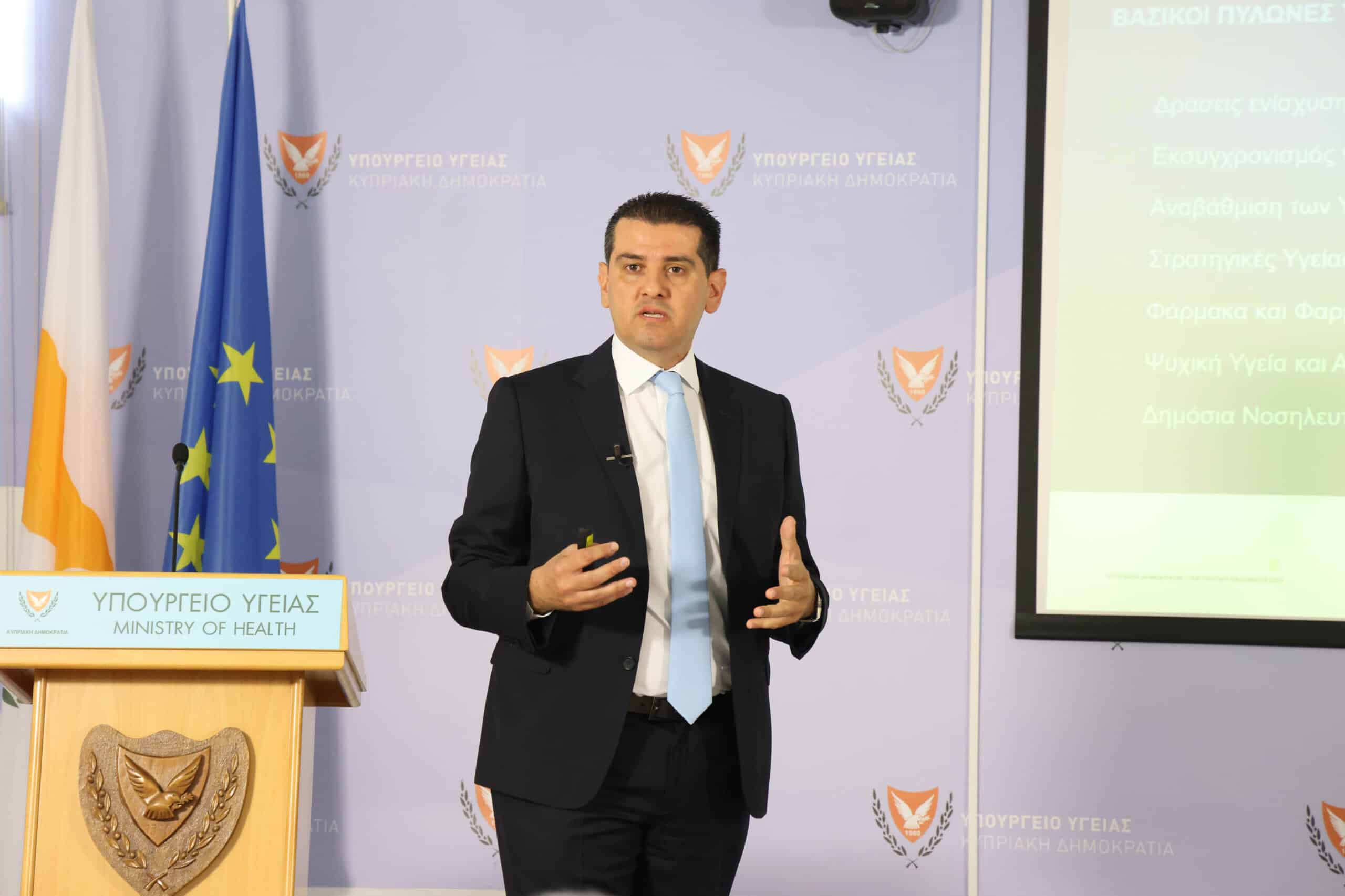
Health Minister Michael Damianos praised his ministry’s accomplishments during the first year of President Nikos Christodoulides’ tenure, highlighting the implementation of expenses coverage plan for patients sent abroad for treatment, the increase in subsidy for infertility treatment, and the preparation of new health strategies including better management of patients with mental health problems and nutritional disorders. Additionally, investments in infrastructures and medical equipment in public hospitals worth €22 million were approved.