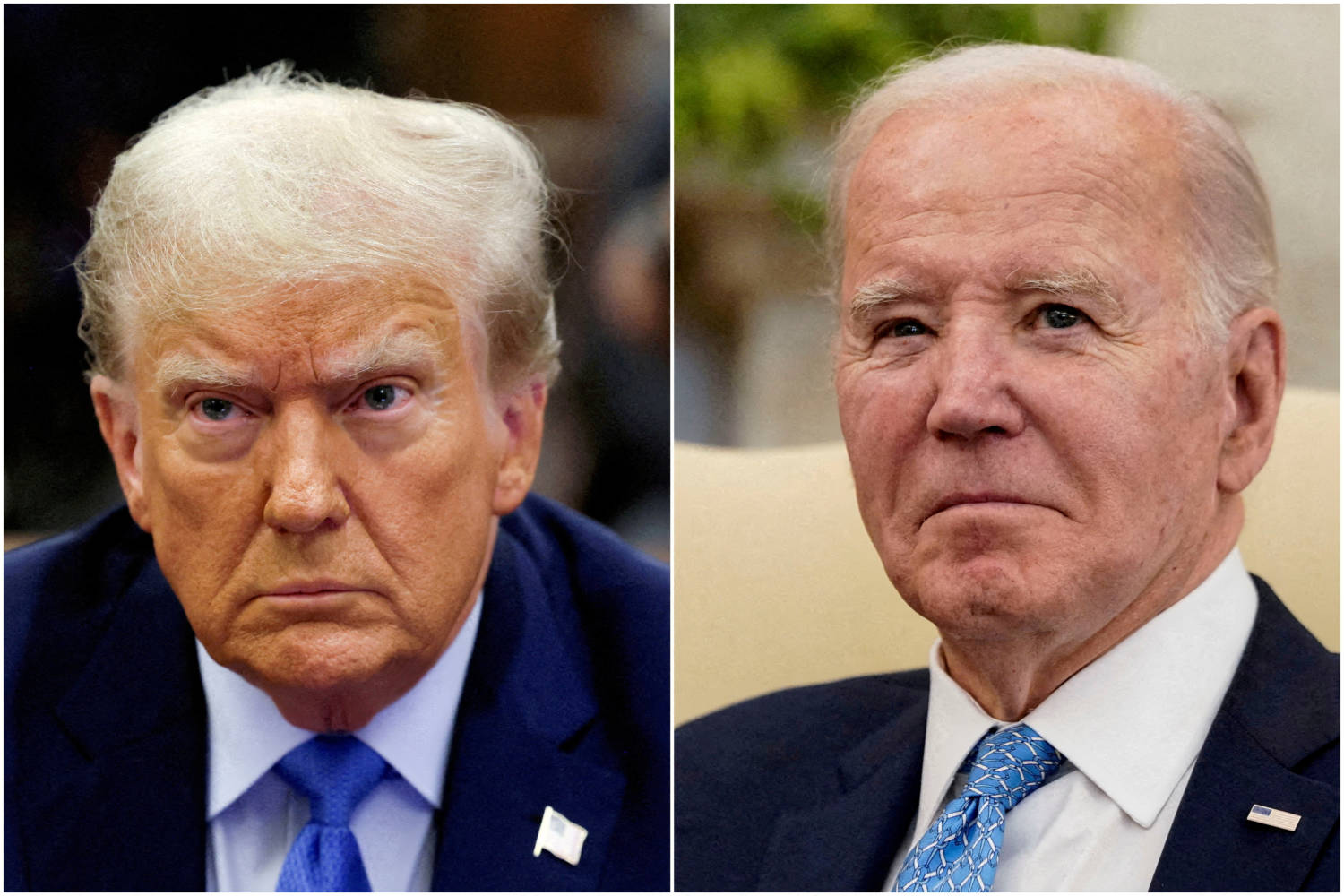
‘, Anywhere, any time, any place’, Biden tells Trump

U.S. President Joe Biden and Republican rival Donald Trump have accepted CNN’s invitation to face off in the first 2024 debate on June 27.
U.S. President Joe Biden and Republican rival Donald Trump have accepted CNN’s invitation to face off in the first 2024 debate on June 27.

– Democrats and Republicans dominate the U.S. two-party political system.
– Independent candidates and third-party challengers, like Robert F. Kennedy Jr., could impact this year’s presidential election.
– Strategists believe a third-party candidate could take more votes from President Joe Biden than from former President Donald Trump.
– Narrow margins in battleground states are crucial for winning the 270 electoral college votes needed for victory.
– In the 2020 election, Biden won Michigan, Wisconsin, Pennsylvania, Arizona, Georgia, Nevada, and lost North Carolina, with all these states decided by less than 3% of the vote.
– Kennedy’s platform includes limiting U.S. intervention in foreign conflicts, cheaper housing, and reining in corporate power. He has 15% support among registered voters according to a Reuters/Ipsos poll.
– Pennsylvania, with 19 electoral votes, is a key focus, where Biden won with just 50% of the votes in 2020.
– If Biden loses Pennsylvania and Georgia, Trump could win the presidency.
– Both Biden and Trump have low approval ratings, but Trump’s loyal voter base makes him less vulnerable to third-party votes.
– There’s a possibility that no candidate reaches the 270 electoral vote threshold, leading to a contingent election scenario where the House of Representatives would elect the president.
– It is unlikely for a third-party candidate to win 270 electoral votes on their own, as seen in historical precedents like Theodore Roosevelt in 1912 and George Wallace in 1968, and Ross Perot in 1992 who did not win any electoral college votes despite a significant popular vote percentage.