SpaceX Starship lost on return to Earth after completing most of test flight

SpaceX Starship lost on return to Earth after completing most of test flight

SpaceX’s Starship rocket, aimed at future astronaut missions to the moon and beyond, nearly completed a full test flight on its third attempt, cruising through low orbit before being destroyed upon return to Earth. The spacecraft lost communication during atmospheric re-entry and was presumed lost either due to burning up, disintegration, or crashing into the sea. Despite this, the test marked a significant step in the development of Starship, crucial for both SpaceX’s satellite launch business and NASA’s moon program. The two-stage spacecraft, composed of the Starship vessel and Super Heavy rocket booster, launched from Texas, reaching altitudes of 145 miles (234 km). SpaceX’s approach involves pushing spacecraft to failure to refine improvements, indicating Starship is still far from operational readiness. Elon Musk envisions Starship for lunar and Mars missions and as a replacement for the Falcon 9 rocket in commercial launches.

SpaceX Starship disintegrates after completing most of third test flight

SpaceX Starship disintegrates after completing most of third test flight

SpaceX’s Starship rocket, aimed for moon and beyond missions, nearly completed a test flight but disintegrated upon re-entry to Earth. This was its third attempt, achieving further progress than previous tries. The spacecraft lost communication during re-entry near the Indian Ocean, an hour after launching from Texas. Despite not attempting a core objective of re-igniting one of its engines, the test flight achieved several goals including successful stage separation, payload door operation in orbit, and propellant transfer in space. However, it failed to demonstrate the return of its Super Heavy rocket booster, a key part of SpaceX’s reusability strategy. SpaceX plans at least six more test flights this year, pending regulatory approval. The company must report and correct failures before each new flight as per Federal Aviation Administration requirements. Starship is central to SpaceX’s future goals and NASA’s Artemis moon program.

US achieves first moon landing in half century with private spacecraft

US achieves first moon landing in half century with private spacecraft

A spacecraft built and flown by Texas-based company Intuitive Machines successfully landed near the moon’s south pole, marking the first U.S. touchdown on the lunar surface in over fifty years and the first ever by the private sector. The landing, which took place at about 6:23 p.m. EST, involved the uncrewed six-legged robot lander named Odysseus. This event is part of NASA’s goal to send commercially flown spacecraft for scientific missions to the moon ahead of a planned return of astronauts later this decade. Initial communications issues raised concerns about the lander’s condition, but it was later confirmed that Odysseus is upright and transmitting data. The landing site is believed to be at a crater named Malapert A near the moon’s south pole. This mission represents the first controlled descent to the lunar surface by a U.S. spacecraft since Apollo 17 in 1972 and is a significant milestone under NASA’s Artemis lunar program, which aims to return astronauts to the moon and eventually conduct human flights to Mars.

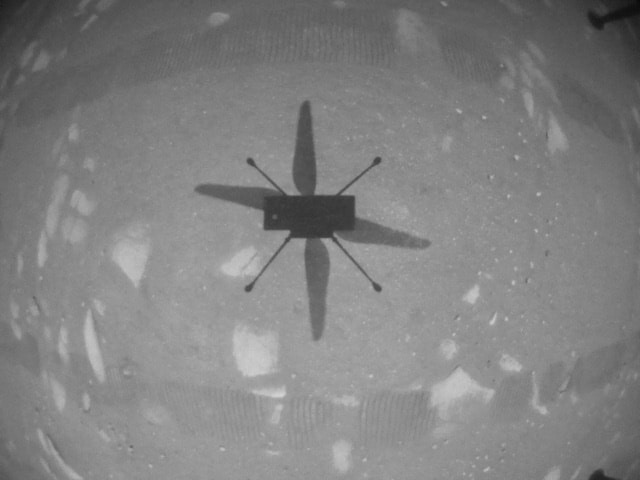
NASA announces end of history-making Mars helicopter mission

NASA announces end of history-making Mars helicopter mission

NASA’s miniature robot helicopter Ingenuity, which achieved the first powered flight on another planet in 2021, can no longer fly, marking the end of its mission. Ingenuity experienced communication issues and had a bent carbon fiber rotor blade. Originally intended for a 30-day mission with five flights, Ingenuity completed 72 flights over nearly three years, flying a distance 14 times greater than initially planned.