Archaeological dig maps city scape of ancient Paphos

Archaeological dig maps city scape of ancient Paphos

New evidence of the urban planning of ancient Nea Paphos was revealed during archaeological excavations carried out by Warsaw and Krakow universities. The excavation focused on uncovering the city’s road system remnants to confirm the hypothesized size of the residential blocks in Nea Paphos. Excavations revealed two perpendicular walls forming the corner of a room likely from the Hellenistic period, and remnants of two canals. Additionally, the mission processed ceramic and glass materials discovered in earlier excavation periods.

Early humans colonised Cyprus much earlier than previously thought, study finds

Early humans colonised Cyprus much earlier than previously thought, study finds

Researchers led by Professor Corey Bradshaw of Flinders University challenge previous beliefs about early human migration patterns with a study published in Proceedings of the National Academy of Sciences. The study suggests that hunter-gatherers settled Cyprus much earlier than previously thought, around 14,257 to 13,182 years ago, contradicting the idea that Mediterranean islands were too isolated for Paleolithic societies. The research indicates rapid settlement coinciding with favorable climatic conditions, large-scale migrations, and the use of advanced watercraft. Dr. Theodora Moutsiou argues that Mediterranean islands like Cyprus would have been attractive destinations for early hunter-gatherer societies, challenging the notion of inhospitability. The study emphasizes the importance of reevaluating early human migration in the Mediterranean based on new archaeological evidence and advanced modeling techniques.

BoCCF podcast episode on South Mathiatis-Strongylou Mine

BoCCF podcast episode on South Mathiatis-Strongylou Mine

Fact: The South Mathiatis-Strongylou Mine in Cyprus is the only mine in the country that has been a UNESCO candidate in the natural and cultural landscape category since 2002.

Ancient humans had piercings just like us, archaeologists in Turkey find

Ancient humans had piercings just like us, archaeologists in Turkey find

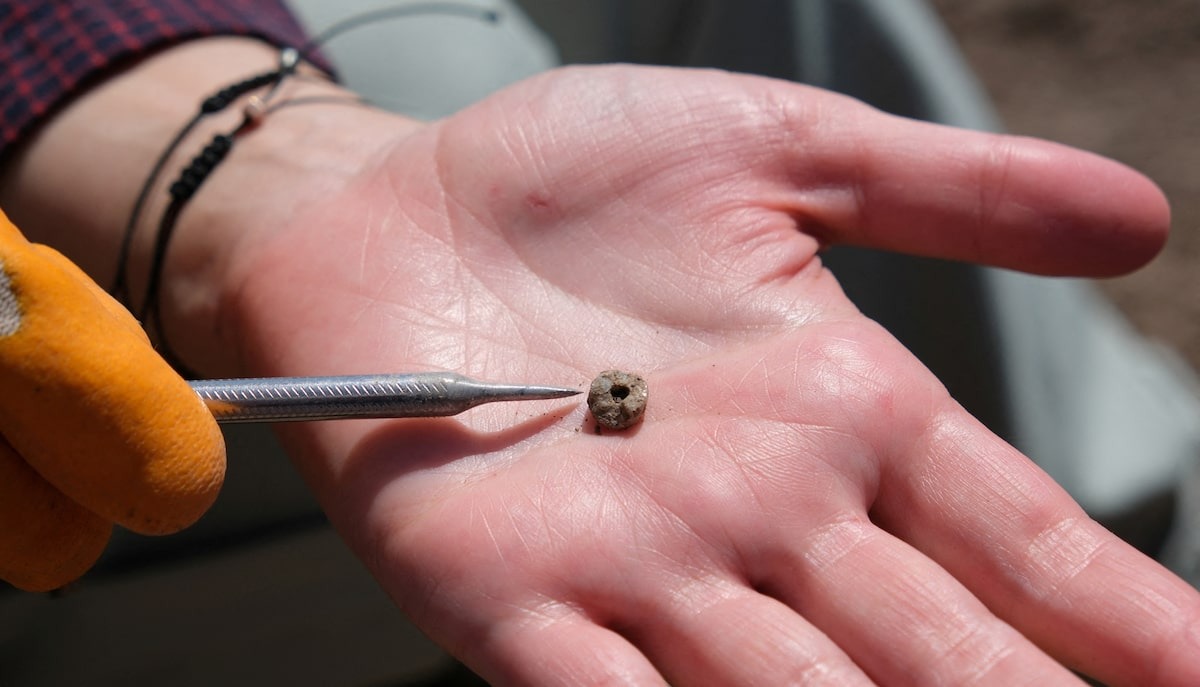
Stone ornaments found at an 11,000-year-old burial site in southeast Turkey indicate that humans have been piercing their bodies since prehistoric times. These ornaments were discovered around the mouths and ears of skeletons, suggesting their use as piercings. This finding at the Boncuklu Tarla site, which dates back to when ancient humans settled for farming in the Fertile Crescent, provides the first evidence of their original use due to their placement on the skeletons. Wear on the lower teeth of some skulls also indicated lower lip piercings. The site, established by hunter-gatherers who gradually settled, has yielded over 100,000 artifacts, showing early societal formation and similarities between Neolithic people and modern humans in terms of self-presentation and concerns about appearance.