Palestinian NGO’s legal case over UK arms to Israel to be heard in October

Palestinian NGO’s legal case over UK arms to Israel to be heard in October

A Palestinian rights group, Al-Haq, is challenging British arms exports to Israel due to alleged breaches of international law in the Gaza war. The case will be heard in October at London’s High Court.

ANALYSIS | Do wealthy Canadians pay enough taxes? That depends how we define ‘fair share’ | CBC News

ANALYSIS | Do wealthy Canadians pay enough taxes? That depends how we define 'fair share' | CBC News

The federal government announced an increase in capital gains taxes in the recent budget to ensure the wealthiest Canadians pay their fair share. The government plans to increase the inclusion rate of the capital gains tax for high-income earners. Data from the Fraser Institute and Statistics Canada show that high-income earners already pay a disproportionately large share of taxes. However, some argue that this data does not consider the totality of income inequality, with the wealthiest 20 percent of Canadians holding more than two-thirds of total net wealth.

Federal Budget 2024: What are the proposed capital gains tax changes and how might they affect me?

Federal Budget 2024: What are the proposed capital gains tax changes and how might they affect me?

The fact described in the text is that Canada’s 2024 budget proposes to increase the capital gains tax inclusion rate from 50% to 66.67% for all capital gains realized by corporations and trusts, as well as for capital gains over 0,000 realized by individuals.

2024 Federal Budget analysis

2024 Federal Budget analysis

– The 2023 budget proposed a refundable ITC for clean electricity, equal to 15% of the capital cost of eligible property.
– The 2024 budget provides the design and implementation details of the ITC, including the eligibility criteria.
– The ITC will be available only to eligible Canadian corporations, including taxable Canadian corporations, provincial and territorial Crown corporations, and corporations owned by municipalities or Indigenous communities.
– Property eligible for the ITC includes equipment used to generate electricity from various sources, including solar, wind, water, nuclear fission, geothermal energy, and specified waste materials.
– The ITC will be subject to potential repayment obligations if the property is converted to an ineligible use, exported from Canada, or disposed of.
– The EV Supply Chain Investment Tax Credit is equal to 10% of the cost of buildings used in electric vehicle supply chain segments.
– The Clean Technology Manufacturing Investment Tax Credit has been updated to include production of qualifying minerals at polymetallic projects.
– An accelerated CCA of 10% is provided for new eligible purpose-built rental projects that begin construction after April 15, 2024.
– Immediate expensing is provided for certain productivity-enhancing assets acquired after April 15, 2024.
– The budget proposes to extend an exemption for certain interest and financing expenses relating to arm’s length financing used to build or acquire purpose-built rental housing.
– The government is considering introducing a new tax on residentially zoned vacant land to spur development.
– The government intends to restrict the acquisition of existing single-family homes by very large corporate investors.
– The government is exploring measures to expand access to alternative financing products for home purchasers, such as halal mortgages.
– Amendments are proposed to the CRA’s information gathering provisions to enhance tax audits and facilitate the collection of tax revenues.
– The budget proposes to remove the tax-indifferent investor exception to the anti-avoidance rule for synthetic equity arrangements.
– Specific amendments are proposed to preclude a corporation from qualifying as a mutual fund corporation if it is controlled by or for the benefit of a corporate group.
– The budget introduces the Canada Carbon Rebate for Small Business, to return a portion of the federal backstop pollution pricing fuel charge proceeds collected from a province to CCPCs with less than 500 employees.
– The budget proposes measures to address tax debt avoidance planning, including joint and several liability for taxpayers who participate in such planning.
– The budget proposes to remove the failure to file an information return in respect of a reportable or notifiable transaction under the mandatory disclosure rules from the general penalty provision.
– The budget proposes to repeal the exception to the debt forgiveness rules for bankrupt corporations and the loss restriction rule applicable to bankrupt corporations.
– The government launched consultations on the existing SR&ED tax incentives and announces a second phase of consultations to focus on specific policy parameters.

Freeland’s new federal budget hikes taxes on the rich to cover billions in new spending | CBC News

Freeland's new federal budget hikes taxes on the rich to cover billions in new spending | CBC News

Fact: Ottawa plans to spend .9 billion more than planned over the next five years, with a projected billion deficit this fiscal year.

Canada Hikes Capital Gains Tax to Raise Billions for Housing – BNN Bloomberg

Canada Hikes Capital Gains Tax to Raise Billions for Housing - BNN Bloomberg

Canada will raise capital gains taxes on businesses and wealthy individuals to help pay for new spending aimed at making housing more affordable and improving the lives of young people. Finance Minister Chrystia Freeland said the government will tax Canadian companies on two-thirds of their capital gains, up from half currently.

Capital gains tax change draws ire from some Canadian entrepreneurs worried it will worsen brain drain | CBC News

Capital gains tax change draws ire from some Canadian entrepreneurs worried it will worsen brain drain | CBC News

The federal government’s budget includes an increase in the inclusion rate of the capital gains tax from 50% to 67% for businesses and trusts, generating an estimated billion in new revenue. This change will impact 40,000 individuals and 307,000 companies in Canada. Some members of the business community believe that expanding the taxable amount will hurt productivity, investment, and entrepreneurship in Canada, potentially leading to a brain drain.

Capital gains tax upped for wealthiest Canadians

Capital gains tax upped for wealthiest Canadians

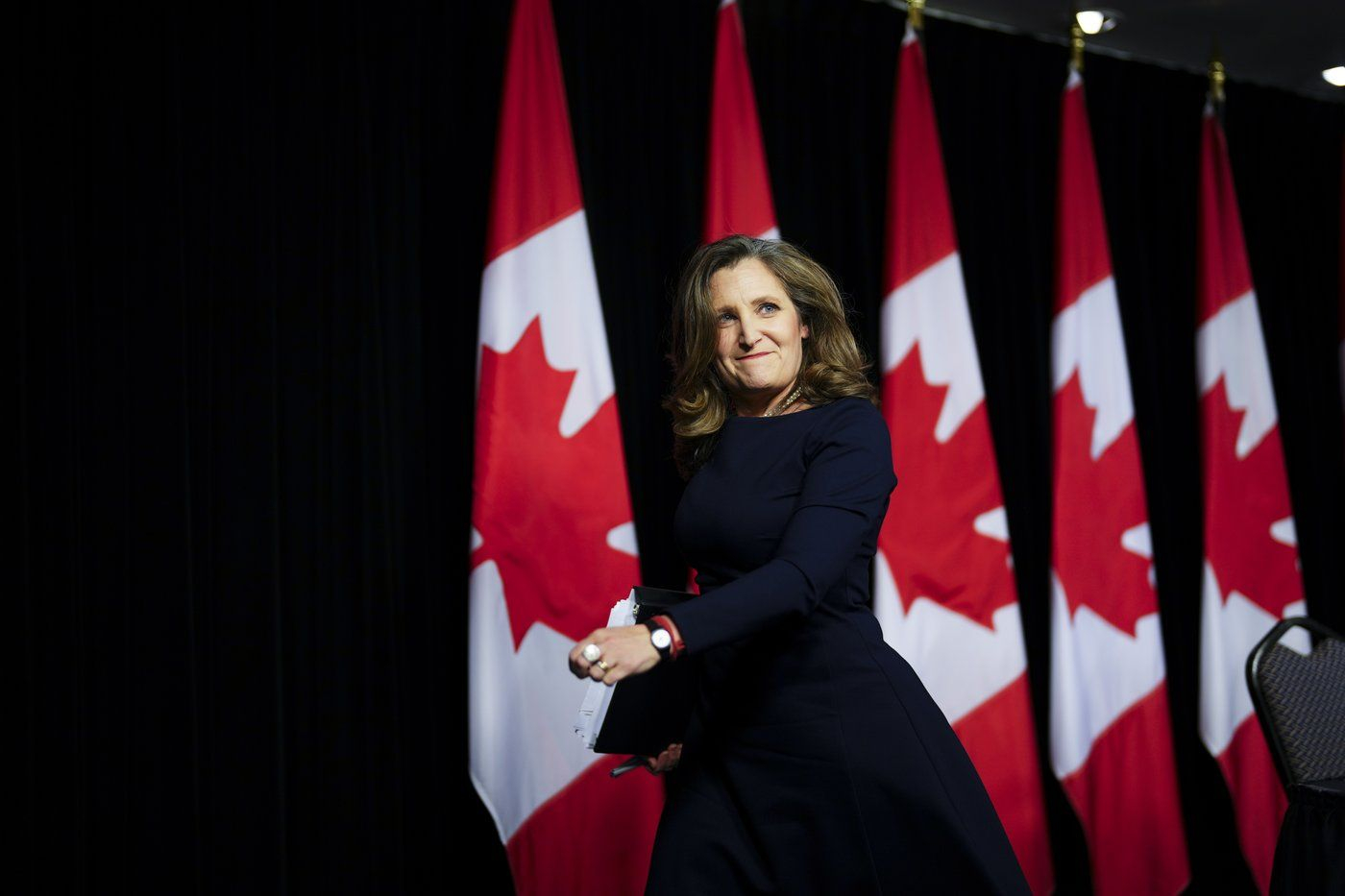
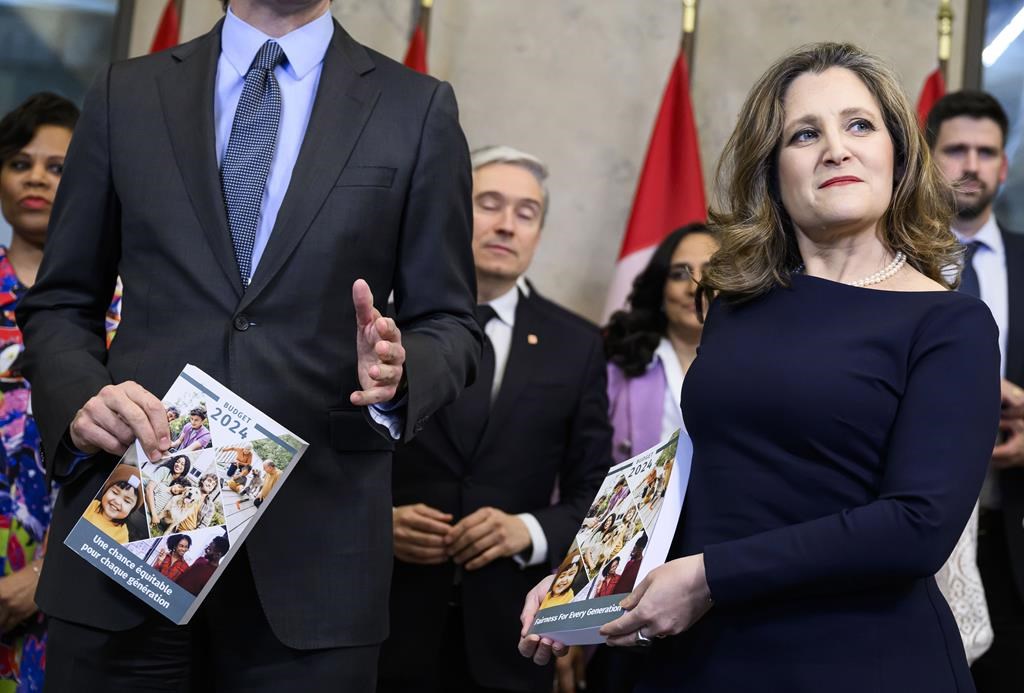
Finance Minister Chrystia Freeland delivered a federal budget that keeps the deficit capped at billion, thanks to higher-than-expected government revenues and new taxes that largely offset new spending. The budget pledges billion in new spending focused on economic justice for younger generations. The government plans to pay for most of its new spending initiatives with higher taxes on the wealthiest Canadians and businesses, including increasing the capital gains inclusion rate. The deficit, deficit-to-GDP ratio, and debt-to-GDP ratio are projected to fall every year until 2028-29. The federal budget also includes initiatives aimed at boosting the economy’s productivity, such as expanding artificial intelligence capacity and research support.

Capital gains are going to be taxed more, and these economists say it’s a good thing

Capital gains are going to be taxed more, and these economists say it's a good thing

Canada’s wealthiest individuals and corporations will soon pay taxes on a larger share of capital gains, with the federal budget proposing to tax two-thirds rather than one-half of capital gains. The increase in the inclusion rate will apply to capital gains above 0,000 for individuals and all capital gains realized by corporations. The changes are expected to generate over billion in tax revenues over five years and will help fund new spending on housing and national defense. Business groups are opposed to the changes, arguing that they will hurt economic growth and productivity, but economists believe that the changes will make the tax system more efficient and level the playing field for businesses. Prime Minister Justin Trudeau defended the tax change as a matter of fairness, with the additional revenues helping to fund new government spending and keep the deficit at bay.