A sociologist, ’s view of the Cyprus problem

A sociologist, ’s view of the Cyprus problem

The Cyprus problem has been unresolved for 50 years, with significant changes in both the physical landscape and the mindset of its people since 1974. The UN-led negotiations have focused on constitutional and legal challenges, often overlooking the social realities and expectations of Greek Cypriots and Turkish Cypriots regarding a federal Cyprus. The social structure and the passage of time have influenced the local dimension of the Cyprus issue, with Greek Cypriots generally expecting a reversal of the northern occupation and Turkish Cypriots aiming to retain benefits supported by Turkey. Urban expansion and new economic interests in the north have altered perceptions of life. Sociological analysis is deemed necessary to understand the underlying contradictions in the images of Cypriot society and to foster progress towards settlement. Examples of successful bicommunal cooperation include the Nicosia Master Plan and the Bicommunal Technical Committee on Cultural Heritage. These initiatives demonstrate the potential for building solidarity and mutual understanding through shared efforts, yet they have not significantly influenced the formal negotiation process. The article emphasizes the importance of sociological insight in addressing the Cyprus problem and fostering a bicommunal society.


Drought devastates crops

Drought devastates crops

Reduced rainfall and recent sunny days have destroyed cereal crops in West Nicosia farming communities. Farmers are unable to save their crops, citing irreversible damage due to drought. An elderly farmer reported never seeing such a disaster before, with minimal rain and the ground showing deep cracks. Andreas Alexandrou, the provincial secretary of the Panagrotikos Association of Nicosia, observed widespread devastation in the communities of Akaki, Meniko, Peristerona, and Orunta, describing the landscape as yellow and dreary. The Ministry of Agriculture is monitoring the situation, and there are calls for prompt identification of affected areas and guidance for farmers.

Tourism to keep head up high in 2024

Tourism to keep head up high in 2024

– Cyprus’ tourism head, Costas Koumis, is optimistic about the tourism sector’s performance in 2024, aiming for arrivals close to the 3.97 million record of 2019.
– Despite geopolitical unrest and other challenges, the goal is to maintain tourist arrivals at similar levels to the previous year, with a possible deviation of 30,000 to 50,000.
– In 2023, Cyprus saw 3.85 million tourist arrivals, marking the third-best historical performance with a 20% annual increase, despite losing the Russian and Ukrainian markets.
– The tourism sector’s contribution to Cyprus’ GDP in 2023 was estimated at 12.8%, with tourism revenue reaching €2.99 billion, a 22.6% nominal increase from 2022.
– The average per capita expenditure in 2023 increased by 2.1% to €778, and daily expenditure rose by 11.6% to €90.
– The average length of stay for holidaymakers in Cyprus decreased to 8.6 days in 2023 from 9.4 days in 2022.
– Sea arrivals in 2023 were around 322,000, with expectations of a decrease in 2024 due to the conflict in Israel.
– Challenges for 2024 include conflicts in the Middle East, economic downturns in Germany and the UK, and an aviation sector crisis.
– Air connectivity remains the same with 55 airlines, but available seats are expected to decrease from the initial estimate.
– Tourism from Poland, Scandinavian countries, Romania, and Serbia is expected to increase, while UK and German markets remain stable.
– The government and ministry are committed to enhancing Cyprus’ tourism product, with €11.24 million allocated for 16 subsidy schemes in 2024, including €8.1 million from the EU-funded Recovery and Resilience Plan.

It’s not the economy, stupid

It’s not the economy, stupid

For the first time in decades, the dominant pre-election issue in the US is not the economy, but migration. Gerald Baker, a columnist and executive at the Wall Street Journal, made this observation. The phrase “it’s the economy, stupid,” has been a central slogan for most election campaigns, emphasizing the importance of the economy in elections. However, the pivotal issue in the 2024 elections is migration. The US has experienced a massive influx of illegal immigrants under President Joe Biden’s administration, with at least six million estimated arrivals. This situation has become a problem not only for border states but also for many cities, including New York. Many Americans are concerned about the costs, the large number of arrivals, and the involvement of some migrants in criminal activities. This shift in concern towards migration reflects a profound change in the public mood and indicates a broader disillusionment with the current political system.

Limassol, ’s Frederick University to host 2024 Youth Tech Fest

Limassol, ’s Frederick University to host 2024 Youth Tech Fest

Frederick University is co-organizing the second Youth Tech Fest Cyprus 2024, which will occur on April 20, 2024, from 9 am to 4:30 pm at the University’s Limassol campus. The festival aims to promote digital literacy and engage children and young people in ESTEAM fields (Entrepreneurship, Science, Technology, Art, and Mathematics) through a variety of activities, workshops, masterclasses, and shows in areas such as Robotics, Gaming, Woodworking, XR/VR, and science. The event includes a Girls Go Circular workshop for schoolgirls aged 14-19, focusing on digital skills and the circular economy, organized by Junior Achievement Cyprus and Frederick University. The festival also features a Youth Tech Summit for educational technology insights and best practices, an Open Competition for student projects, and an Award Ceremony. Admission to all festival activities is free.

Energy minister promises support for consumers

Energy minister promises support for consumers

Energy Minister George Papanastasiou invoked the name of late United States President John F. Kennedy in a speech for World Consumer Rights Day, highlighting Kennedy’s view of consumers as central to the economy. Papanastasiou discussed the economic challenges exacerbated by global crises like the Covid-19 pandemic and the energy crisis, leading to economic instability and high inflation. He emphasized the government’s focus on introducing cheap energy, promoting renewable energy sources, and energy conservation, including the launch of the “Photovoltaics for All” scheme. Additionally, he mentioned the planned “e-basket” scheme for price transparency and a bill to allow the government to set maximum retail prices on certain products, alongside a policy of zero VAT on essential products to alleviate financial pressures on consumers.

Paphos tourism from Central Europe on the rise in 2024

Paphos tourism from Central Europe on the rise in 2024

Tourism from Central Europe to Paphos is expected to grow in 2024, based on early-year figures. This growth follows a trend of increasing arrivals from countries like Poland, Hungary, Austria, France, and Italy. Factors contributing to this growth include the expansion of Ryanair’s low-cost flights between Paphos and Central European airports, Paphos’s popularity as a year-round destination due to its mild climate and diverse attractions, and promotional efforts by the Paphos Tourism Board. In 2023, Paphos received over 120,000 tourists from Poland, a number expected to rise in 2024 with Ryanair operating at least 14 flights per week from six Polish airports.

Japan union group announces biggest wage hikes in 33 years, presaging shift at central bank

Japan union group announces biggest wage hikes in 33 years, presaging shift at central bank

Japan’s largest companies have agreed to a 5.28% wage increase for 2024, the largest in 33 years, according to the country’s largest union group. This development is seen as a sign that the Bank of Japan may soon end its decade-long stimulus program, especially considering the bank’s eight years of negative interest rate policy. The wage increase exceeds expectations and comes amid annual wage negotiations, which are crucial for the Bank of Japan’s policy decisions. Policymakers hope the wage hikes will boost household spending and support sustainable economic growth. Workers had initially requested a 5.85% increase. The wage hikes are expected to result in positive real wages by April-June 2024. Rengo, the trade union group representing about 7 million workers, aimed for more than 3% increases in base pay. Rising income inequality, inflation, and labor shortages were cited as reasons for the significant wage increase, with part-time workers expected to see a 6% increase this fiscal year. The government hopes these wage hikes will benefit smaller and medium-sized firms, which make up 99.7% of all enterprises. However, wage increases for smaller companies are expected to be lower. Among smaller delivery companies, only 57% plan to raise wages in the upcoming fiscal year. Despite wage increases, real wages have fallen for 22 consecutive months due to inflation not keeping pace. Toyota Motor announced its largest pay increase in 25 years, indicating a strong stance in labor negotiations. The central bank may end negative interest rates as early as its next meeting on March 18-19, influenced by the wage increases and chronic labor shortages in Japan. Prime Minister Fumio Kishida encourages companies to raise wages to combat deflation and improve Japan’s wage growth compared to other OECD countries. The annual pay negotiations, known as “shunto” or “spring labor offensive,” are a key aspect of Japanese business culture, emphasizing collaborative labor-management relations.

Bank of England set to play for time before first rate cut

Bank of England set to play for time before first rate cut

The Bank of England is expected to maintain uncertainty about when it will start reducing interest rates, awaiting clearer evidence that inflation pressures are diminishing. Despite other central banks moving towards cutting borrowing costs post-COVID pandemic and inflation projected to decrease to the 2% target soon, the BoE has labeled its high rates as “under review.” Governor Andrew Bailey expressed a cautiously optimistic outlook, noting inflation expectations appear controlled and concerns over a price-wage spiral are lessening. However, Bailey indicated no rush to lower the Bank Rate from its 16-year peak of 5.25%, citing labor market data uncertainties and geopolitical risks. In February, the decision to keep the Bank Rate steady was supported by six rate-setters, with two advocating for an increase and one for a reduction. Analysts anticipate a similar 6-2-1 vote split in the next decision, potentially influenced by upcoming inflation data. The BoE forecasts inflation to slow to 2% in the second quarter following a decrease in regulated energy costs but expects a rise to almost 3% later in 2024. Inflation reached a high of 11.1% in October 2022. The central bank remains concerned about the risk posed by fast-growing wages, with Britain’s minimum wage set to increase by nearly 10% and employers offering pay settlements of about 5% since the start of 2024. Former BoE deputy governor Charlie Bean highlighted that Britain’s pay growth is roughly double the level consistent with 2% inflation. The BoE is seen as moving more slowly towards rate cuts compared to other central banks, with the British economy showing signs of recovery from a short recession. Finance minister Jeremy Hunt announced tax cuts to moderately boost consumers. The European Central Bank and the US Federal Reserve are contemplating rate cuts, potentially placing the BoE behind. Economists at HSBC predict inflation could drop to as low as 1.2% in May and June before rising later in the year, challenging the BoE’s communication on maintaining its current stance. A Reuters poll shows economists mostly expect rate cuts to begin in the third quarter, with 40% anticipating a move in the second quarter. Investors do not fully expect a quarter-point cut until August. The BoE’s March monetary policy decision will be announced without a press conference, as no new economic forecasts are due to be published.

Biden to say US Steel must remain domestically owned and operated

Biden to say US Steel must remain domestically owned and operated

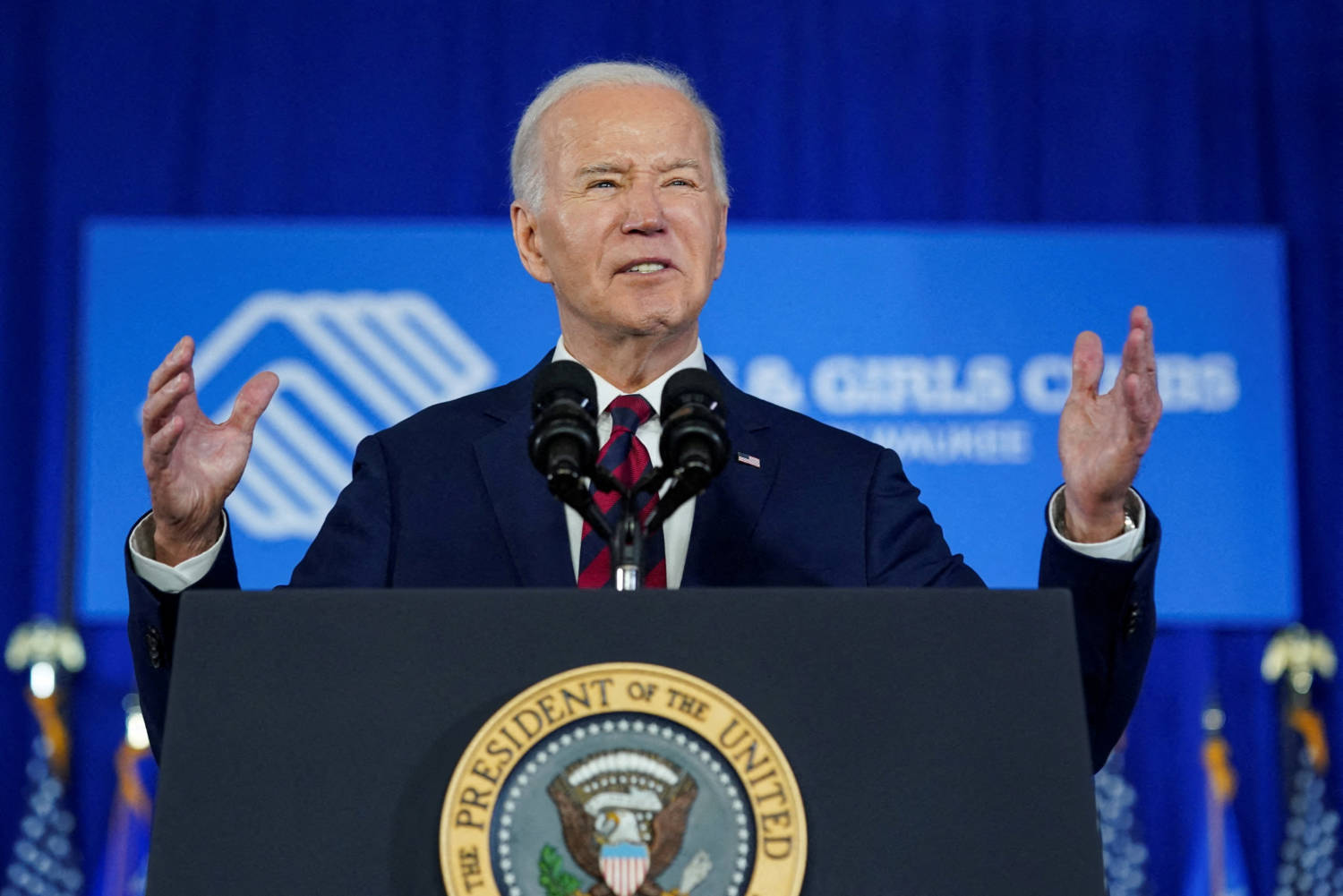
President Joe Biden will oppose the proposed .9 billion acquisition of U.S. Steel Corp by Japan’s Nippon Steel, stating that U.S. Steel must remain a domestically owned and operated American firm. In a statement, Biden will emphasize the importance of maintaining strong American steel companies powered by American workers and highlight U.S. Steel’s significance as an iconic American company for over a century. U.S. Steel shares dropped 4.9% in premarket trading following the news. The acquisition has faced criticism from both Democratic and Republican U.S. senators due to national security concerns and lack of consultation with U.S. Steel’s main union.