UK businesses trim hiring and pay plans, Lloyds says
UK businesses trim hiring and pay plans, Lloyds says

British businesses are reducing their plans for staffing and wage increases due to the impending minimum wage rise in April. The Lloyds Bank Business Barometer showed a decrease in the measure of staffing plans and the share of firms expecting to increase wages by 3% or more. The minimum wage in Britain will rise by nearly 10% next month, impacting businesses, especially smaller firms. The Resolution Foundation think tank highlighted the success of Britain’s introduction of the minimum wage 25 years ago in increasing the pay of low earners.

European Central Bank: inflation tolerance and the last mile

European Central Bank: inflation tolerance and the last mile

Inflation in the euro area has declined from high levels in recent years, with a rate expected to be 2.3% in 2024 compared to 8.4% in 2022 and 5.6% in 2023. The European Central Bank (ECB) is discussing the concept of inflation tolerance as a way to navigate uncertainty and provide guidance on when action will be taken based on inflation levels. The ECB may consider setting an inflation range within which no action is needed, with action required as inflation approaches 3%. This approach aims to balance the need for a precise inflation target with the reality of uncertainty in the economic system.

Laudable progress in direct taxes but scope for betterment remains

Laudable progress in direct taxes but scope for betterment remains

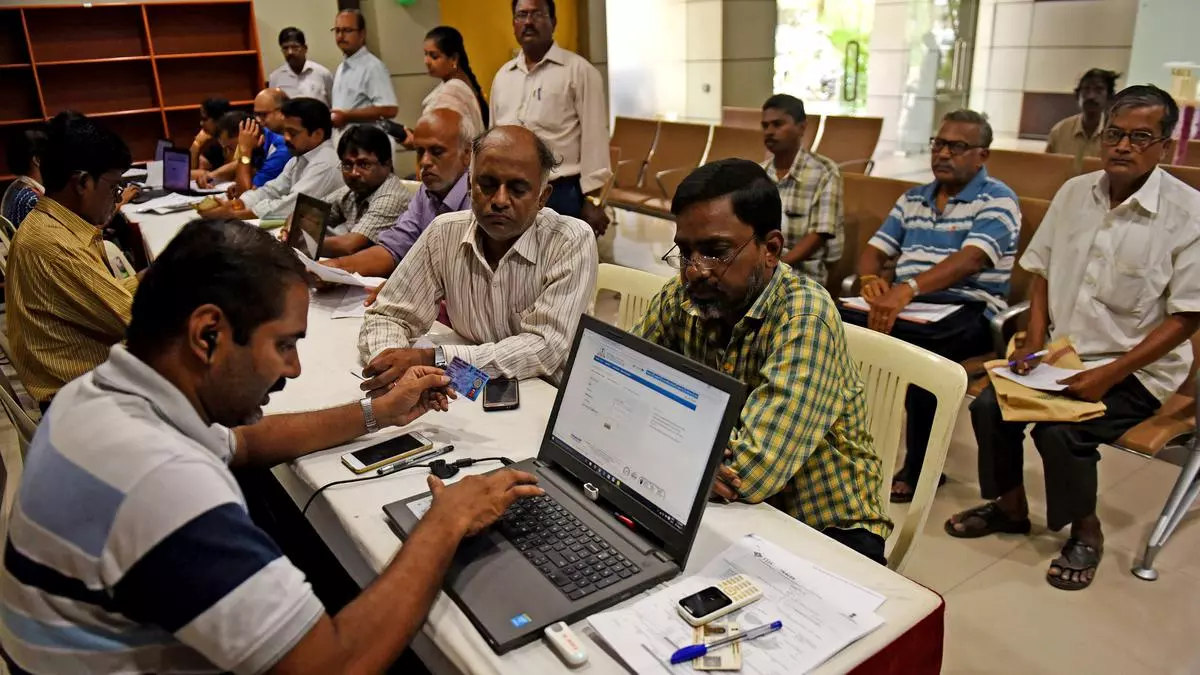
The Indian middle class may be disappointed with the Narendra Modi-led government’s lack of adjustments to tax rates and slabs. Personal tax collections have increased significantly, with the share of personal tax in overall collections rising from 38% to 52% in the last decade. Efforts have been made to improve tax compliance through technology and widening the tax base. Corporate tax collections have not grown as much as personal taxes, indicating room for improvement in the tax system.

Missouri House Republicans vote to cut corporate income taxes as Democrats criticize ‘giveaway’

Missouri House Republicans vote to cut corporate income taxes as Democrats criticize 'giveaway'

The Missouri House passed a bill repealing the corporate income tax, with Republicans supporting it and Democrats opposing it. The bill would gradually reduce the tax rate until it is eliminated in 2028. The bill is estimated to reduce state revenues by at least 4 million when fully implemented. The state is currently sitting on a surplus of about .4 billion.

A minute with Fotini Michailidi Visual Artist

A minute with Fotini Michailidi Visual Artist

The person lives a nomadic life between Nicosia and Paphos in Cyprus, staying at friends or siblings’ houses with their dog, Chiva.

Financial literacy key to stability and growth, CBC governor says

Financial literacy key to stability and growth, CBC governor says

Fact: CBC governor Constantinos Herodotou addressed the “Digital Financial Literacy: the Way Forward” conference, highlighting the importance of financial literacy in managing finances effectively and contributing to financial stability and sustainable growth.

Apr-Feb fiscal deficit at 86.5% of FY24 aim, net tax revenue falls in Feb

Apr-Feb fiscal deficit at 86.5% of FY24 aim, net tax revenue falls in Feb

– India’s fiscal deficit during April-February was Rs 15.01 lakh crore, 86.5% of the full-year revised target of Rs 17.34 lakh crore.
– Net tax revenue turned negative in February due to a contraction in corporate tax revenue and transfer of tax devolution instalments to states.
– Gross tax revenue of the union government grew at 13.4% YoY during 11 months of FY24, with income tax growing at 25.8% YoY and corporate taxes at 17.3% YoY.
– Centre’s net tax collections grew at 6.8% YoY during 11 months of FY24, the lowest in four years, due to higher growth in transfers to states.
– The centre spent 84.8% of the Rs 9.5 lakh crore capital expenditure target during the first 11 months of FY24.
– There is a shortfall in spending for some sectors, which may result in savings for the government if the amounts do not get spent by March end.

UK economy went into recession last year, data confirms

UK economy went into recession last year, data confirms

Britain’s economy entered a shallow recession last year, with GDP shrinking by 0.1% in the third quarter and 0.3% in the fourth. The economy is expected to grow by just 0.25% this year, with inflation moving towards the point where the Bank of England can start cutting rates. Household real disposable income grew by 0.7%, prompting consumers to potentially increase spending and support the economy. The current account deficit in the fourth quarter was 21.18 billion pounds, equivalent to 3.1% of GDP.