India income tax collection up 17.7pc in 2023-24 to nearly $235bn
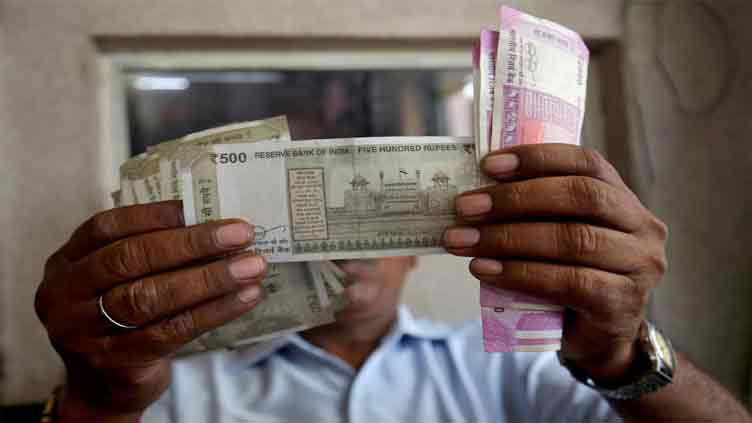
Fact: India’s income tax collection increased by 17.7% in the 2023-24 financial year, reaching nearly 5 billion.
Fact: India’s income tax collection increased by 17.7% in the 2023-24 financial year, reaching nearly 5 billion.

The Minnesota Legislature is considering several bills targeting corporations, including proposals to require large corporations to disclose their state income tax filings and to cap the number of single-family rental units a company can own. Rep. Esther Agbaje is pushing a bill that would cap the number of single-family homes one business entity can own, primarily corporations. Governor Tim Walz has stated that he is not interested in raising or cutting corporate taxes, but rather maintaining a proper balance. Minnesota has the highest corporate tax rate among the states, but the effective tax rate is lower due to deductions. Several bills are moving in the Legislature aimed at regulating corporations, including those related to single-family home ownership, tax transparency, hospital salaries, debt collection, corporate tax studies, health care acquisitions, and employee classification. Critics argue that the bills and underlying philosophy behind them are anti-business.

President Biden and his wife Jill released their income tax returns on Tax Day, revealing that they avoided over 3,000 in payroll taxes since 2017 by characterizing their earnings as corporate profits rather than wages. They also claimed ,254 in Social Security benefits in 2023, despite not needing the income due to their wealth. Additionally, the Bidens had to pay 5 in penalties to the IRS for underpaying their taxes due to the complexity of the tax code.

Canada’s wealthiest individuals and corporations will soon pay taxes on a larger share of capital gains, with the federal budget proposing to tax two-thirds rather than one-half of capital gains. The increase in the inclusion rate will apply to capital gains above 0,000 for individuals and all capital gains realized by corporations. The changes are expected to generate over billion in tax revenues over five years and will help fund new spending on housing and national defense. Business groups are opposed to the changes, arguing that they will hurt economic growth and productivity, but economists believe that the changes will make the tax system more efficient and level the playing field for businesses. Prime Minister Justin Trudeau defended the tax change as a matter of fairness, with the additional revenues helping to fund new government spending and keep the deficit at bay.

The federal government’s latest budget included significant new spending, with an increase of over billion over five years compared to previous plans. The budget also included a change in capital gains taxes, with two-thirds of gains over 0,000 now counting towards taxes. This change is expected to raise billion over five years and improve the efficiency and equity of Canada’s tax system. The increase in the inclusion rate for capital gains is seen as a move that aligns the tax system with other types of payments and makes it more efficient and equitable.

– Corporate taxpayers with billion in income would pay 21 percent on their first 0 million in income, 25 percent on 0 million of their income, and 30 percent on billion of their income, resulting in a total tax bill of 6 million and an average tax rate of 27.3 percent.
– Graduated rate of corporate taxation was a feature of the corporate tax until recently.
– Approximately 99.7 percent of corporate taxpayers fall below the thresholds of million in tax payments.
– 87 percent of tax payments are made by corporations above the million tax payment threshold.
– Companies with tax payments of more than 0 million generate about billion in additional tax revenue.
– Tax revenues would increase by about billion in 2019 with the proposed reform.
– The tax code can discourage market power by levying a higher tax on firms likely to exercise it.
– International tax cooperation can limit tax competition pressures and reduce profit-shifting incentives.
– Market power provides a rationale for reconsidering tax preferences for very-high-profit large companies.
– Graduated corporate tax brackets would be straightforward to administer, especially for large companies.
– Tax policy should distinguish the normal return to capital from the above-normal return to capital to improve efficiency and equity of capital taxation.

– Millions of Americans file their tax returns by April 15 as a civic responsibility
– Giant corporations like Nike and FedEx find ways to pay less in taxes despite earning record profits
– New Jersey is proposing to reverse a corporate tax cut for companies making over million in annual profits
– Many large corporations pay lower tax rates than the average household, with some even avoiding taxes entirely
– Corporations use tax avoidance strategies to hoard wealth for shareholders and executives
– New Jerseyans oppose the expiration of a Corporate Business Tax surcharge on profitable corporations to help pay for NJ Transit
– States need to challenge corporate tax avoidance and invest in core infrastructure
– Corporations prioritize maximizing profits over the public good through tax avoidance
– New Jersey legislators are urged to reinstate the full surtax on profitable mega corporations and close tax loopholes to ensure corporations pay their fair share in taxes.

President Biden proposed to reverse the 2017 Trump tax cuts for the wealthiest Americans by raising the corporate tax rate, denying tax breaks for corporations whose CEOs earn more than million in annual compensation, and requiring billionaires to pay at least 25 percent of their income in taxes.

The text discusses a small market relief rally following Iran’s missile and drone strike on Israel, with US stock futures rising and gold and oil prices slightly lower. The CEO of deVere Group warns investors not to be complacent, as the situation in the Middle East remains volatile and any disruption in oil production could have significant implications for energy prices worldwide. The ripple effects on financial markets could impact investor sentiment, corporate profits, consumer spending, inflation, and central bank monetary policy. Investors are advised to seek refuge in sectors less sensitive to geopolitical risks and to conduct thorough research, diversify portfolios, and consult with a financial advisor before making investment decisions.