Gold rally could extend beyond recent highs

Gold rally could extend beyond recent highs

Gold has increased by nearly 19% since a low in October and about 7% in the past month. UBS strategists suggest there might be a short-term pullback in gold prices, but the rally could continue over the year. Factors supporting gold include potential Federal Reserve rate cuts, central banks and investors buying gold, and increased geopolitical risks. Gold prices have surpassed ,180, reaching near ,200 highs in Asian trading. The Federal Reserve’s potential rate cuts this year and ongoing geopolitical tensions are supporting gold’s value. Fed Chair Jerome Powell indicated the U.S. economy is healthy, and rate cuts could begin once there is confidence in inflation’s downward trajectory. Futures markets anticipate a 70% chance of the Fed cutting rates by mid-June, with a total of one percentage point reduction by year-end. U.S. Nonfarm Payrolls (NFP) data for February showed 275,000 jobs added, exceeding expectations and potentially influencing Fed rate decisions. China’s inflation data for February indicates a return to normal consumption levels, positively affecting gold prices as China is a major consumer of gold. The Chinese Consumer Price Index (CPI) increased by 0.7% year-over-year in February, and the Producer Price Index (PPI) declined by 2.7% year-over-year in the same month. Upcoming U.S. CPI and Retail Sales data for February are awaited for further market direction, with CPI expected to increase by 0.4% month-over-month and Retail Sales projected to rise by 0.7% month-over-month.

Gold extends rally above $2,160 ahead of US NFP

Gold extends rally above $2,160 ahead of US NFP

The price of gold reached a new all-time high above ,160, influenced by a weaker US Dollar, a decline in US Treasury bond yields, and expectations for a rate cut by the Federal Reserve in June. Dovish commentary from central bank policymakers, including Fed Chair Jerome Powell and European Central Bank chief Christine Lagarde, also supported gold prices. Powell indicated the Fed is close to being confident enough to cut rates, while Lagarde suggested the ECB might ease policy in June. Additionally, geopolitical tensions and safe haven buying, particularly following a Houthi attack in the Red Sea, contributed to the demand for gold. Despite investors pulling metal out of Gold-backed ETFs, central banks remain strong buyers of gold.

No fuel to run the economy

No fuel to run the economy

Inflation in Cyprus was reported to be lower than expected and below the Eurozone target average of 2%. Despite this, the real economy is facing challenges with small to medium-sized enterprises closing almost daily due to rising electricity costs and fuel prices, which are expected to increase further due to a rise in world crude prices. Small businesses are also burdened by local fees and taxes. The consumers’ association criticized the Energy Ministry for a lack of transparency regarding the formula for determining fuel prices at the pump, suggesting that more openness could have reduced fuel prices by about 3-4 cents a litre during October to December. Additionally, the price of olive oil increased by 54% over the past year, with a further 3.4% increase in February. Some goods and services have helped keep the consumer price index in check, but prices in several sectors continue to rise due to a lack of healthy competition in the Cyprus economy. The “photovoltaics for all” scheme has been criticized for not adequately supporting households unable to invest in lower-energy appliances. The current administration has been reluctant to introduce more support measures for vulnerable people, aiming to maintain a sound fiscal policy.

EURUSD recovers after release of US NFP

EURUSD recovers after release of US NFP

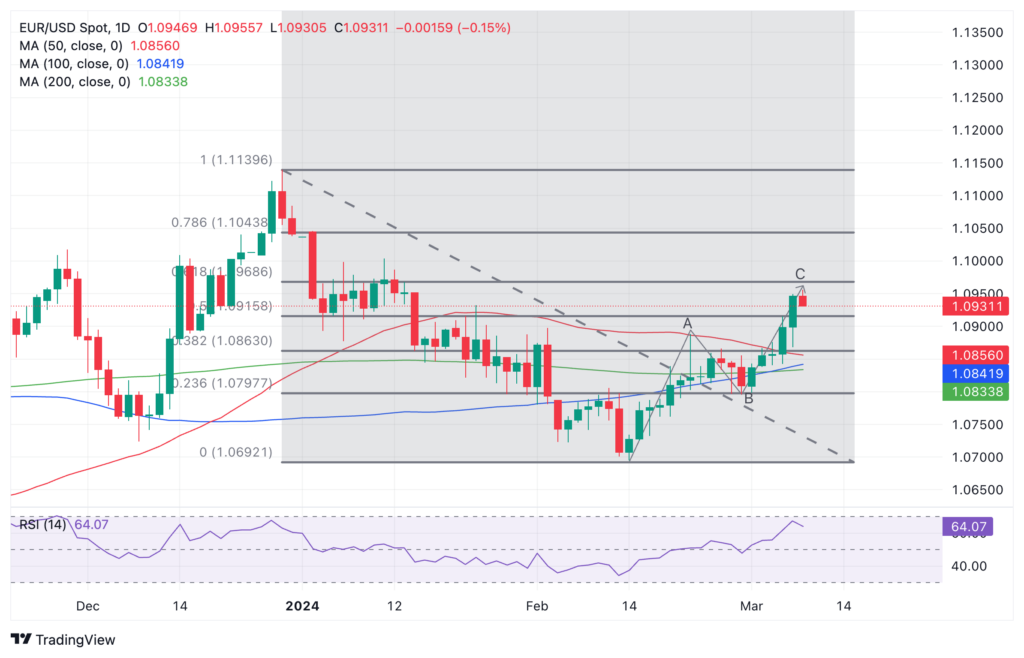
– The EUR/USD pair increased after US Nonfarm payrolls data showed a decrease in Average Hourly Earnings and an increase in the Unemployment Rate.
– The US economy added 275,000 jobs in February, more than the 200,000 expected.
– Average Hourly Earnings rose by 4.3% YoY and 0.1% MoM, both below the predicted 4.4% and 0.3%.
– The Unemployment Rate increased to 3.9%, higher than the expected 3.7%.
– This data could lead the Federal Reserve to cut interest rates earlier than anticipated.
– Francois Villeroy de Galua, Governor of the Bank of France and ECB Governing Council member, stated a rate cut in spring is “very likely.”
– Joachim Nagel, Bundesbank President, mentioned the increasing probability of an interest-rate cut before the summer break.
– ECB President Christine Lagarde indicated June as the next key date for reviewing policy on interest rates.
– The EUR/USD is in a short-term uptrend due to the anticipation that the US Fed might lower interest rates sooner than the ECB.
– Technical analysis suggests a tentative short-term uptrend for EUR/USD, with recent signs indicating a possible correction.

Britain, ’s Tesco raises store worker pay by 9.1 per cent

Britain, ’s Tesco raises store worker pay by 9.1 per cent

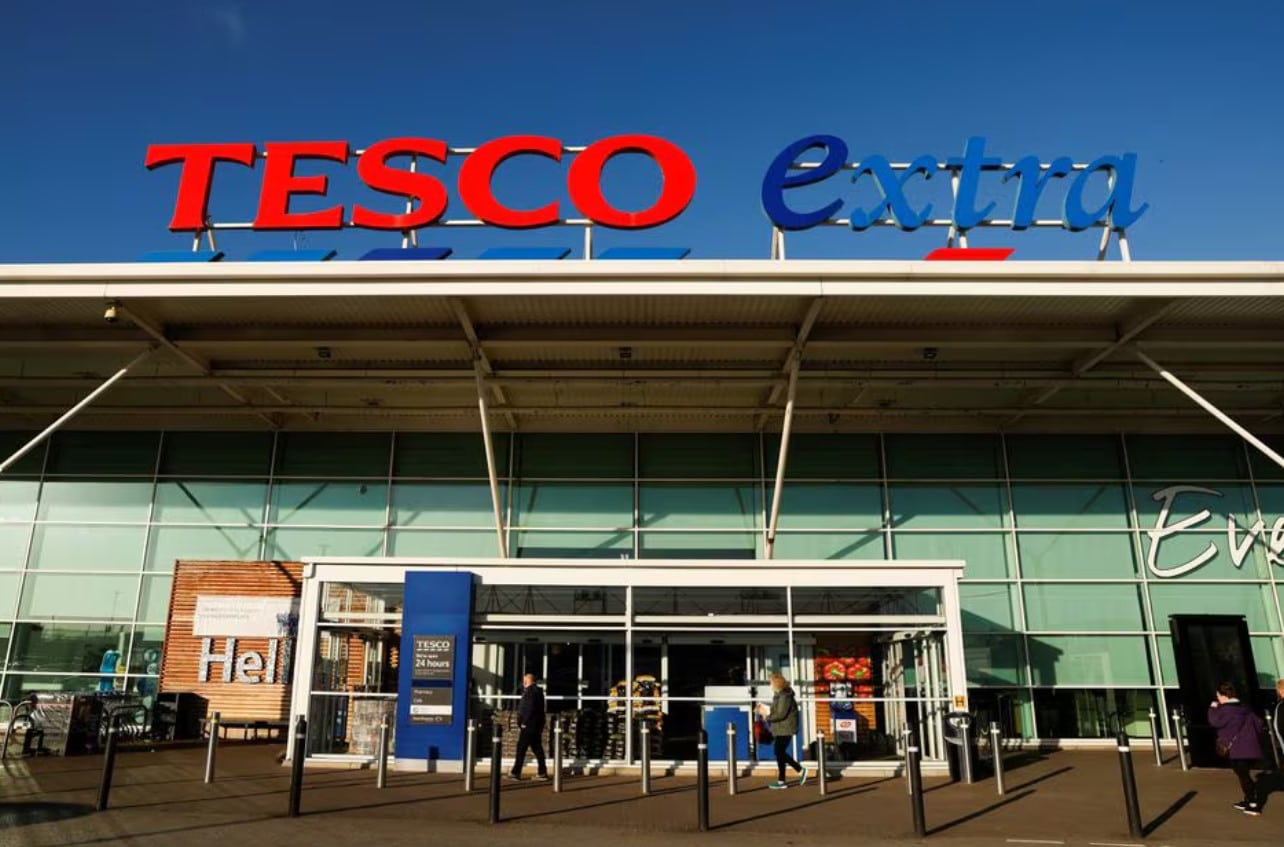
Tesco, Britain’s largest retailer, announced a 9.1% increase in hourly pay for store workers, raising the base pay from 11.02 pounds to 12.02 pounds starting April. This pay rise, negotiated with the shopworkers’ union USDAW, surpasses the government’s national living wage increase of 9.8% to 11.44 pounds an hour. Tesco’s London workers will receive 13.15 pounds an hour. The pay rise will cost Tesco over 300 million pounds. Other UK retailers, including Sainsbury’s, Asda, Marks & Spencer, Amazon, Aldi, Lidl, and Costa Coffee, have also announced pay increases for 2024.

Our View: Sugarcoating unpopular policies cannot work indefinitely

Our View: Sugarcoating unpopular policies cannot work indefinitely

Finance Minister Makis Keravnos of the Christodoulides government claims that green taxation plans will significantly benefit the public, despite concerns about the increased costs for fuel, water, and mandatory energy upgrades for buildings. The consumer tax reduction on fuel is ending, and a new green tax is expected to increase fuel prices by 14 to 15 cents per litre. Keravnos argues that green taxation will discourage energy and resource waste, and claims that revenue from the carbon tax will be returned to businesses and households, though specifics are not provided. Critics argue that the green taxes will increase the cost of living and inflation, as businesses pass on higher costs to consumers. There is also concern about the government’s decision-making regarding energy tariffs and subsidies, with suggestions that temporary tax relief measures are not sustainable and could harm public finances. The government is under pressure to extend fuel tax discounts and electricity bill subsidies, despite the need for fiscal responsibility and addressing inflation.

The hidden costs of feeding the world

The hidden costs of feeding the world

Kathleen Merrigan finds that the true cost of food is far higher than what consumers pay at the checkout counter, taking into account economic, environmental, social, and health impacts. The United Nations Food and Agriculture Organization’s 2023 report using true cost accounting reveals that the global cost of the agrifood system in 2020 was up to US.7 trillion more than retail prices, about 10% of global GDP or per person per day worldwide. Hidden costs in wealthy countries are mainly due to unhealthy dietary patterns, while in low-income countries, they stem from poverty and undernourishment. Environmental costs, including nitrogen runoff and greenhouse gas emissions, represent about 20% of the global hidden costs. True cost accounting could guide policy changes, potentially reallocating 0 billion in agricultural subsidies worldwide to support more sustainable and equitable food production methods.

Sterling is on the move

Sterling is on the move

The British Pound is experiencing its strongest performance against the US dollar and other major currencies in over seven months. This change is attributed to investors and traders adjusting to a new perspective on the UK’s economy, which has shown resilience despite challenges such as Brexit and geopolitical tensions. Initially, there was an expectation of four interest rate cuts by the Bank of England to address the cost of living crisis and prevent a deep recession. However, current expectations have shifted to potentially only two interest rate cuts this year, based on economic data indicating better-than-expected GDP growth and consumer spending. Additionally, comments from the Fed Chairman have led traders to believe that the Federal Reserve might implement more interest rate cuts than the Bank of England, further influencing the strength of the British Pound.

Cyprus inflation rises by 1.8 per cent in February

Cyprus inflation rises by 1.8 per cent in February

Cyprus experienced a 1.8 per cent inflation increase in February 2024, primarily driven by the services sector. This follows decreases in inflation rates in November and December 2023, and January 2024. The February 2024 Consumer Price Inflation (CPI) rose by 1.03 points to 114.93 compared to 113.90 in January 2024. Inflation rates for November 2023 fell to 1.71 per cent, December 2023 saw an increase of 1.64 per cent, and January 2024 had an increase of 1.69 per cent. Year-over-year, the largest change in February was in Services, with a 3.7 per cent increase. Agricultural Products saw the most significant monthly change with a 5.6 per cent rise. The Restaurants and Hotels category experienced the greatest annual change with a 6.2 per cent increase, while the largest monthly changes were in Clothing and Footwear (3.1 per cent) and Food and Non-Alcoholic Beverages (2.7 per cent). For January and February 2024, compared to the same period last year, notable changes were in Restaurants and Hotels (5.9 per cent) and Other Goods and Services (3.7 per cent). The categories with the most significant positive impact on the February 2024 CPI change compared to February 2023 were Restaurants and Hotels (0.62) and Food and Non-Alcoholic Beverages (0.43). Compared to the previous month, the greatest impacts were from Food and Non-Alcoholic Beverages (0.60) and Clothing and Footwear (0.22). Catering Services had a substantial impact on the annual CPI change for February 2024 (0.60), and Fresh Vegetables had the most significant monthly impact (0.38).

ECB takes small step towards rate cut as inflation falls

ECB takes small step towards rate cut as inflation falls

The European Central Bank (ECB) maintained borrowing costs at record highs but indicated a move towards reducing them, noting that inflation is decreasing faster than expected. The ECB’s main interest rate remains at 4.0 percent, reflecting a continued decrease in inflation over the past 1.5 years and revised, lower economic projections. Despite this, domestic price pressures, including wages, are still high. The ECB plans to base future decisions on the path of underlying inflation. It is unlikely to lower borrowing costs before its June 6 meeting, with crucial wage data expected in May. The ECB has revised its inflation forecast for this year from 2.7 percent to 2.3 percent, suggesting it might achieve its 2 percent inflation target earlier than the previously expected 2025. However, core inflation, excluding food and fuel, remains at 3.1 percent. Economic growth in the eurozone is projected to be 0.6 percent, down from a previous estimate of 0.8 percent.