Aid ship reaches Gaza as Israel rejects Hamas truce offer [VIDEO]

Aid ship reaches Gaza as Israel rejects Hamas truce offer [VIDEO]

– The first ship carrying food aid, the Open Arms vessel with 200 tonnes of food, reached the coast of the Gaza Strip.
– The charity World Central Kitchen (WCK) aims to deliver the aid on a temporary jetty.
– The aid is intended to ease the hunger crisis in Gaza, where hundreds of thousands face malnourishment.
– The war began with an attack by Hamas on Oct. 7, killing 1,200 people and taking 253 hostages in Israel.
– An Israeli assault has killed more than 31,000 people and displaced nearly the entire 2.3 million population of Gaza.
– Hamas’s latest ceasefire counter-proposal, which includes the release of hostages and talks to end the war, was rejected by Israel.
– Israel demands only temporary pauses in fighting and refuses to discuss ending the war until Hamas is eradicated.
– Sami Abu Zuhri, a senior Hamas official, criticized Israel’s rejection of the ceasefire proposal.
– Efforts for a ceasefire continue, with mediators from the U.S., Egypt, and Qatar involved.
– The United Nations reports all 2.3 million people in Gaza are suffering from a food crisis.
– Israel denies blame for the hunger crisis and calls for better food distribution by aid agencies.
– At least 21 people were killed and 150 wounded by Israeli forces during a food distribution event.
– U.S. Senate Majority Leader Chuck Schumer called for Israelis to replace Prime Minister Benjamin Netanyahu, criticizing his approach to the conflict.

Russia says it repelled attempted Ukrainian cross-border incursion

Russia says it repelled attempted Ukrainian cross-border incursion

Russia’s defense ministry reported that it prevented a Ukrainian attempt to attack the Belgorod region of Russia, involving up to 30 soldiers landing near the village of Kozinka using helicopters. Ukrainian officials claimed that anti-Kremlin Russian armed groups based in Ukraine were attacking two Russian border provinces, Belgorod and Kursk. The Belgorod regional governor reported two deaths and significant damage in Kozinka. Concurrently, Russia commenced a three-day presidential election expected to secure President Vladimir Putin another six-year term. The Belgorod region has been targeted by attacks from Ukraine since 2022, with Ukrainian forces having temporarily seized an area near the border, including Kozinka, in May 2023.

Bank of England set to play for time before first rate cut

Bank of England set to play for time before first rate cut

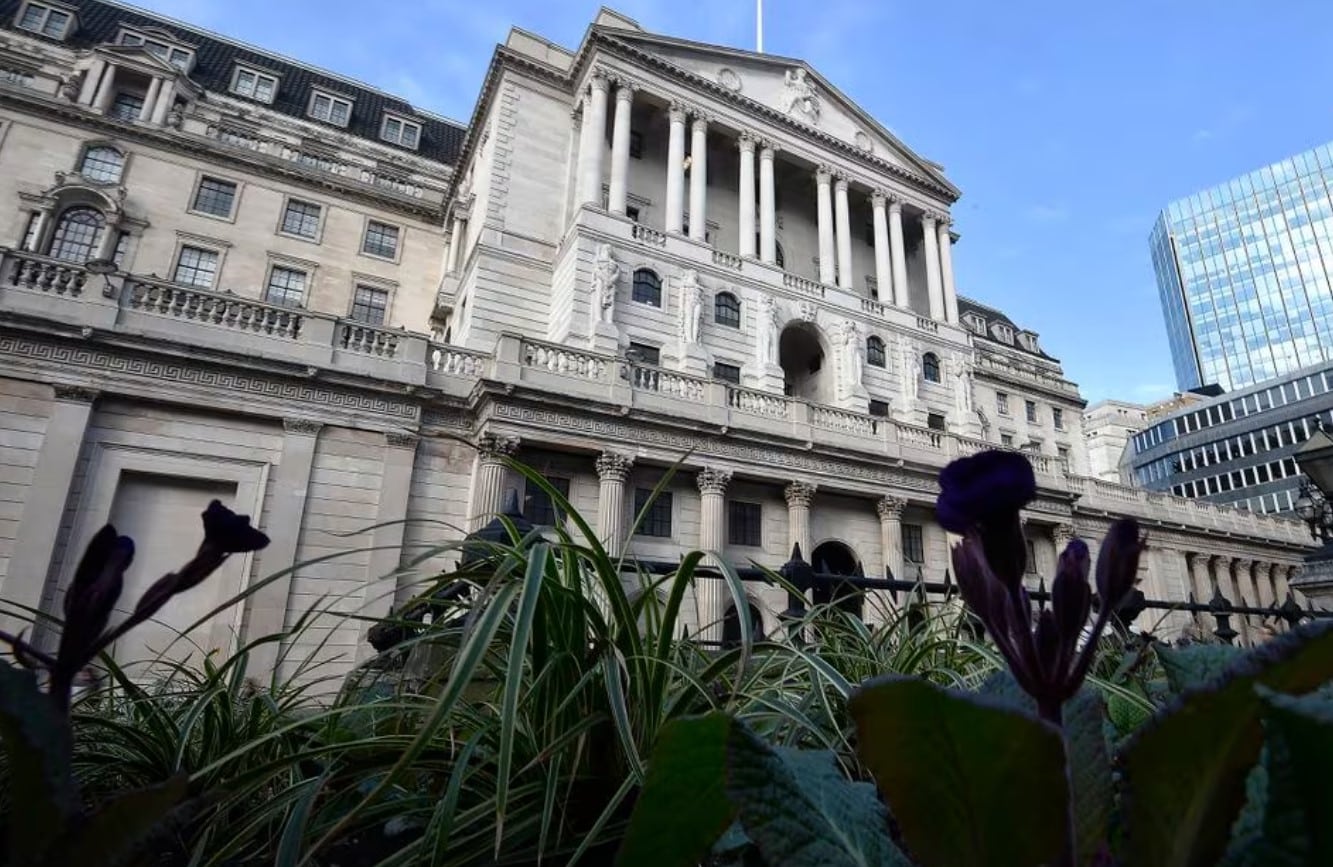
The Bank of England is expected to maintain uncertainty about when it will start reducing interest rates, awaiting clearer evidence that inflation pressures are diminishing. Despite other central banks moving towards cutting borrowing costs post-COVID pandemic and inflation projected to decrease to the 2% target soon, the BoE has labeled its high rates as “under review.” Governor Andrew Bailey expressed a cautiously optimistic outlook, noting inflation expectations appear controlled and concerns over a price-wage spiral are lessening. However, Bailey indicated no rush to lower the Bank Rate from its 16-year peak of 5.25%, citing labor market data uncertainties and geopolitical risks. In February, the decision to keep the Bank Rate steady was supported by six rate-setters, with two advocating for an increase and one for a reduction. Analysts anticipate a similar 6-2-1 vote split in the next decision, potentially influenced by upcoming inflation data. The BoE forecasts inflation to slow to 2% in the second quarter following a decrease in regulated energy costs but expects a rise to almost 3% later in 2024. Inflation reached a high of 11.1% in October 2022. The central bank remains concerned about the risk posed by fast-growing wages, with Britain’s minimum wage set to increase by nearly 10% and employers offering pay settlements of about 5% since the start of 2024. Former BoE deputy governor Charlie Bean highlighted that Britain’s pay growth is roughly double the level consistent with 2% inflation. The BoE is seen as moving more slowly towards rate cuts compared to other central banks, with the British economy showing signs of recovery from a short recession. Finance minister Jeremy Hunt announced tax cuts to moderately boost consumers. The European Central Bank and the US Federal Reserve are contemplating rate cuts, potentially placing the BoE behind. Economists at HSBC predict inflation could drop to as low as 1.2% in May and June before rising later in the year, challenging the BoE’s communication on maintaining its current stance. A Reuters poll shows economists mostly expect rate cuts to begin in the third quarter, with 40% anticipating a move in the second quarter. Investors do not fully expect a quarter-point cut until August. The BoE’s March monetary policy decision will be announced without a press conference, as no new economic forecasts are due to be published.

Bank of England to start cutting in Q3 but strong chance of Q2 move

Bank of England to start cutting in Q3 but strong chance of Q2 move

The Bank of England is expected to start reducing borrowing costs in the third quarter, with a Reuters poll indicating that while 40% of economists anticipated an earlier cut, it is more probable that the first reduction will occur later than sooner. This aligns the Bank of England with the Federal Reserve and the European Central Bank, which are both expected to begin cutting interest rates in June. Inflation in the UK has decreased from a 41-year high of 11.1% in October 2022 to below the Bank’s 2% target, anticipated to be 1.8% next quarter, and is expected to stay around this target until at least the end of 2025. All but three of 68 economists forecast at least one reduction in the Bank Rate from its 16-year peak of 5.25% by the end of September, with a significant minority suggesting the first cut could be as early as the next quarter. No changes are expected on March 21, nor are any further increases after 14 hikes from December 2021 to August 2023. The Bank Rate is predicted to be 4.75% by the end of September, 4.50% by the end of 2024, and to decrease steadily to 3.25% by the end of 2025. The UK economy showed growth in January after a shallow recession in the second half of 2023, with expectations of 0.2-0.3% expansion each quarter through to 2026. Growth forecasts for 2024 and 2025 are 0.3% and 1.2%, respectively. A survey published earlier this month indicated businesses had their strongest month in February since the previous year, but inflation pressures remain a concern for the Bank of England.

UK PM Rishi Sunak rules out holding an election in early May

UK PM Rishi Sunak rules out holding an election in early May

British Prime Minister Rishi Sunak announced he would not hold a general election in early May, indicating the vote would likely occur later in the year. This statement aims to quell speculation about an early election, despite opposition parties urging for one. Sunak confirmed there would be no election on May 2, the same day as local elections, due to logistical challenges of organizing two elections close together. Despite facing political challenges, including a party defection and controversy over donor funds, Sunak has previously suggested the election could happen in the latter half of the year. Current polls show Sunak’s Conservative Party trailing behind the Labour Party by approximately 20 percentage points. The government has faced difficulties in fulfilling its main promises, but Sunak has achieved the goal of halving inflation by the end of 2023. A general election must be held by January next year, but Sunak has the discretion to call one sooner.

Cyprus to open polling stations abroad for EU elections

Cyprus to open polling stations abroad for EU elections

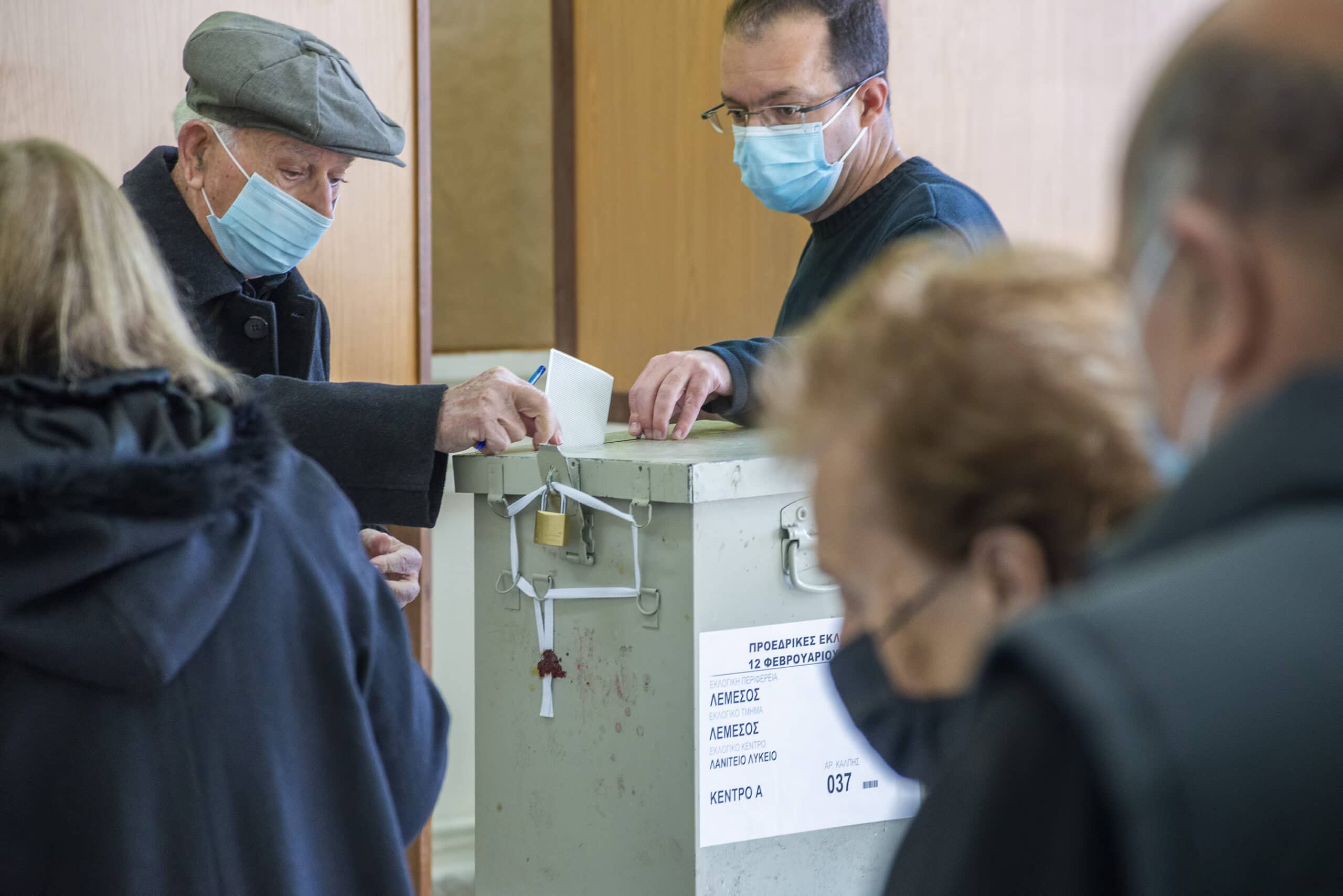
Cyprus will open polling stations in Greece, Belgium, and the United Kingdom for the European Parliament elections in June. Cypriots living in these countries can vote there if they register before April 2. A polling station will be established in any location where at least 50 voters submit a declaration requesting one. Voter registration for both local government and European Parliament elections is open until April 2, with the elections scheduled for June 9. In Cyprus, citizens of the Republic of Cyprus and EU citizens residing in Cyprus who are over 18 years old on election day (born on or after June 9, 2006) are eligible to vote. Voters aged 25 and over can register online, while paper applications are available at various local offices and can also be downloaded from the Electoral Service’s website.

UK will change law to ban foreign states from owning newspapers

UK will change law to ban foreign states from owning newspapers

Britain’s government plans to prevent foreign states from owning newspapers, potentially blocking Abu Dhabi-backed RedBird IMI’s bid to buy the Telegraph. The proposed legislation amendment aims to stop newspaper and periodical news magazine mergers involving foreign state ownership, influence, or control. This move is in response to concerns over the independence of the media and foreign investors acquiring politically influential assets. The Telegraph, known for its connections with the Conservative Party, is at the center of this political struggle for ownership. The government’s plan includes referring relevant media mergers to the Competition and Markets Authority (CMA) for assessment of foreign state involvement, with the authority to block or unwind mergers based on the findings.

UN Envoy continues assessment over potential new negotiations

UN Envoy continues assessment over potential new negotiations

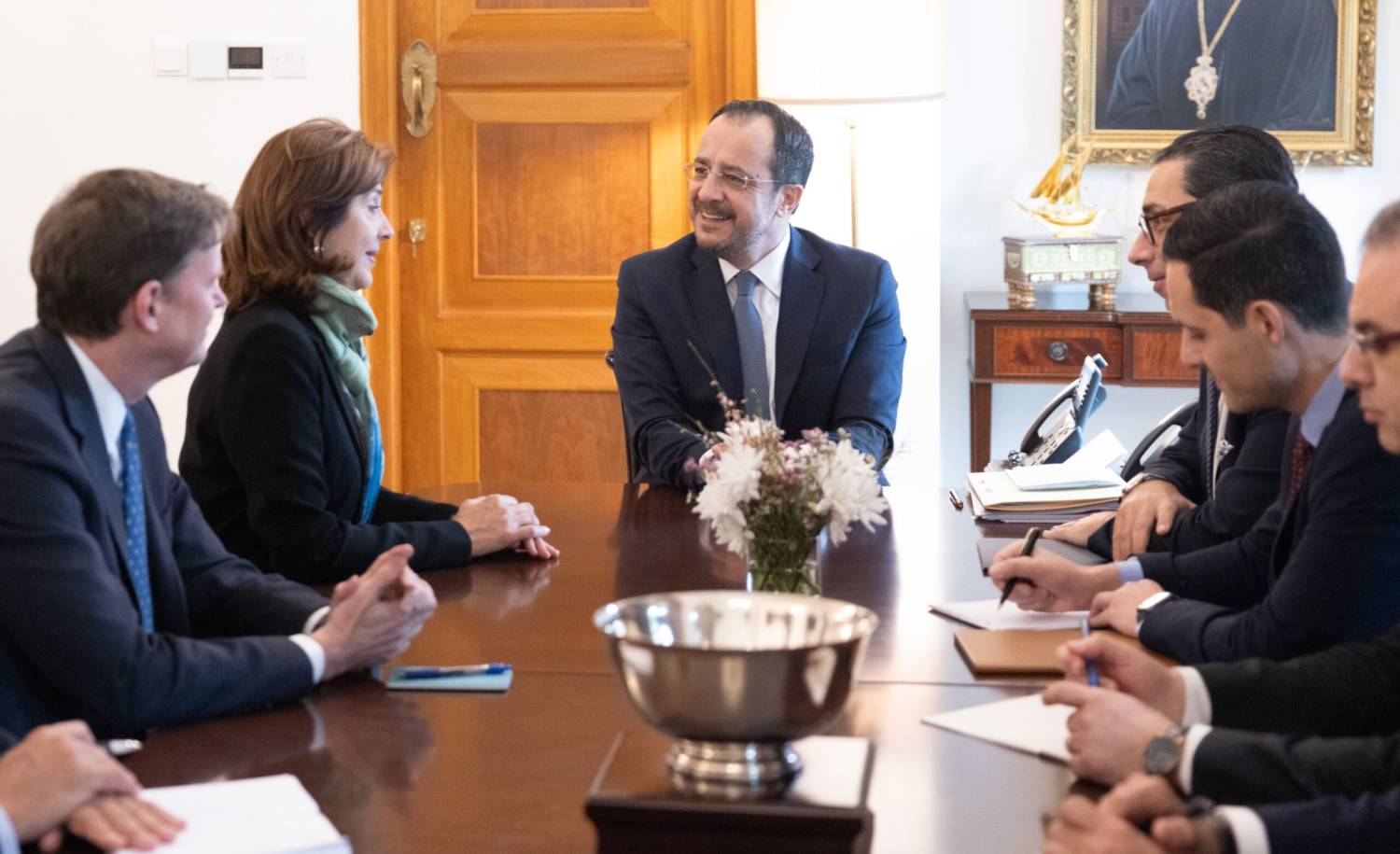
Maria Angela Holguín Cuéllar, the personal envoy of the United Nations Secretary-General, is in Cyprus to gather assessments on the failure of the talks in Crans Montana and to understand the positions of various political forces regarding the future of negotiations in Cyprus. During her meetings with leaders from both sides of the divide and party leaders, Holguín has emphasized not rushing into negotiations without sufficient momentum and has sought to understand each side’s desires and perceived responsibilities of the other side. She has indicated a preference for focusing on the present rather than past failures. Various political leaders have expressed their views to Holguín, ranging from skepticism about the potential for confidence-building measures to contribute positively, to differing perspectives on the future of negotiations and the possibility of a federation. The National Unity Party in the occupied territories has stated that the chapter of federation is closed, while the Republican Turkish Party supports efforts to create common ground for resuming official negotiations and seeks a comprehensive solution based on political equality.

Putin warns the West: Russia is ready for nuclear war

Putin warns the West: Russia is ready for nuclear war

President Vladimir Putin stated that Russia is technically prepared for nuclear war but sees no immediate need for nuclear weapons in Ukraine. He warned that U.S. troop deployment in Ukraine would be seen as a significant escalation. Putin expressed confidence in Russia’s military readiness for a nuclear confrontation but highlighted the lack of necessity for such measures in the current context. He also mentioned that Russia has annexed four regions of Ukraine, considering them fully part of Russia. The Biden administration has no plans to send troops to Ukraine but aims to support Ukrainian forces with a security aid bill. Putin’s nuclear rhetoric was described by a Ukrainian official as propaganda and intimidation, while the UN nuclear watchdog’s chief downplayed the likelihood of nuclear war. Putin reiterated that the use of nuclear weapons is outlined in Russia’s nuclear doctrine, which includes conditions such as a response to an attack with weapons of mass destruction or a conventional attack threatening Russia’s existence. Additionally, Putin offered talks on Ukraine and emphasized the need for written security guarantees in any settlement.

Split in Israel coalition points to return of politics as normal

Split in Israel coalition points to return of politics as normal

– A centrist bloc in Israel’s unity government led by former defence minister Benny Gantz has dissolved.
– This development is increasing pressure on Prime Minister Benjamin Netanyahu during the ongoing Gaza war, which has lasted for five months.
– Gideon Saar, a former justice minister and ex-member of Netanyahu’s Likud party, left the partnership with Gantz to form a separate centre-right bloc in parliament.
– The coalition shifts, including Saar’s move, are common in Israeli politics and are not expected to immediately affect the government’s stability.
– Analysts interpret the breakup as a sign of a return to the usual political dynamics in Israel, highlighting a growing divide between right-wing and center-left factions.
– Gantz, considered a strong candidate for Israel’s next prime minister, recently made unapproved visits to Washington and London, causing upset among right-wing and religious nationalist coalition partners.
– Gantz has called for unity in the government and suggested that elections should be held after the war to allow candidates to present their contributions to the country.
– A poll by Channel 12 showed increasing support for early elections, with 50% of right-wing voters in favor, and Gantz’s National Unity Party leading over Likud by a significant margin.